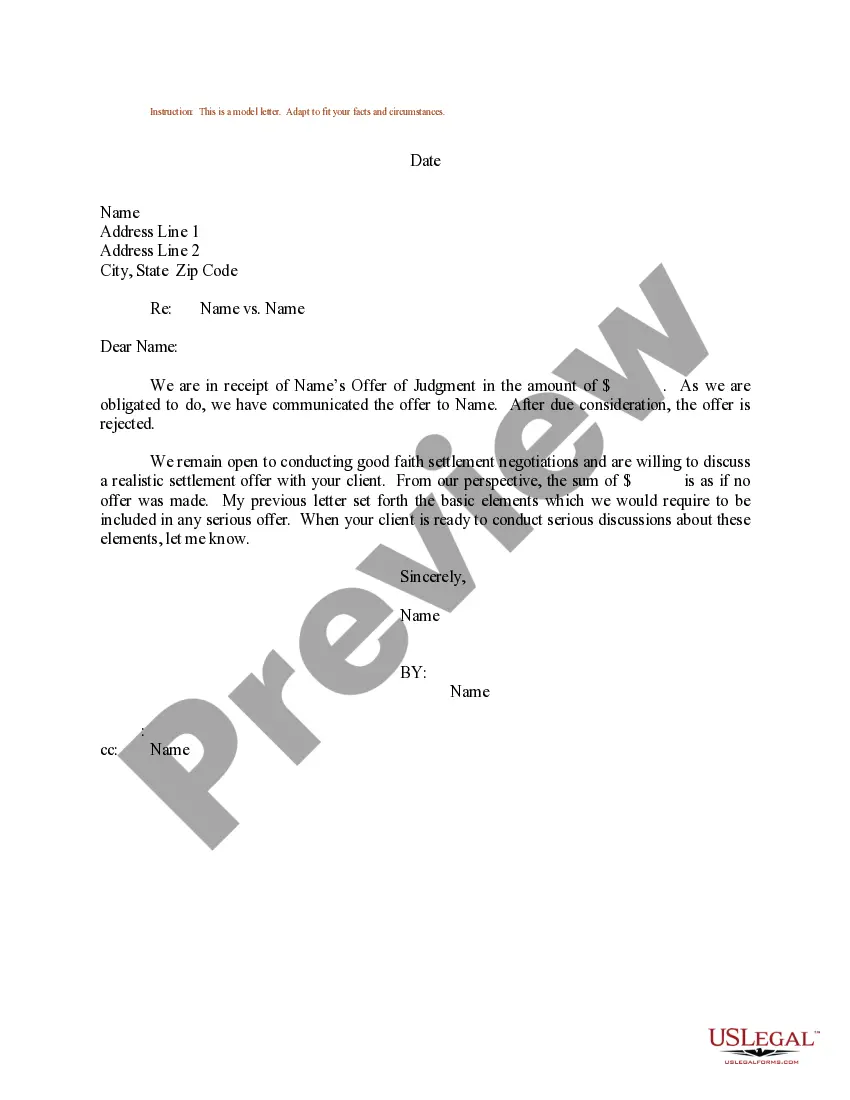
Sample Letter Rejecting Settlement Offer With Debt Collector In Franklin
Description


Get your form ready online
Our built-in tools help you complete, sign, share, and store your documents in one place.
Make edits, fill in missing information, and update formatting in US Legal Forms—just like you would in MS Word.
Download a copy, print it, send it by email, or mail it via USPS—whatever works best for your next step.
Sign and collect signatures with our SignNow integration. Send to multiple recipients, set reminders, and more. Go Premium to unlock E-Sign.
If this form requires notarization, complete it online through a secure video call—no need to meet a notary in person or wait for an appointment.
We protect your documents and personal data by following strict security and privacy standards.

Make edits, fill in missing information, and update formatting in US Legal Forms—just like you would in MS Word.

Download a copy, print it, send it by email, or mail it via USPS—whatever works best for your next step.

Sign and collect signatures with our SignNow integration. Send to multiple recipients, set reminders, and more. Go Premium to unlock E-Sign.

If this form requires notarization, complete it online through a secure video call—no need to meet a notary in person or wait for an appointment.

We protect your documents and personal data by following strict security and privacy standards.
Looking for another form?






Form popularity
FAQ
Provide specific reasons for your rejection, highlighting the damages and losses not covered by the proposed settlement. These reasons could include medical expenses, lost wages, property damage, pain and suffering, and other relevant costs.
Your letter in response to a settlement offer 1) In your introduction, start by saying that you are surprised and a little hurt that your employer wishes to terminate your employment. Then state how hard you have worked and how much your job means to you. This will elicit sympathy and create goodwill.
However, refusing a settlement offer does extend the life of your claim and delays when you receive compensation. If you have pressing medical bills or other expenses, this is a factor to consider. You'll also need to invest more time and energy into your case, including providing more documentation of your damages.
In a claim refusal letter, begin with a statement of appreciation, common ground, or understanding; provide a concise and factual explanation; and end in a friendly and confident way. Remember to use the indirect approach.
I am responding to your contact about a debt you are attempting to collect. You contacted me by phone/mail, on date. You identified the debt as any information they gave you about the debt. Please stop all communication with me and with this address about this debt.
I am writing in response to the settlement offer you presented on Settlement Offer Date, related to claim number Claim Number for the incident that occurred on Incident Date. After careful consideration, I must reject this offer as it does not meet my needs based on the severity and ongoing nature of my injuries.
Respond to their communication in writing saying something along the lines of: Dear sirs, Thank you for your communication dated xx, the contents of which have been noted. I do not recognise this alleged debt, and require you to prove this alleged debt.
If you write a letter, instead of using the tear-off form, the debt dispute letter should include your personal identifying information; verification of the amount of debt owed; the name of the creditor for the debt; and a request the debt not be reported to credit reporting agencies until the matter is resolved or ...
Negotiating with debt collectors is a four-step process. Verify the legitimacy of both the debt and the collector. Review your finances and choose your most affordable payment option. Negotiate with the debt collector. Get agreements in writing.
I am writing in regards to the above-referenced debt to inform you that I am disputing this debt. Please verify the debt as required by the Fair Debt Collection Practices Act. I am disputing this debt because I do not owe it. Because I am disputing this debt, you should not report it to the credit reporting agencies.

