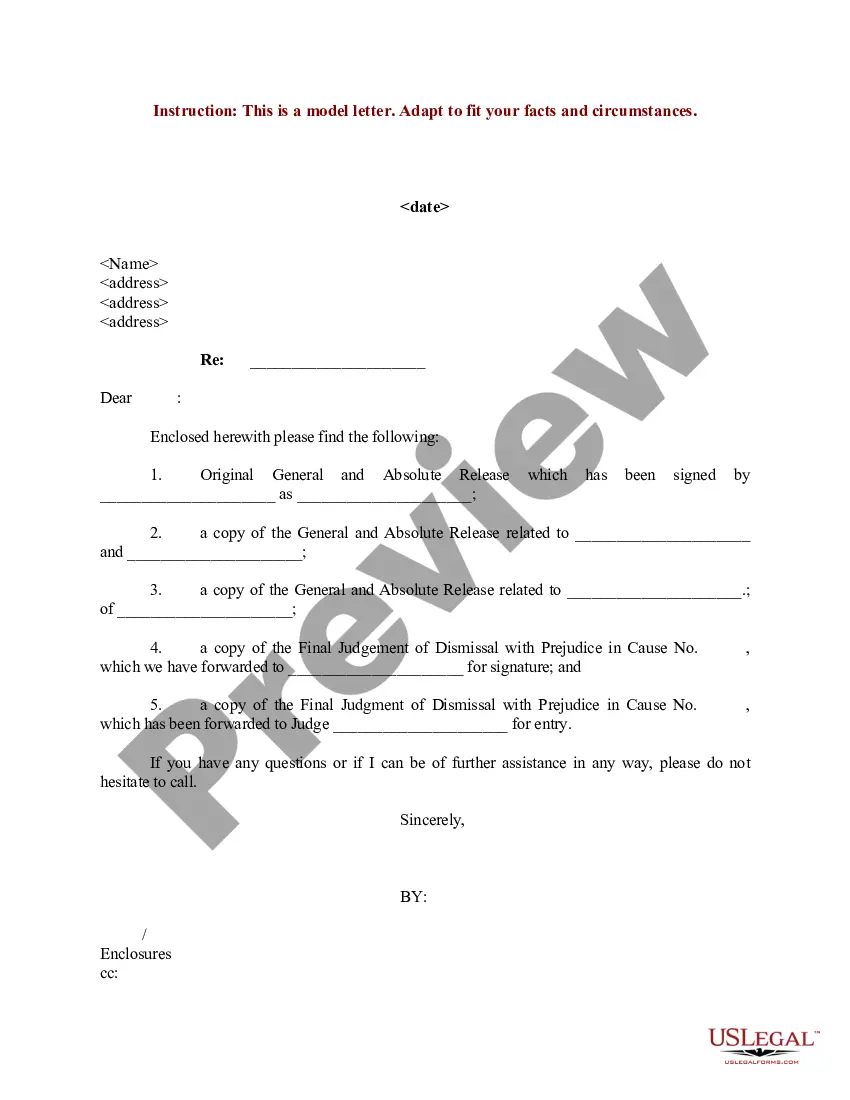
Release With Prejudice Without A Trial In Georgia
Description

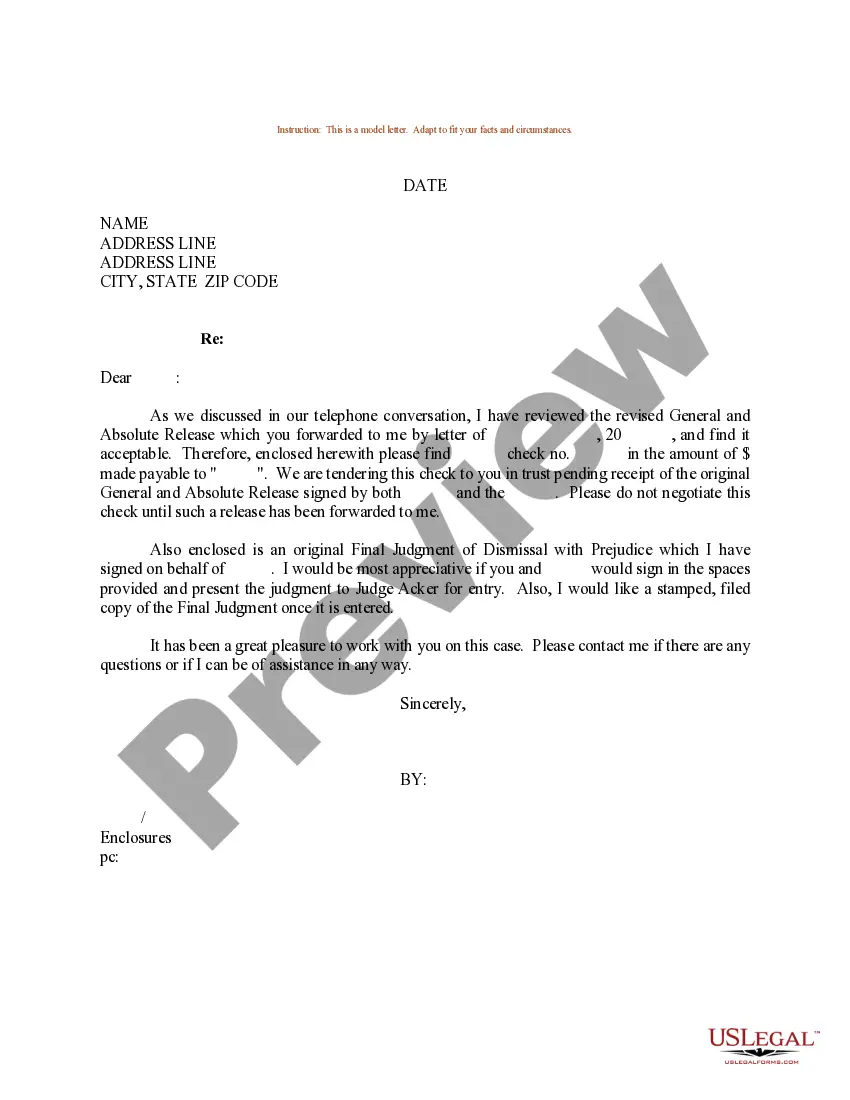
Get your form ready online
Our built-in tools help you complete, sign, share, and store your documents in one place.
Make edits, fill in missing information, and update formatting in US Legal Forms—just like you would in MS Word.
Download a copy, print it, send it by email, or mail it via USPS—whatever works best for your next step.
Sign and collect signatures with our SignNow integration. Send to multiple recipients, set reminders, and more. Go Premium to unlock E-Sign.
If this form requires notarization, complete it online through a secure video call—no need to meet a notary in person or wait for an appointment.
We protect your documents and personal data by following strict security and privacy standards.

Make edits, fill in missing information, and update formatting in US Legal Forms—just like you would in MS Word.

Download a copy, print it, send it by email, or mail it via USPS—whatever works best for your next step.

Sign and collect signatures with our SignNow integration. Send to multiple recipients, set reminders, and more. Go Premium to unlock E-Sign.

If this form requires notarization, complete it online through a secure video call—no need to meet a notary in person or wait for an appointment.

We protect your documents and personal data by following strict security and privacy standards.
Looking for another form?




Form popularity
FAQ
Any action or other proceeding filed in any of the courts of this state in which no written order is taken for a period of five years shall automatically stand dismissed with costs to be taxed against the party plaintiff.
“With prejudice” means the decision is final. “Without prejudice” means it's not final and subject to future inquiry. If the judge announces a case is dismissed with prejudice, that means it's permanently dismissed and can't be retried.
A dismissal with prejudice means that the case is closed permanently. Once a case is dismissed with prejudice, the plaintiff is barred from filing another lawsuit on the same grounds. It's equivalent to a final judgment against the plaintiff and means victory for the defendant.
If the judge dismisses the case with prejudice, it becomes a final judgment that can only be challenged in a higher court through the appellate process, not refiled in the same court.
District Courts may dismiss with prejudice where the plaintiff acted irresponsibly or in bad faith, or where rehearing the claim would burden the court system.
In the formal legal world, a court case that is dismissed with prejudice means that it is dismissed permanently. A case dismissed with prejudice is over and done with, once and for all, and can't be brought back to court.
The lawsuit may be refiled “either within the original applicable period of limitations or within six months after the discontinuance or dismissal, whichever is later.” O.C.G.A.
Rule 41 - Preparation and Filing (a)Filing. Paper-filed motions and responses to motions shall be filed as set out in Rule 6, Copies and Certificate of Service. Efiled motions and responses shall be filed in ance with Rule 46, Electronic Filing of Documents.
In the formal legal world, a court case that is dismissed with prejudice means that it is dismissed permanently. A case dismissed with prejudice is over and done with, once and for all, and can't be brought back to court. A case dismissed without prejudice means the opposite. It's not dismissed forever.