Consent Consumer Investigative For Employment In Bronx
Description





Form popularity
FAQ
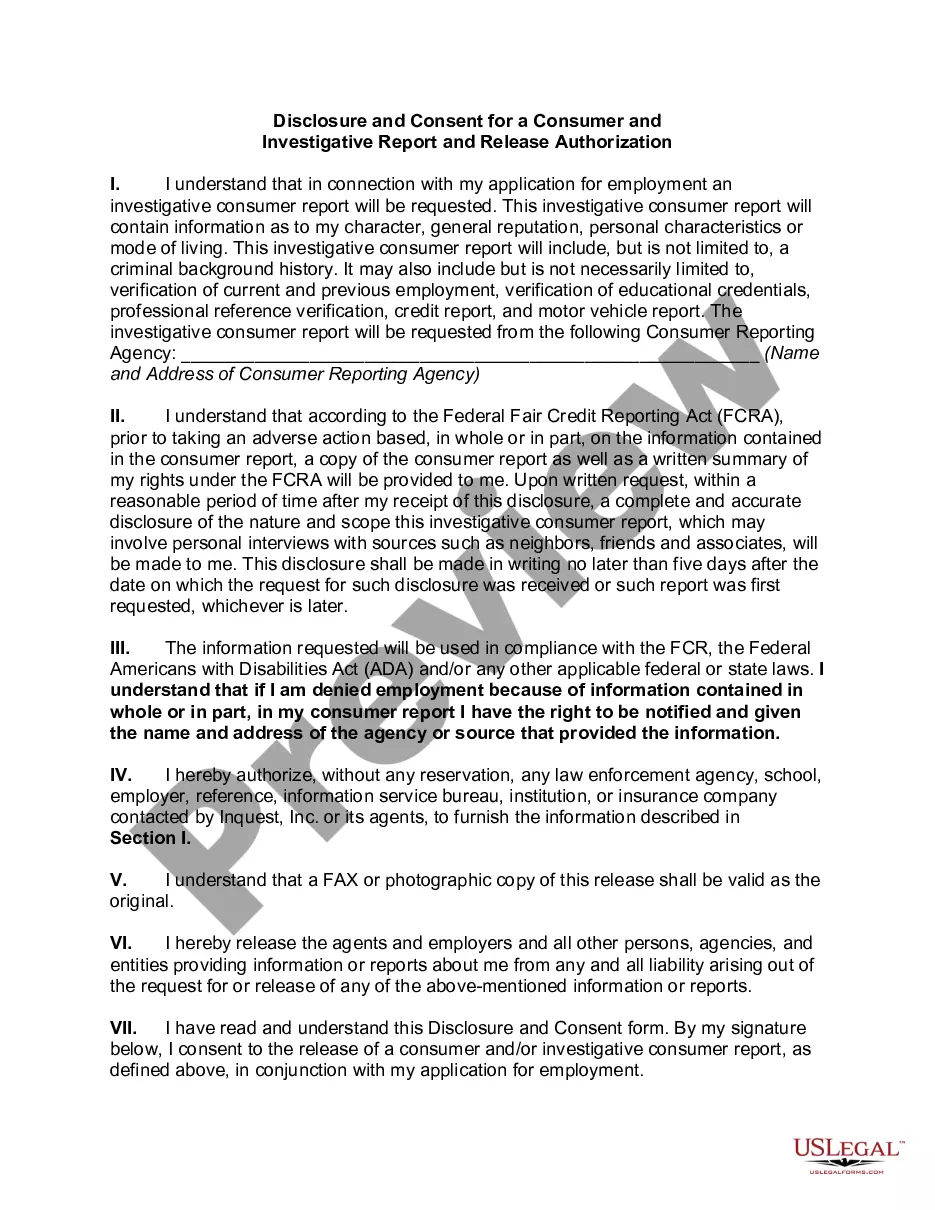
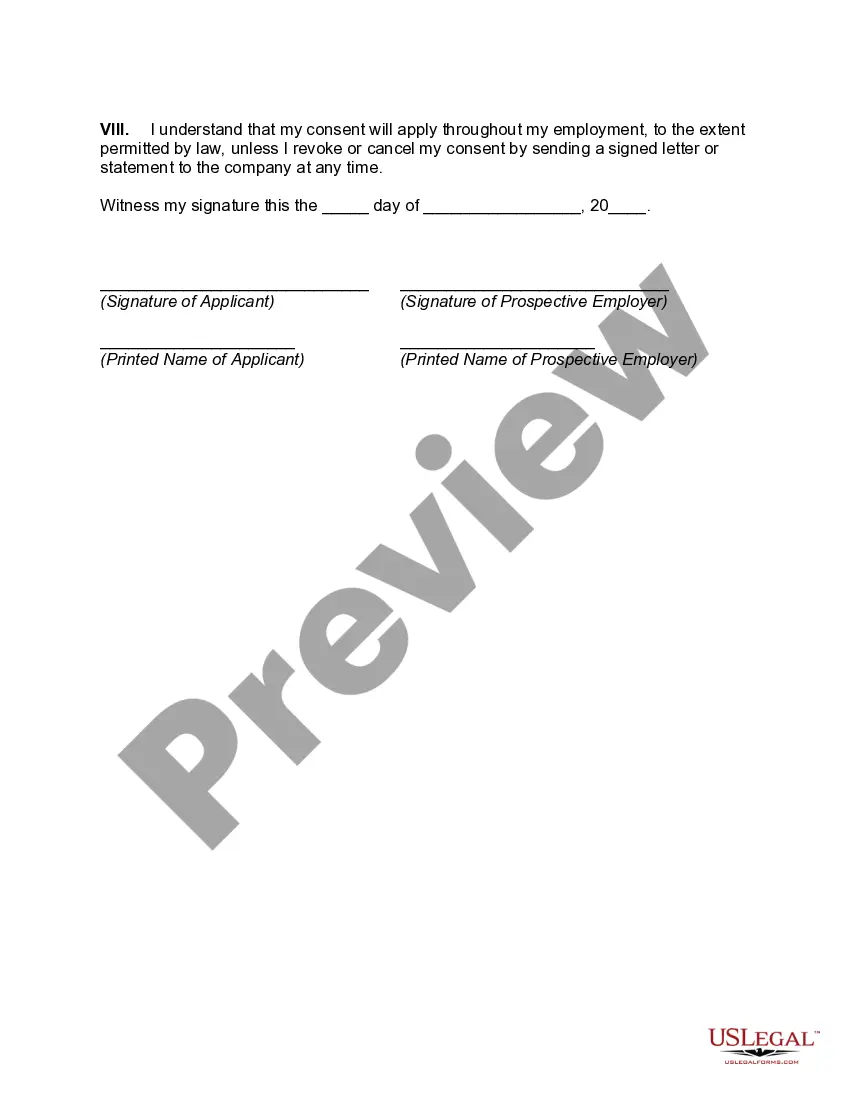
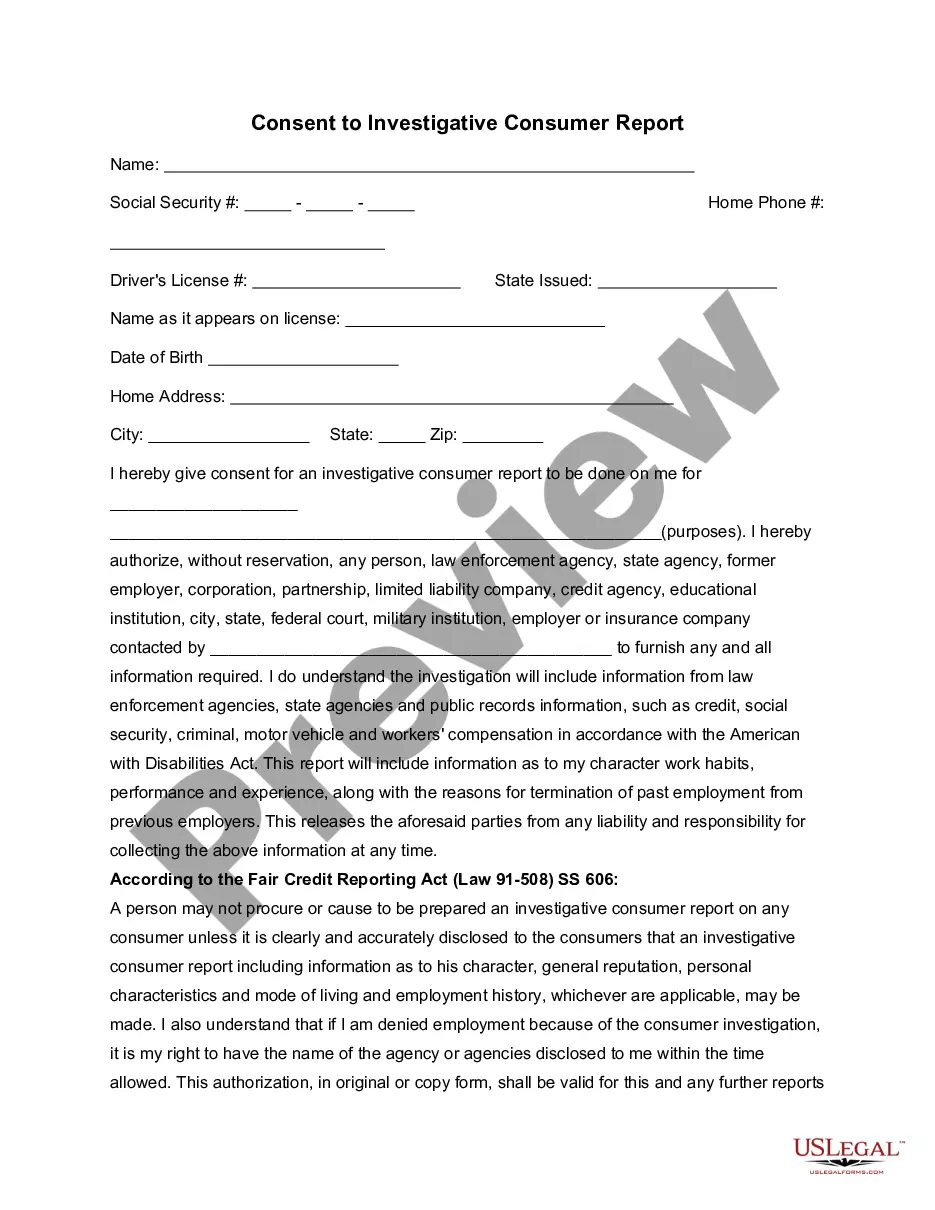
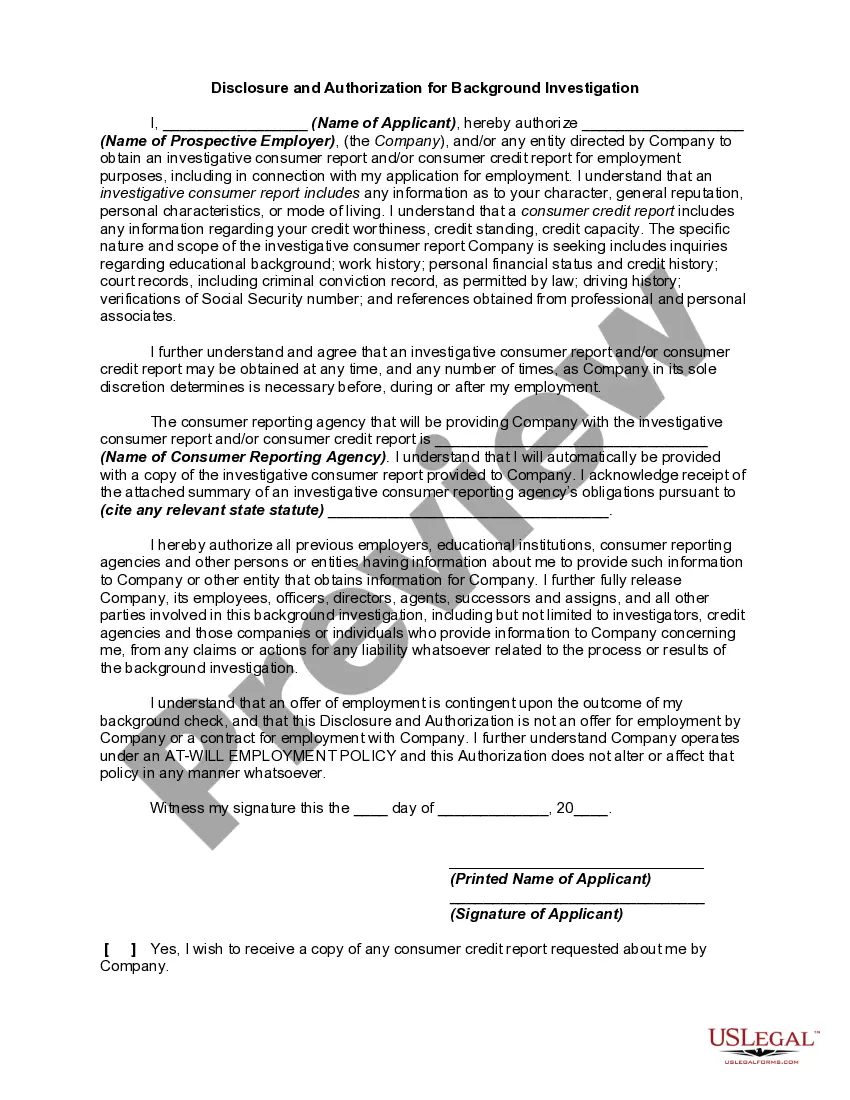
A consumer report is a report prepared by a CRA that includes information on an applicant's or employee's credit worthiness, credit standing, credit capacity, character, general reputation, personal characteristics, or mode of living and is used or expected to be used for employment purposes.
An important subset of “consumer reports” are so called “investigative consumer reports.” This subgroup includes consumer reports or portions of such reports in which information on a consumer's character, general reputation, personal characteristics, or mode of living is obtained through personal interviews with ...
Section 1681a of the Fair Credit Reporting Act defines an “investigative consumer report” as “a consumer report or portion thereof in which information on a consumer's character, general reputation, personal characteristics, or mode of living is obtained through personal interviews with neighbors, friends, or ...
In the US it's legal for employers to discriminate based on credit score/history, so unfortunately this is normal.
Employment verification includes information such as – but not limited to – job title, date of hire, and current salary. It does not include information concerning personal attributes such as an employee's character. However, some performance information, such as annual ratings for certain populations, may be released.
Yes. Most reputable, potential employers will pull various consumer reports during the application process. Any possible negative information in your credit reports may hinder your chances at landing the job.
The bottom line is that no company has the right to prevent a former employee from finding future work.
Employment background checks also are known as consumer reports. They can include information from a variety of sources, including credit reports and criminal records.
