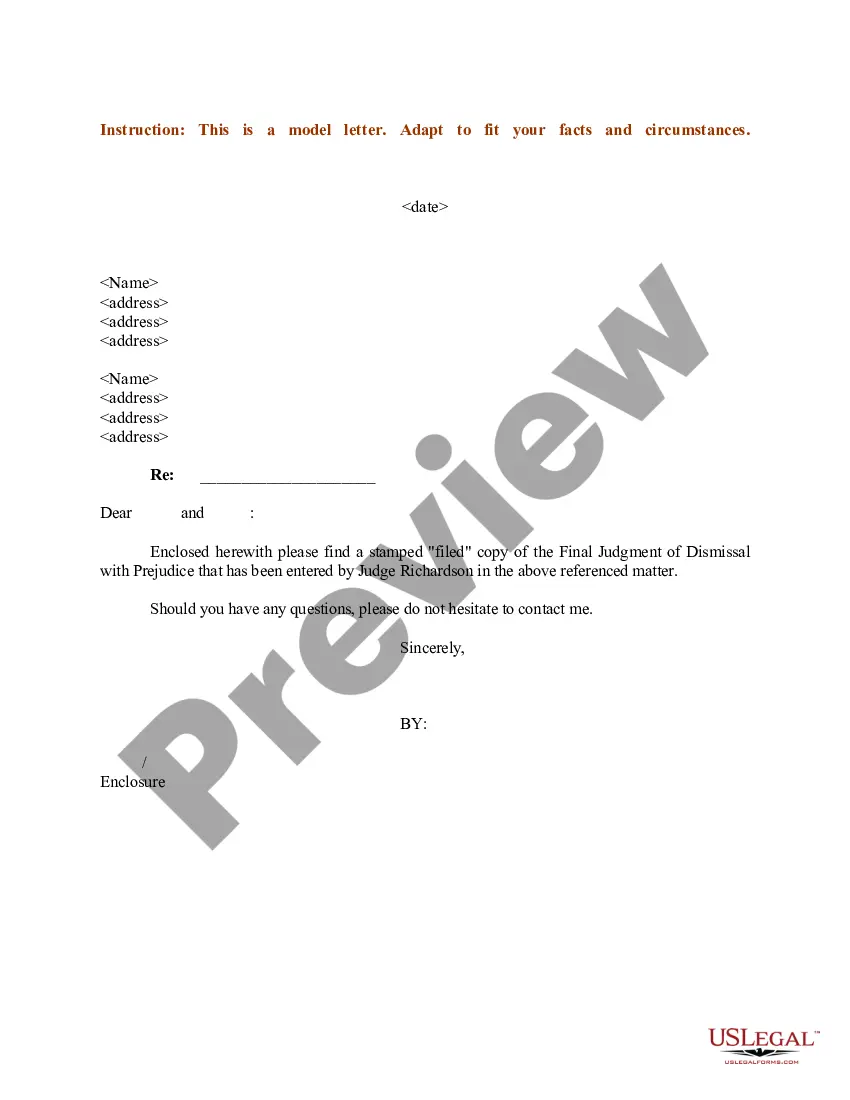
Template Without Prejudice Letter Uk In Virginia
Description

Get your form ready online
Our built-in tools help you complete, sign, share, and store your documents in one place.
Make edits, fill in missing information, and update formatting in US Legal Forms—just like you would in MS Word.
Download a copy, print it, send it by email, or mail it via USPS—whatever works best for your next step.
Sign and collect signatures with our SignNow integration. Send to multiple recipients, set reminders, and more. Go Premium to unlock E-Sign.
If this form requires notarization, complete it online through a secure video call—no need to meet a notary in person or wait for an appointment.
We protect your documents and personal data by following strict security and privacy standards.

Make edits, fill in missing information, and update formatting in US Legal Forms—just like you would in MS Word.

Download a copy, print it, send it by email, or mail it via USPS—whatever works best for your next step.

Sign and collect signatures with our SignNow integration. Send to multiple recipients, set reminders, and more. Go Premium to unlock E-Sign.

If this form requires notarization, complete it online through a secure video call—no need to meet a notary in person or wait for an appointment.

We protect your documents and personal data by following strict security and privacy standards.
Looking for another form?









Form popularity
FAQ
Three elements are necessary for the privilege: a dispute, a genuine attempt to resolve the dispute, and the making of assertions in that attempt. If all three elements are proved, the privilege applies to both parties and consent is required from both parties for the privilege to be waived.
The iniquity exception, which means that privilege does not apply to protect communications that are made in furtherance of a crime, fraud or equivalent conduct, was not engaged because there was not at least a strong prima facie case of iniquity.
The 'without prejudice' label can be attached to any form of communication – letters, emails, phone calls, and meetings – whether online or otherwise. All that is required is that one or both parties state that the communication is 'without prejudice' before the communication occurs.
The without prejudice principle stems from the common law spectrum. In the US, the without prejudice principle is a recognised legal concept also referred to as 'settlement privilege', or 'mediation privilege' if settlement negotiations are conducted by a third party.
Because the parties involved in a legal dispute know that without prejudice offers can't be used as evidence of guilt in court, they feel safe in making dispute settlement offers. If this protection was removed, then no one would make any offers.
Misrepresentation, fraud, or undue influence. Evidence that negotiations took place to explain delay in proceedings. Without prejudice save as to costs. Demonstrating that loss has been properly mitigated when bringing a negligence or breach of contract claim. Waiver.
Misrepresentation, fraud, or undue influence This exception can apply in an employment context if either party has induced the other to enter into a contract (which again would include any compromise agreement) by an untrue statement of fact.
Because the parties involved in a legal dispute know that without prejudice offers can't be used as evidence of guilt in court, they feel safe in making dispute settlement offers. If this protection was removed, then no one would make any offers.
In order for settlement discussions and agreements to be protected under the 'without prejudice' principle, there must be: an 'existing dispute' between the parties and a genuine attempt to settle that dispute, and • no 'unambiguous impropriety' in the conduct of the parties during the settlement discussions.
In general terms, the Without Prejudice Rule operates to exclude genuinely without prejudice communications from evidence in the current or subsequent proceedings between the parties to the dispute and between different parties to the dispute (e.g. in tripartite litigation).