Arbitration Case In Court In King
Description



Get your form ready online
Our built-in tools help you complete, sign, share, and store your documents in one place.
Make edits, fill in missing information, and update formatting in US Legal Forms—just like you would in MS Word.
Download a copy, print it, send it by email, or mail it via USPS—whatever works best for your next step.
Sign and collect signatures with our SignNow integration. Send to multiple recipients, set reminders, and more. Go Premium to unlock E-Sign.
If this form requires notarization, complete it online through a secure video call—no need to meet a notary in person or wait for an appointment.
We protect your documents and personal data by following strict security and privacy standards.

Make edits, fill in missing information, and update formatting in US Legal Forms—just like you would in MS Word.

Download a copy, print it, send it by email, or mail it via USPS—whatever works best for your next step.

Sign and collect signatures with our SignNow integration. Send to multiple recipients, set reminders, and more. Go Premium to unlock E-Sign.

If this form requires notarization, complete it online through a secure video call—no need to meet a notary in person or wait for an appointment.

We protect your documents and personal data by following strict security and privacy standards.
Looking for another form?










Form popularity
FAQ
Arbitration is less formal than going to court, and you may represent yourself. However, you should keep in mind that arbitration is a legal proceeding that results in an award that is generally final and binding. Because your legal rights are involved, you may choose to consult with and be represented by an attorney.
A claimant will typically start arbitration by sending a document known as a “request for arbitration” or a “notice to arbitrate” to its opponent.
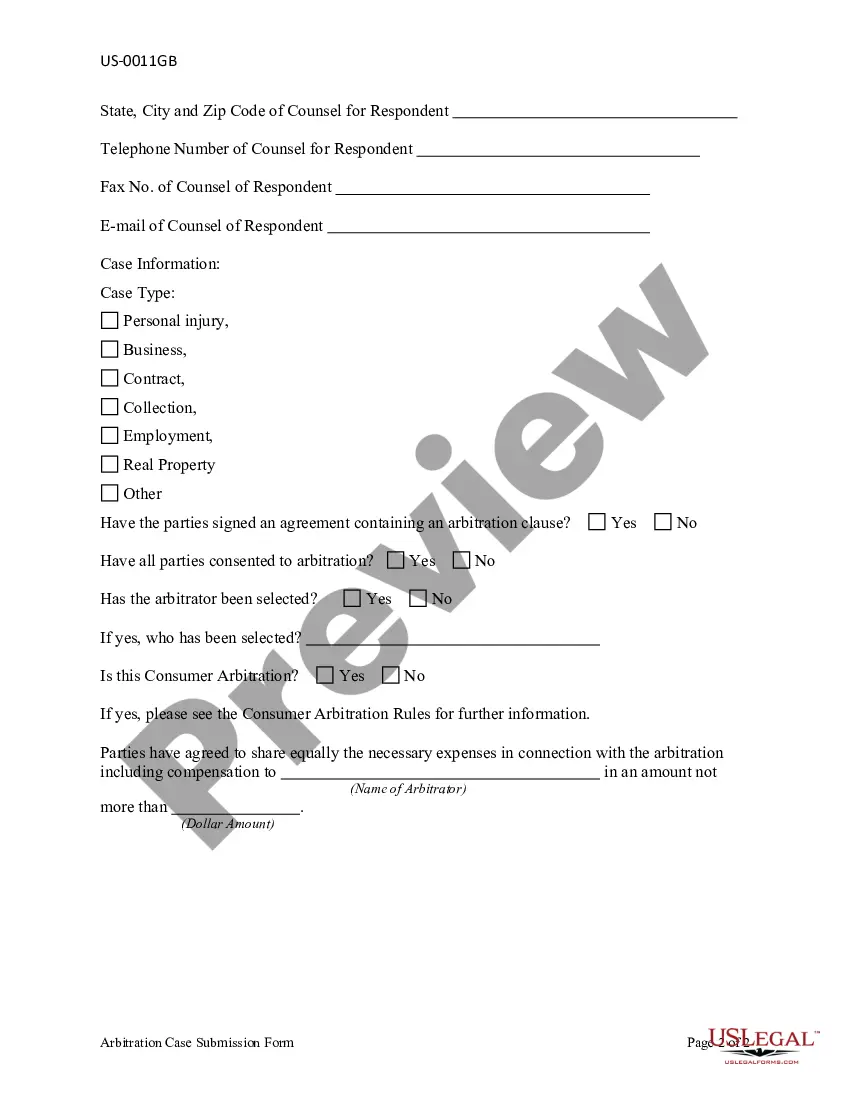
Most general civil cases valued at $50,000 and under may be ordered to judicial arbitration or to civil, court-ordered mediation (Local Rule 3210 (pdf )). Eligible case types include personal injury, business, contracts, collections, employment, and certain real property matters.
A primary objective of court-ordered arbitration programs is to reduce time to disposition. A number of factors influence a pro- gram's ability to achieve this goal, including the court's scheduling rules and procedures and the effect of arbitration on settlement behavior.
A claimant will typically start arbitration by sending a document known as a “request for arbitration” or a “notice to arbitrate” to its opponent.
Arguments should flow easily from the relevant facts and applicable law. Avoid exaggerating the strengths of your case as well as disparaging the opposing side. Remember that professionalism and credibility are critical to persuasiveness.
Parties are encouraged to file their Requests electronically using ICC Case Connect. Via the Request form, claimant(s) will be invited to supply key information in relation to their Request, and to upload their Request and any relevant annexes.
Outline a concise factual background and then move on to a discussion of the issues at the heart of the case. Your arguments should flow easily from the relevant facts and applicable law. And, by all means, avoid exaggeration of the strengths of your case as well as disparagement of the opposing side.
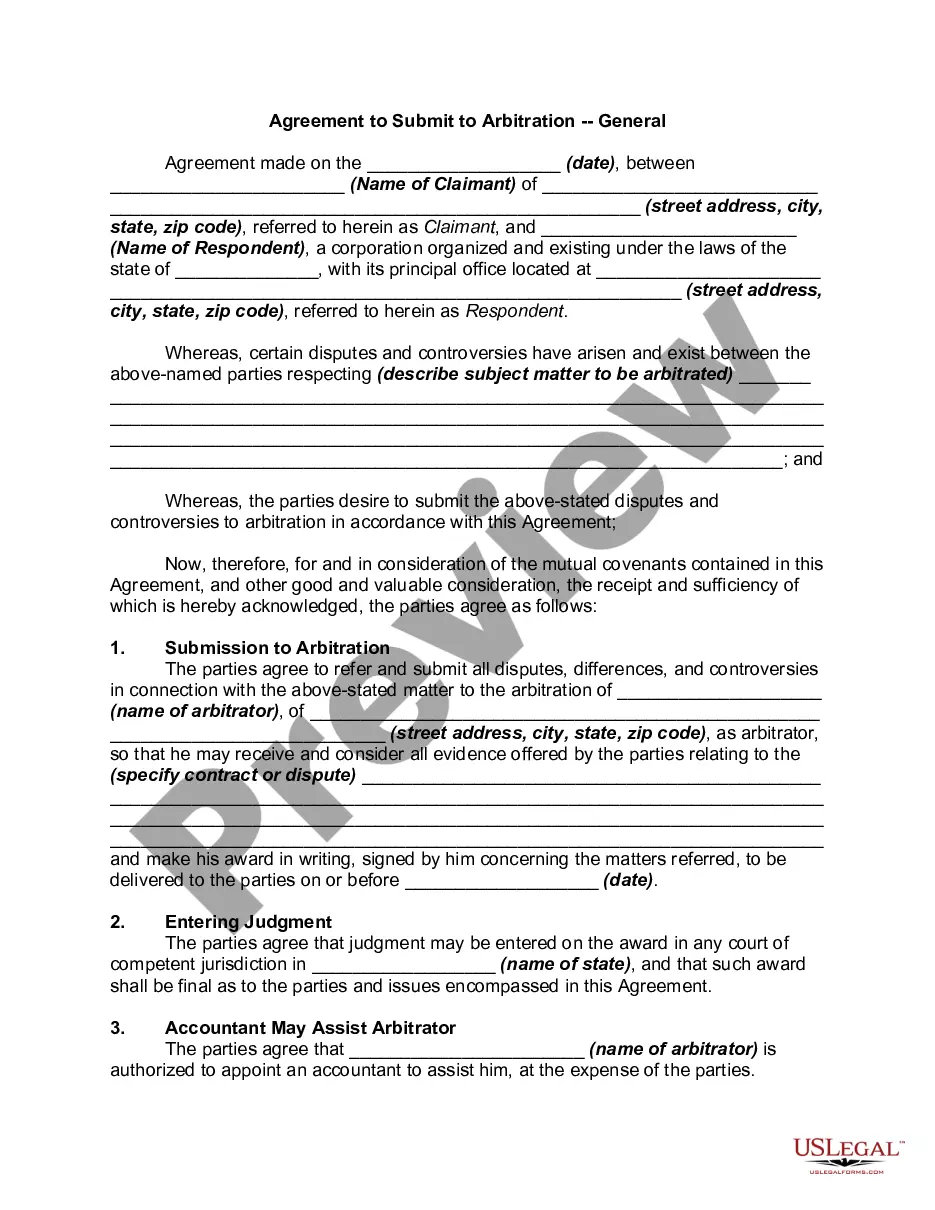
"A dispute having arisen between the parties concerning , the parties hereby agree that the dispute shall be referred to and finally resolved by arbitration under the LCIA Rules. The number of arbitrators shall be one/three. The seat, or legal place, of arbitration shall be City and/or Country.