Email Resignation Letter Format In Washington
Description

Get your form ready online
Our built-in tools help you complete, sign, share, and store your documents in one place.
Make edits, fill in missing information, and update formatting in US Legal Forms—just like you would in MS Word.
Download a copy, print it, send it by email, or mail it via USPS—whatever works best for your next step.
Sign and collect signatures with our SignNow integration. Send to multiple recipients, set reminders, and more. Go Premium to unlock E-Sign.
If this form requires notarization, complete it online through a secure video call—no need to meet a notary in person or wait for an appointment.
We protect your documents and personal data by following strict security and privacy standards.

Make edits, fill in missing information, and update formatting in US Legal Forms—just like you would in MS Word.

Download a copy, print it, send it by email, or mail it via USPS—whatever works best for your next step.

Sign and collect signatures with our SignNow integration. Send to multiple recipients, set reminders, and more. Go Premium to unlock E-Sign.

If this form requires notarization, complete it online through a secure video call—no need to meet a notary in person or wait for an appointment.

We protect your documents and personal data by following strict security and privacy standards.
Looking for another form?








Form popularity
FAQ
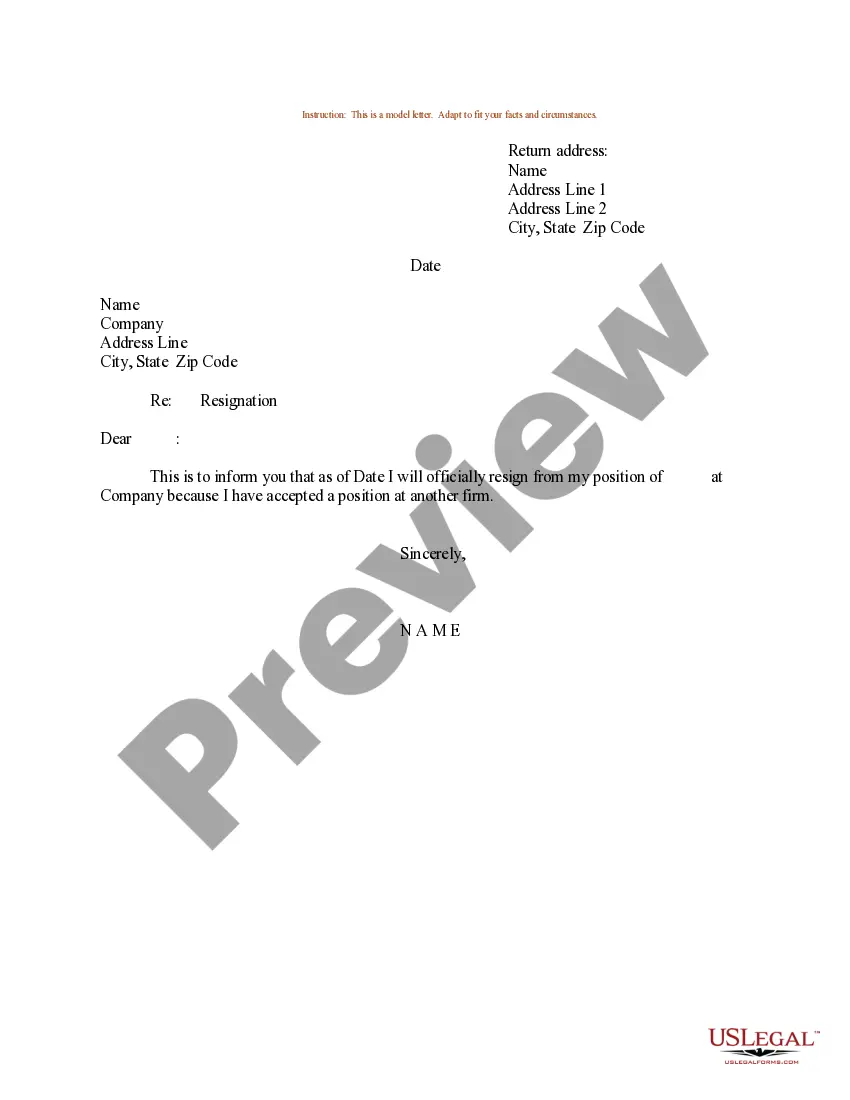
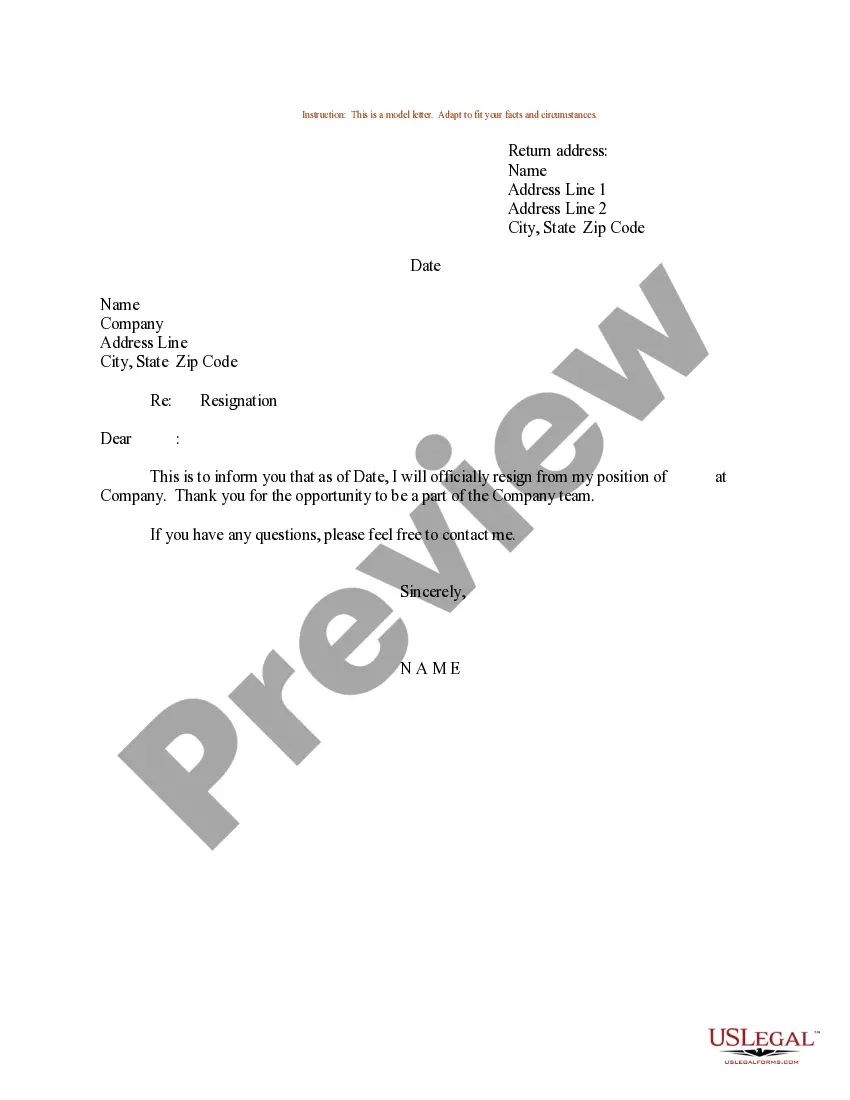
Dear Employer's Name, I am writing to inform you of my immediate resignation from my position as role at Company Name. After careful consideration, I have concluded that it is in my best interest to step down from my role effective immediately.
Dear Supervisor's Name, I am writing to inform you that I have decided to resign from my position as Job Title at Company Name. My last day of work will be Date. I want to take this opportunity to thank you and the entire team for the valuable experience and support provided during my time at Company Name.
You can either hand in your resignation in person or send it by email.
How to craft your resignation email Use a concise and direct subject line, like "Resignation - your name." Begin the email with a formal greeting. Clearly state your intention to resign and briefly mention your reason for leaving. Mention your notice period and confirm your final working day.
Hence, yes, you can resign via email. But we suggest having an online meeting with your supervisor beforehand to give them a heads up.
How to write a resignation email Choose a direct and descriptive email subject. Address the recipient professionally. State your intention to resign clearly and concisely. Provide your last working day. Express gratitude. Offer assistance during the transition period. Close the email respectfully.
Writing a well-crafted resignation email isn't just a formality of moving on from a job. It's an opportunity to leave on positive terms and maintain a professional relationship with your previous employer. You never know how your paths might cross again in the future, and you may want to use them as a resumé reference.
How to Write a Resignation Email (Step-by-Step Guide) Craft an upfront email subject line. Address the recipient. State the purpose of your email. Share further details if you'd like. Show your appreciation. End your message gracefully. Use a professional sign-off.
Comments Section The order of proper resigning is basically: letter handed over directly, email, in person verbal, phone call, text, just never show up again. The short/standard answer is yes, quitting via email is considered unprofessional.

