Resignation Letters For Managers In Utah
Description

Get your form ready online
Our built-in tools help you complete, sign, share, and store your documents in one place.
Make edits, fill in missing information, and update formatting in US Legal Forms—just like you would in MS Word.
Download a copy, print it, send it by email, or mail it via USPS—whatever works best for your next step.
Sign and collect signatures with our SignNow integration. Send to multiple recipients, set reminders, and more. Go Premium to unlock E-Sign.
If this form requires notarization, complete it online through a secure video call—no need to meet a notary in person or wait for an appointment.
We protect your documents and personal data by following strict security and privacy standards.

Make edits, fill in missing information, and update formatting in US Legal Forms—just like you would in MS Word.

Download a copy, print it, send it by email, or mail it via USPS—whatever works best for your next step.

Sign and collect signatures with our SignNow integration. Send to multiple recipients, set reminders, and more. Go Premium to unlock E-Sign.

If this form requires notarization, complete it online through a secure video call—no need to meet a notary in person or wait for an appointment.

We protect your documents and personal data by following strict security and privacy standards.
Looking for another form?






Form popularity
FAQ
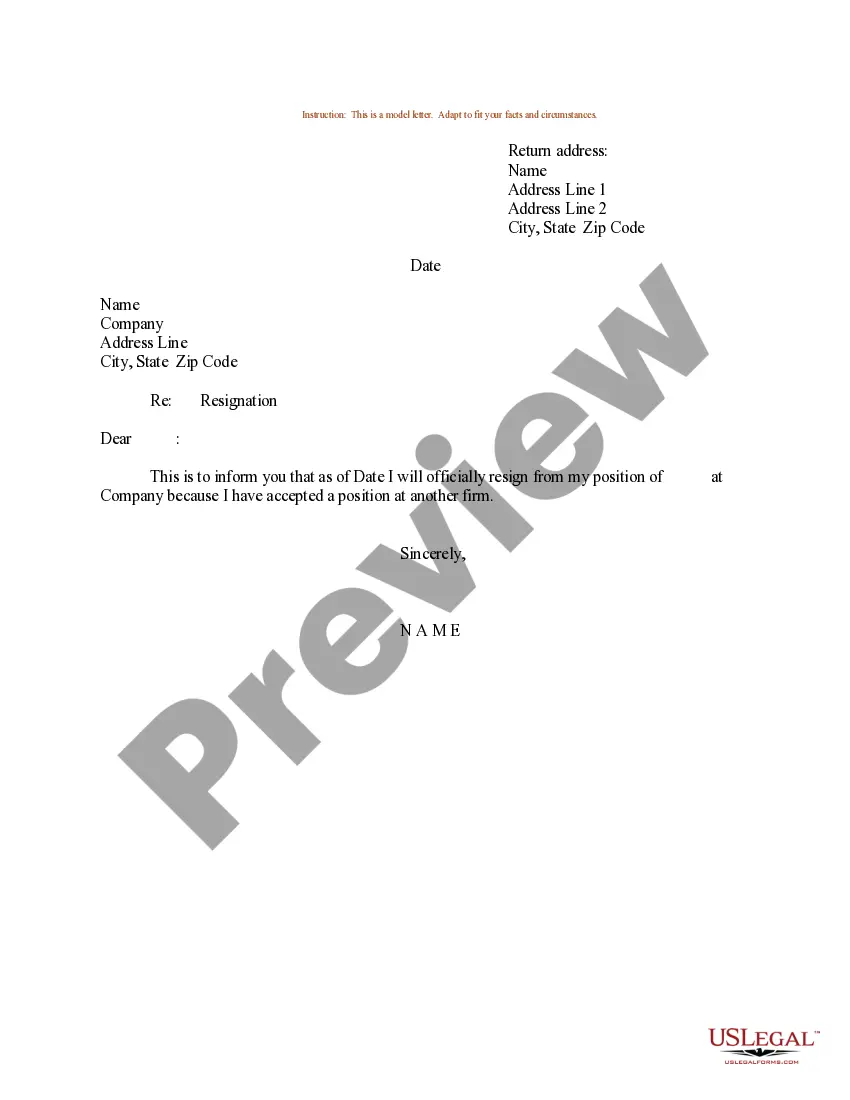
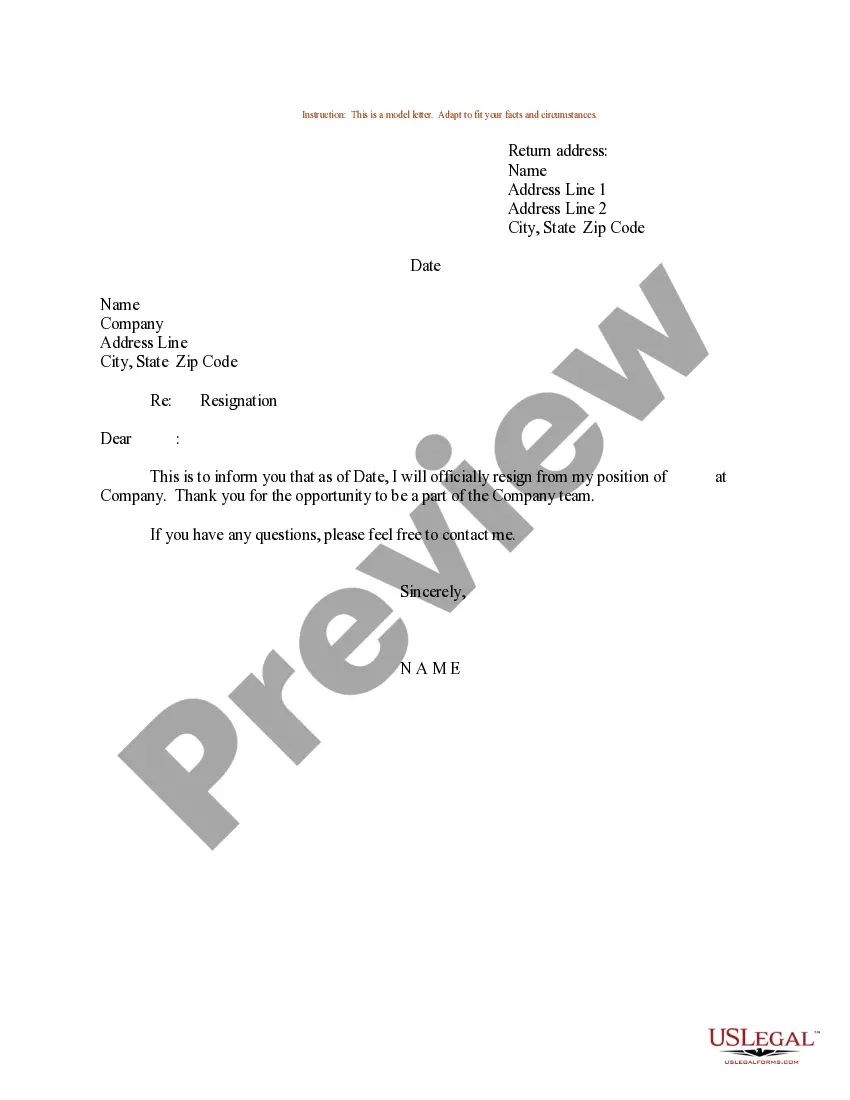
Important Sections in a Manager's Resignation Letter Clear Statement of Resignation. Begin with a direct and unambiguous statement of your intention to resign. Notice Period. Specify your intended last day of work. Transition Plan Overview. Professional Tone and Gratitude. Future Contact Information.
Best practice tip. The employee should put their resignation notice in writing to the employer. Use our Letter of resignation template to help prepare a resignation letter.
How to tell your boss you're resigning? Request an in-person meeting. Outline your reasons for leaving. Give an appropriate two weeks' notice. Offer to facilitate the transition. Express gratitude. Provide your formal letter of resignation.
Ask to meet with the boss, explain that you feel it is time to leave and explain what you will be doing next (new job, moving, going to school, taking some time to work on health issues). Thank them for the time spent in their employment. Do not unload issues at this point.
The best policy is to present your notice to your direct manager in person. Bring your resignation letter, with all the details of your resignation and hand it over after you've verbally given notice. No matter how uncomfortable giving notice is, doing it in person is the professional thing to do.
10 things you should never say when leaving your job Don't bash your employer. Don't apologise. Don't give away too much. Don't make any promises. Don't sign anything. Don't tell them who knew. Don't say that you'll do an exit interview. Don't tell them how long you've been looking.
There are three key ingredients to your resignation letter. 1.) Thank your manager for the opportunity and all that you have learned on the job. 2.) Include your resignation date, giving your employer at least two weeks of notice time. 3.) Wish your manager and the company all the best in future endeavors.
Use these steps to write a resignation letter as an executive: Include all relevant contact information and the date. Write a salutation. Explain the reason for your letter. Express your gratitude. Offer to help with the transition. End on a positive note. Include a sign off.
Unless stated in an employment agreement, you have no obligation to disclose where you are going. If asked, just say that you are grateful for the time you spend with your current company, and the time has come to make a change for the betterment of your career. Keep repeating as necessary.

