Resignation Letter Gracefully With Ideas Oscar Wilde In Pima
Description

Get your form ready online
Our built-in tools help you complete, sign, share, and store your documents in one place.
Make edits, fill in missing information, and update formatting in US Legal Forms—just like you would in MS Word.
Download a copy, print it, send it by email, or mail it via USPS—whatever works best for your next step.
Sign and collect signatures with our SignNow integration. Send to multiple recipients, set reminders, and more. Go Premium to unlock E-Sign.
If this form requires notarization, complete it online through a secure video call—no need to meet a notary in person or wait for an appointment.
We protect your documents and personal data by following strict security and privacy standards.

Make edits, fill in missing information, and update formatting in US Legal Forms—just like you would in MS Word.

Download a copy, print it, send it by email, or mail it via USPS—whatever works best for your next step.

Sign and collect signatures with our SignNow integration. Send to multiple recipients, set reminders, and more. Go Premium to unlock E-Sign.

If this form requires notarization, complete it online through a secure video call—no need to meet a notary in person or wait for an appointment.

We protect your documents and personal data by following strict security and privacy standards.
Looking for another form?



Form popularity
FAQ
“Don't use words like quitting or leaving when you tell your boss you're resigning, because they could make your boss feel like it's their fault you're vacating your position. Similarly, avoid phrases like “I've found a better opportunity” or “I've outgrown my position.” Instead, let them down easy.”
Don't say (or to be correct: write) anything in a resignation letter that is negative about the company, its management or other employees, even if this is the reason you are leaving; and however temping it may be to momentarily make you feel better or empowered.
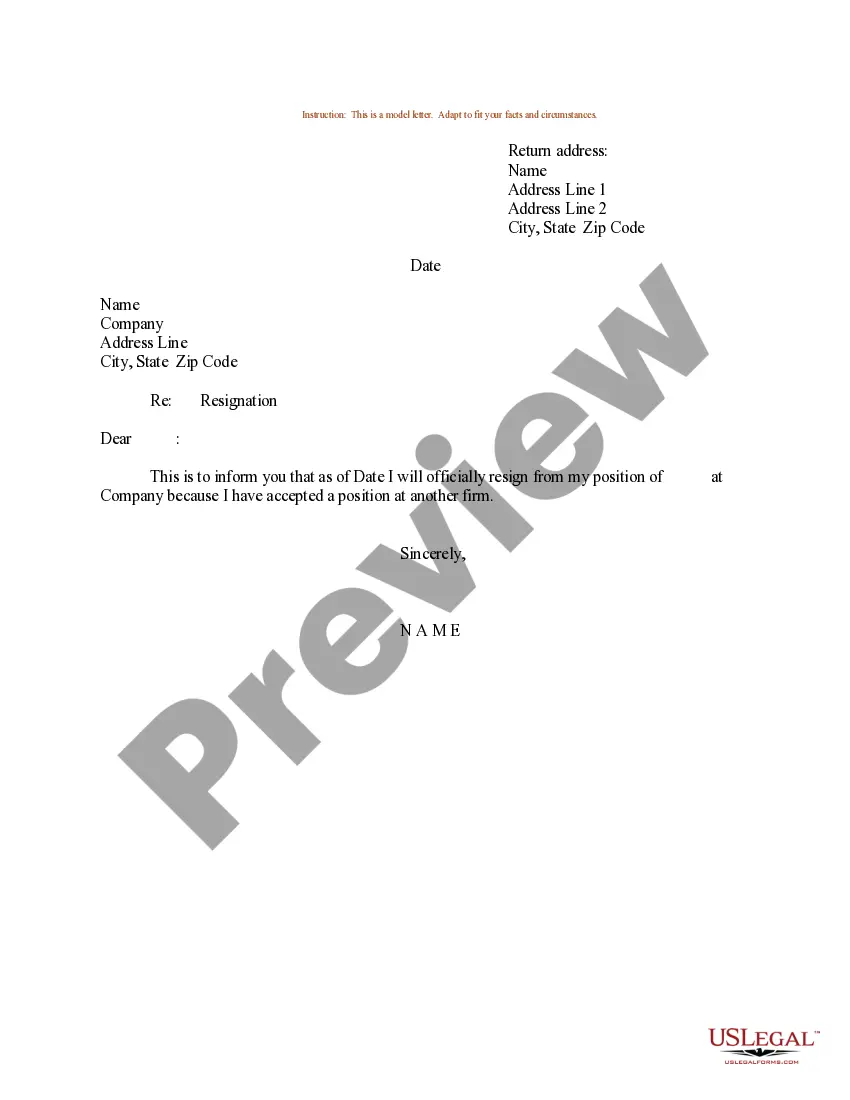
Start with a Formal Greeting: Address your letter to your supervisor or manager. State Your Intent to Resign: Clearly state that you are resigning and include your last working day. Express Gratitude: Thank your employer for the opportunities and experiences you've had during your time with the company. Share Your Rea
Resignation letters remain professional and you refrain from using any inappropriate language regardless of how you feel about why you're leaving. Avoid getting overly emotional and write your letter when you're in a good state of mind to ensure your letter won't offend the receiver.
Elements of a resignation letter The three key elements of a resignation are the intent, the thank you, and the hand-off.
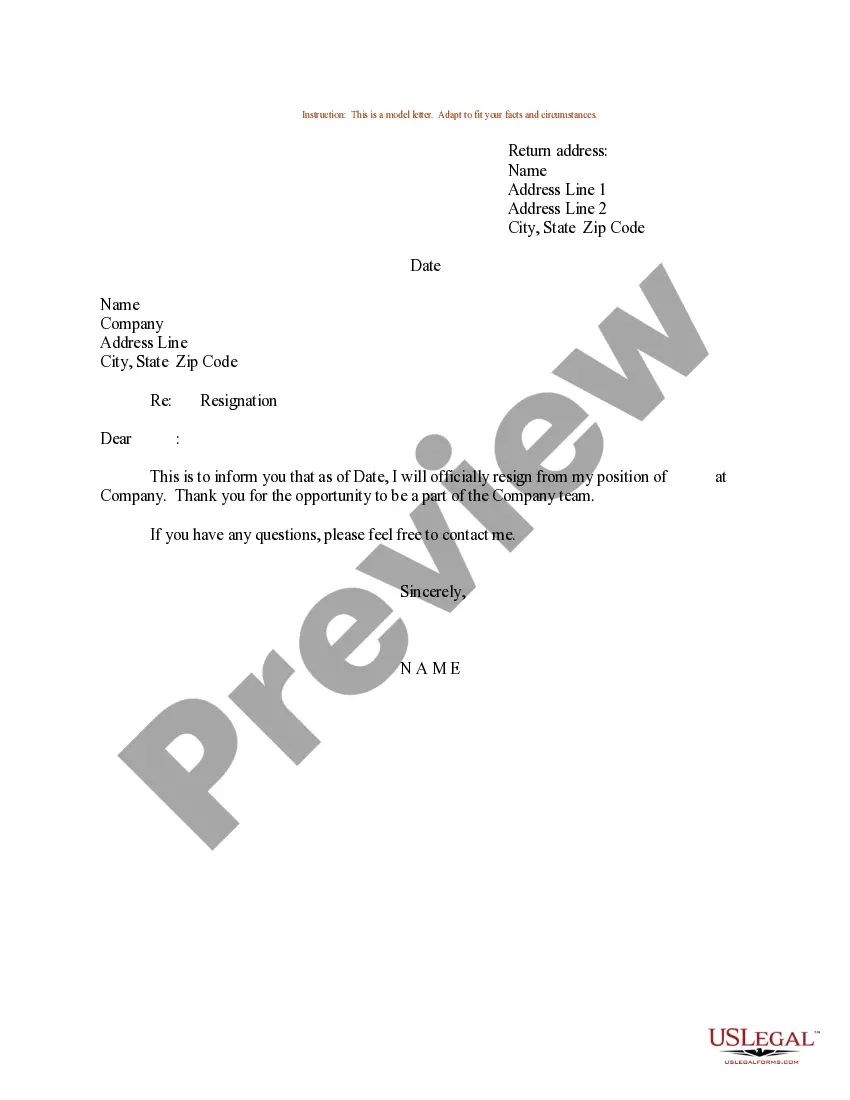
Close with a professional sign-off: End the letter with a professional sign-off, such as “Sincerely” or “Best regards.” Sign your name underneath the sign-off. Proofread and edit: Before sending the resignation letter, proofread it carefully for grammar and spelling errors.
What Not to Include in Your Resignation Letter Negative comments about colleagues or the company. These can damage professional relationships and often do more harm than good. Too much detail about personal grievances. There's a time and place for everything. Confidential or sensitive information.
Dear Supervisor's Name, I am writing to inform you that I have decided to resign from my position as Job Title at Company Name. My last day of work will be Date. I want to take this opportunity to thank you and the entire team for the valuable experience and support provided during my time at Company Name.
Express Gratitude: Take a moment to reflect on your time with the company and sincerely express your appreciation to your employer and colleagues. Write a thank-you note acknowledging their support, mentorship, and the opportunities you had to grow and learn.
Here are some tips for writing a professional resignation letter. A greeting: Start formal. A statement of resignation. Offer help with transitioning. Thank your employer for giving you a chance to be a part of their company, and for their time. Leave your contact information for your employer.
