Resignation Letter With Notice Period In Hillsborough
Description

Get your form ready online
Our built-in tools help you complete, sign, share, and store your documents in one place.
Make edits, fill in missing information, and update formatting in US Legal Forms—just like you would in MS Word.
Download a copy, print it, send it by email, or mail it via USPS—whatever works best for your next step.
Sign and collect signatures with our SignNow integration. Send to multiple recipients, set reminders, and more. Go Premium to unlock E-Sign.
If this form requires notarization, complete it online through a secure video call—no need to meet a notary in person or wait for an appointment.
We protect your documents and personal data by following strict security and privacy standards.

Make edits, fill in missing information, and update formatting in US Legal Forms—just like you would in MS Word.

Download a copy, print it, send it by email, or mail it via USPS—whatever works best for your next step.

Sign and collect signatures with our SignNow integration. Send to multiple recipients, set reminders, and more. Go Premium to unlock E-Sign.

If this form requires notarization, complete it online through a secure video call—no need to meet a notary in person or wait for an appointment.

We protect your documents and personal data by following strict security and privacy standards.
Looking for another form?




Form popularity
FAQ
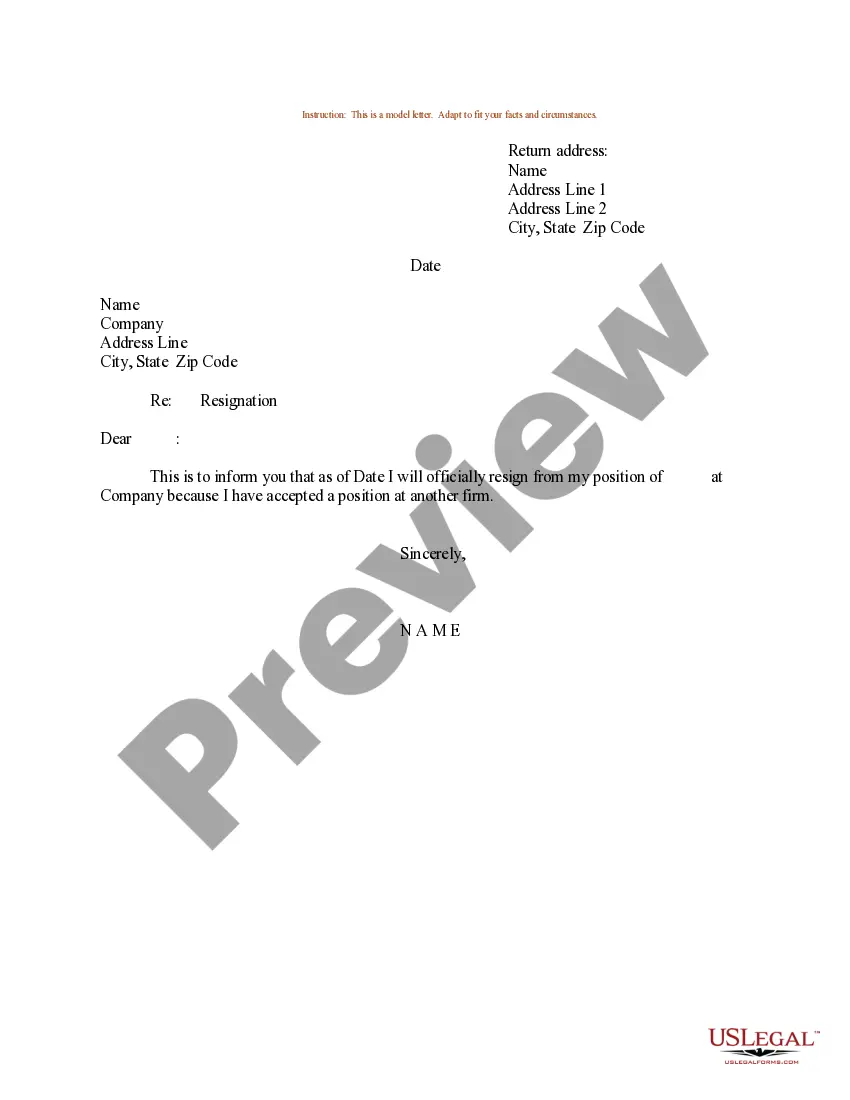
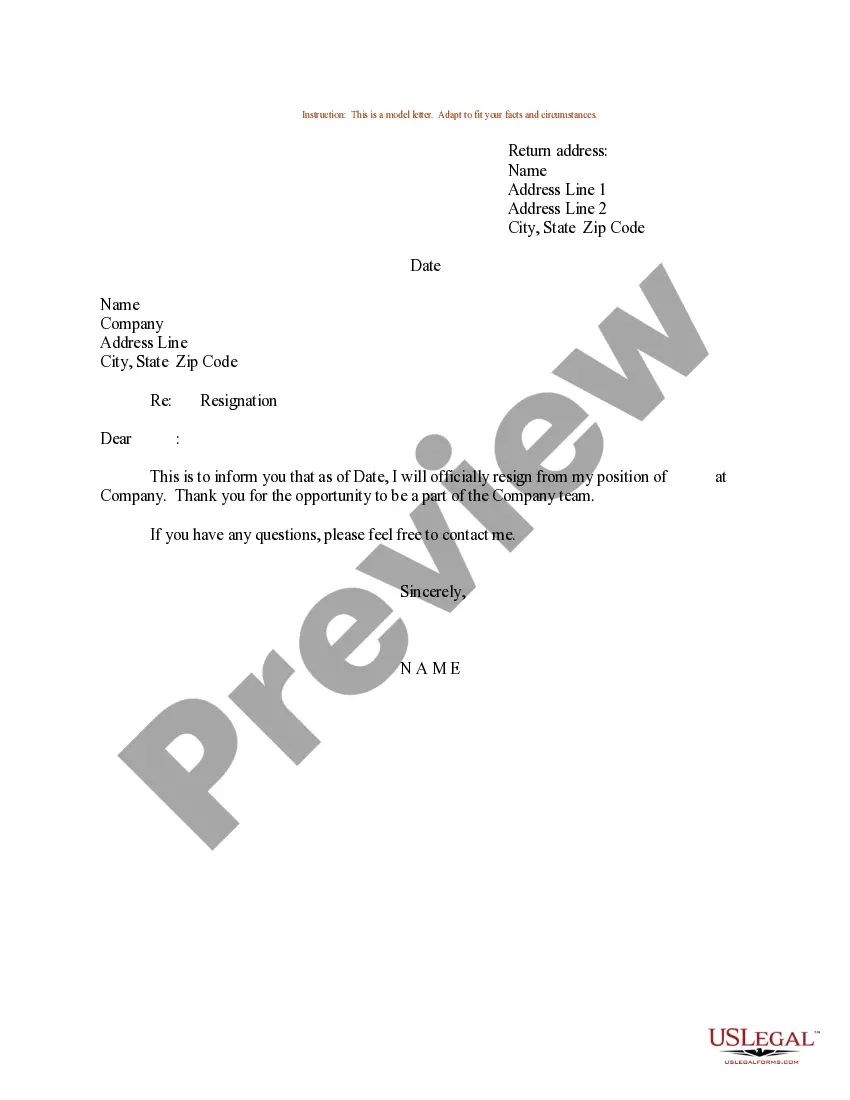
How to Write a Resignation Letter A greeting: Start formal. A statement of resignation. Offer help with transitioning. Thank your employer for giving you a chance to be a part of their company, and for their time. Leave your contact information for your employer. Sign off with “Sincerely” or “Thank you”
In a resignation letter with notice period, you need to state your name, address, and contact details along with the date and the name, job title, company name, company address of the addressee; the email version of the notice period letter needs you to mark a copy to both the HR and Manager and focus on the template.
Please accept this letter as formal notification of my intention to resign from my position as job title with company name. My final day will be date of last day as per my notice period. I would like to thank you for the opportunity to have worked in the position for the past time in employment.
You can ensure a smooth transition when resigning immediately by being transparent about your reasons for leaving, expressing your sincere appreciation for your time spent at the company, and offering to assist with the transition process until your final day.
In any event, a resignation with immediate effect could put you in breach of your contract. Your employer may then decide to make a claim against you for losses suffered as a result of your breach. This is a worse case scenario, and you would expect a sensible dialogue to take place during any resignation process.
Although my employment contract states a required notice period of INSERT NOTICE PERIOD LENGTH, I would like to reduce this to INSERT REQUESTED NOTICE PERIOD LENGTH, completing my employment on INSERT LAST DAY YOU INTEND TO WORK.
Dear Manager's name, Please accept this as an official notice of my resignation. I am writing to inform you that I am ending my employment as current job title at company name. My last day in the company will take effect on dd/mm/yy, after serving my notice period.
Address it appropriately, be very professional, explain why you're leaving (to pursue a better opportunity, NEVER because of any current dissatisfaction), state your last day of employment, flatter your boss and the organization, thank them for the opportunity and experience, and offer to help train your replacement.
A3: Yes, employers can ask an employee to leave immediately upon receiving their resignation. However, consider the potential impact on morale and workload and whether you will compensate the employee for the notice period.

