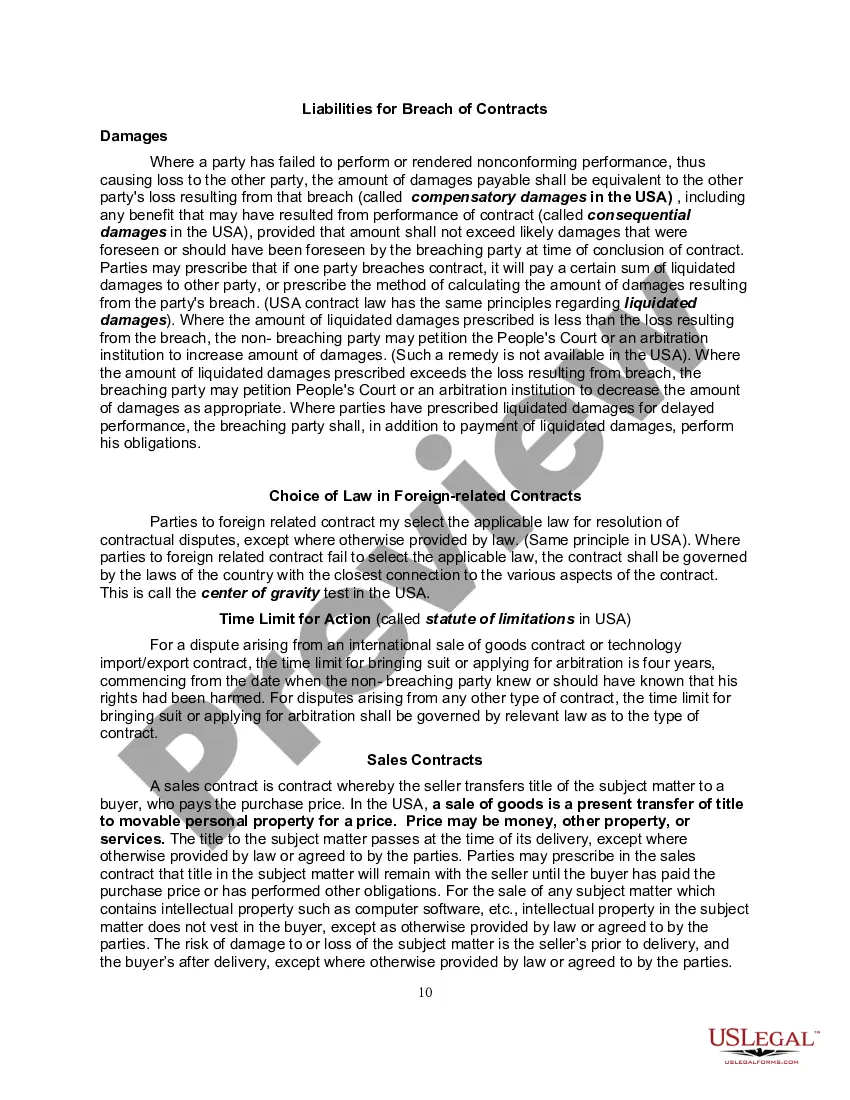
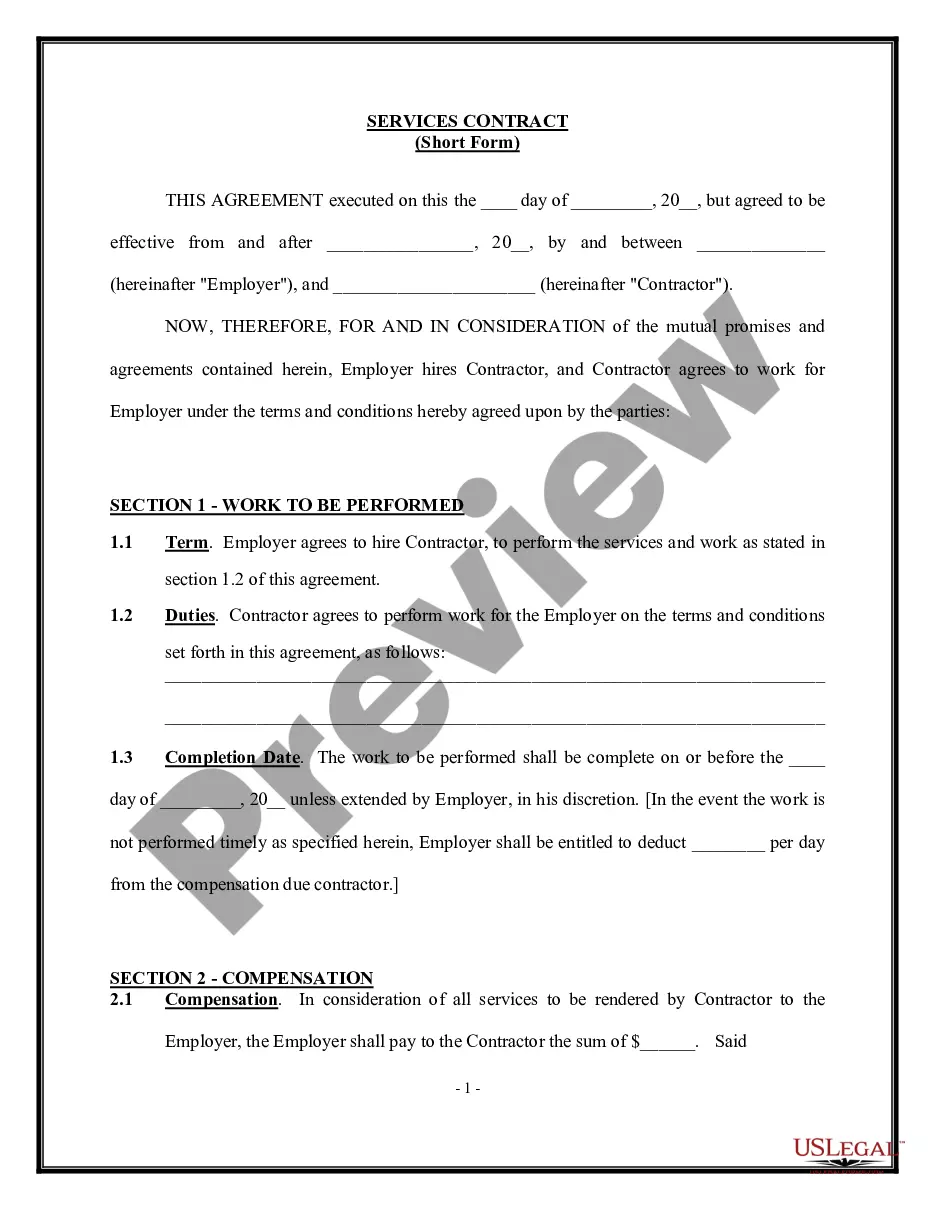
Contract Law In Hindi In Clark
Description



Get your form ready online
Our built-in tools help you complete, sign, share, and store your documents in one place.
Make edits, fill in missing information, and update formatting in US Legal Forms—just like you would in MS Word.
Download a copy, print it, send it by email, or mail it via USPS—whatever works best for your next step.
Sign and collect signatures with our SignNow integration. Send to multiple recipients, set reminders, and more. Go Premium to unlock E-Sign.
If this form requires notarization, complete it online through a secure video call—no need to meet a notary in person or wait for an appointment.
We protect your documents and personal data by following strict security and privacy standards.

Make edits, fill in missing information, and update formatting in US Legal Forms—just like you would in MS Word.

Download a copy, print it, send it by email, or mail it via USPS—whatever works best for your next step.

Sign and collect signatures with our SignNow integration. Send to multiple recipients, set reminders, and more. Go Premium to unlock E-Sign.

If this form requires notarization, complete it online through a secure video call—no need to meet a notary in person or wait for an appointment.

We protect your documents and personal data by following strict security and privacy standards.
Looking for another form?







Form popularity
FAQ
An agreement is defined under Section 2(e) of the Indian Contract Act, 1872 (the Act). It states that “Every promise and every set of promises, forming the consideration for each other, is an agreement”.
Both parties must clearly understand and agree to the terms outlined in the contract. Additionally, consideration, or something of value exchanged between the parties, must be present to support the contract's validity. Moreover, legality and the capacity of the parties involved are essential components to consider.
Section 3: Defences available to promisor In a dispute between the promisor and the third party over a term, the promisor can rely on any defence he would have if the dispute was with the promisee, as long as the defence is applicable to the term under dispute.
The communication of proposals, the acceptance of proposals, and the revocation of proposals and acceptances, respectively, are deemed to be made by any act or omission of the party proposing, accepting or revoking, by which he intends to communicate such proposal, acceptance or revocation, or which has the effect of ...
A proposal may be revoked at any time before the communication of its acceptance is complete as against the proposer, but not afterwards.An acceptance may be revoked at any time before the communication of the acceptance is complete as against the acceptor, but not afterwards.
The law of contracts is civil in nature, which means that harms caused are redressed by paying compensation and damages which can be liquidated or unliquidated. This law is used to enforce rights in personam which means rights that can be claimed only against specific persons.
The communication of a proposal is complete when it comes to the knowledge of the person to whom it is made. as against the proposer, when it is put in a course of transmission to him, so as to be out of the power of the acceptor; as against the acceptor, when it comes to the knowledge of the proposer.
--If it was not the intention of the parties that time should be of the essence of the contract, the contract does not become voidable by the failure to do such thing at or before the specified time; but the promisee is entitled to compensation from the promisor for any loss occasioned to him by such failure.
To be legally valid, a contract must fulfill four basic requirements: All signees must be above the age of consent. All parties must agree to the contract freely. All parties must be able to understand the agreement (legal capacity) The terms of the agreement must be permitted in law.
A legally enforceable contract must include an offer, acceptance, consideration, capacity, legality, and mutual assent.
