Law Books For Dummies In Georgia
Description
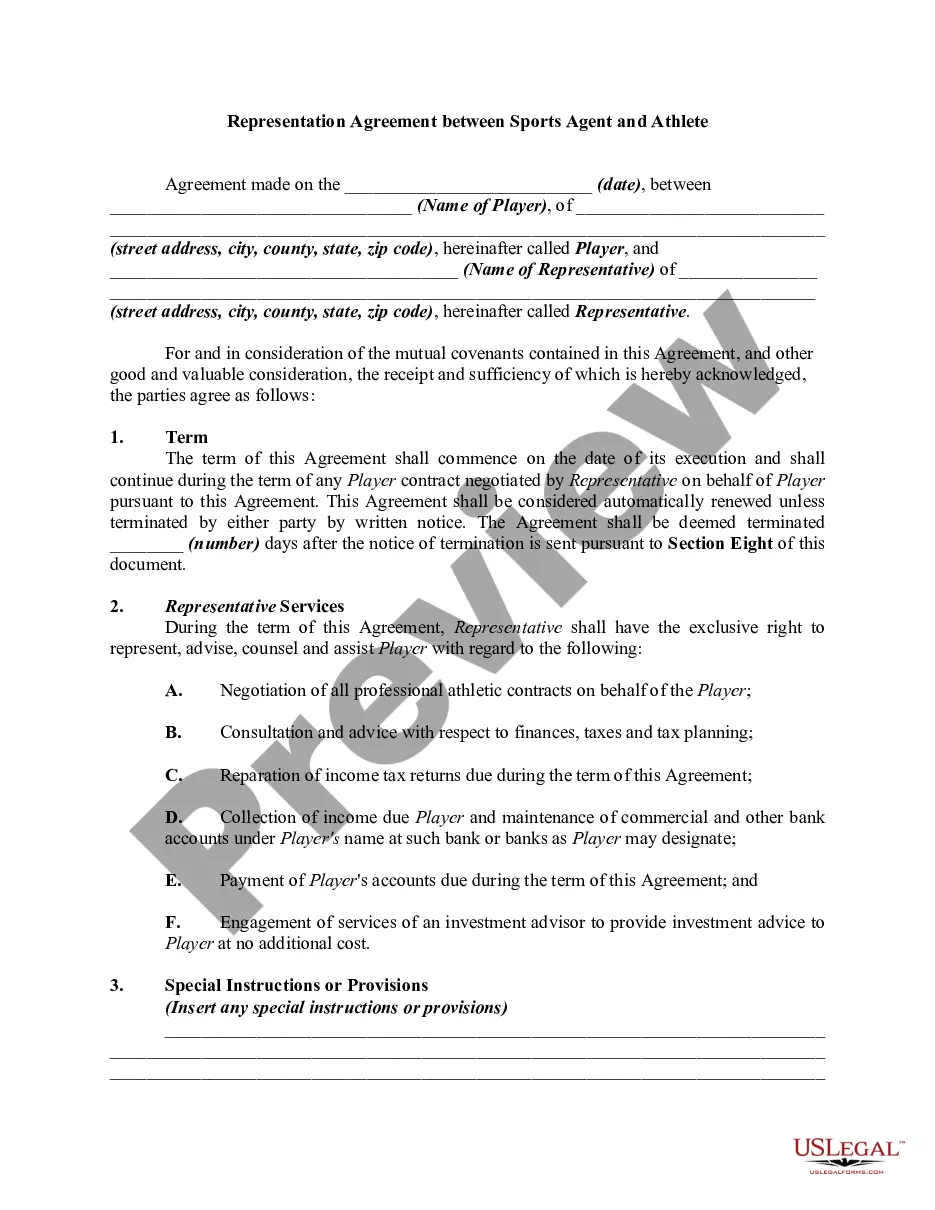
Get your form ready online
Our built-in tools help you complete, sign, share, and store your documents in one place.
Make edits, fill in missing information, and update formatting in US Legal Forms—just like you would in MS Word.
Download a copy, print it, send it by email, or mail it via USPS—whatever works best for your next step.
Sign and collect signatures with our SignNow integration. Send to multiple recipients, set reminders, and more. Go Premium to unlock E-Sign.
If this form requires notarization, complete it online through a secure video call—no need to meet a notary in person or wait for an appointment.
We protect your documents and personal data by following strict security and privacy standards.

Make edits, fill in missing information, and update formatting in US Legal Forms—just like you would in MS Word.

Download a copy, print it, send it by email, or mail it via USPS—whatever works best for your next step.

Sign and collect signatures with our SignNow integration. Send to multiple recipients, set reminders, and more. Go Premium to unlock E-Sign.

If this form requires notarization, complete it online through a secure video call—no need to meet a notary in person or wait for an appointment.

We protect your documents and personal data by following strict security and privacy standards.
Looking for another form?









Form popularity
FAQ
Georgia is not a common-law state in the sense that a common-law marriage can no longer be created in this state. Since January 1, 1997, no one can create or form a common law marriage in Georgia. Any such marriages created in Georgia before January 1, 1997, will be recognized as common-law marriages.
A law degree is one of a few requirements needed to take the bar exam in Georgia. You must also: Pass a character and fitness evaluation, which includes submitting a detailed application and undergoing a background check. Either be a resident of Georgia or have graduated from a Georgia law school.
The first type of law is general law. Under Article III, Section VI, Paragraph IV(a), a general law has uniform operation across the state and affects matters on a state-wide basis. These laws are compiled in the Official Code of Georgia Annotated (O.C.G.A). The second type of law is a local law.
The U.S. Department of Justice categorizes different legal systems into four main types of legal systems: common law, civil law, religious law, and customary law systems, with the latter two being exceedingly rare. Within each type of legal system, there is considerable variation based on precedent and local practices.
The Georgia court system has five classes of trial- level courts: the magistrate, probate, juvenile, state, and superior courts. In addition, there are approximately 400 municipal courts operating locally. There are two appellate-level courts: the Supreme Court and Court of Appeals.
The law of the U.S. state of Georgia consists of several levels, including constitutional, statutory, and regulatory law, as well as case law and local law. The Official Code of Georgia Annotated forms the general statutory law.
Governor may sign bill or do nothing, and bill becomes law. Governor may veto bill, which requires two-thirds of members of each house to override. If second house passes bill, it is returned to house where bill was introduced.
Entering law school in Georgia requires candidates to obtain a bachelor's degree in a relevant discipline and to pass the Law School Admission Test (LSAT). After passing the LSAT, candidates pursue their Juris Doctor (J.D.) degree at a law school accredited by the American Bar Association.
Process shall be served by the sheriff of the county where the action is brought or where the defendant is found, or by his deputy, or by the marshal or sheriff of the court, or by his deputy, or by any citizen of the United States specially appointed by the court for that purpose or by someone who is not a party and ...
The Life of a Law Step 1: Drafting the Idea. The first step can start with you. Step 2: Georgia General Assembly. Step 3: Georgia State Legislative Session. Step 4: Third Reading. Step 5: The Vote. Step 6: The Governor's Role. Step 7: The Bill Becomes a Law.
