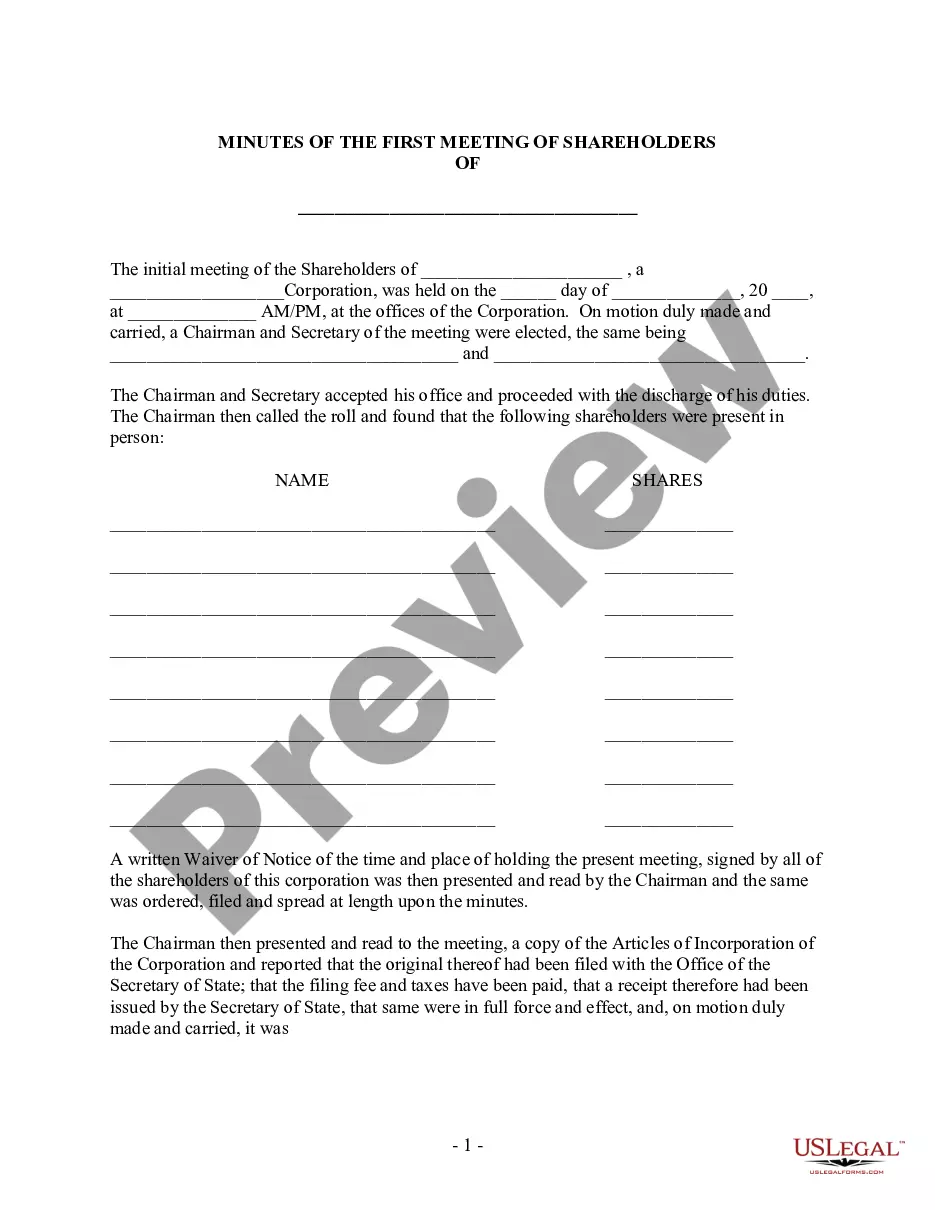
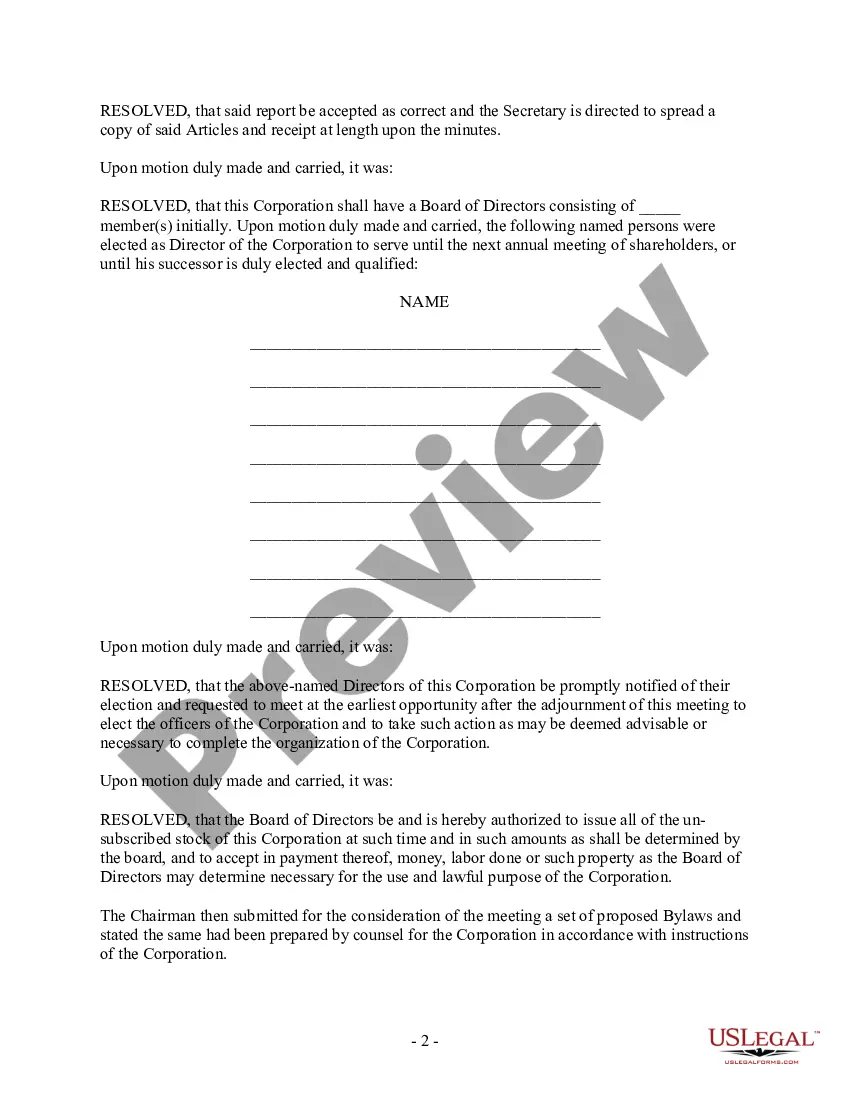
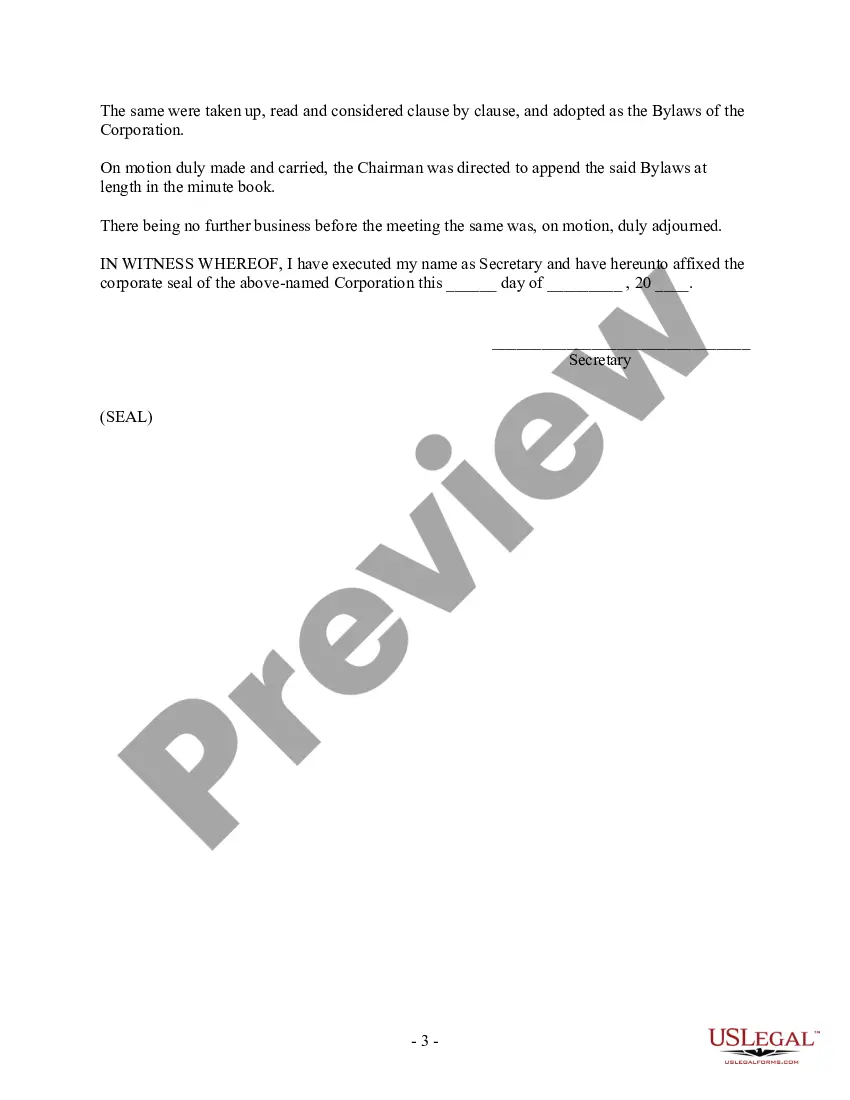
Meeting Minutes Corporate With Actions Template In Cook
Description



Get your form ready online
Our built-in tools help you complete, sign, share, and store your documents in one place.
Make edits, fill in missing information, and update formatting in US Legal Forms—just like you would in MS Word.
Download a copy, print it, send it by email, or mail it via USPS—whatever works best for your next step.
Sign and collect signatures with our SignNow integration. Send to multiple recipients, set reminders, and more. Go Premium to unlock E-Sign.
If this form requires notarization, complete it online through a secure video call—no need to meet a notary in person or wait for an appointment.
We protect your documents and personal data by following strict security and privacy standards.

Make edits, fill in missing information, and update formatting in US Legal Forms—just like you would in MS Word.

Download a copy, print it, send it by email, or mail it via USPS—whatever works best for your next step.

Sign and collect signatures with our SignNow integration. Send to multiple recipients, set reminders, and more. Go Premium to unlock E-Sign.

If this form requires notarization, complete it online through a secure video call—no need to meet a notary in person or wait for an appointment.

We protect your documents and personal data by following strict security and privacy standards.
Looking for another form?







Form popularity
FAQ
Motions recorded in minutes should reflect exact wording when vote was taken or when presiding officer declared unanimous consent. Minutes should also record numbers of those in favor voting in favor of the motion and those opposed.
How to write meeting minutes Organization name. Meeting purpose. Start and end times. Date and location. List of attendees and absentees, if necessary. Space for important information like motions passed or deadlines given. Space for your signature and the meeting leader's signature.
Motions should be found in the minutes as they occurred in the meeting. Motions – Each motion should be numbered. Numbering of motions starts at one at the beginning of each school year and continue from there until the next year.
5 steps to write impactful meeting action items Write the action item (what) Discuss the purpose (why) Set a due date (when) Assign a person to every action item (who) Think about what happens next.
What Should Be Included in Meeting Minutes? Date and time of the meeting. Names of the meeting participants and those unable to attend (e.g., “regrets”) Acceptance or corrections/amendments to previous meeting minutes. Decisions made about each agenda item, for example: Actions taken or agreed to be taken. Next steps.
Record the exact wording of the motion. The names of the movers and seconders of any motion shall be recorded in the minutes, unless the bylaws or committee procedures state otherwise. Usually, voting outcomes are clear and there is no need to count the votes.
To create helpful action items, you need to know the meeting topic and the goal of the project or business objective. Summarize the meeting conversation topic and the problem that needs to be solved. Decide on the specific action that needs to be done to help progress the project, problem, or goal.
Only one thing (motion) can be discussed at a time. A motion is the topic under discussion (e.g., “I move that we add a coffee break to this meeting”).
How do you write a motion for minutes of a meeting? To write a motion for minutes of a meeting, use the following format: Main motion: Moved by name. The motion carried or failed with number in favour and number against by a ballot vote.
For motions, include the exact wording of the statement, and the name of the person making the motion. Some organizations might require the name of the person seconding the motion, as well. Bowie adds that if the motion is not worded properly, it's up to the chair to help the member modify the wording.
