Agreement To Arbitrate Disputes In Cook
Description

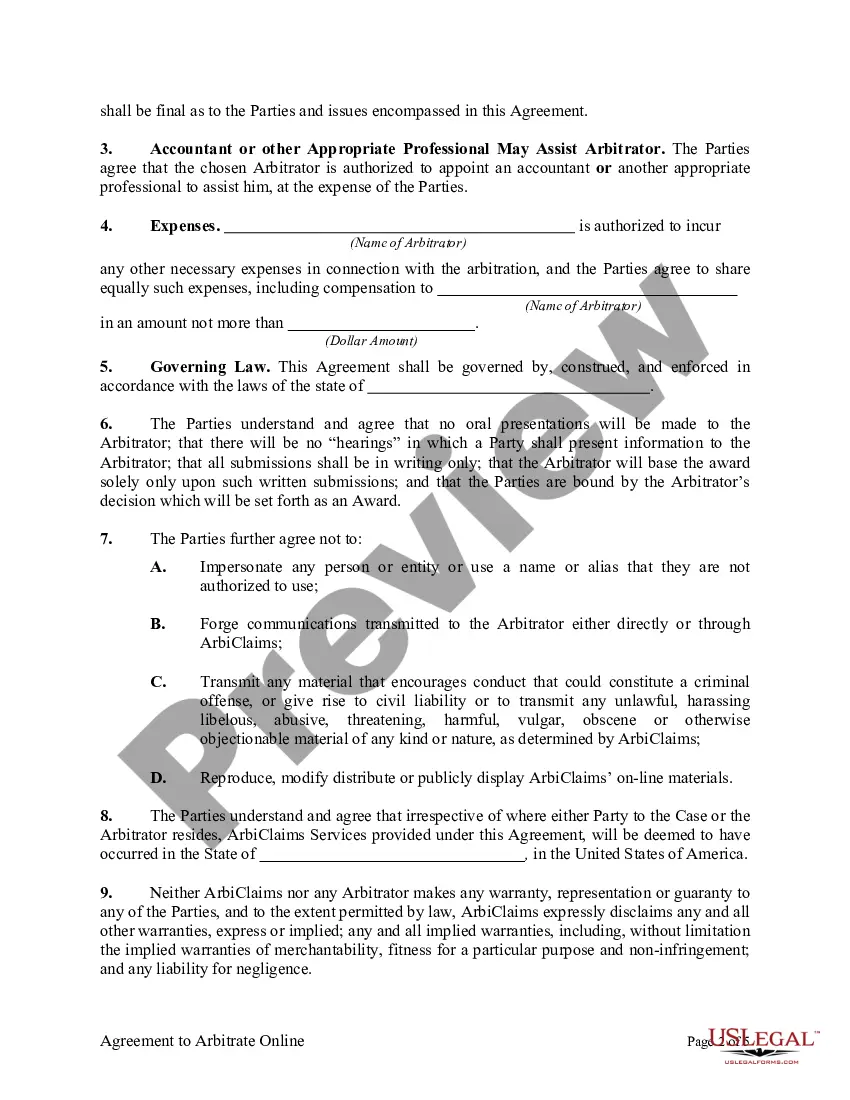
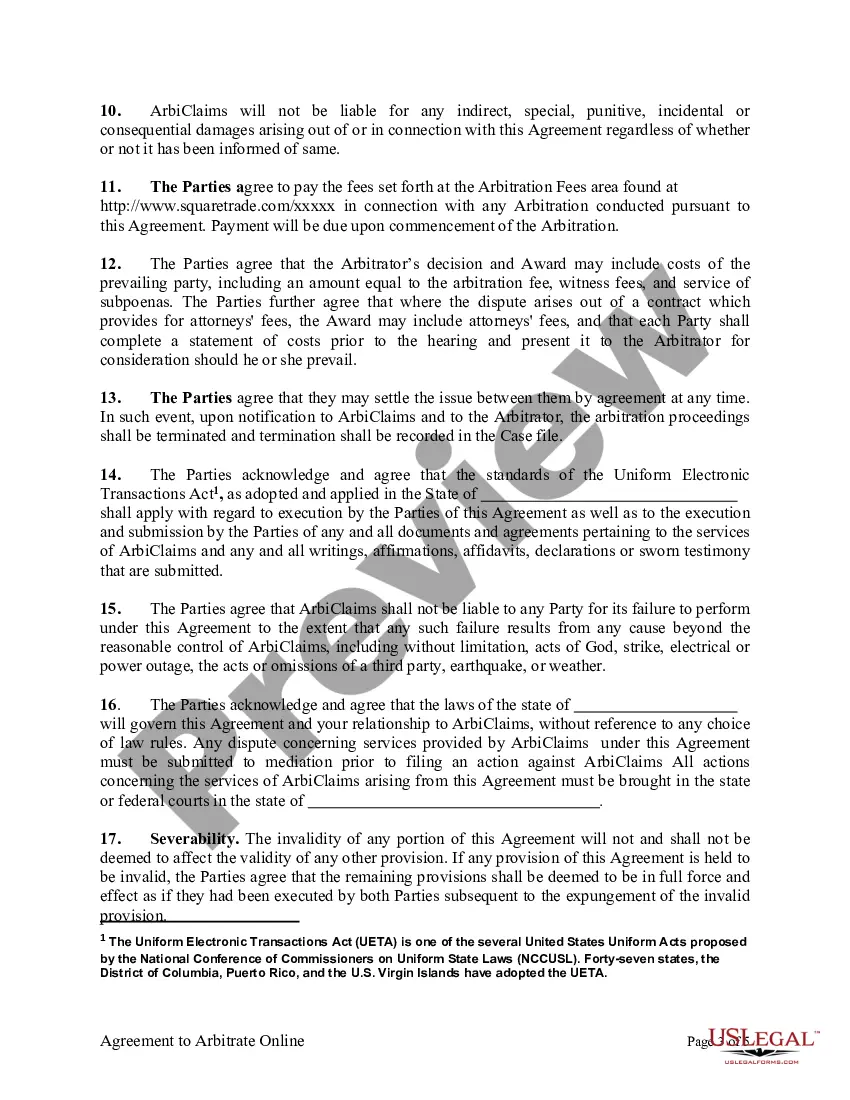




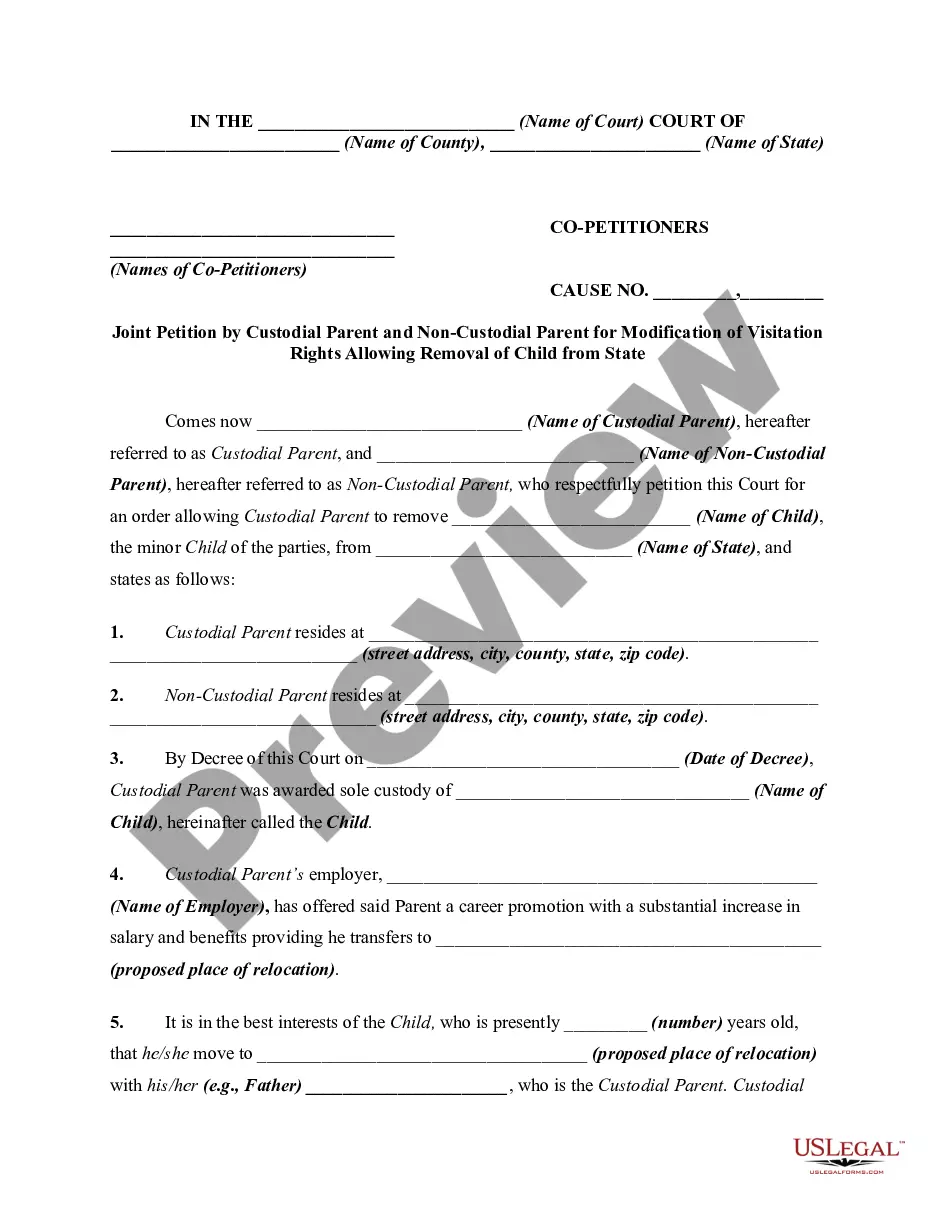
Get your form ready online
Our built-in tools help you complete, sign, share, and store your documents in one place.
Make edits, fill in missing information, and update formatting in US Legal Forms—just like you would in MS Word.
Download a copy, print it, send it by email, or mail it via USPS—whatever works best for your next step.
Sign and collect signatures with our SignNow integration. Send to multiple recipients, set reminders, and more. Go Premium to unlock E-Sign.
If this form requires notarization, complete it online through a secure video call—no need to meet a notary in person or wait for an appointment.
We protect your documents and personal data by following strict security and privacy standards.

Make edits, fill in missing information, and update formatting in US Legal Forms—just like you would in MS Word.

Download a copy, print it, send it by email, or mail it via USPS—whatever works best for your next step.

Sign and collect signatures with our SignNow integration. Send to multiple recipients, set reminders, and more. Go Premium to unlock E-Sign.

If this form requires notarization, complete it online through a secure video call—no need to meet a notary in person or wait for an appointment.

We protect your documents and personal data by following strict security and privacy standards.
Looking for another form?

Form popularity
FAQ
Within thirty days of the date of notification of the Request, the respondent shall submit an answer to the request (the “Answer”) to the Secretariat, which must include its statement of the facts, comments on the Request, proposal with regard to the number of arbitrators (with the indication of the name and contact ...
Under most arbitration rules, an Answer or Response to a Request for Arbitration must include the respondent's name and contact details, the name and contact details of its representative, its preliminary comments on the dispute, its response to the relief sought by the claimant, its observations and proposals ...
Under most arbitration rules, an Answer or Response to a Request for Arbitration must include the respondent's name and contact details, the name and contact details of its representative, its preliminary comments on the dispute, its response to the relief sought by the claimant, its observations and proposals ...
The Scope of the Clause. This section of the clause is critical; it sets the boundaries for which disputes the tribunal is authorised to determine. Choice of Rules. The Number of Arbitrators. Appointing Authority. Choice of Venue. The language of the proceedings. Finality. Exclusion of the right of appeal.
Always get straight to the merits without berating the other side or whining about how badly it has treated you. Another threat to your credibility is the “kitchen sink” arbitration demand or a response that includes numerous claims or defenses that have little chance of succeeding.
There are typically seven stages of the arbitration process: Claimant Files a Claim. Respondent Submits Answer. Parties Select Arbitrators. Parties Attend Initial Prehearing Conference. Parties Exchange Discovery. Parties Attend Hearings. Arbitrators Deliberate and Render Award.
A clause that requires arbitration is known as a mandatory arbitration clause. Today's question is: Are such clauses enforceable in Illinois? The short answer is yes, and the long answer doesn't really change much.
Under Rule 25, commercial and personal injury cases with damages valued at less than $50,000 and that do not involve claims of medical malpractice, asbestos, construction, nursing home, and product liability are automatically referred to mandatory arbitration.
A clause that requires arbitration is known as a mandatory arbitration clause. Today's question is: Are such clauses enforceable in Illinois? The short answer is yes, and the long answer doesn't really change much.
