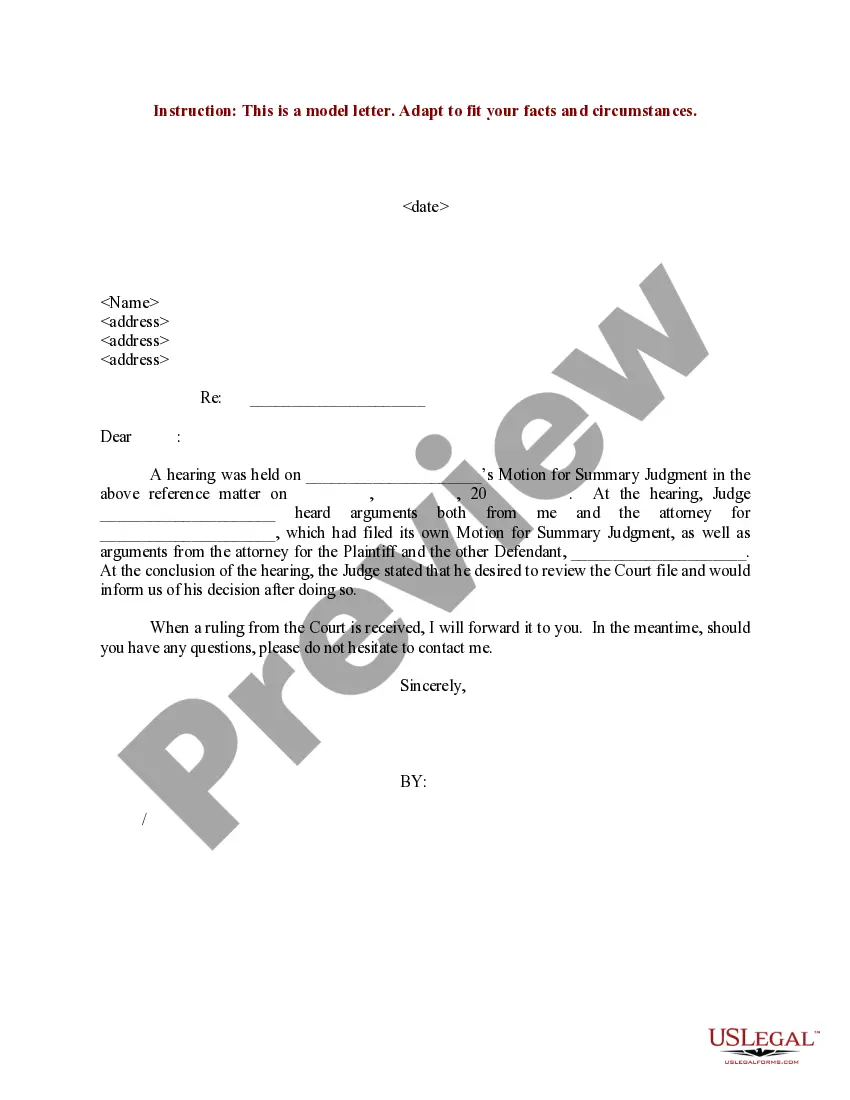
Motion Hearing In Court In Georgia
Description
Get your form ready online
Our built-in tools help you complete, sign, share, and store your documents in one place.
Make edits, fill in missing information, and update formatting in US Legal Forms—just like you would in MS Word.
Download a copy, print it, send it by email, or mail it via USPS—whatever works best for your next step.
Sign and collect signatures with our SignNow integration. Send to multiple recipients, set reminders, and more. Go Premium to unlock E-Sign.
If this form requires notarization, complete it online through a secure video call—no need to meet a notary in person or wait for an appointment.
We protect your documents and personal data by following strict security and privacy standards.

Make edits, fill in missing information, and update formatting in US Legal Forms—just like you would in MS Word.

Download a copy, print it, send it by email, or mail it via USPS—whatever works best for your next step.

Sign and collect signatures with our SignNow integration. Send to multiple recipients, set reminders, and more. Go Premium to unlock E-Sign.

If this form requires notarization, complete it online through a secure video call—no need to meet a notary in person or wait for an appointment.

We protect your documents and personal data by following strict security and privacy standards.
Looking for another form?









Form popularity
FAQ
Unless otherwise ordered by the judge, each party opposing a motion shall serve and file a response, reply memorandum, affidavits, or other responsive material not later than 30 days after service of the motion, or on the date of the hearing (if one is held) whichever occurs sooner.
A motion is a paper you can file in your case. It asks the court to decide something in your case. For example, if you need more time to answer a complaint against you, you can file a motion to extend the time to answer. If you do not have a case, you cannot file a motion.
In general, a status hearing is simply a date for the judge to check in with the prosecutor, criminal defense attorney and the criminal defendant on how the case is going and whether it will be resolved without trial.
In general, a status hearing is simply a date for the judge to check in with the prosecutor, criminal defense attorney and the criminal defendant on how the case is going and whether it will be resolved without trial.
It must be filed within twenty-eight days of the conviction and sentencing. The grounds for the motion are that the final judgment is inconsistent with the evidence presented during the trial and contrary to laws governing the issues contested in the trial.
The grounds for the motion are that the final judgment is inconsistent with the evidence presented during the trial and contrary to laws governing the issues contested in the trial.
The Purpose and Importance of Motion Hearings Understanding what is a motion hearing helps to highlight its importance. These hearings allow both parties to present their arguments and evidence about a specific motion, giving the judge the information needed to make fair and informed decisions.