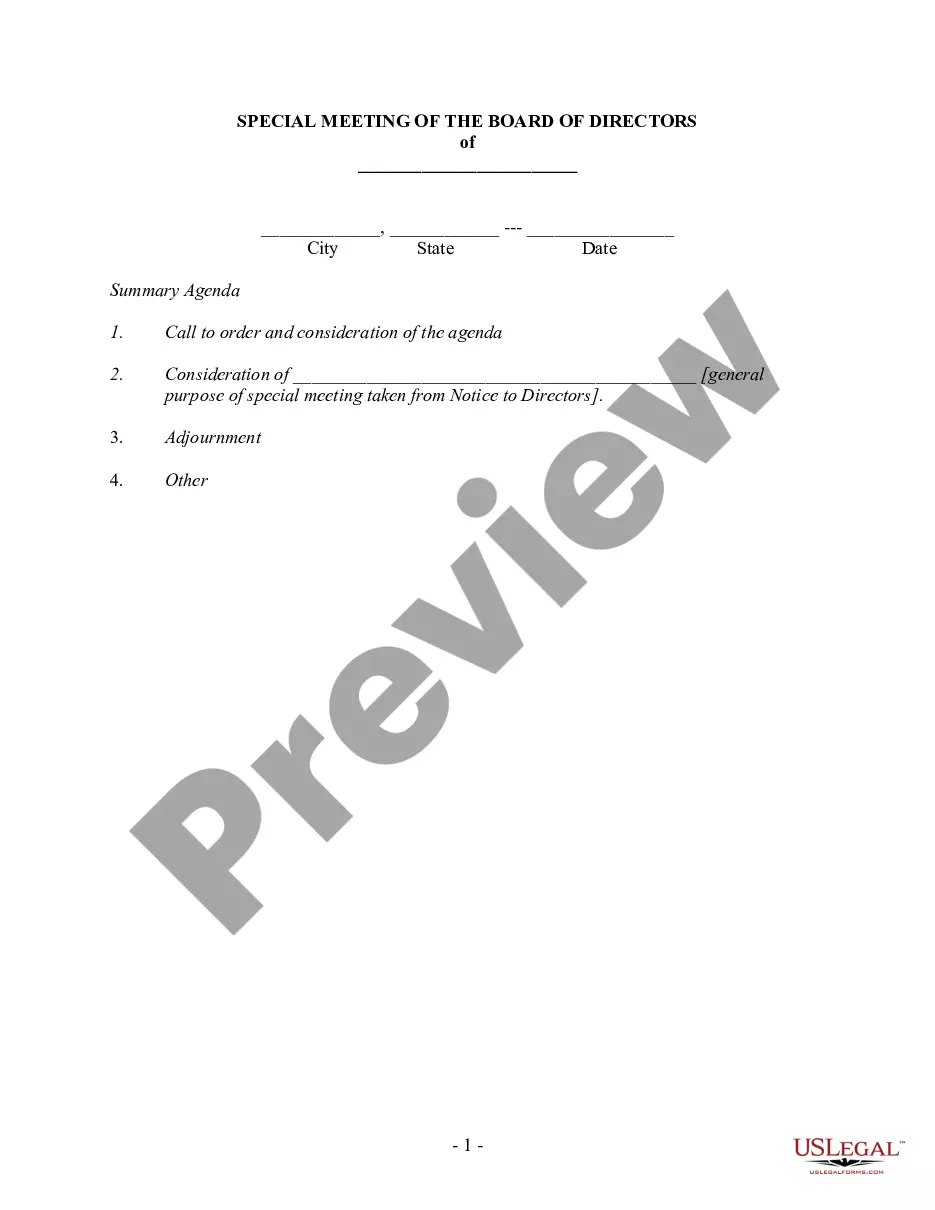
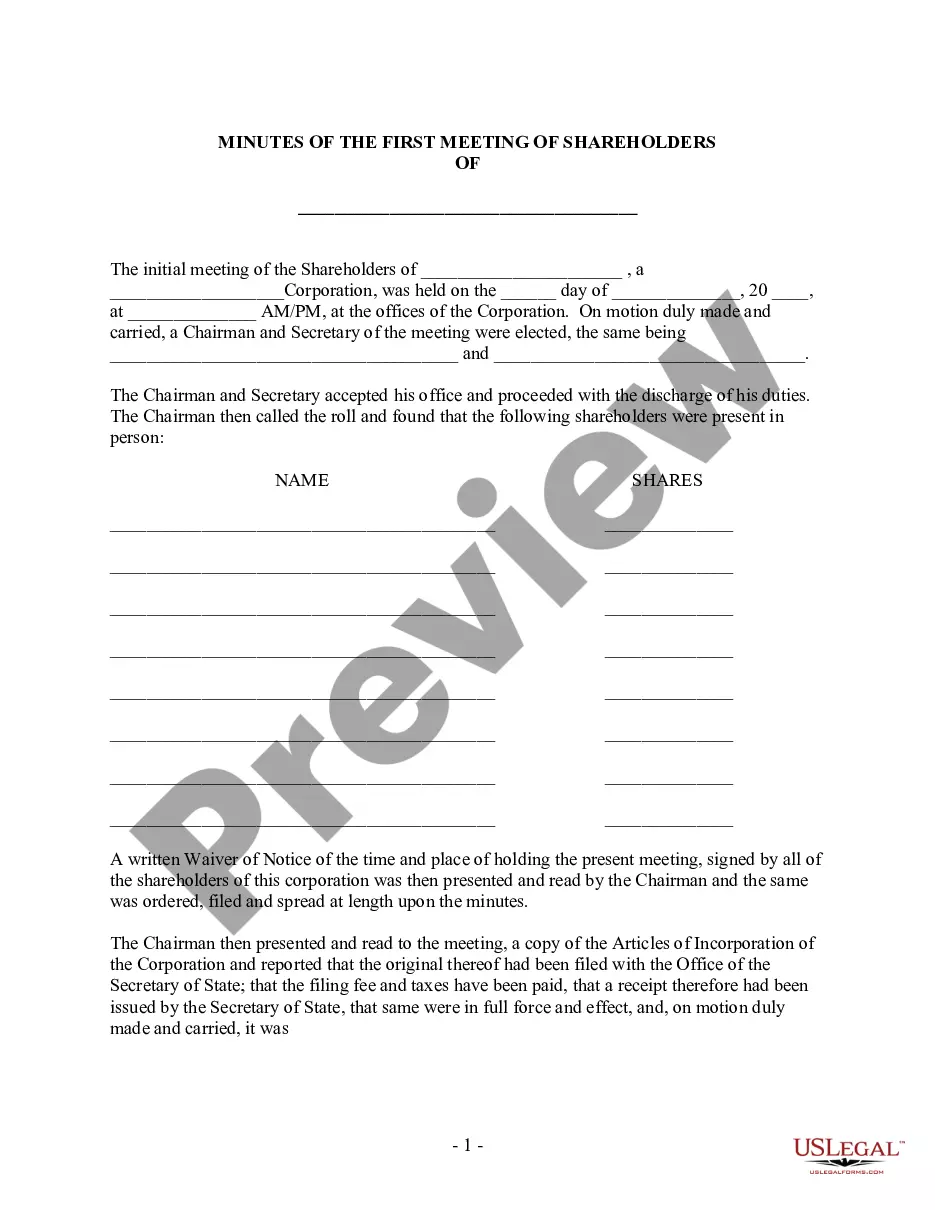
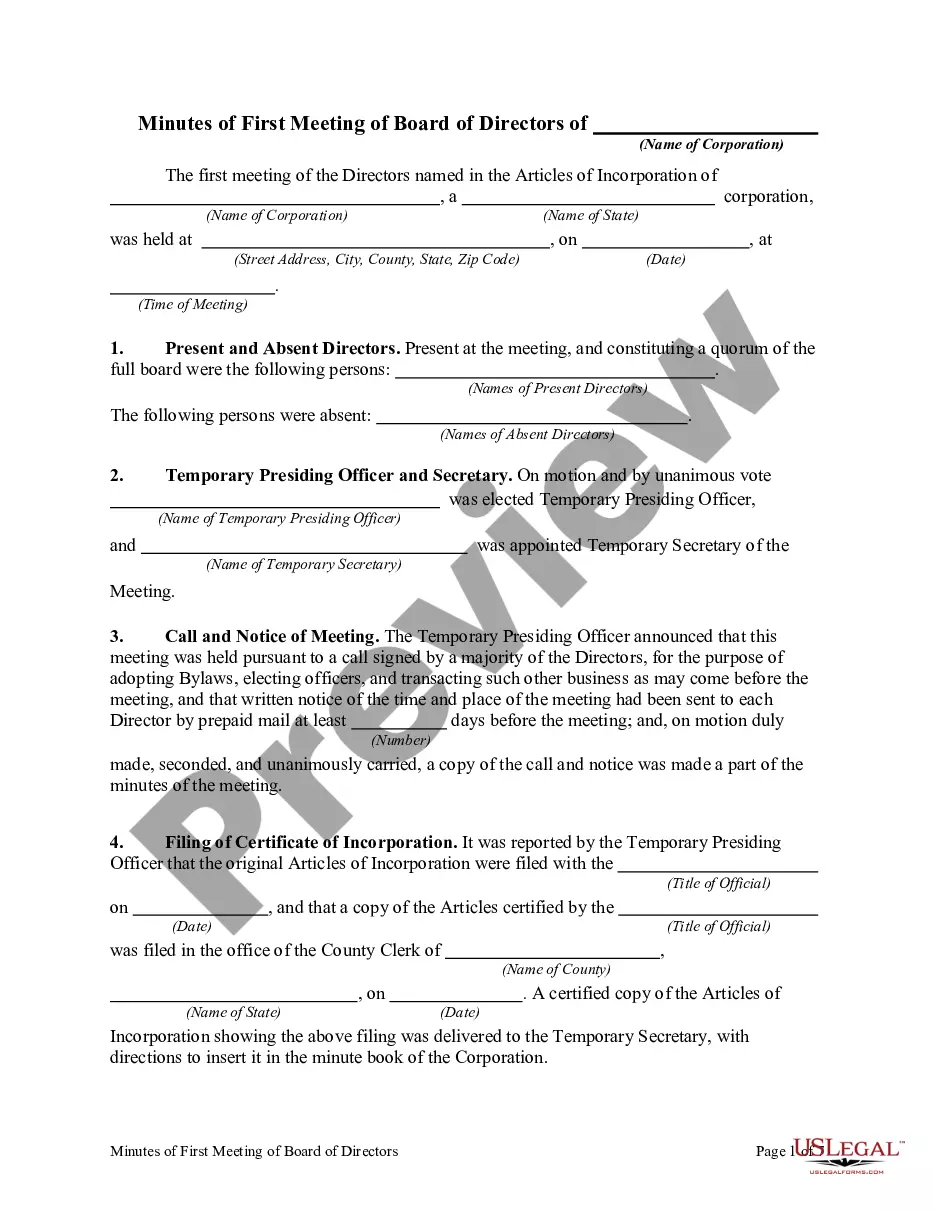
Board Meeting Corporate Format In Hennepin
Description


Get your form ready online
Our built-in tools help you complete, sign, share, and store your documents in one place.
Make edits, fill in missing information, and update formatting in US Legal Forms—just like you would in MS Word.
Download a copy, print it, send it by email, or mail it via USPS—whatever works best for your next step.
Sign and collect signatures with our SignNow integration. Send to multiple recipients, set reminders, and more. Go Premium to unlock E-Sign.
If this form requires notarization, complete it online through a secure video call—no need to meet a notary in person or wait for an appointment.
We protect your documents and personal data by following strict security and privacy standards.

Make edits, fill in missing information, and update formatting in US Legal Forms—just like you would in MS Word.

Download a copy, print it, send it by email, or mail it via USPS—whatever works best for your next step.

Sign and collect signatures with our SignNow integration. Send to multiple recipients, set reminders, and more. Go Premium to unlock E-Sign.

If this form requires notarization, complete it online through a secure video call—no need to meet a notary in person or wait for an appointment.

We protect your documents and personal data by following strict security and privacy standards.
Looking for another form?


Form popularity
FAQ
What information do board meeting minutes contain? Meeting date, time and location. Type of meeting. Names and titles of attendees and guests. Any absent board directors. Quorum. Notes about directors who left early or re-entered the meeting. Board approvals, resolutions and acceptance of reports. Overview of discussions.
How to give a presentation to a board of directors Understand your audience. Before you start creating your presentation, conduct research on your audience. Create an outline. Add visuals. Focus on the outcome. Address any challenges. Leave time for questions. Conclude your presentation.
Board presentations focus on high-level insights and strategic decisions rather than operational details. They are concise, data-driven, and tailored to the board's priorities, often featuring well-structured board slides to enhance clarity and impact.
The chair calls the meeting to order with a simple statement. They should say something along the lines of: “Good morning/evening, everyone! It's state the date and time, and I'd like to call the meeting of organization name to order.”
A Board Meeting is a formal meeting of the board of directors of an organization and any invited guests, held at definite intervals and as needed to review performance, consider policy issues, address major problems and perform the legal business of the board.
Notice is hereby given that a meeting of the Board of Directors of the (Company Name) will be held at (Time) on (Day of the Week), the (Date in words) at (Board Meeting Address), to interalia consider the following business as under:-. 3.
How to give a presentation to a board of directors Understand your audience. Before you start creating your presentation, conduct research on your audience. Create an outline. Add visuals. Focus on the outcome. Address any challenges. Leave time for questions. Conclude your presentation.
How to structure an effective board of directors presentation Title slide: Start with a compelling title that summarizes the purpose of the presentation. Agenda. Introduction. Company overview. Financial highlights. Operational updates. Market analysis. Strategic initiatives:
Notice must be given to each director and the notice must indicate the proposed time, date and place of the meeting. Notice does not need to be in writing but it is best practice to have a form of written notice sent out.
