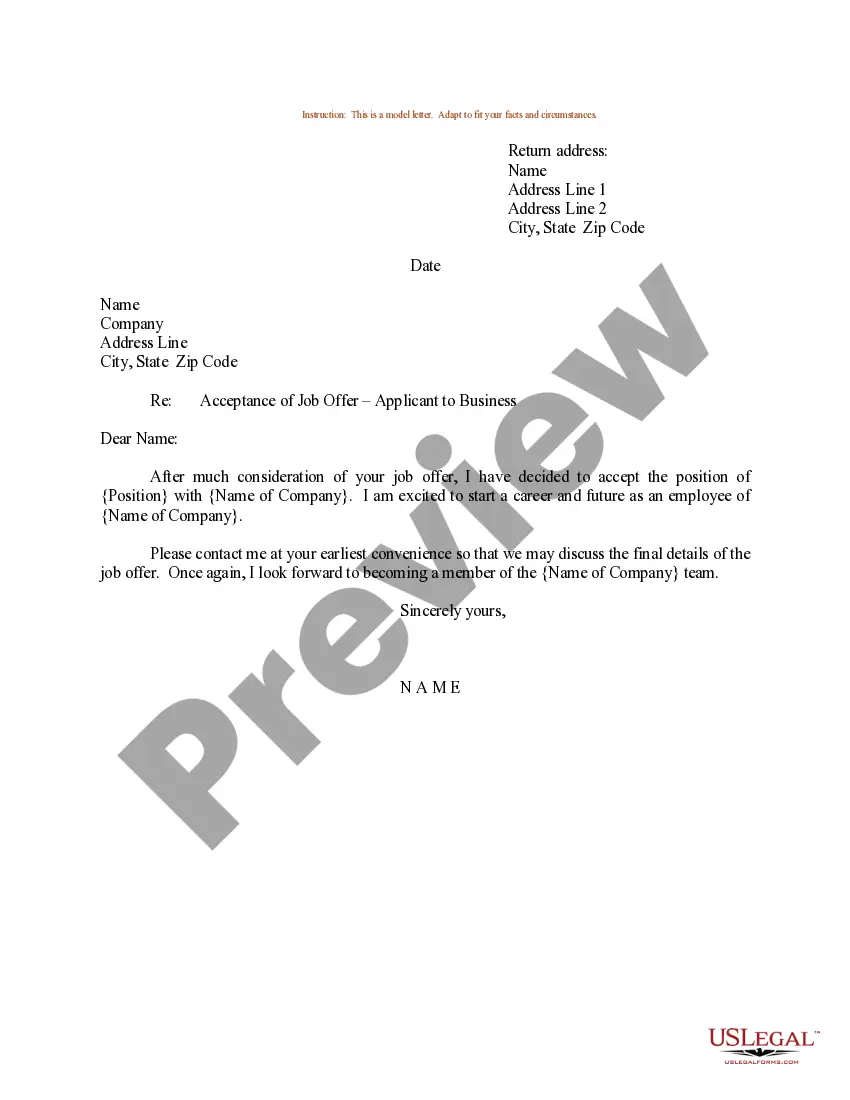
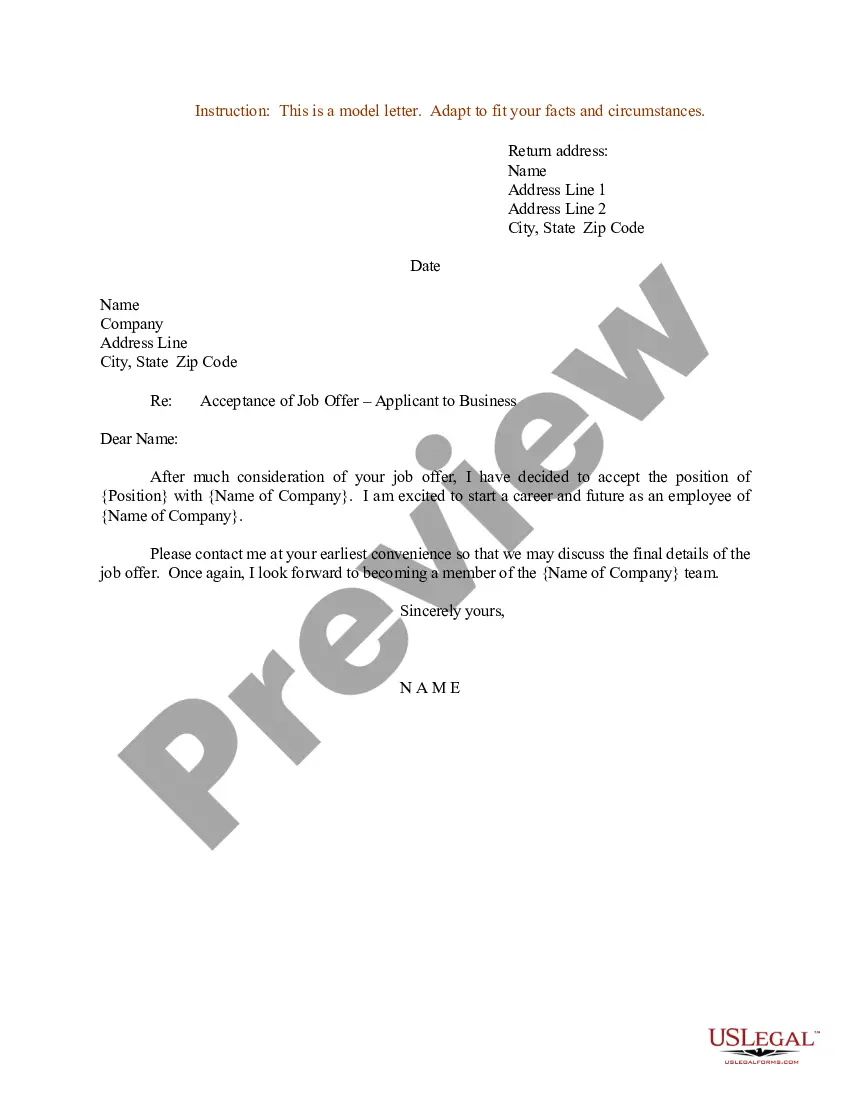
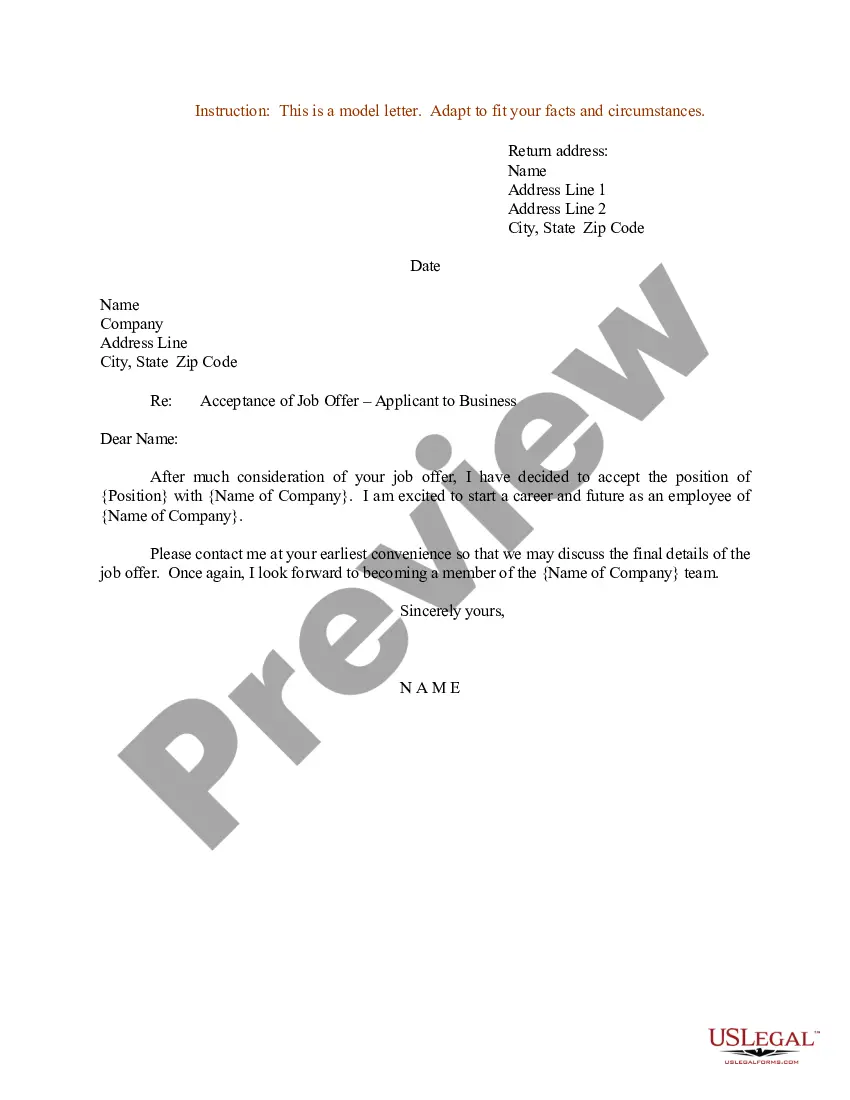
Military Acceptance Letter Format In Alameda
Description
Get your form ready online
Our built-in tools help you complete, sign, share, and store your documents in one place.
Make edits, fill in missing information, and update formatting in US Legal Forms—just like you would in MS Word.
Download a copy, print it, send it by email, or mail it via USPS—whatever works best for your next step.
Sign and collect signatures with our SignNow integration. Send to multiple recipients, set reminders, and more. Go Premium to unlock E-Sign.
If this form requires notarization, complete it online through a secure video call—no need to meet a notary in person or wait for an appointment.
We protect your documents and personal data by following strict security and privacy standards.

Make edits, fill in missing information, and update formatting in US Legal Forms—just like you would in MS Word.

Download a copy, print it, send it by email, or mail it via USPS—whatever works best for your next step.

Sign and collect signatures with our SignNow integration. Send to multiple recipients, set reminders, and more. Go Premium to unlock E-Sign.

If this form requires notarization, complete it online through a secure video call—no need to meet a notary in person or wait for an appointment.

We protect your documents and personal data by following strict security and privacy standards.
Looking for another form?



Form popularity
FAQ
Certificates from 1880 to 1939 will take up to 3 business days to complete. Certificates from 1940 to present can be completed the same day in most cases.
The Clerk-Recorder department provides copies of recorded official records including deeds, mortgages, liens, releases of liens, and maps; birth, death and marriage certificates; fictitious business name statements; and CEQA filings.
Fill in case information: Enter the case number, court name, and the names of the parties involved. Provide the plaintiff's details and address (Clio Draft can help autofill case info). Declare default: Check the appropriate box indicating that the defendant has failed to respond.
If the defendant didn't file a response by the deadline, you can ask the court to enter a default. A default ends the defendant's chance to file a response because the defendant has not responded in time. You must ask for a default within 10 days of the defendant missing the deadline to respond.
Depending on whether your pleading was verified, or not, this can be as quick as a few days in cases where the clerk can enter default, or as long as a few weeks in the event a hearing is necessary in order to secure a default judgment.