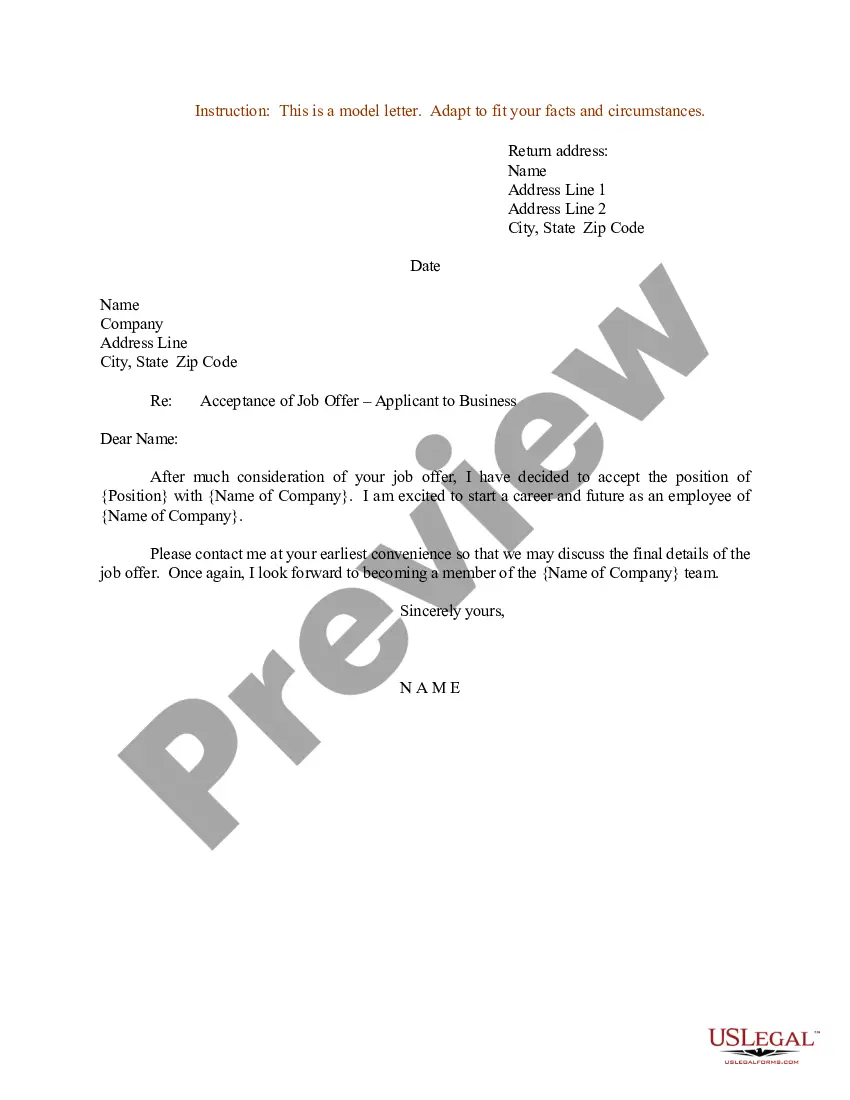
Job Acceptance Letter Sample With Conditions In Kings
Description

Get your form ready online
Our built-in tools help you complete, sign, share, and store your documents in one place.
Make edits, fill in missing information, and update formatting in US Legal Forms—just like you would in MS Word.
Download a copy, print it, send it by email, or mail it via USPS—whatever works best for your next step.
Sign and collect signatures with our SignNow integration. Send to multiple recipients, set reminders, and more. Go Premium to unlock E-Sign.
If this form requires notarization, complete it online through a secure video call—no need to meet a notary in person or wait for an appointment.
We protect your documents and personal data by following strict security and privacy standards.

Make edits, fill in missing information, and update formatting in US Legal Forms—just like you would in MS Word.

Download a copy, print it, send it by email, or mail it via USPS—whatever works best for your next step.

Sign and collect signatures with our SignNow integration. Send to multiple recipients, set reminders, and more. Go Premium to unlock E-Sign.

If this form requires notarization, complete it online through a secure video call—no need to meet a notary in person or wait for an appointment.

We protect your documents and personal data by following strict security and privacy standards.
Looking for another form?



Form popularity
FAQ
It's important to understand what the conditions mean and how to navigate the process to secure the position. Candidates should always take a step back and decide if they want the job and whether the employer's conditions are reasonable. If not, negotiate or politely decline and move on.
To accept a conditional employment offer, the candidate can send a response, either over the phone or via email, that details their understanding of the conditions and their intention to fulfill them. If the candidate doesn't accept the offer, the employer can revoke it.
Follow these steps to respond to a conditional acceptance letter: Understand the conditions. Reread the letter carefully to ensure you understand the conditions attached to your acceptance. Research the requirements. Ask questions. Make a plan.
A job offer acceptance letter can be fairly brief, but needs to contain the following: An expression of your gratitude for the job offer and the opportunity. Written formal acceptance of the job offer. The terms and conditions (your salary, job title, and any other benefits) Clarification on your starting date.
What To Include The position title and description (with specific duties and KPIs if possible) Total compensation for the position (salary, benefits, etc.) A specific list of employment conditions and what exactly it means to meet them. The potential start date (should all conditions be met on time)
A contract acceptance letter is a formal letter by which you accept the terms and conditions of a business contract. Normally, you're required to issue a formal acceptance or a counteroffer against an offer or proposal within a set amount of time.
A conditional acceptance letter indicates that a school is interested in enrolling you as a student but needs you to take further action or provide more information before completing your enrollment.
A conditional offer of employment should be written like a traditional job offer, with a full description of the job responsibilities, salary, etc. However, it also lays out conditions that must be met in order for the employee to start work.
For job seekers, it's crucial to understand that while a conditional job offer signals they're a preferred candidate, employment is not yet guaranteed. The employer must still verify they meet all the qualifications and pass any required checks.
Include the following: a thank-you for the offer, your written acceptance, the terms and conditions of the offer, including the salary and job title, and the starting date. Keep it professional. Follow the hiring manager's lead in terms of tone and format.