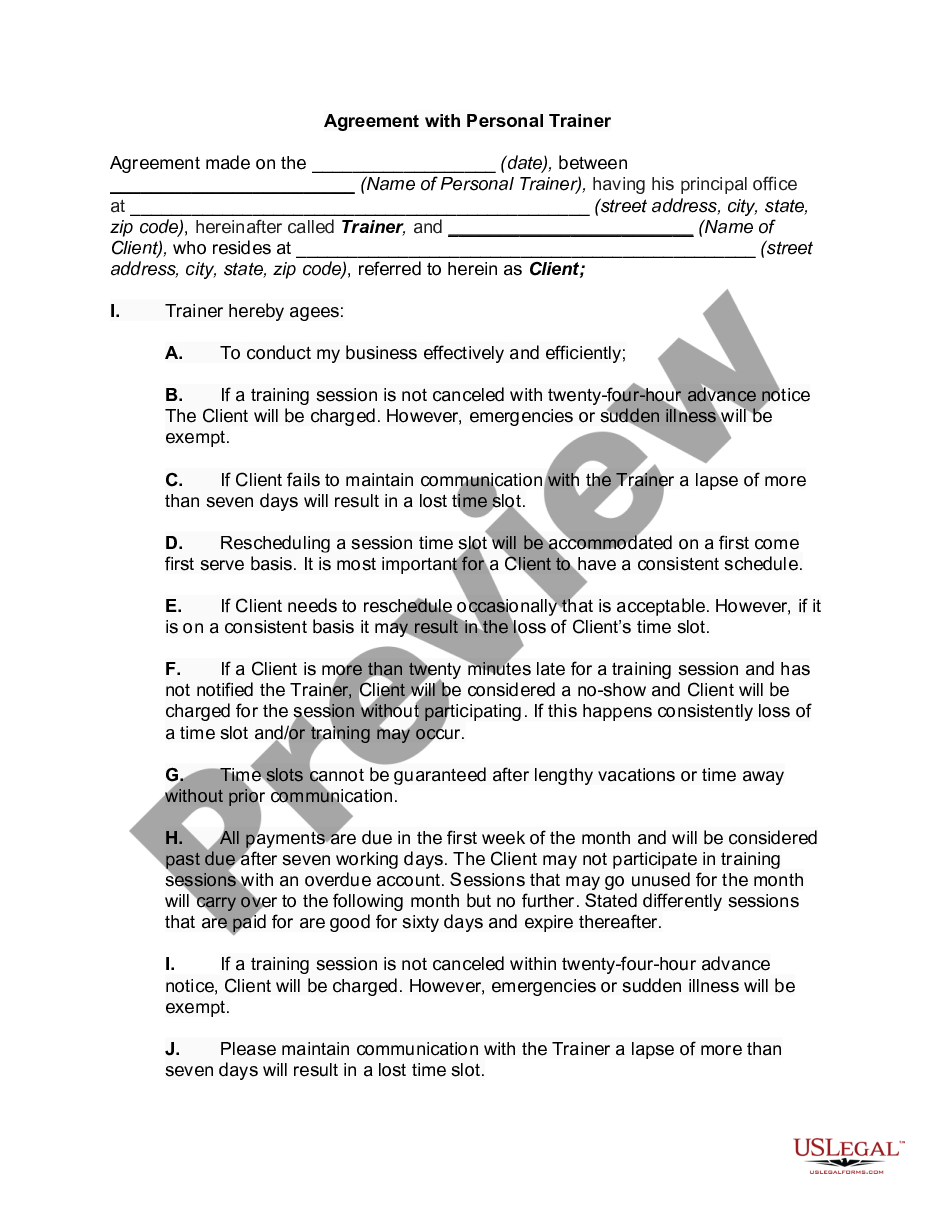
Texas Permanent Sanitary Sewer Easement
Description
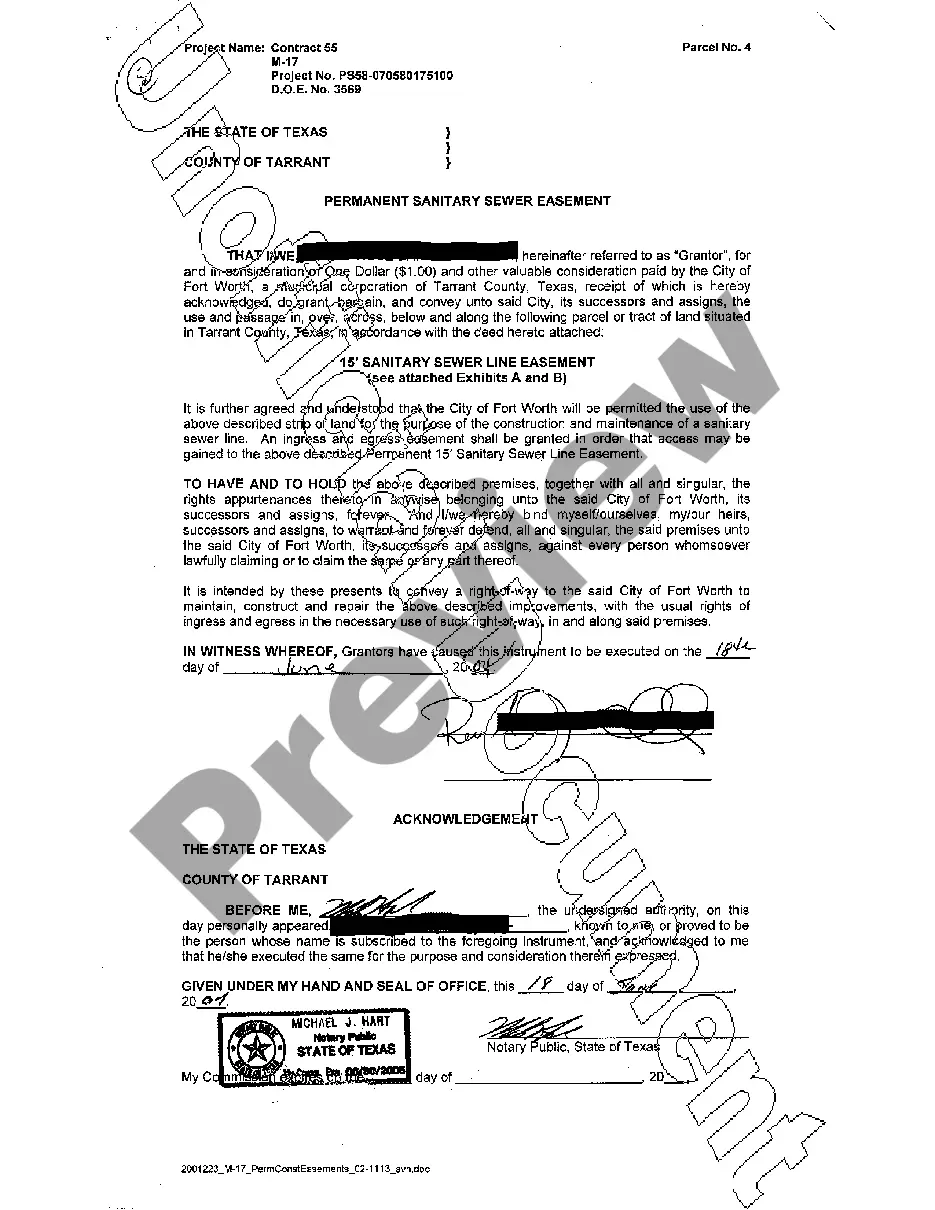
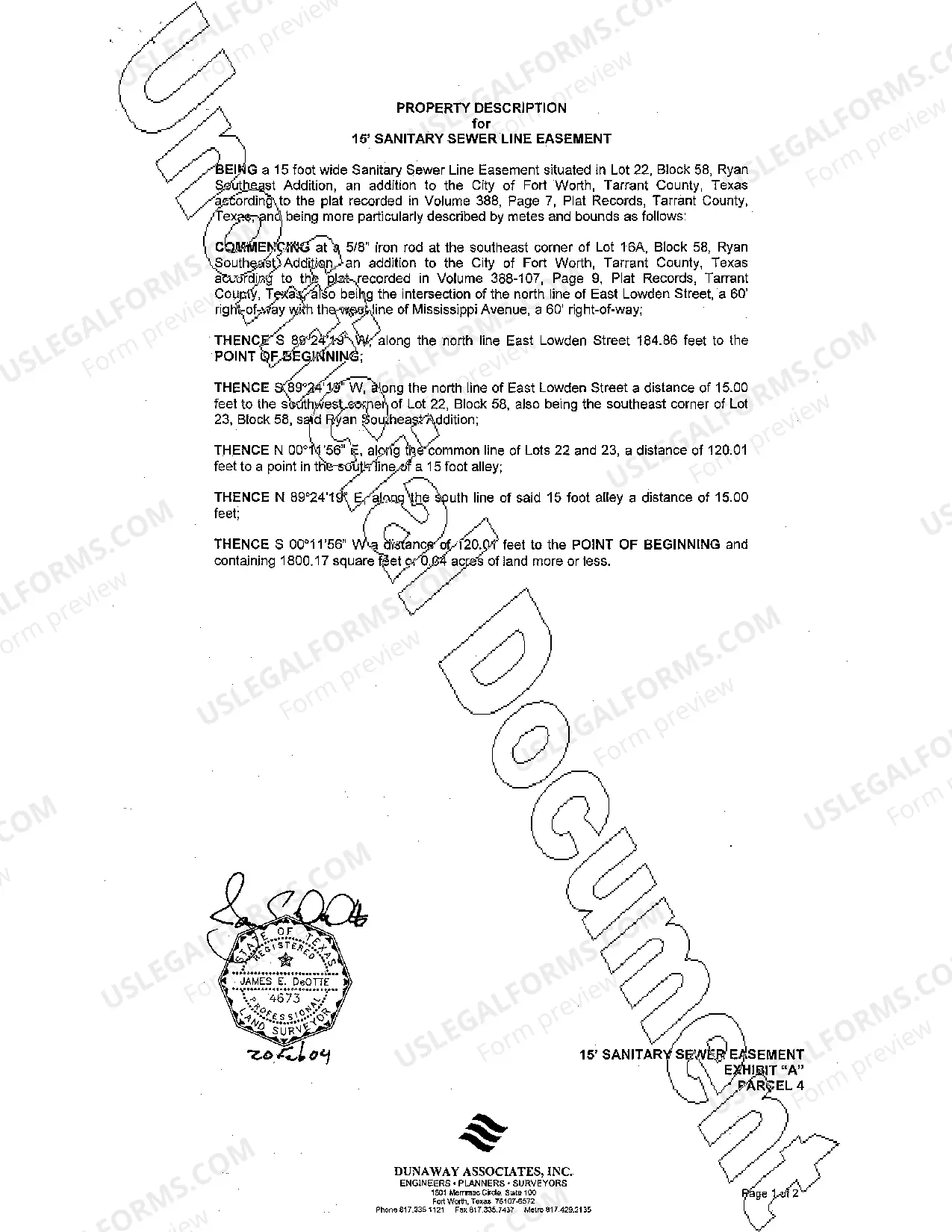
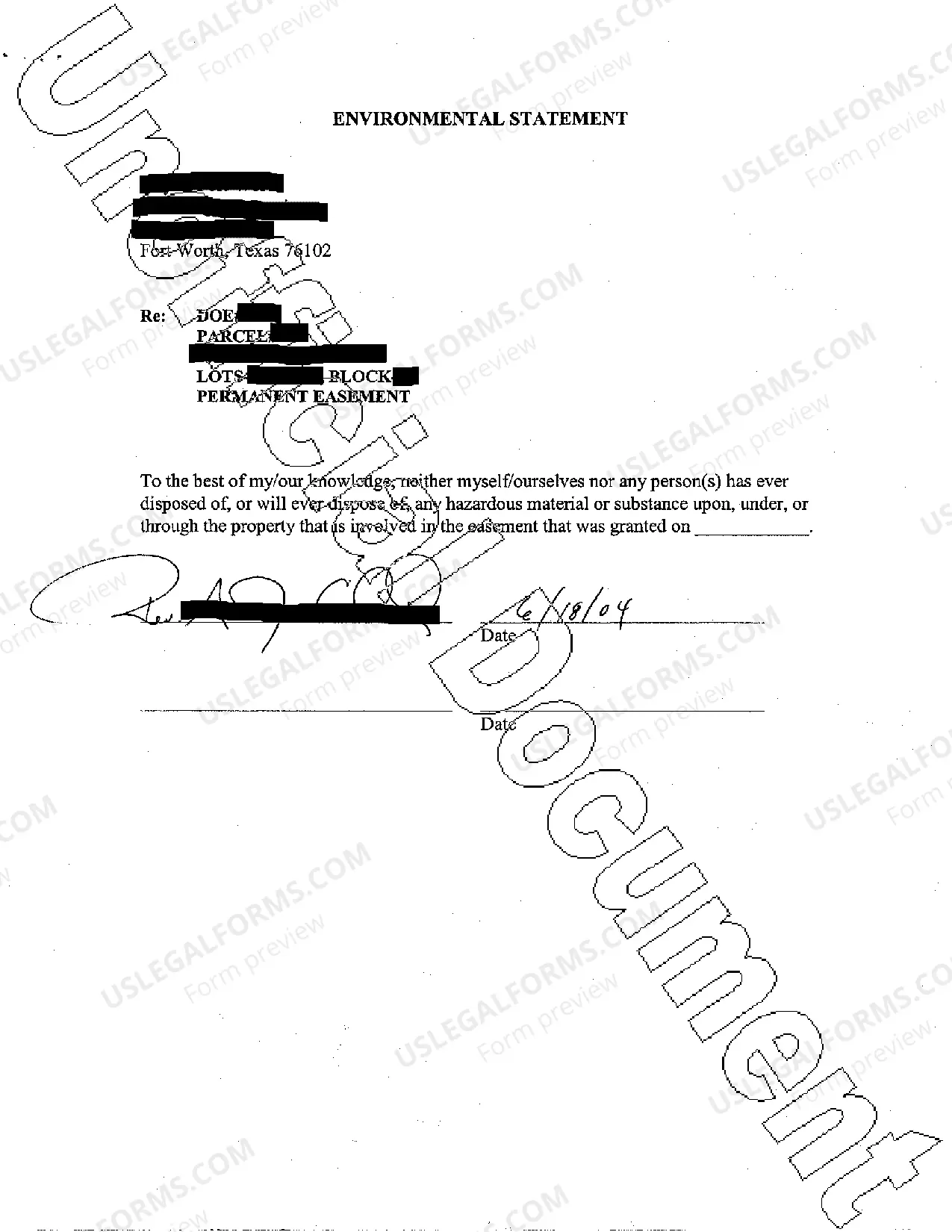

Key Concepts & Definitions
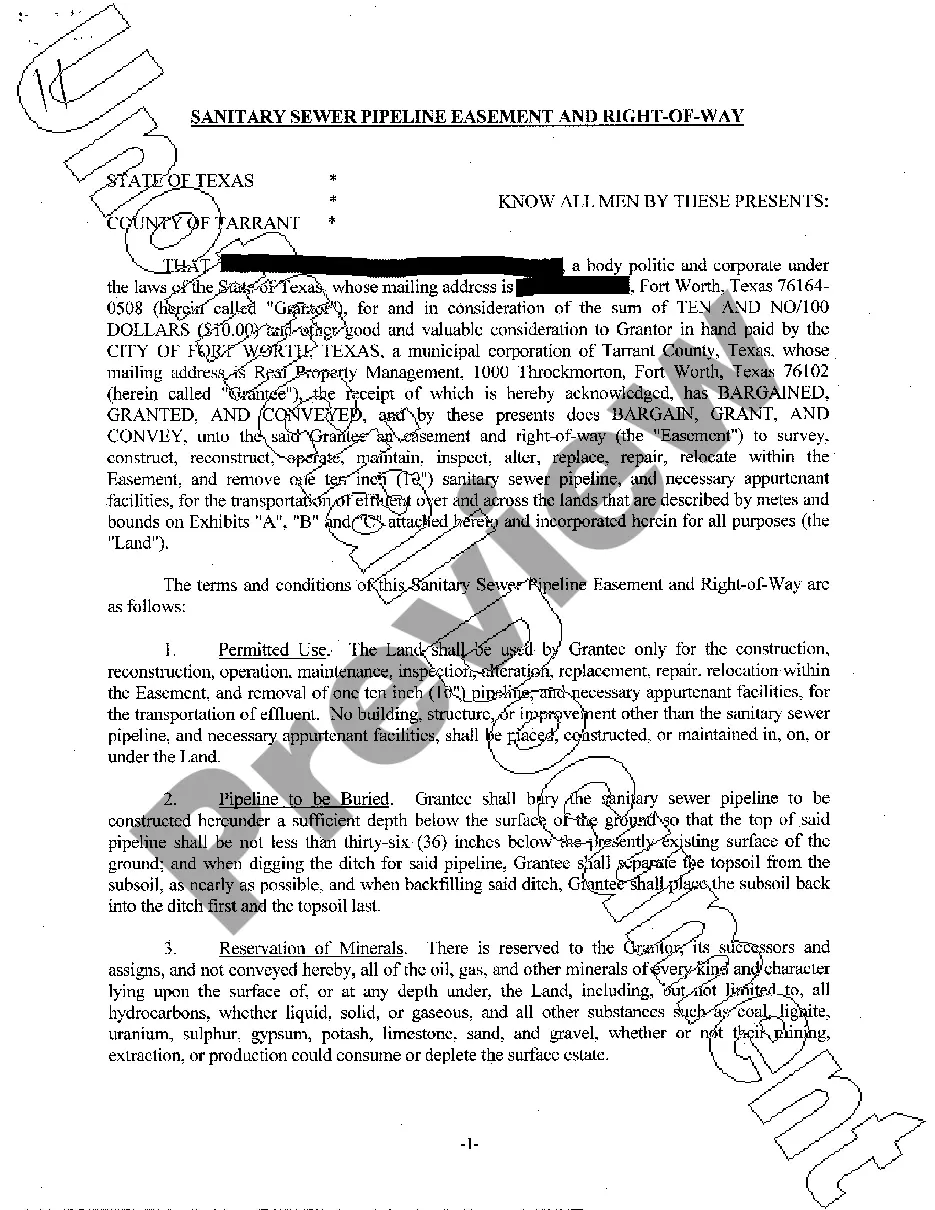
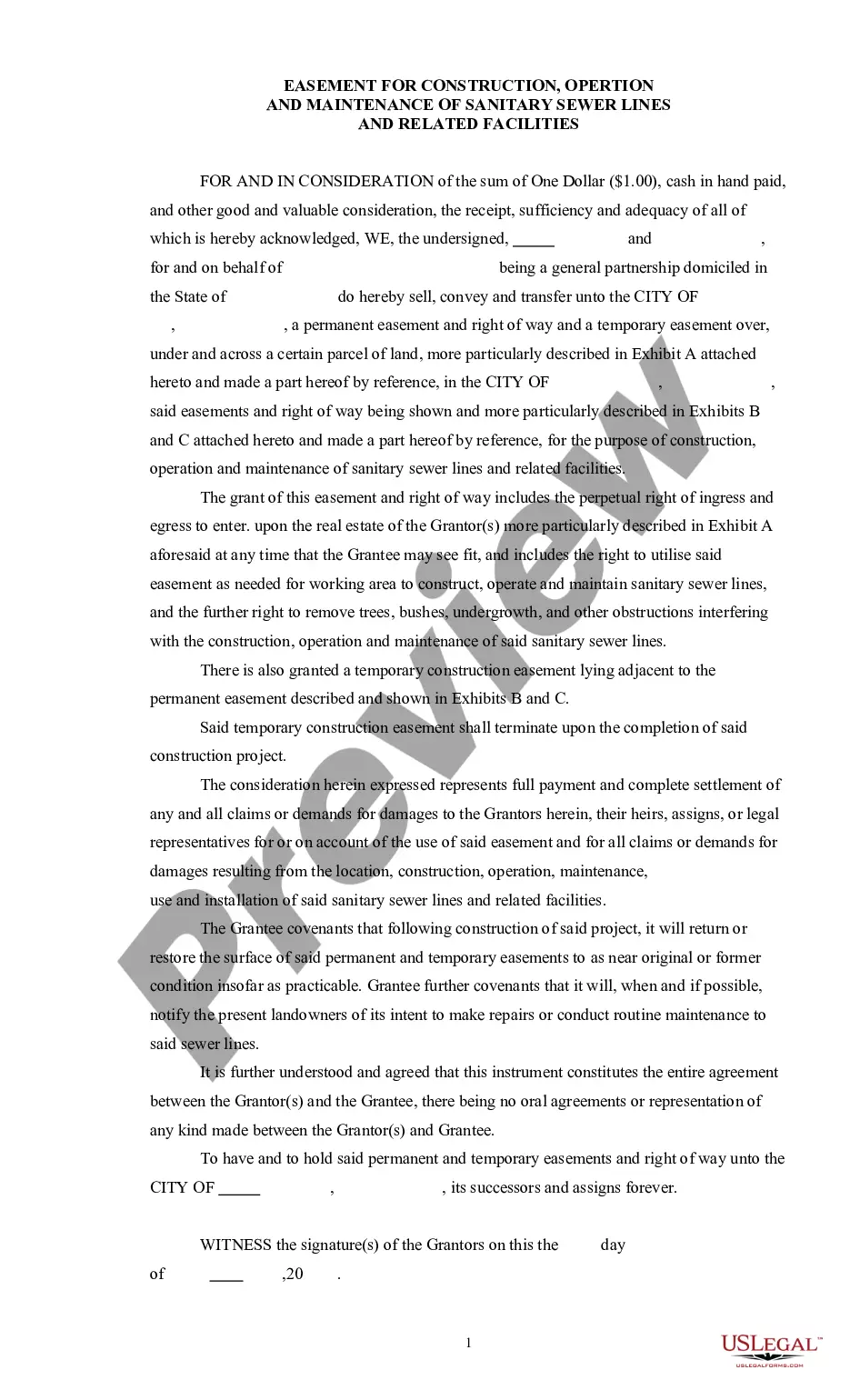
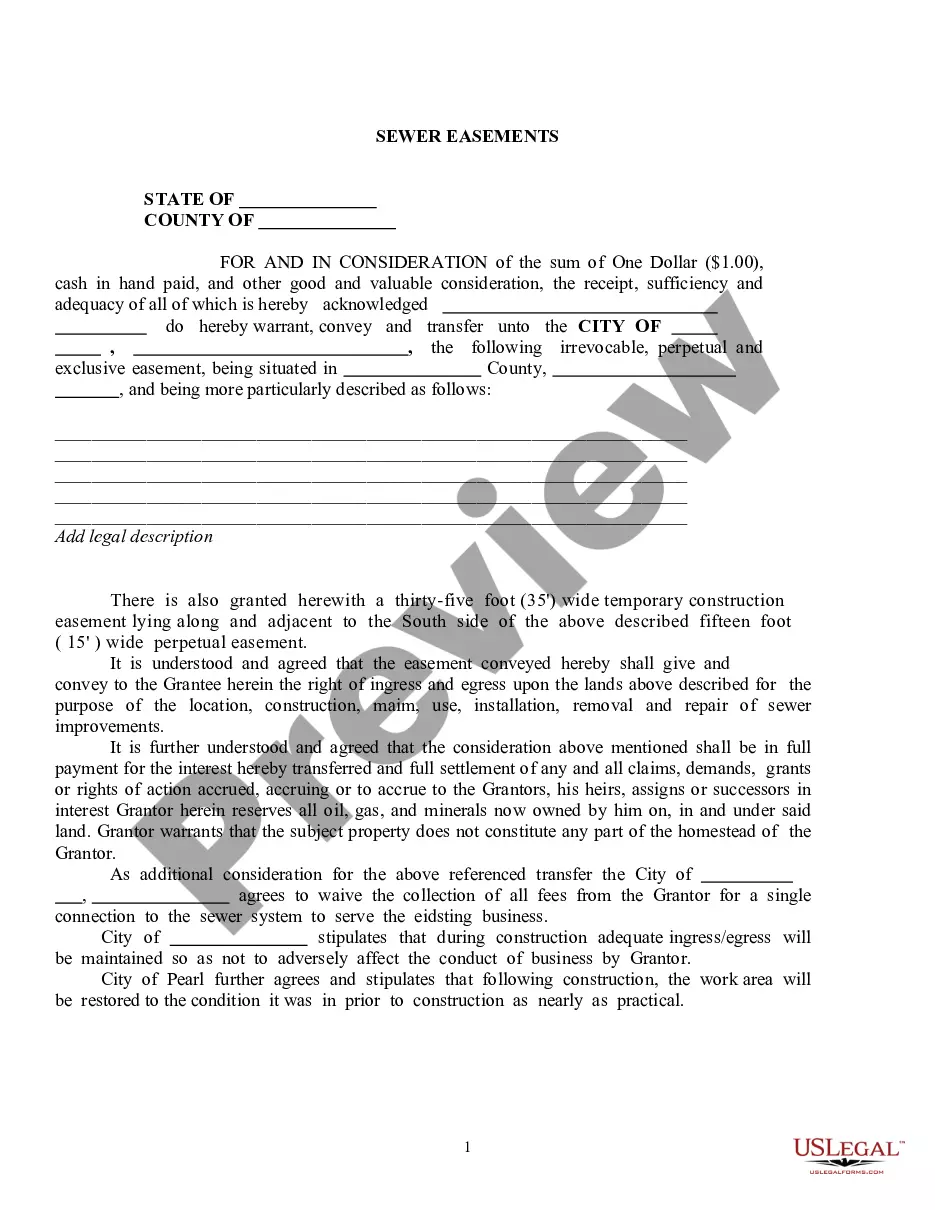
Permanent Sanitary Sewer Easement: A legal right granted by a landowner to a utility company or municipality to use a designated area of their property for installing, maintaining, and operating sanitary sewer lines. This easement remains in effect regardless of any change in the property ownership.
Step-by-Step Guide
- Identify the Need: Determine the necessity for a sewer line in the area based on community and environmental needs.
- Consult With a Professional: Engage with legal and civil engineering professionals to assess the feasibility and design the easement layout.
- Negotiation and Compensation: Discuss terms with the property owner, negotiate compensation, and permissions.
- Legal Documentation: Draft and sign the easement agreement with clear defined terms and conditions.
- Registration: Register the easement with local land authorities to legalize the agreement.
- Maintenance and Management: Implement routine checks and maintenance to ensure the functionality and safety of the sewer system.
Risk Analysis
- Legal Disputes: Disputes may arise from unclear easement agreements or boundaries.
- Property Damage: Installation and maintenance of sewer lines may cause temporary or permanent damage to the property.
- Financial Risks: Cost overruns due to unforeseen complications during installation.
- Environmental Impact: Potential environmental risks if the sewer systems malfunction or if there is a breach during installation.
Key Elements
- Boundary Definitions: Exact dimensions and locations need to be clearly depicted in easement documents.
- Access Rights: Specifics about who has the right to access the property for maintenance or emergencies.
- Restrictions: Limitations on what the landowner can build or plant on the easement area.
- Time Frame: Duration for which the easement is valid, although it is generally permanent.
Best Practices
- Clarity in Documents: Ensure all legal documents are clear and precise to prevent future legal issues.
- Environmental Considerations: Conduct environmental assessments to mitigate impact.
- Regular Maintenance: Establish a regular maintenance schedule to prolong the lifespan of the sewer infrastructure.
- Good Communication: Maintain open lines of communication with the property owner and the community.
How to fill out Texas Permanent Sanitary Sewer Easement?
Access to top quality Texas Permanent Sanitary Sewer Easement templates online with US Legal Forms. Avoid hours of lost time seeking the internet and lost money on forms that aren’t updated. US Legal Forms provides you with a solution to just that. Get more than 85,000 state-specific legal and tax samples you can download and fill out in clicks within the Forms library.
To receive the sample, log in to your account and then click Download. The document will be stored in two places: on the device and in the My Forms folder.
For people who don’t have a subscription yet, check out our how-guide below to make getting started simpler:
- See if the Texas Permanent Sanitary Sewer Easement you’re looking at is appropriate for your state.
- Look at the sample making use of the Preview function and browse its description.
- Check out the subscription page by clicking Buy Now.
- Choose the subscription plan to keep on to register.
- Pay by card or PayPal to complete making an account.
- Choose a favored format to save the file (.pdf or .docx).
Now you can open up the Texas Permanent Sanitary Sewer Easement example and fill it out online or print it and get it done by hand. Think about sending the papers to your legal counsel to make sure all things are filled out appropriately. If you make a mistake, print out and complete sample once again (once you’ve created an account every document you save is reusable). Create your US Legal Forms account now and get access to a lot more samples.
Form popularity
FAQ
A drainage easement is a public (or private) pipe in the ground for the purpose of controlling stormwater. Although homeowners cannot build over easements, they are a blessing for stormwater drainage when a property falls away from the street.
Many properties have drainage easements within them, and if you're purchasing a home you will see the outline of the easement on the title plan. You can't build in such an easement, so in that sense it affects the future value of the property.For the most part, though, drainage easements do not impact home value.
Absent an express agreement to the contrary, the owner of the dominant estate has a duty to maintain the easement, and the owner of the servient estate has no right to interfere with the dominant estate. Roberts v. Freindswood Dev. Co., 886 S.W.
The party gaining the benefit of the easement is the dominant estate (or dominant tenement), while the party granting the benefit or suffering the burden is the servient estate (or servient tenement). For example, the owner of parcel A holds an easement to use a driveway on parcel B to gain access to A's house.
When one of the owners of either the dominant estate which an easement benefits or the servient estate over which the easement runs becomes the owner of both properties, then there is a unity of the two titles, and since an owner does not need an easement over the owner's own property, according to Florida law, the
Private drainage and erosion issues, as well as ground water issues, are the responsibility of the property owner. Drainage directed from gutters, downspouts or other private systems to neighboring properties is a civil matter between the property owners.
The deeds for your house and property typically only convey basic information about your property and will not usually show any information about the property's drainage plans.
To reduce the risk of flooding to neighbouring properties, the law requires that you: Keep your drains clear in your property and to ensure that you do not drain water into your neighbour's property or foul drain.But you are not allowed to artificially channel water a way that will cause damage your neighbour's land.
There is a right of drainage that allows water that flows across your land to flow downhill naturally to your neighbour's land.Not allowed water from your property is channelled through a down pipe or other pipe onto your neighbour's property.)