Listing Agreement Form For Debt Securities In Salt Lake
Description
Get your form ready online
Our built-in tools help you complete, sign, share, and store your documents in one place.
Make edits, fill in missing information, and update formatting in US Legal Forms—just like you would in MS Word.
Download a copy, print it, send it by email, or mail it via USPS—whatever works best for your next step.
Sign and collect signatures with our SignNow integration. Send to multiple recipients, set reminders, and more. Go Premium to unlock E-Sign.
If this form requires notarization, complete it online through a secure video call—no need to meet a notary in person or wait for an appointment.
We protect your documents and personal data by following strict security and privacy standards.

Make edits, fill in missing information, and update formatting in US Legal Forms—just like you would in MS Word.

Download a copy, print it, send it by email, or mail it via USPS—whatever works best for your next step.

Sign and collect signatures with our SignNow integration. Send to multiple recipients, set reminders, and more. Go Premium to unlock E-Sign.

If this form requires notarization, complete it online through a secure video call—no need to meet a notary in person or wait for an appointment.

We protect your documents and personal data by following strict security and privacy standards.
Looking for another form?









Form popularity
FAQ
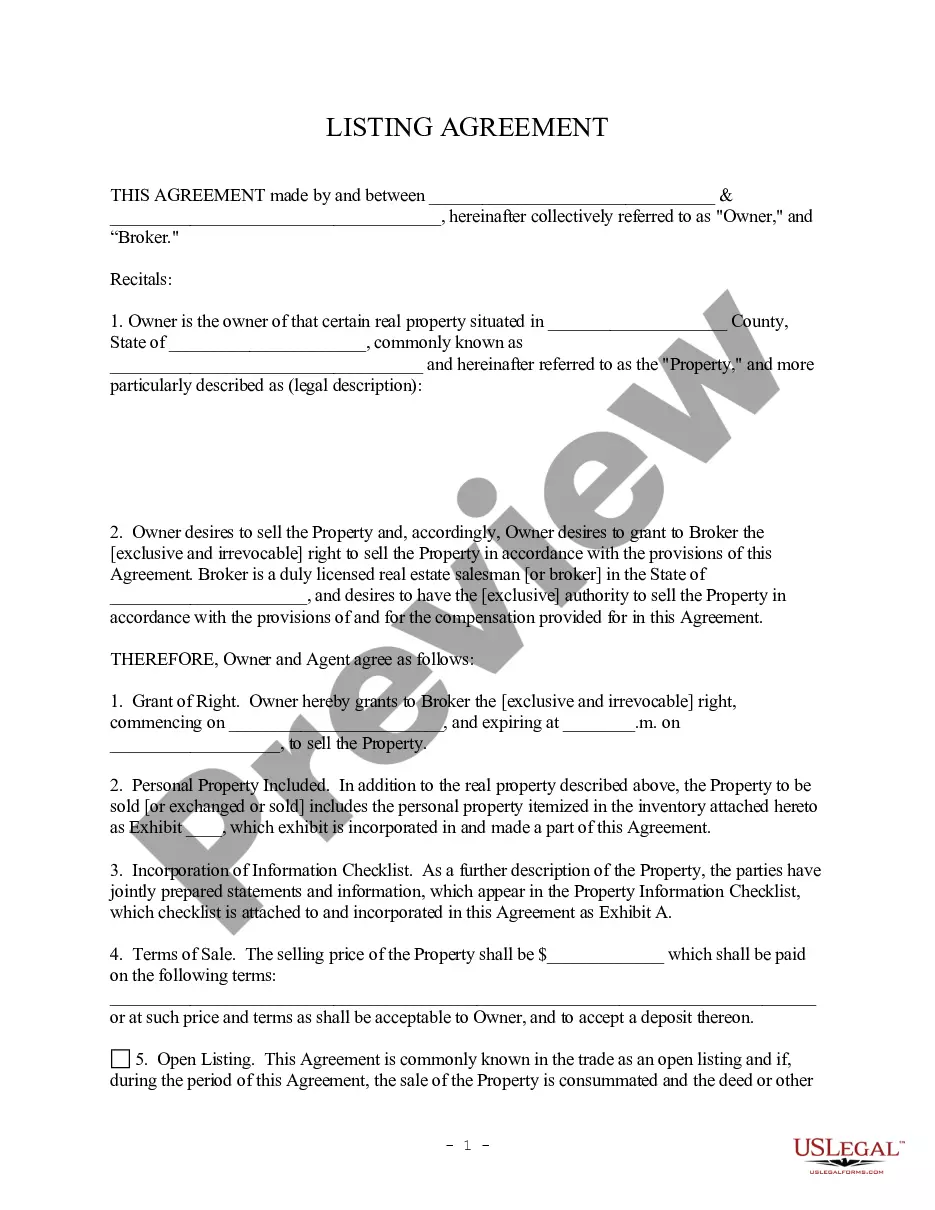
Exclusive right to sell listing An exclusive right to sell grants a single real estate agency exclusive authority to market and sell a property, ensuring the listing agent earns a commission regardless of who finds the buyer. While this agreement is active, the property owner cannot use another agent.
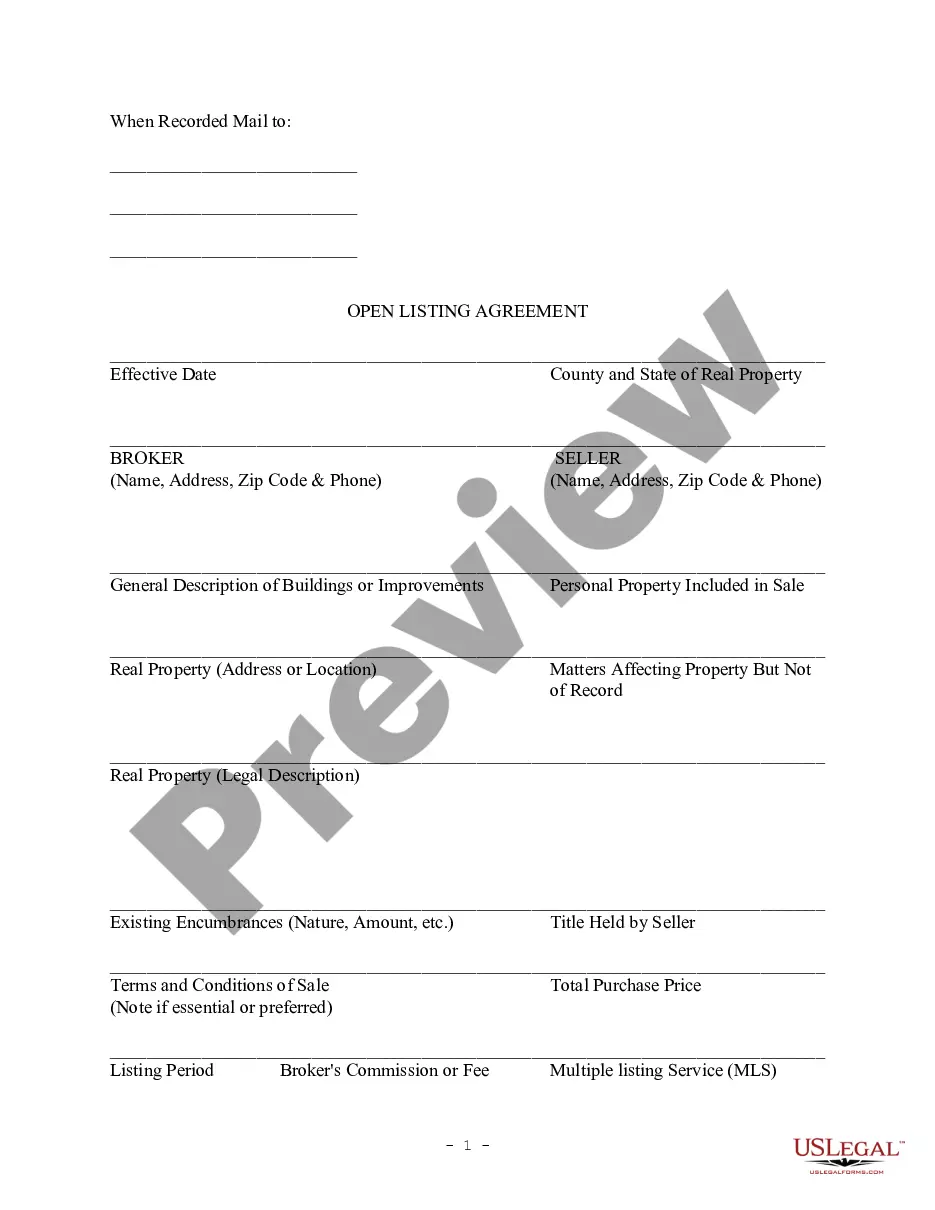
In an exclusive agency listing, the seller retains the right to sell the property, with no obligation to the broker. With exclusive right-to-sell listings, the broker receives a commission regardless of who sells the property.
The Exclusive Listing Agreement establishes a ground for honesty, trust, and confidence between the seller and broker. Such a relationship is important during the marketing process and through the closing of the sale or lease.
To be admitted to trading, Debt Securities must be eligible for electronic settlement. For listing and admission to trading, listing particulars, as applicable must be submitted to the Exchange and published.
Public debt, what it is? Public debt securities are publicly traded fixed income securities that can be assigned different credit ratings based on the creditworthiness of the issuers. Investment grade securities: Bonds issued by stable companies with a low risk of default.
Debt securities are negotiable financial instruments, meaning they can be bought or sold between parties in the market. They come with a defined issue date, maturity date, coupon rate, and face value. Debt securities provide regular payments of interest and guaranteed repayment of principal.
3.4.1 Held-to-maturity debt securities. 3.4.2 Trading debt securities. 3.4.3 Available-for-sale debt securities.
Less commonly, the term listing agreement also refers to a contract made between a security issuer (e.g., a public company) and the financial exchange that hosts the issue. Examples of exchanges include the New York Stock Exchange (NYSE), the Tokyo Stock Exchange (TSE), and the London Stock Exchange (LSE).

