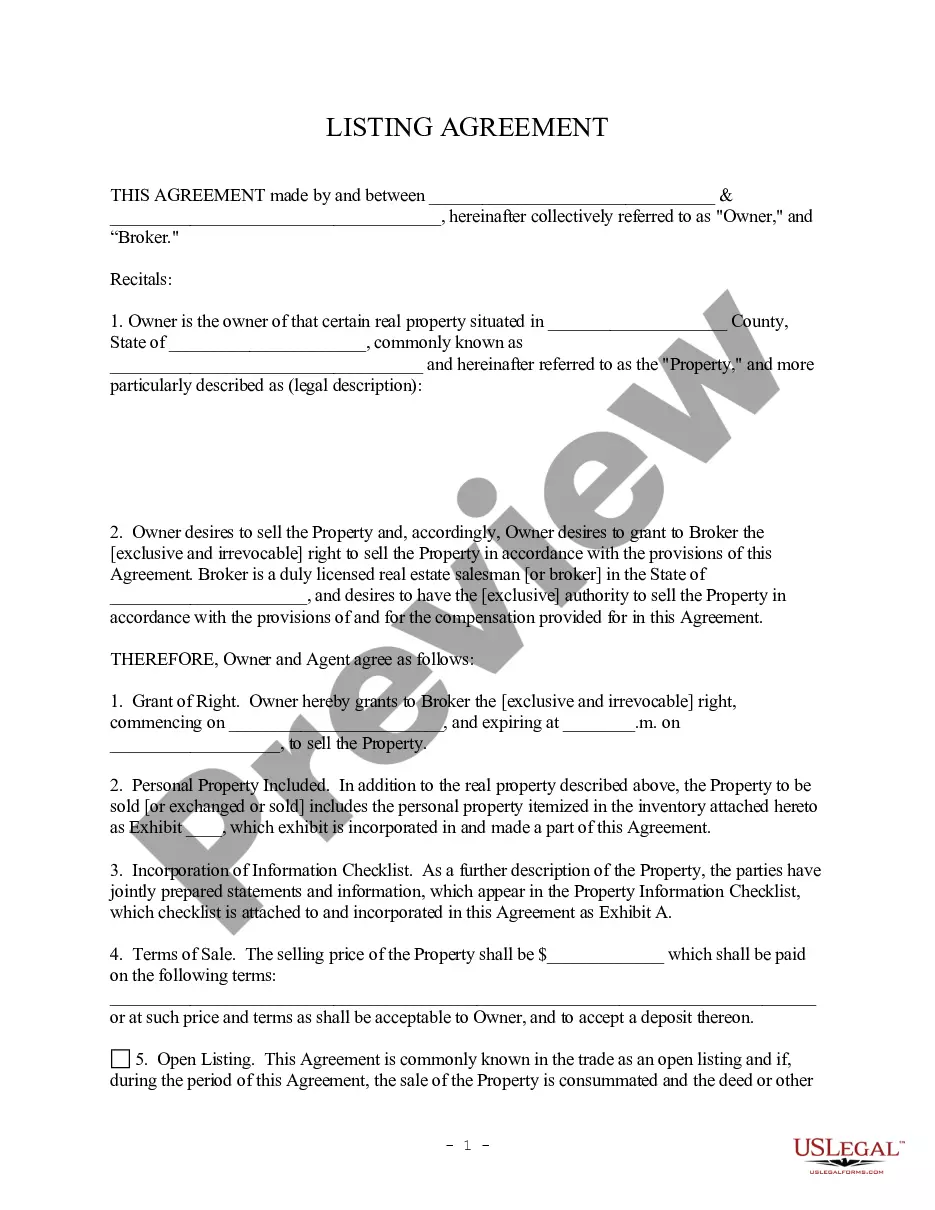
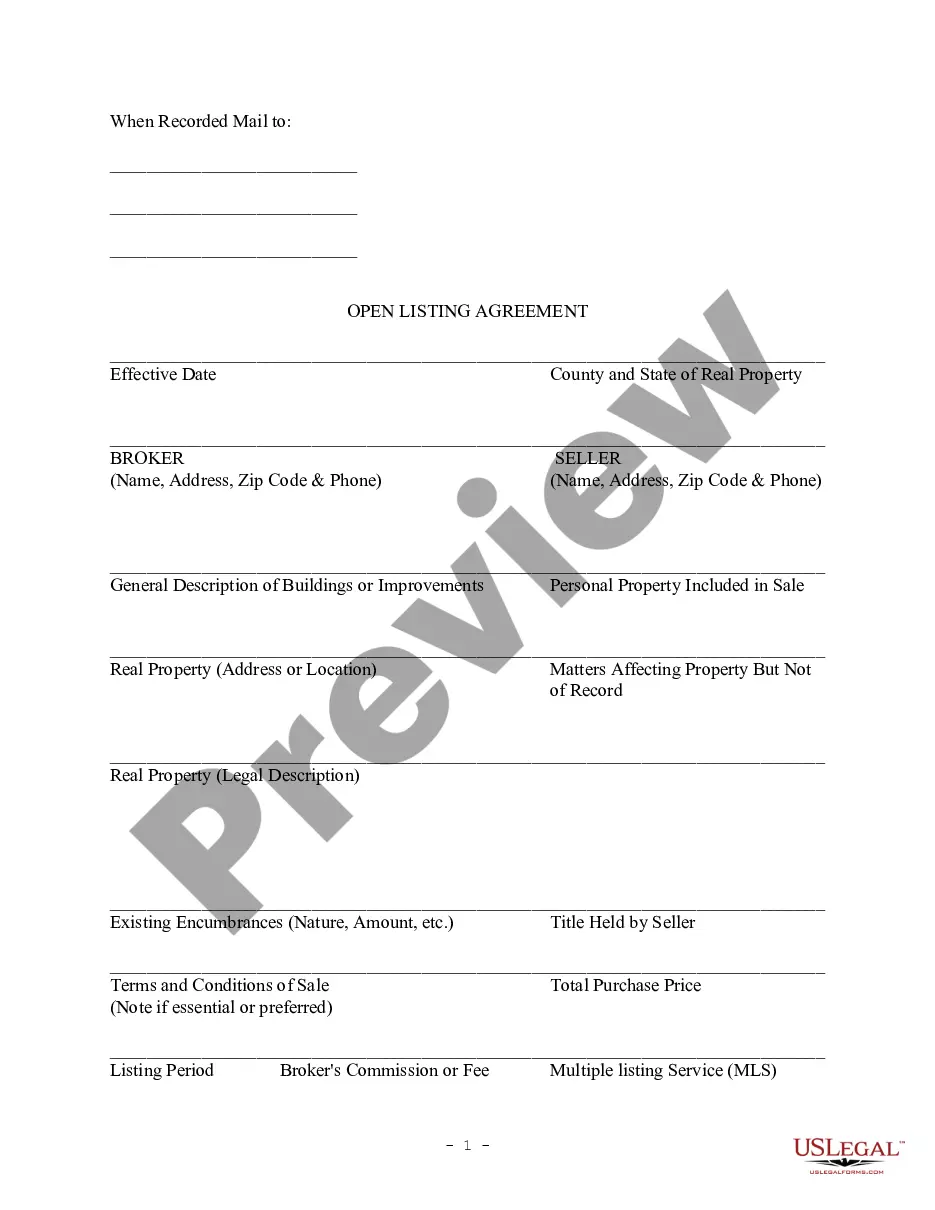
Listing Agreement Form For Condominium In Philadelphia
Description

Get your form ready online
Our built-in tools help you complete, sign, share, and store your documents in one place.
Make edits, fill in missing information, and update formatting in US Legal Forms—just like you would in MS Word.
Download a copy, print it, send it by email, or mail it via USPS—whatever works best for your next step.
Sign and collect signatures with our SignNow integration. Send to multiple recipients, set reminders, and more. Go Premium to unlock E-Sign.
If this form requires notarization, complete it online through a secure video call—no need to meet a notary in person or wait for an appointment.
We protect your documents and personal data by following strict security and privacy standards.

Make edits, fill in missing information, and update formatting in US Legal Forms—just like you would in MS Word.

Download a copy, print it, send it by email, or mail it via USPS—whatever works best for your next step.

Sign and collect signatures with our SignNow integration. Send to multiple recipients, set reminders, and more. Go Premium to unlock E-Sign.

If this form requires notarization, complete it online through a secure video call—no need to meet a notary in person or wait for an appointment.

We protect your documents and personal data by following strict security and privacy standards.
Looking for another form?





Form popularity
FAQ
Rationale: Requirements of a valid listing agreement include: a definite starting (commencement) and ending (termination) date. Rationale: When the seller's agent is working with potential buyers, the agent must: provide the IABS unless the buyer is represented by another agent.
Every valid contract in California needs to have four essential elements. (1) The parties must be capable of contracting, (2) the parties must consent to the contract, (3) the contract must have a lawful object (they cannot be for illegal services), and (4) the contract must be supported by consideration. (Civ.
Generally, there are three types of Listing Agreements; the Exclusive Right to Sell Listing Agreement, the Exclusive Agency Listing Agreement, and the Open or Non-Exclusive Listing Agreement. The variation between each type of Listing Agreement can prove crucial to your rights and liabilities towards your agent.
To be legally enforceable, a listing agreement must satisfy four requirements. It must contain a property description, include a promise of compensation, specify a fixed figure for the compensation (either a percentage or a dollar amount), and be in writing and signed by the seller.
As the most commonly used listing agreement, the Exclusive Right to Sell Listing's name pretty much says it all. With an Exclusive Right to Sell Listing Agreement, the real estate agent or broker has total control over the transaction. Additionally, there is no room to allow multiple agents to work on the deal.
The exclusive right-to-represent contract is the most common buyer representation agreement and best protects the agent. Buyer's agents make significant time and resource investments.
The most desirable form of listing agreement from an agent's viewpoint is the Exclusive right to sell because it guarantees a commission for the agent regardless of who sells the property during the listing period.
A listing agreement is between the parties that own a property and the agents or brokers who will find a buyer for it. Typically, a real estate listing agreement involves the property owner and a real estate agent.
Real estate agents have three listing agreements, the most common of which is the exclusive right-to-sell agreement. But let's go over some details of each type.
A "listing agreement" is a contract between a real estate agent or broker (the industry professional who will be listing the property for sale) and a home seller. It primarily says that the agent has the right to list (advertise and handle the sale of) the house.

