Listing Agreement Document Format In Nevada
Description
Get your form ready online
Our built-in tools help you complete, sign, share, and store your documents in one place.
Make edits, fill in missing information, and update formatting in US Legal Forms—just like you would in MS Word.
Download a copy, print it, send it by email, or mail it via USPS—whatever works best for your next step.
Sign and collect signatures with our SignNow integration. Send to multiple recipients, set reminders, and more. Go Premium to unlock E-Sign.
If this form requires notarization, complete it online through a secure video call—no need to meet a notary in person or wait for an appointment.
We protect your documents and personal data by following strict security and privacy standards.

Make edits, fill in missing information, and update formatting in US Legal Forms—just like you would in MS Word.

Download a copy, print it, send it by email, or mail it via USPS—whatever works best for your next step.

Sign and collect signatures with our SignNow integration. Send to multiple recipients, set reminders, and more. Go Premium to unlock E-Sign.

If this form requires notarization, complete it online through a secure video call—no need to meet a notary in person or wait for an appointment.

We protect your documents and personal data by following strict security and privacy standards.
Looking for another form?






Form popularity
FAQ
Similarly, real estate agents may use electronic listing agreement forms to create an enforceable agency relationship with a client, as though it were a printed document manually signed by the client.
Though notarization is not required, it may still be a good idea to have a notary present in order to verify the identities of all signers.
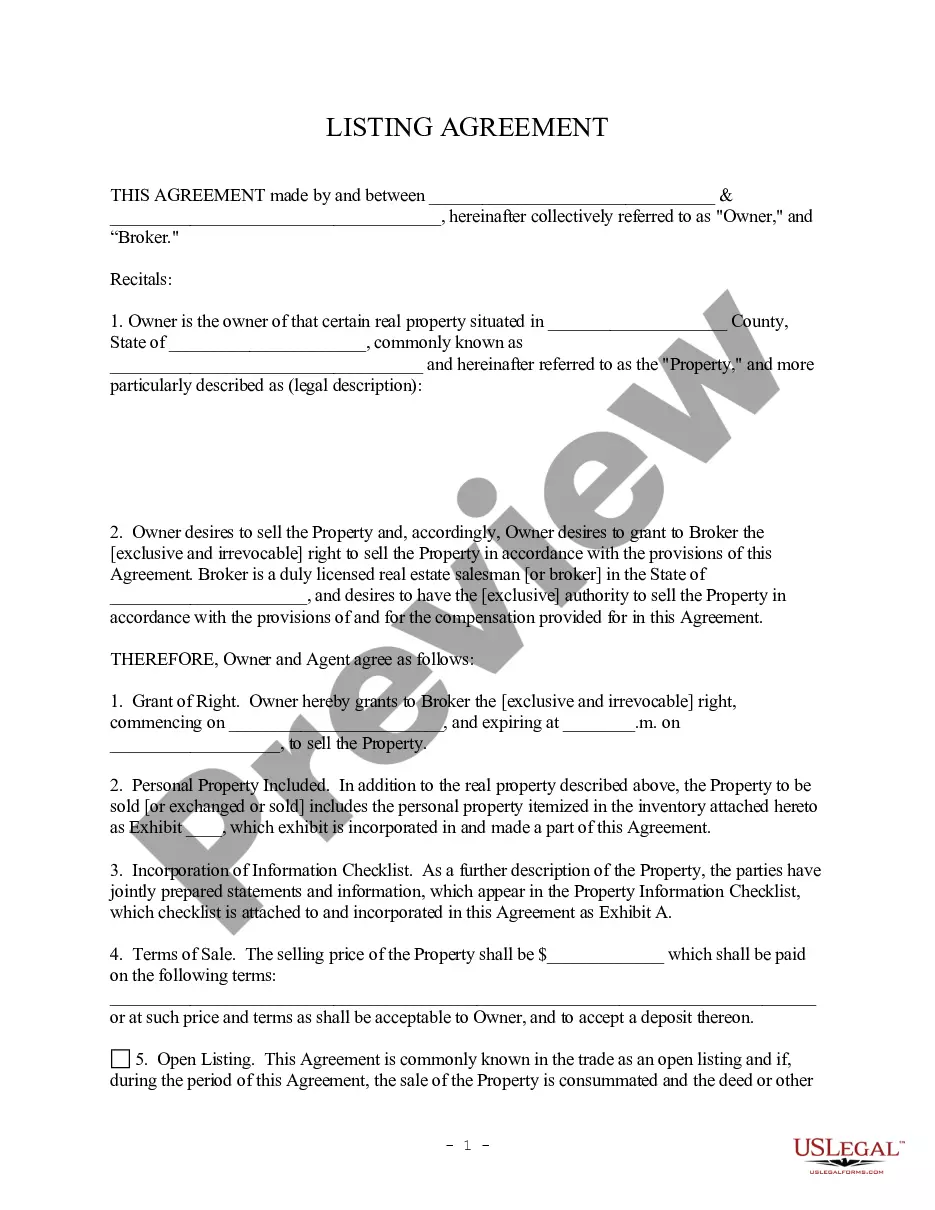
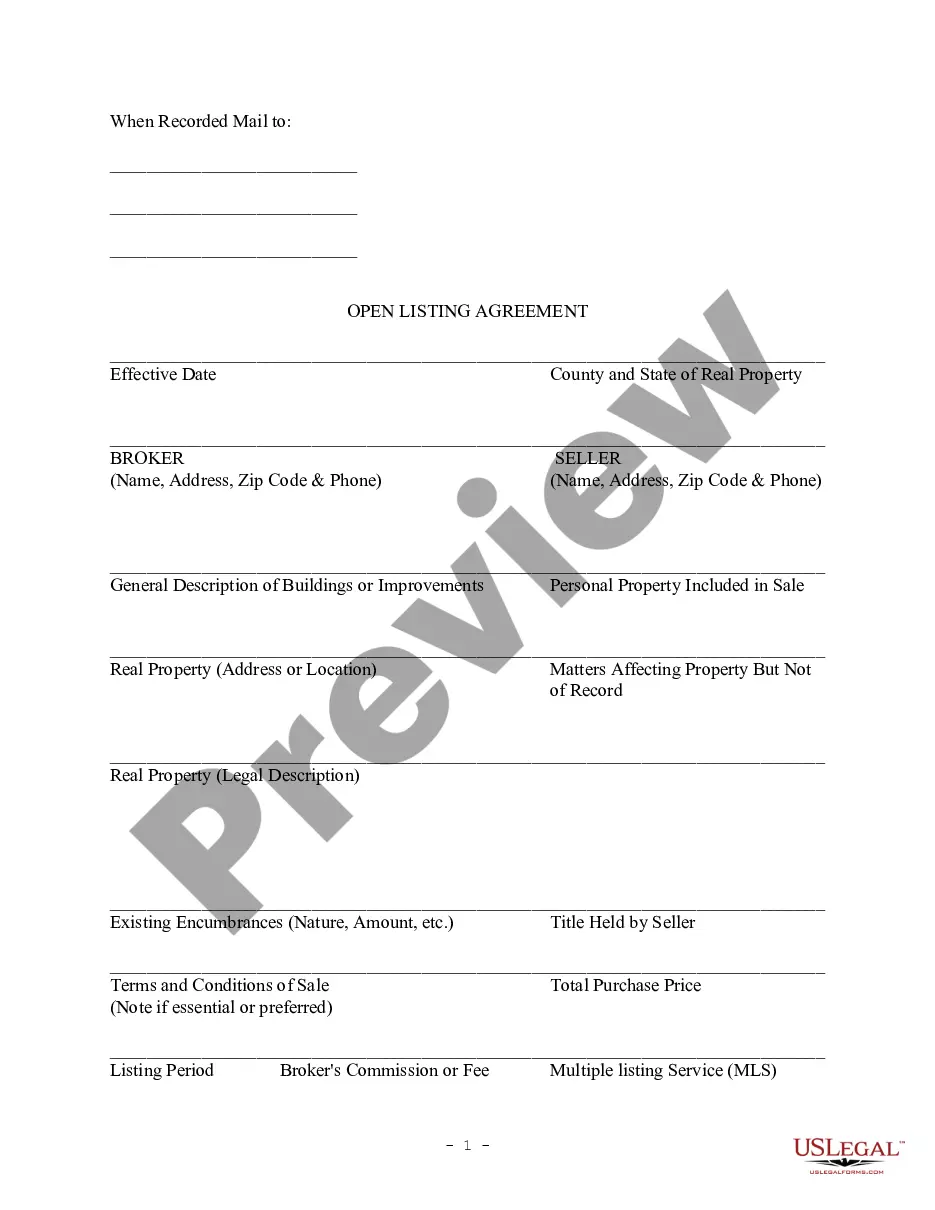
A listing agreement is a written document signed by all owners of real estate or their authorized attorney in fact authorizing a broker to offer or advertise real estate described in such document for sale or lease on specified terms for a defined period of time and is only valid if signed by all owners or their ...
Eight Listing Traps to Avoid Approach to Conflicts of Interest. Non-Disclosed Referral Fees. Lack of Specificity in the Listing Agreement. Unquantifiable Efforts. Long Listing Agreements. Seller Costs. Focus on Brokerage Rather Than Agent. Paying Out of Escrow.
To be legally enforceable, a listing agreement must satisfy four requirements. It must contain a property description, include a promise of compensation, specify a fixed figure for the compensation (either a percentage or a dollar amount), and be in writing and signed by the seller.
Explanation: A written listing agreement between a seller and a broker is an example of a bilateral contract. A bilateral contract is a type of contract where both parties make promises to each other. In this case, the seller promises to sell the property and the broker promises to find a buyer.

