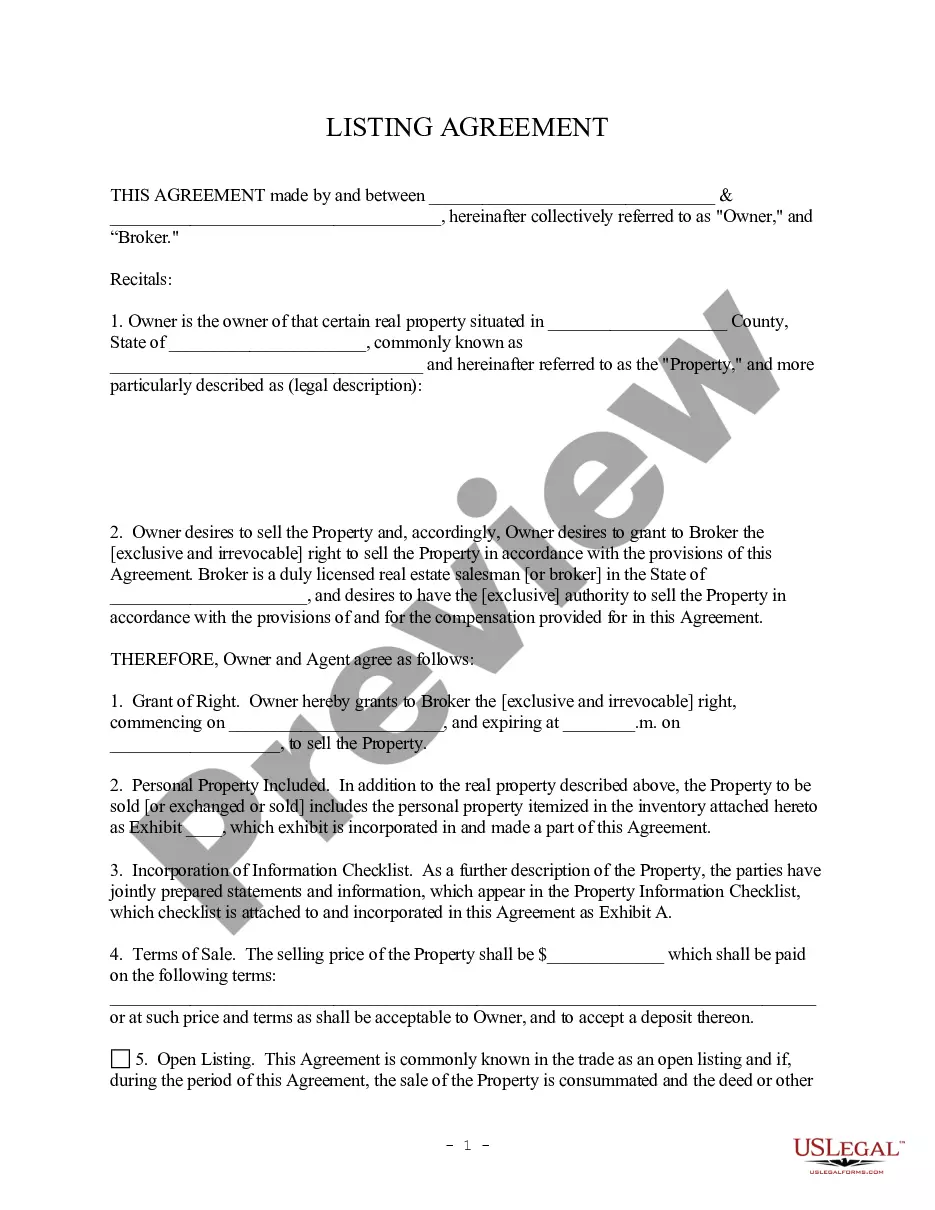
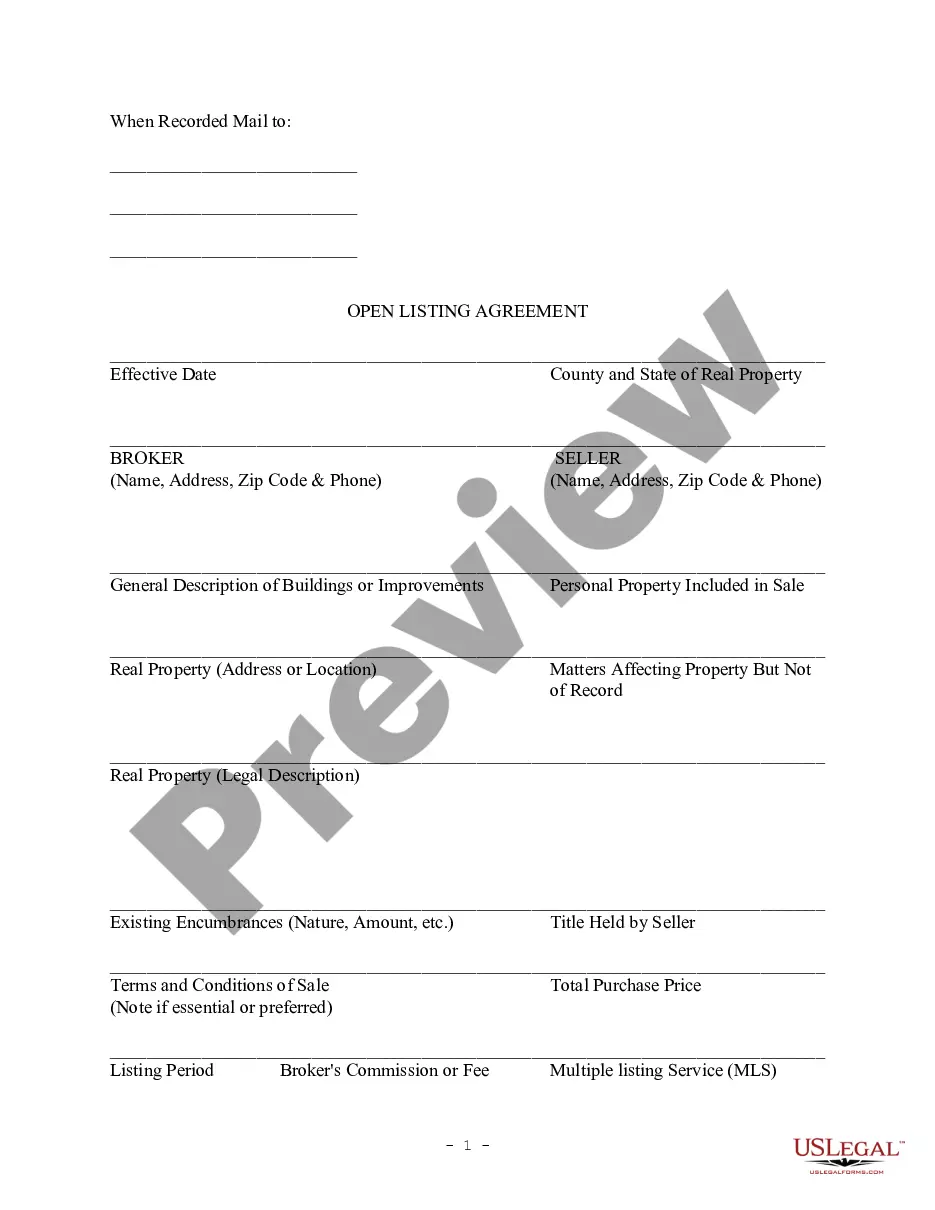
Listing Agreement Contract With A Self-renewing Clause In Nevada
Description
Get your form ready online
Our built-in tools help you complete, sign, share, and store your documents in one place.
Make edits, fill in missing information, and update formatting in US Legal Forms—just like you would in MS Word.
Download a copy, print it, send it by email, or mail it via USPS—whatever works best for your next step.
Sign and collect signatures with our SignNow integration. Send to multiple recipients, set reminders, and more. Go Premium to unlock E-Sign.
If this form requires notarization, complete it online through a secure video call—no need to meet a notary in person or wait for an appointment.
We protect your documents and personal data by following strict security and privacy standards.

Make edits, fill in missing information, and update formatting in US Legal Forms—just like you would in MS Word.

Download a copy, print it, send it by email, or mail it via USPS—whatever works best for your next step.

Sign and collect signatures with our SignNow integration. Send to multiple recipients, set reminders, and more. Go Premium to unlock E-Sign.

If this form requires notarization, complete it online through a secure video call—no need to meet a notary in person or wait for an appointment.

We protect your documents and personal data by following strict security and privacy standards.
Looking for another form?


Form popularity
FAQ
Typically, an owner can sell a home after the protection clause period has passed, which is usually 90 days after the contract has expired. A protection clause, sometimes called a safety clause, protects the agent from the house being sold to a buyer to whom the agent introduced the property.
Once this agreement expires, your real estate agent no longer represents you. It also means your listing will officially no longer be for sale, as it will be removed from platforms like Realtor®. It will also be removed from the multiple listing service, also called the MLS.
Self-renewing clauses, also known as "evergreen clauses," are generally not allowed in listing agreements. They can potentially lock a seller into a long-term contract with a broker, which may not be in the seller's best interest.
The parties involved in the real estate contract are responsible for filing an extension if they wish to extend the contract. Generally, the buyer and seller must both agree to an extension and both must sign the extension agreement. The extension must be filed with the appropriate Land Registry.
How to Amend a Listing Agreement (3 steps) Discuss the Amendment. The broker and owner should meet and discuss the changes to the listing agreement. Write the Amendment. Once a verbal agreement is made, the amendment should be written. Sign and Attach to Listing Agreement.
To extend the listing, submit these documents to the MLS Support Team: Amendment Form. To amend the Expiration Date of the Listing Contract. MLS Change Form: Complete the top section. Fill in the new date in the Expiration Date field.
You would have to wait until the contract is completed and then you could sell privately so long as you don't sell it to someone who was introduced to the property by your real estate agent unless until three months following the termination of the contract has passed.
Typically, an owner can sell a home after the protection clause period has passed, which is usually 90 days after the contract has expired. A protection clause, sometimes called a safety clause, protects the agent from the house being sold to a buyer to whom the agent introduced the property.
Once this agreement expires, your real estate agent no longer represents you. It also means your listing will officially no longer be for sale, as it will be removed from platforms like Realtor®. It will also be removed from the multiple listing service, also called the MLS.
Once this agreement expires, your real estate agent no longer represents you. It also means your listing will officially no longer be for sale, as it will be removed from platforms like Realtor®.

