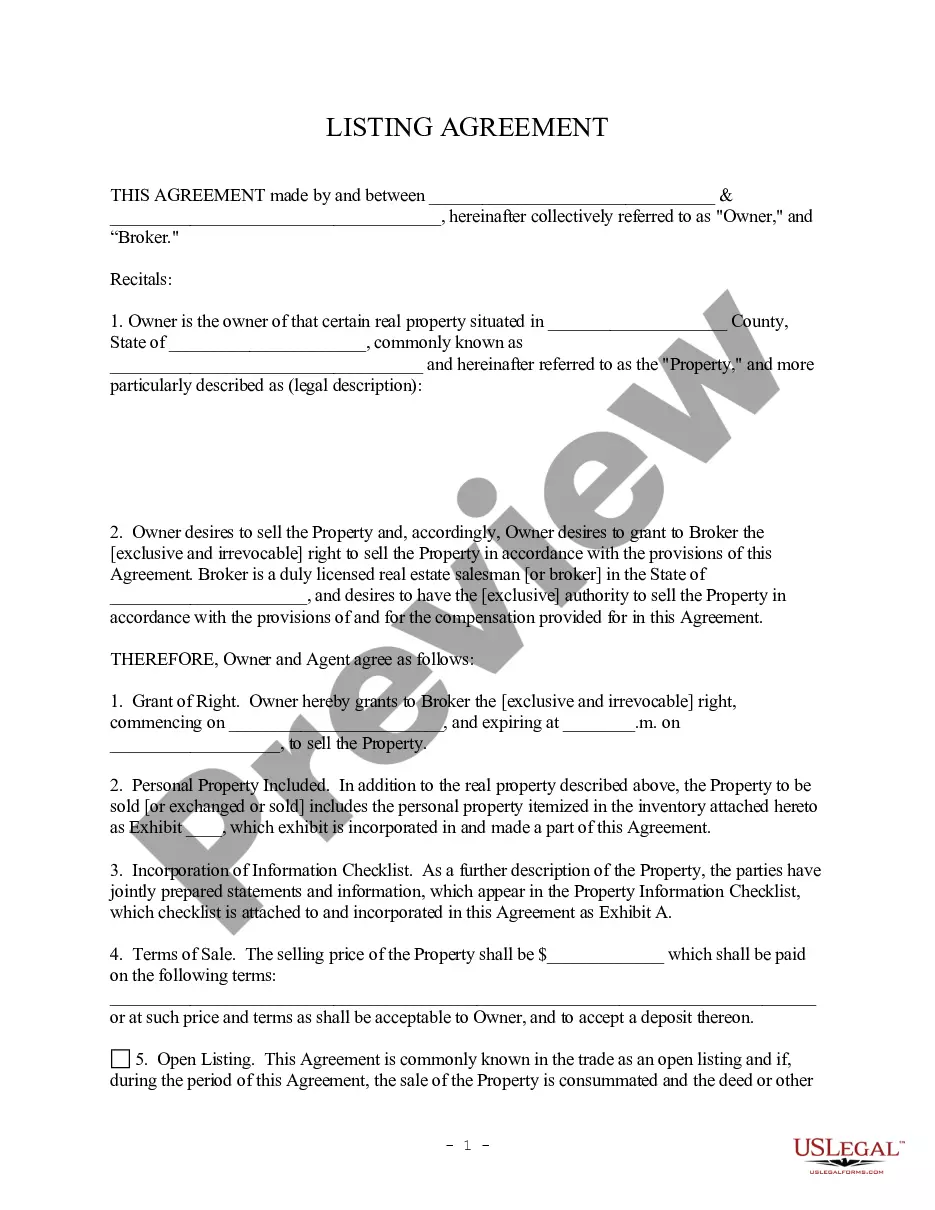
Listing Agreement Contract With Agent In Nassau
Description
Get your form ready online
Our built-in tools help you complete, sign, share, and store your documents in one place.
Make edits, fill in missing information, and update formatting in US Legal Forms—just like you would in MS Word.
Download a copy, print it, send it by email, or mail it via USPS—whatever works best for your next step.
Sign and collect signatures with our SignNow integration. Send to multiple recipients, set reminders, and more. Go Premium to unlock E-Sign.
If this form requires notarization, complete it online through a secure video call—no need to meet a notary in person or wait for an appointment.
We protect your documents and personal data by following strict security and privacy standards.

Make edits, fill in missing information, and update formatting in US Legal Forms—just like you would in MS Word.

Download a copy, print it, send it by email, or mail it via USPS—whatever works best for your next step.

Sign and collect signatures with our SignNow integration. Send to multiple recipients, set reminders, and more. Go Premium to unlock E-Sign.

If this form requires notarization, complete it online through a secure video call—no need to meet a notary in person or wait for an appointment.

We protect your documents and personal data by following strict security and privacy standards.
Looking for another form?



Form popularity
FAQ
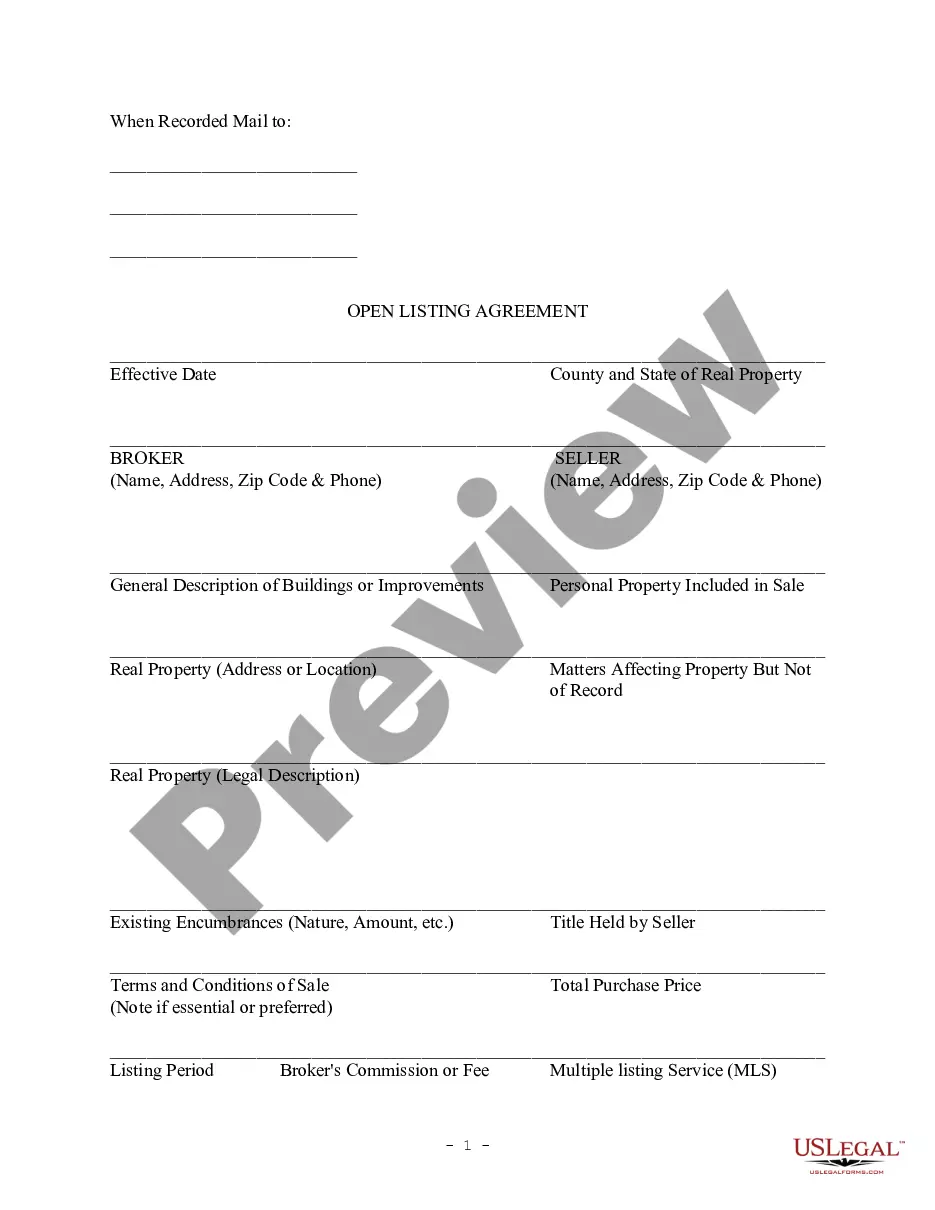
4 Common Types of Listing Agreements in Real Estate Open listing agreement. An open listing is a non-exclusive contract. Exclusive right to sell listing agreement. An exclusive right to sell listing is the most widely-used listing agreement. Exclusive agency listing agreement. Net listing agreement.
Most Realtor contracts last between three and six months, but the length isn't set in stone. Some agreements are as short as 30 days, while others extend beyond 6 months to a year, depending on the brokerage and market conditions. If your home is in a hot market, a shorter contract may be ideal.
Typical time frames for agreements range from three to six months, though they can be shorter or longer. Many include a renewal clause, which provides an option to extend the listing period if both parties agree.
A listing agreement is “a legally binding contract that creates an agency relationship authorizing a broker to serve as the agent for a principal in a real estate transaction.” In other words, a listing agreement is an employment contract between a client and a broker that spells out what the broker is responsible for ...
Writing your own contracts is perfectly possible, and legal. But it's also an incredibly bad idea. There's two reasons for this: Property law is complicated. Because it's such a fundamental part of legislation, it's often lots and lots of different laws layered on top of each other.
When the listing is signed by an authorized licensee member of the broker's staff or by the broker himself, it becomes a (bilateral) contract, with a 5-day management approval contingency. Broker (or broker's agent) must give the seller a copy of the agreement at the time of signing.
A listing agreement is “a legally binding contract that creates an agency relationship authorizing a broker to serve as the agent for a principal in a real estate transaction.” In other words, a listing agreement is an employment contract between a client and a broker that spells out what the broker is responsible for ...
A buyer's agency agreement is a written contract that creates a working relationship between you, as a potential home buyer, and the buyer's agent you'd like to work with. Sellers sign a similar contract, known as a listing agreement, with their listing agent.
An exclusive listing is a type of real estate listing agreement in which a single broker is appointed as the seller's sole agent. In an exclusive agency listing, the seller retains the right to sell the property, with no obligation to the broker.

