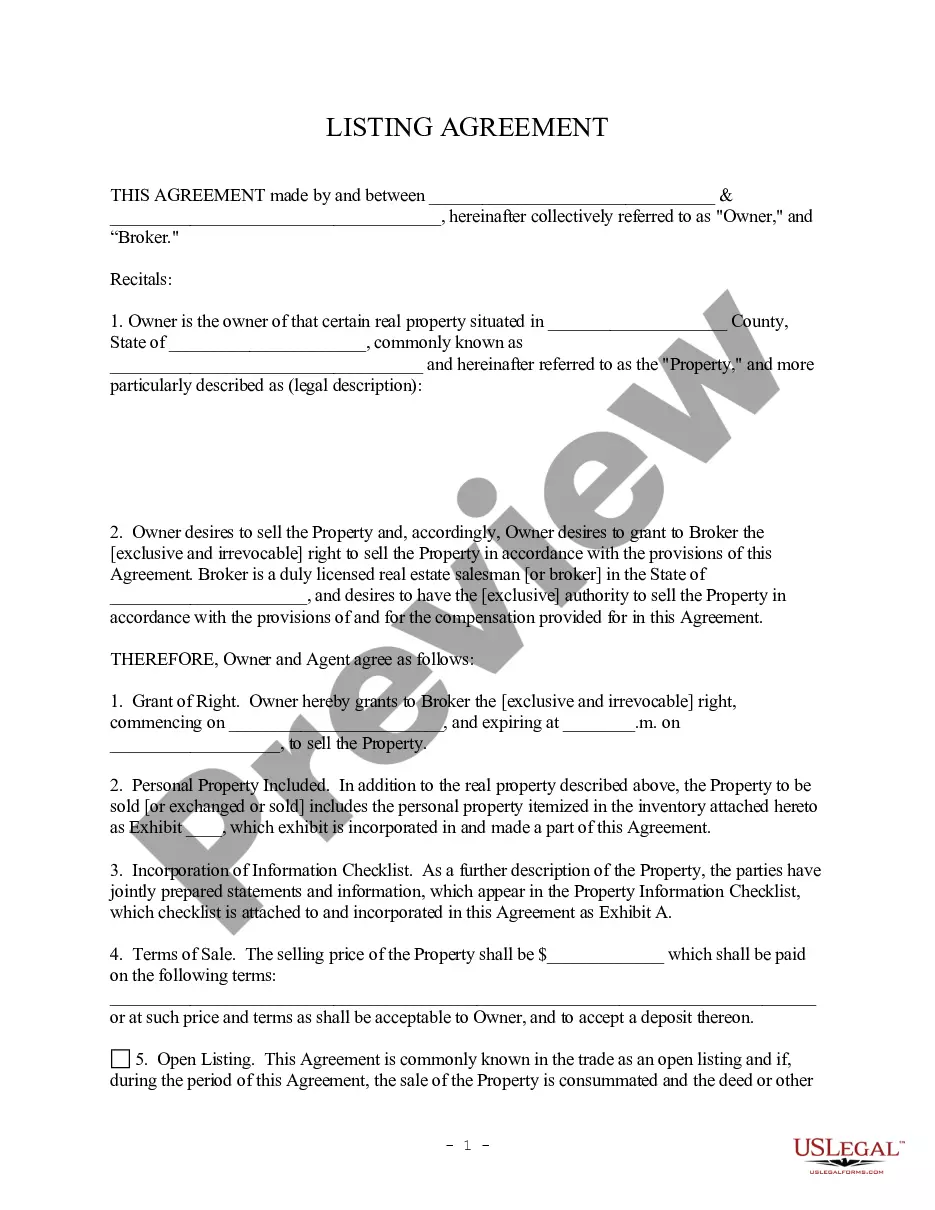
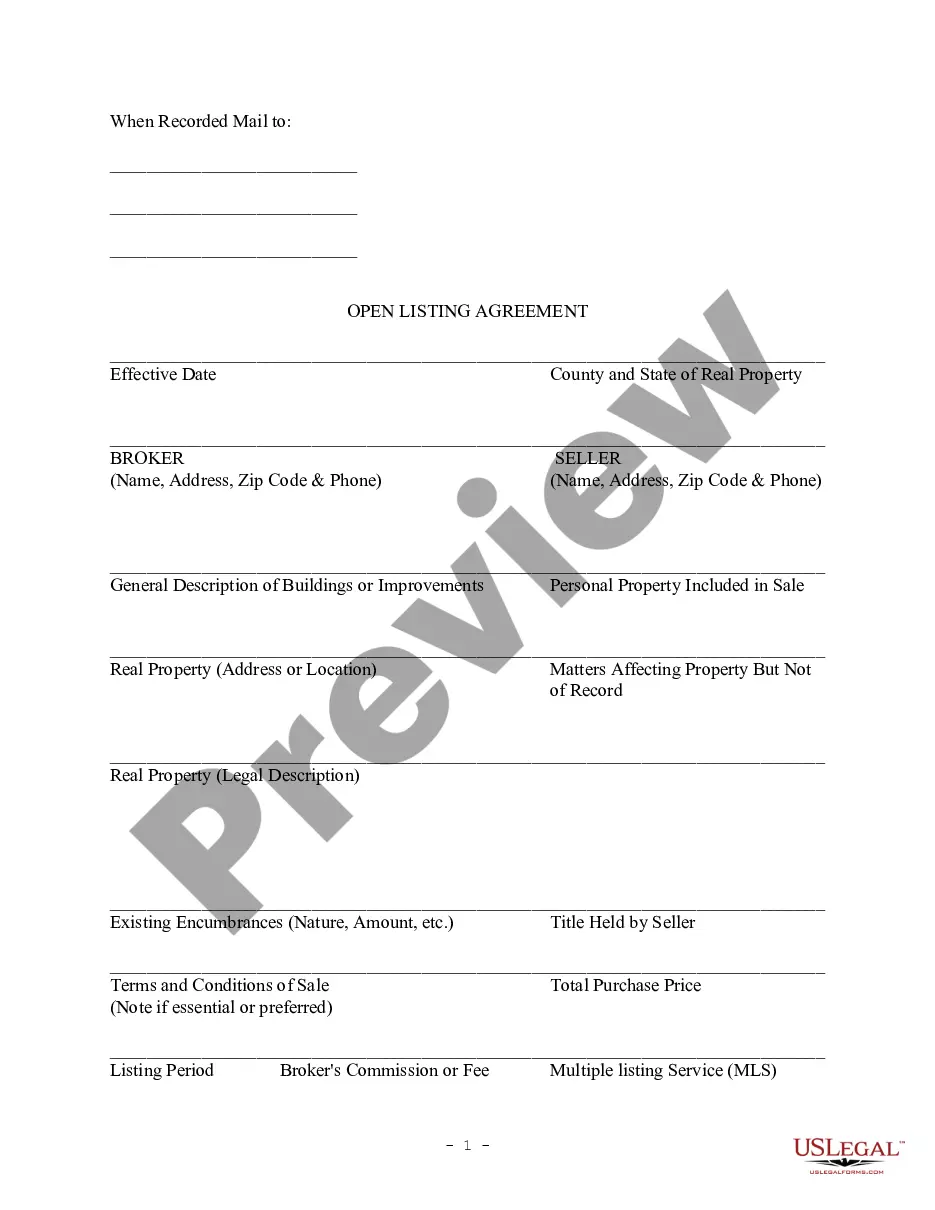
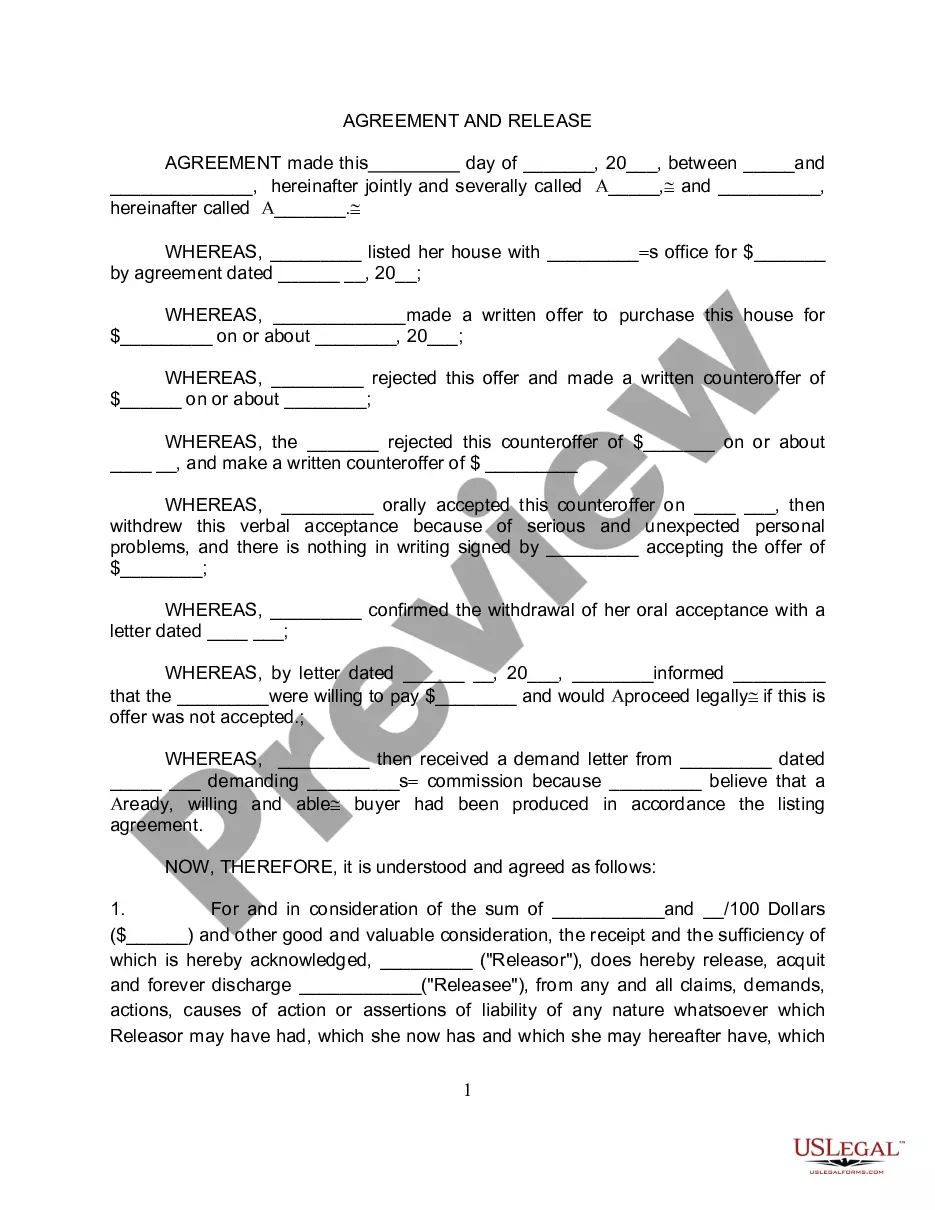
Listing Agreement Document For Payment Agreement In Michigan
Description
Get your form ready online
Our built-in tools help you complete, sign, share, and store your documents in one place.
Make edits, fill in missing information, and update formatting in US Legal Forms—just like you would in MS Word.
Download a copy, print it, send it by email, or mail it via USPS—whatever works best for your next step.
Sign and collect signatures with our SignNow integration. Send to multiple recipients, set reminders, and more. Go Premium to unlock E-Sign.
If this form requires notarization, complete it online through a secure video call—no need to meet a notary in person or wait for an appointment.
We protect your documents and personal data by following strict security and privacy standards.

Make edits, fill in missing information, and update formatting in US Legal Forms—just like you would in MS Word.

Download a copy, print it, send it by email, or mail it via USPS—whatever works best for your next step.

Sign and collect signatures with our SignNow integration. Send to multiple recipients, set reminders, and more. Go Premium to unlock E-Sign.

If this form requires notarization, complete it online through a secure video call—no need to meet a notary in person or wait for an appointment.

We protect your documents and personal data by following strict security and privacy standards.
Looking for another form?





Form popularity
FAQ
Standard agreements have features that distinguish them from other contract types. These features are essential elements such as minimum bargaining rights, high trading volumes, and low risk. A standard form of agreement can be used when a business needs to set the same terms for many people purchasing its products.
A contract where the terms and conditions are put forward by one party and the other party is not given an opportunity to negotiate or amend those terms and conditions.
A listing agreement is between the parties that own a property and the agents or brokers who will find a buyer for it. Typically, a real estate listing agreement involves the property owner and a real estate agent. The property owner, or seller, grants the agent the right to market and sell the property.
2. Exclusive right to sell listing agreement. An exclusive right to sell listing is the most widely-used listing agreement. Under this agreement, the broker has the exclusive right to market the property for a specified period of time.
Every valid contract in California needs to have four essential elements. (1) The parties must be capable of contracting, (2) the parties must consent to the contract, (3) the contract must have a lawful object (they cannot be for illegal services), and (4) the contract must be supported by consideration.
Eight Listing Traps to Avoid Approach to Conflicts of Interest. Non-Disclosed Referral Fees. Lack of Specificity in the Listing Agreement. Unquantifiable Efforts. Long Listing Agreements. Seller Costs. Focus on Brokerage Rather Than Agent. Paying Out of Escrow.
To be legally enforceable, a listing agreement must satisfy four requirements. It must contain a property description, include a promise of compensation, specify a fixed figure for the compensation (either a percentage or a dollar amount), and be in writing and signed by the seller.
The listing agreement is a legally binding contract between the broker and the seller, so any modifications or amendments to the contract need to be agreed upon and documented in writing by all parties. This ensures that there is a clear record of the changes made to the listing agreement.
An exclusive right-to-sell listing is the most commonly used real estate contract. With this type of listing agreement, one broker is authorized as the seller's sole agent and has exclusive authorization to represent the property.
An exclusive right-to-sell listing is the most commonly used contract. With this type of listing agreement, one broker is appointed the sole seller's agent and has exclusive authorization to represent the property.

