Listing Agreement Form With Multiple Agents In Houston
Description
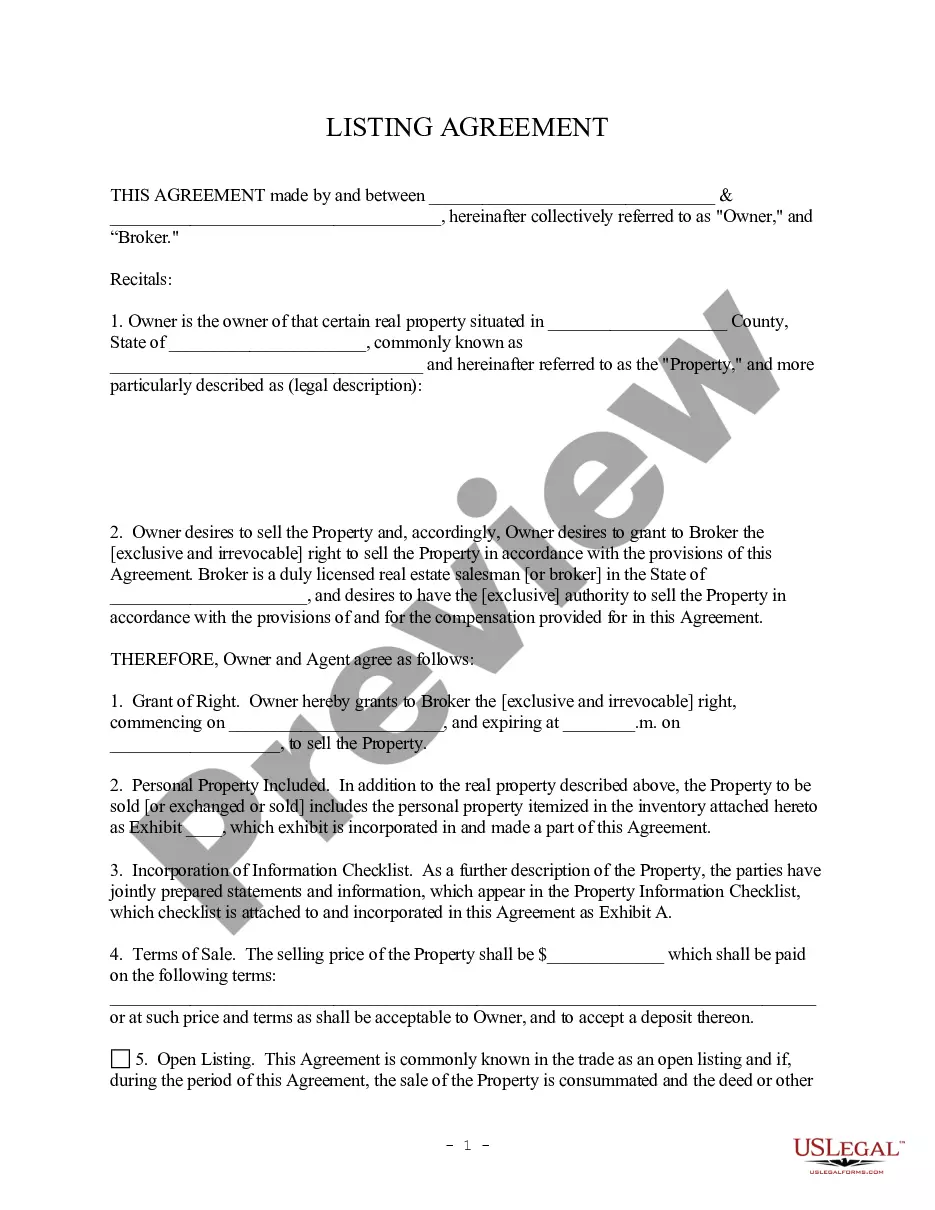
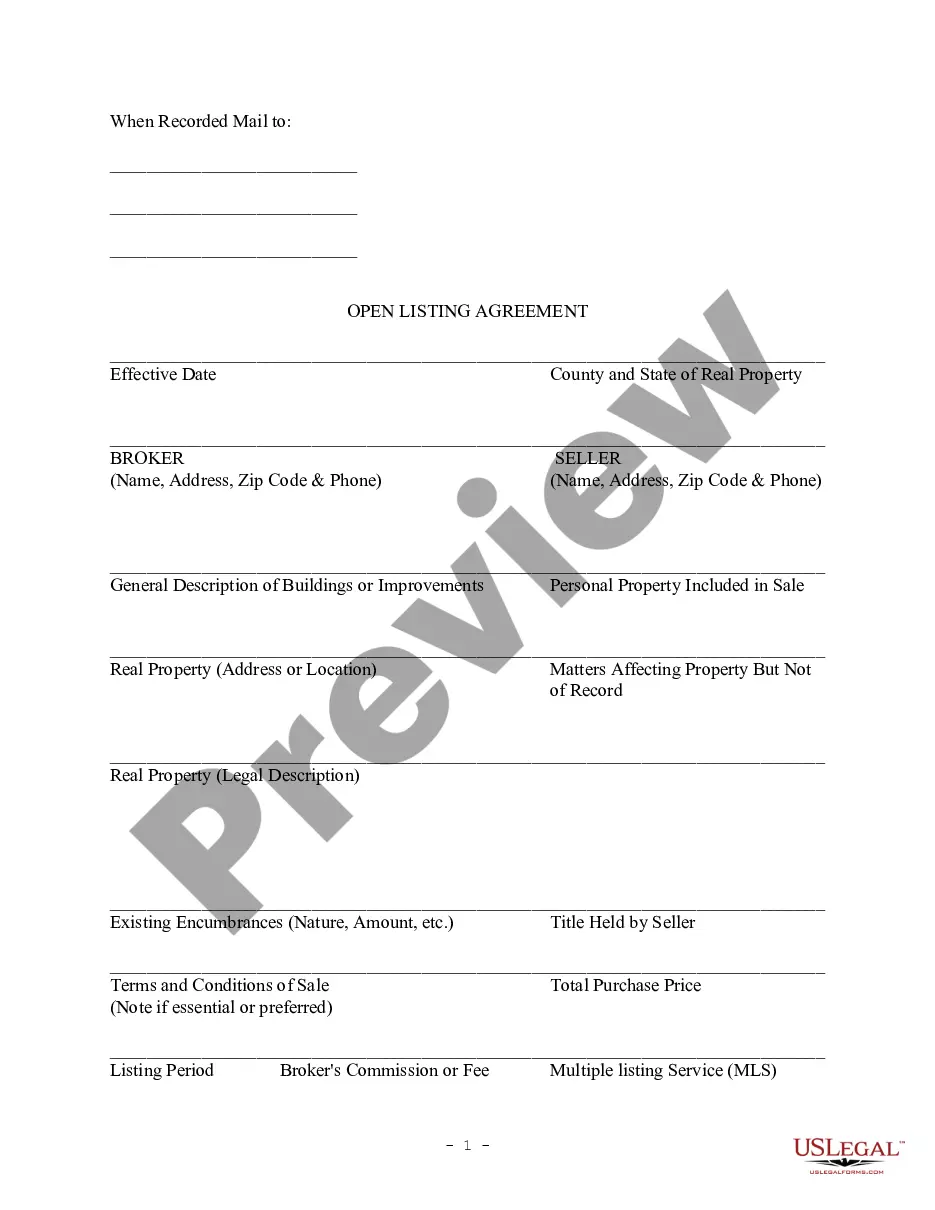
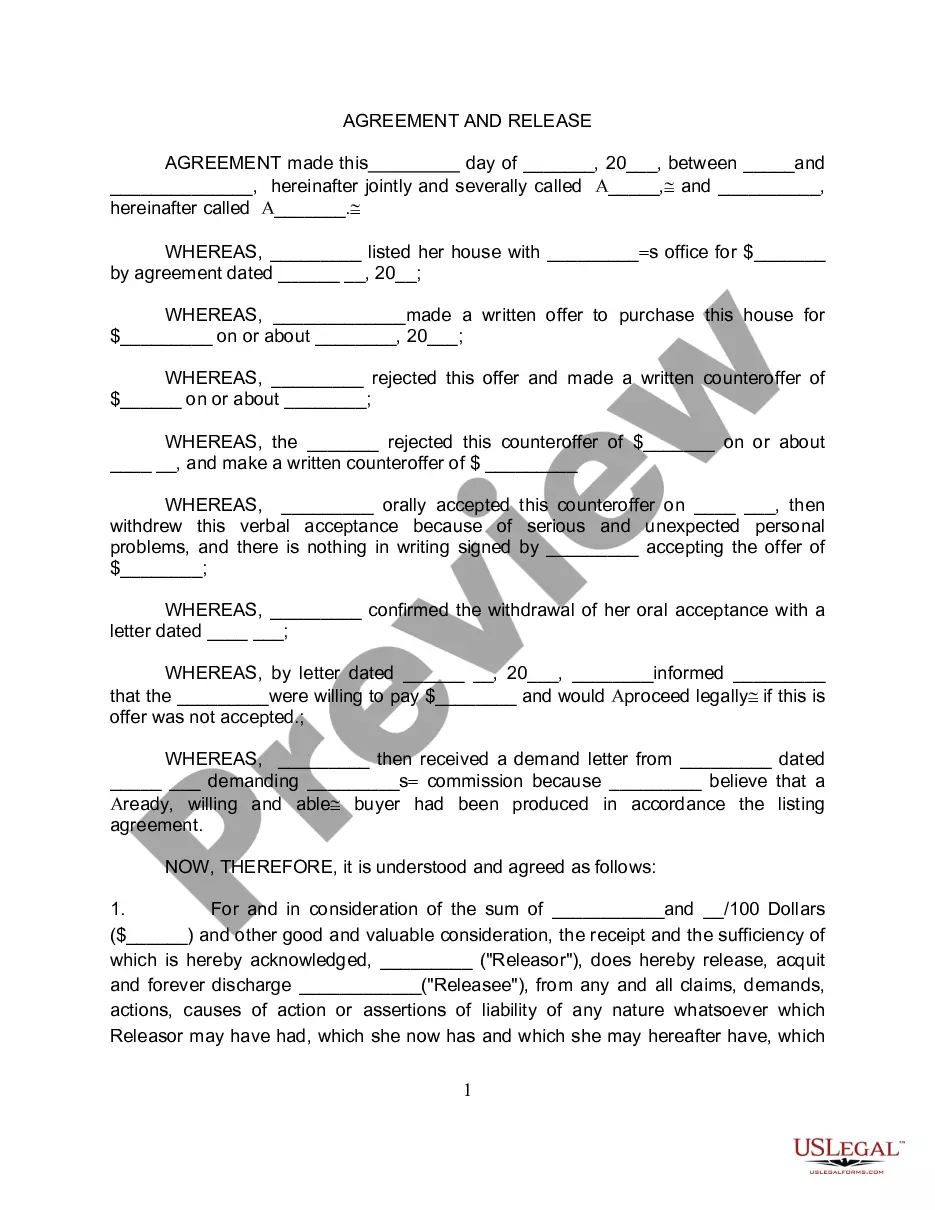
Get your form ready online
Our built-in tools help you complete, sign, share, and store your documents in one place.
Make edits, fill in missing information, and update formatting in US Legal Forms—just like you would in MS Word.
Download a copy, print it, send it by email, or mail it via USPS—whatever works best for your next step.
Sign and collect signatures with our SignNow integration. Send to multiple recipients, set reminders, and more. Go Premium to unlock E-Sign.
If this form requires notarization, complete it online through a secure video call—no need to meet a notary in person or wait for an appointment.
We protect your documents and personal data by following strict security and privacy standards.

Make edits, fill in missing information, and update formatting in US Legal Forms—just like you would in MS Word.

Download a copy, print it, send it by email, or mail it via USPS—whatever works best for your next step.

Sign and collect signatures with our SignNow integration. Send to multiple recipients, set reminders, and more. Go Premium to unlock E-Sign.

If this form requires notarization, complete it online through a secure video call—no need to meet a notary in person or wait for an appointment.

We protect your documents and personal data by following strict security and privacy standards.
Looking for another form?










Form popularity
FAQ
An open listing is a non-exclusive contract. This type of listing gives the seller or buyer the right to engage any number of brokers as agents.
The principal parties to the contract are the listing broker and the client. The client may be buyer, seller, landlord or tenant in the proposed transaction. Legally, the broker is the client's agent. The principal party on the other side of the transaction is a customer or a potential customer, called a prospect.
The requirement that all listing agreements have a definite expiration date is typically the responsibility of state real estate licensing laws and regulations. Each state has its own laws and regulations governing real estate transactions, including listing agreements between sellers and real estate agents.
A listing agreement is between the parties that own a property and the agents or brokers who will find a buyer for it. Typically, a real estate listing agreement involves the property owner and a real estate agent. The property owner, or seller, grants the agent the right to market and sell the property.
Multiple Listing Service (MLS): What Is It An MLS is a powerful tool to further cooperative agreements between brokers for the sale of their listings and provide information necessary to permit such cooperation.
Working with more than one real estate agent is fine when you haven't signed an exclusive agreement with anyone, says Adam Aguilar, a real estate agent with Reliantra in West Toluca Lake, CA. “You can use as many as you wish, unless they stop to ask you to make a commitment to them, in writing,” Aguilar adds.
Working with more than one real estate agent is fine when you haven't signed an exclusive agreement with anyone, says Adam Aguilar, a real estate agent with Reliantra in West Toluca Lake, CA. “You can use as many as you wish, unless they stop to ask you to make a commitment to them, in writing,” Aguilar adds.
Most agents expect you to query multiple agents at a time, so it's usually not a problem. A few agents do request exclusive submissions, though, so look out for that. Most agencies don't want you to query multiple agents at the same agency at the same time. Read each agent's submission instructions carefully.
Working with more than one real estate agent is fine when you haven't signed an exclusive agreement with anyone, says Adam Aguilar, a real estate agent with Reliantra in West Toluca Lake, CA. “You can use as many as you wish, unless they stop to ask you to make a commitment to them, in writing,” Aguilar adds.
The three types of real estate listing agreements are open listing, exclusive agency listing, and exclusive right-to-sell listing.

