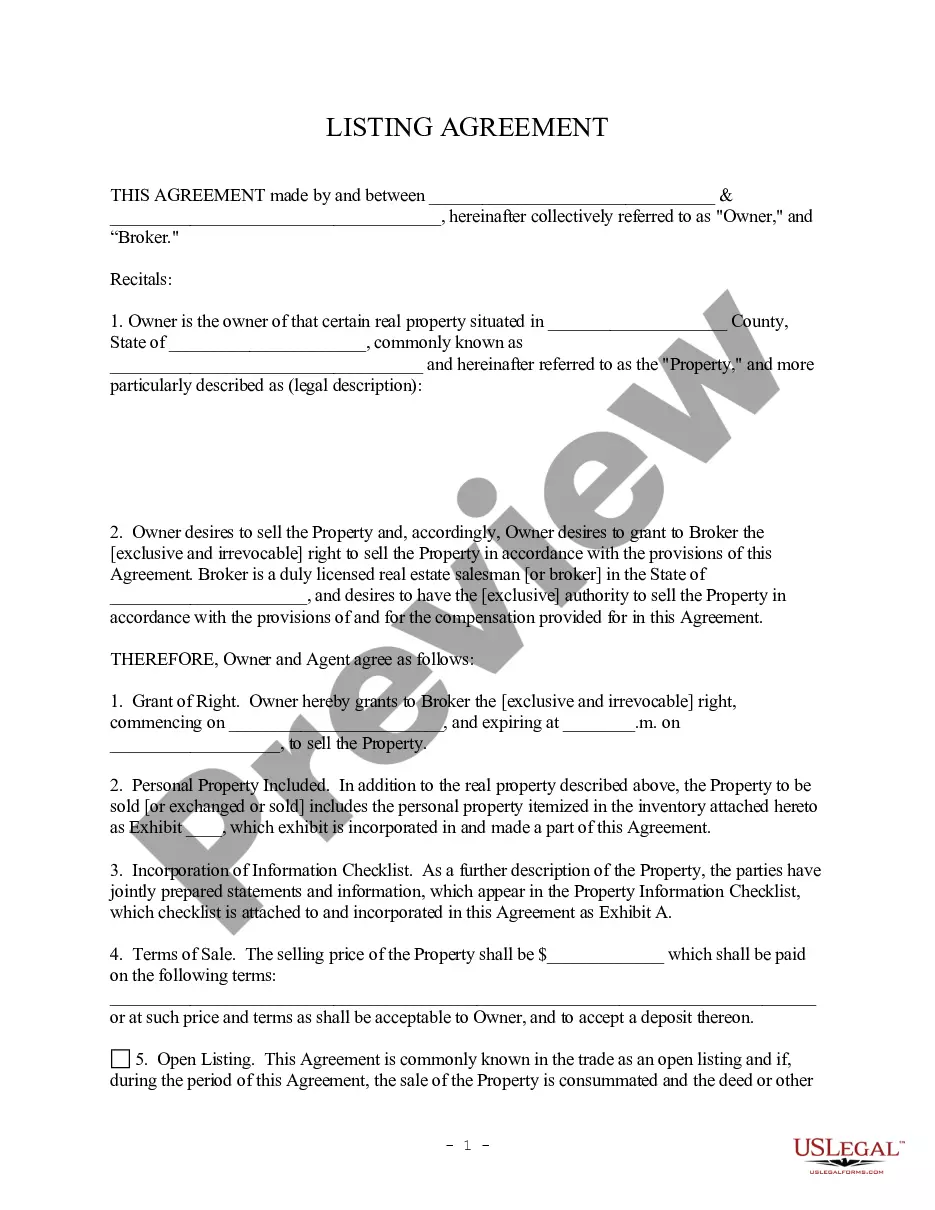
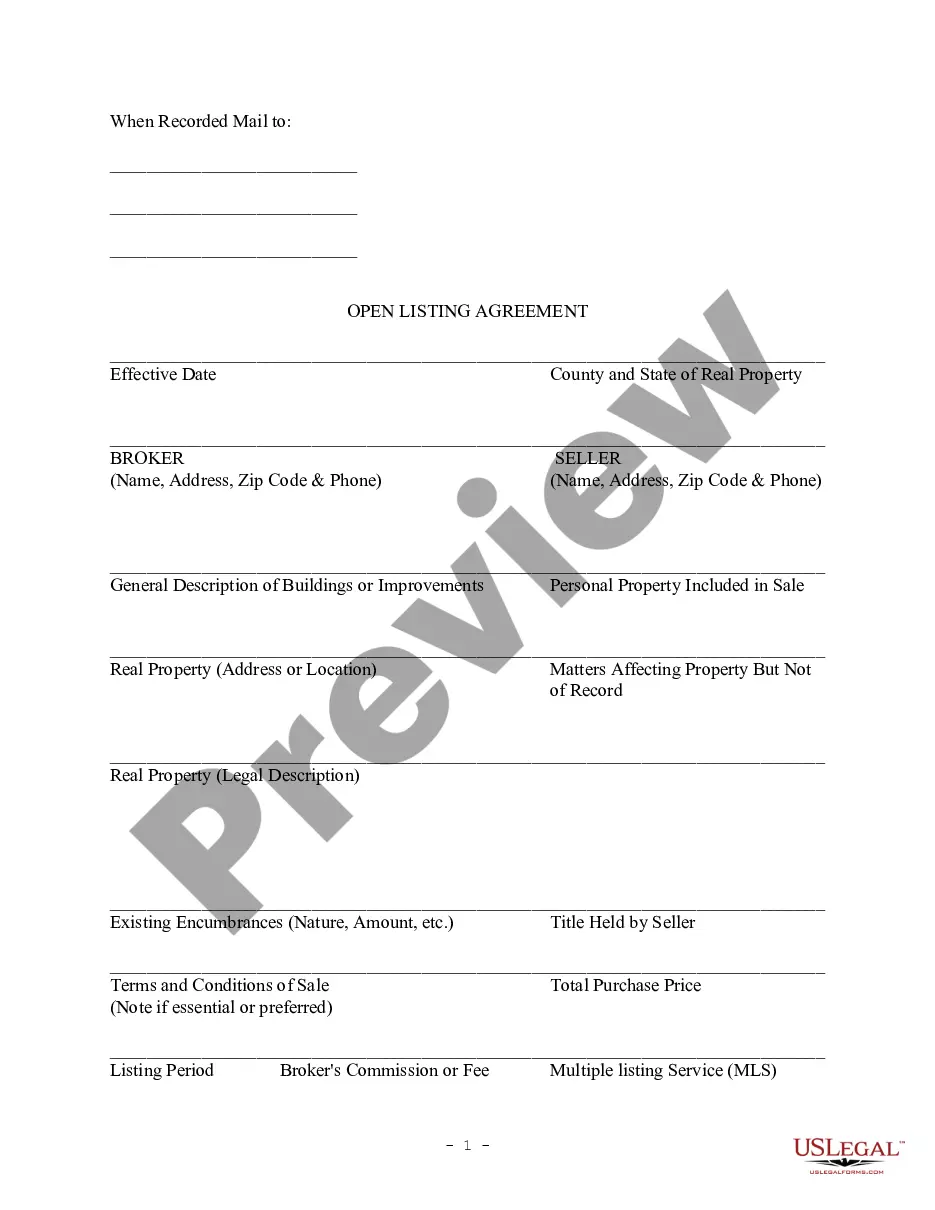
Listing Agreement Document With Bse In Contra Costa
Description
Get your form ready online
Our built-in tools help you complete, sign, share, and store your documents in one place.
Make edits, fill in missing information, and update formatting in US Legal Forms—just like you would in MS Word.
Download a copy, print it, send it by email, or mail it via USPS—whatever works best for your next step.
Sign and collect signatures with our SignNow integration. Send to multiple recipients, set reminders, and more. Go Premium to unlock E-Sign.
If this form requires notarization, complete it online through a secure video call—no need to meet a notary in person or wait for an appointment.
We protect your documents and personal data by following strict security and privacy standards.

Make edits, fill in missing information, and update formatting in US Legal Forms—just like you would in MS Word.

Download a copy, print it, send it by email, or mail it via USPS—whatever works best for your next step.

Sign and collect signatures with our SignNow integration. Send to multiple recipients, set reminders, and more. Go Premium to unlock E-Sign.

If this form requires notarization, complete it online through a secure video call—no need to meet a notary in person or wait for an appointment.

We protect your documents and personal data by following strict security and privacy standards.
Looking for another form?





Form popularity
FAQ
A listing agreement is “a legally binding contract that creates an agency relationship authorizing a broker to serve as the agent for a principal in a real estate transaction.” In other words, a listing agreement is an employment contract between a client and a broker that spells out what the broker is responsible for ...
A listing agreement is between the parties that own a property and the agents or brokers who will find a buyer for it. Typically, a real estate listing agreement involves the property owner and a real estate agent. The property owner, or seller, grants the agent the right to market and sell the property.
At this point, your REALTOR will take the final steps necessary for selling your home, including the preparation and staging of your home before it's officially listed in the Multiple Listing Service (MLS) databases. This includes: Making an extra key for the lockbox. Arrange for the installation of the yard sign.
Final answer: A listing agent, when signing an agreement, is in reality representing and serving the interests of the broker who holds their license. This is a legal agreement between the broker and the other party. The agent does not sign on behalf of any other entity in the company or other MLS licensees.
A "listing agreement" is a contract between a real estate agent or broker (the industry professional who will be listing the property for sale) and a home seller.
To avoid such predatory practices, California enacted Civil Code 1670.12 and Government Code 27280.6, which took effect January 1, 2024, prohibiting an exclusive listing agreement to last longer than 24 months or to renew such a listing for longer than 12 months.
A listing agreement is between the parties that own a property and the agents or brokers who will find a buyer for it. Typically, a real estate listing agreement involves the property owner and a real estate agent. The property owner, or seller, grants the agent the right to market and sell the property.
Though notarization is not required, it may still be a good idea to have a notary present in order to verify the identities of all signers.
The three types of real estate listing agreements are open listing, exclusive agency listing, and exclusive right-to-sell listing.
A listing agreement is an example of an agency relationship that is created by express agency. In this context, express agency arises when the principal explicitly states their intention to create an agency relationship with the agent through a written or verbal agreement.

