Listing Agreement Document With A Self-renewing Clause In Bronx
Description
Get your form ready online
Our built-in tools help you complete, sign, share, and store your documents in one place.
Make edits, fill in missing information, and update formatting in US Legal Forms—just like you would in MS Word.
Download a copy, print it, send it by email, or mail it via USPS—whatever works best for your next step.
Sign and collect signatures with our SignNow integration. Send to multiple recipients, set reminders, and more. Go Premium to unlock E-Sign.
If this form requires notarization, complete it online through a secure video call—no need to meet a notary in person or wait for an appointment.
We protect your documents and personal data by following strict security and privacy standards.

Make edits, fill in missing information, and update formatting in US Legal Forms—just like you would in MS Word.

Download a copy, print it, send it by email, or mail it via USPS—whatever works best for your next step.

Sign and collect signatures with our SignNow integration. Send to multiple recipients, set reminders, and more. Go Premium to unlock E-Sign.

If this form requires notarization, complete it online through a secure video call—no need to meet a notary in person or wait for an appointment.

We protect your documents and personal data by following strict security and privacy standards.
Looking for another form?

Form popularity
FAQ
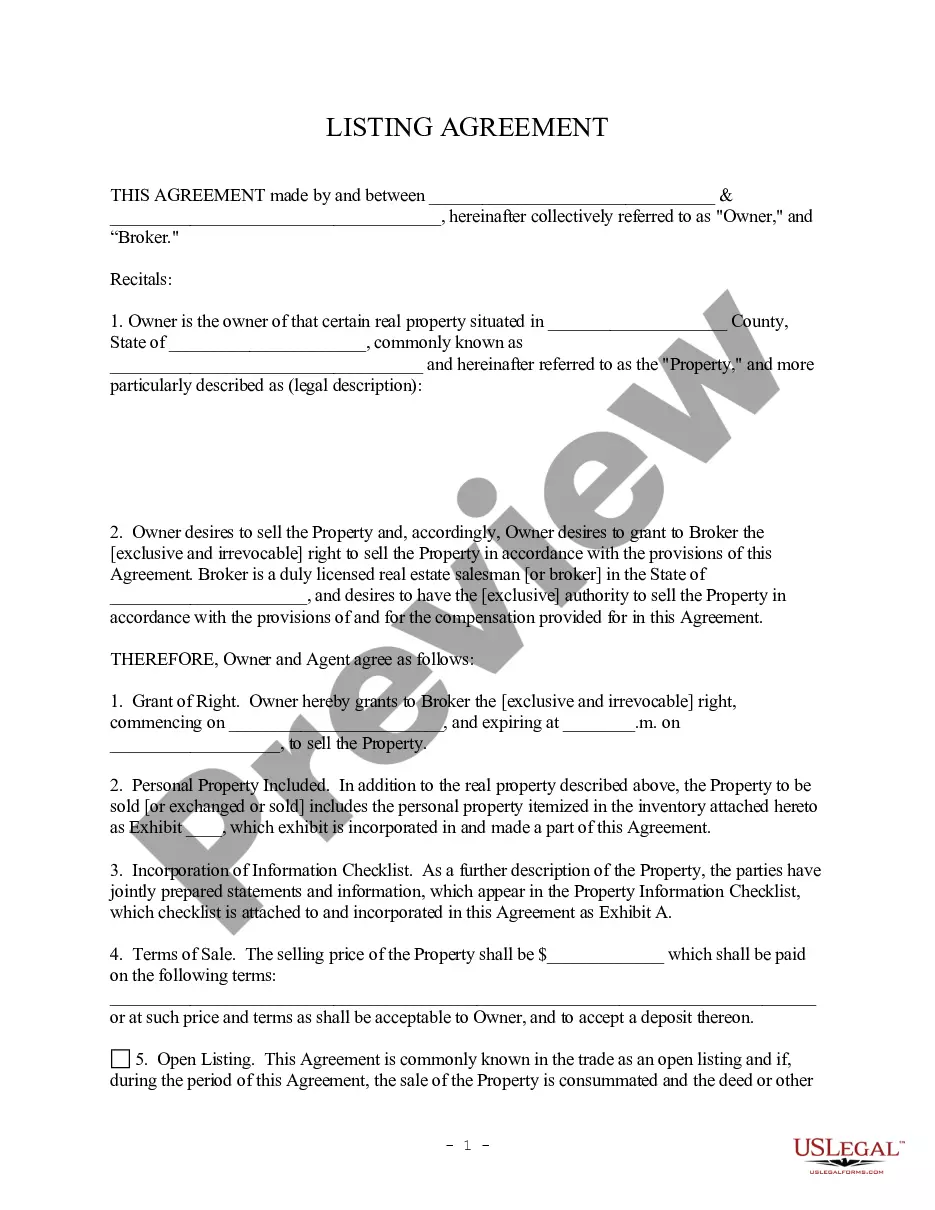
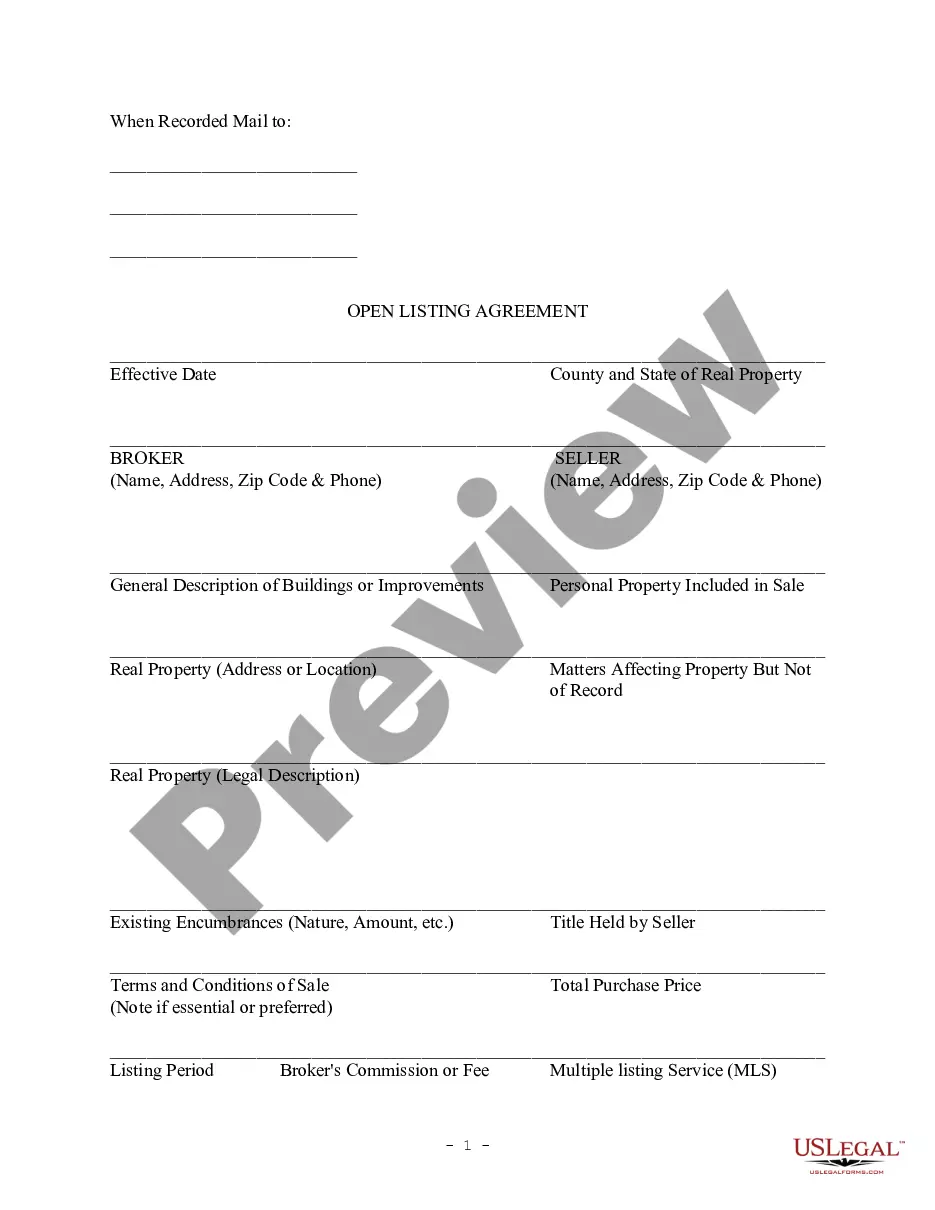
A listing agreement is between the parties that own a property and the agents or brokers who will find a buyer for it. Typically, a real estate listing agreement involves the property owner and a real estate agent.
The exact wording and time limit of the holdover period in a listing agreement can vary so the time period is left blank until the broker or salesperson discusses it with the client. No maximum limit exists for the holdover period -- it can last any duration, as long as the client consents after being fully informed.
What is the Holdover Period? The Holdover period is a length of time (in days) following a listing's expiration where the seller may owe commission to the listing agent if the property sells. There is no prescribed period of time for a holdover, and many listings have a 0 day holdover.
Any amendment should be explained in-full so that all parties are in agreement. Discuss the Amendment. The broker and owner should meet and discuss the changes to the listing agreement. Write the Amendment. Once a verbal agreement is made, the amendment should be written. Sign and Attach to Listing Agreement.
The holdover period is a defined amount time following the expiration of a listing agreement during which the listing brokerage would be entitled to a commission if the property were sold to someone who was introduced to it while it was listed. There are a lot of terms in Real Estate that we all have questions about.
A holdover clause is common in leases, both commercial and residential. The holdover clause is designed to protect the interests of the landlord when a tenant does not leave after the termination or expiration of the term of their lease.
What is a holdover clause? When a tenant stays past the end of the lease, without renewing or extending the term, the tenant is a “holdover tenant.” In that situation, the existence of a holdover clause in a lease contract helps protect the landlord's rights, and potentially those of a successor occupant.
A listing agreement is a legally binding agreement between the seller and real estate agent or REALTOR®, so all parties must sign it. Please note that if you buy a property, you don't have to sign a listing agreement; it's only for sellers.
The true statement about a listing contract is a) It is an employment contract for the professional services of the broker. A listing contract is a formal agreement between a property owner and a broker whom the property owner employs to sell or rent out the property.

