Listing Agreement Contract With Broker In Bexar
Description

Get your form ready online
Our built-in tools help you complete, sign, share, and store your documents in one place.
Make edits, fill in missing information, and update formatting in US Legal Forms—just like you would in MS Word.
Download a copy, print it, send it by email, or mail it via USPS—whatever works best for your next step.
Sign and collect signatures with our SignNow integration. Send to multiple recipients, set reminders, and more. Go Premium to unlock E-Sign.
If this form requires notarization, complete it online through a secure video call—no need to meet a notary in person or wait for an appointment.
We protect your documents and personal data by following strict security and privacy standards.

Make edits, fill in missing information, and update formatting in US Legal Forms—just like you would in MS Word.

Download a copy, print it, send it by email, or mail it via USPS—whatever works best for your next step.

Sign and collect signatures with our SignNow integration. Send to multiple recipients, set reminders, and more. Go Premium to unlock E-Sign.

If this form requires notarization, complete it online through a secure video call—no need to meet a notary in person or wait for an appointment.

We protect your documents and personal data by following strict security and privacy standards.
Looking for another form?










Form popularity
FAQ
The answer is the agreements are terminated. In the event of the death of a broker, all the listings held by the broker will terminate, as well as cause all the licenses of the broker's associates to become inactive.
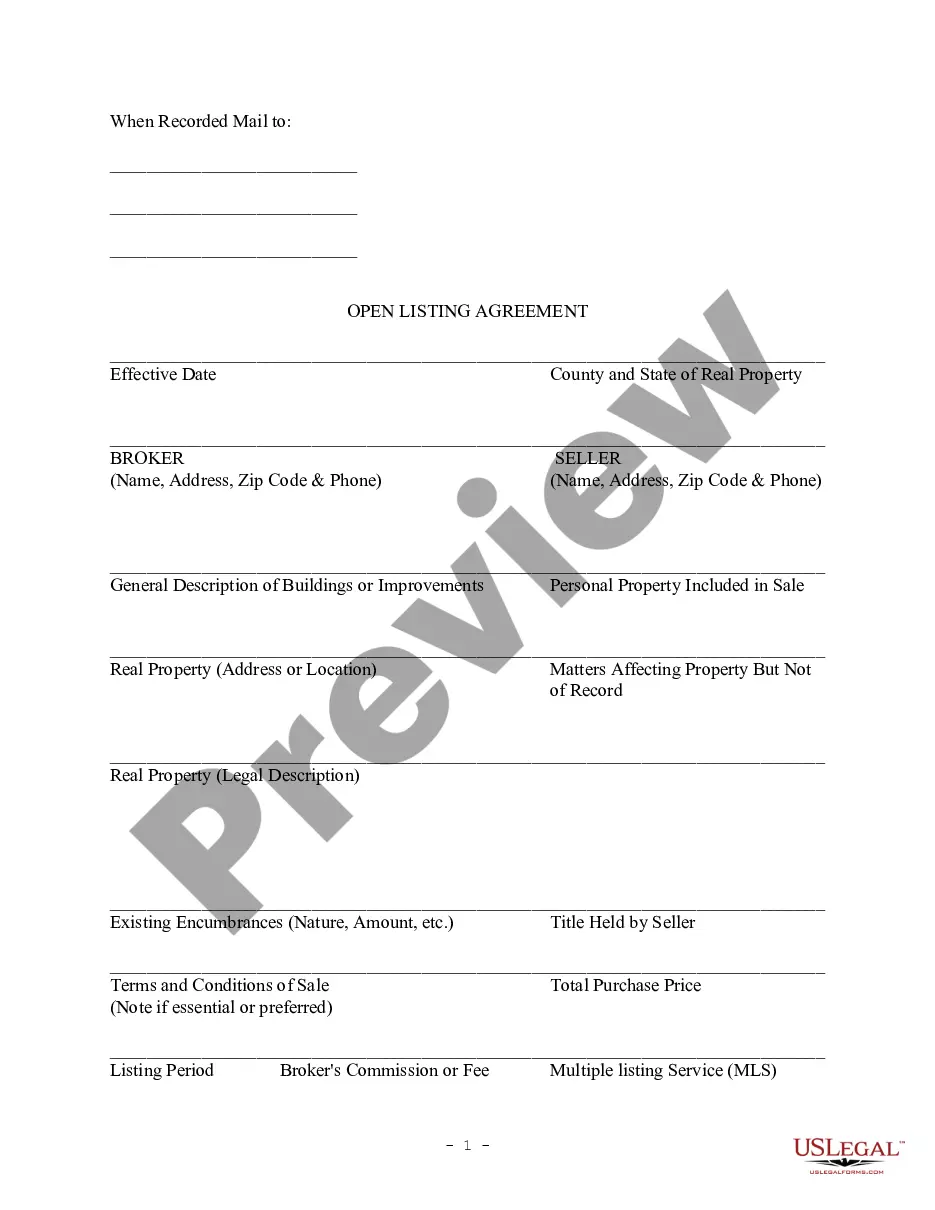
4 Common Types of Listing Agreements in Real Estate Open listing agreement. An open listing is a non-exclusive contract. Exclusive right to sell listing agreement. An exclusive right to sell listing is the most widely-used listing agreement. Exclusive agency listing agreement. Net listing agreement.
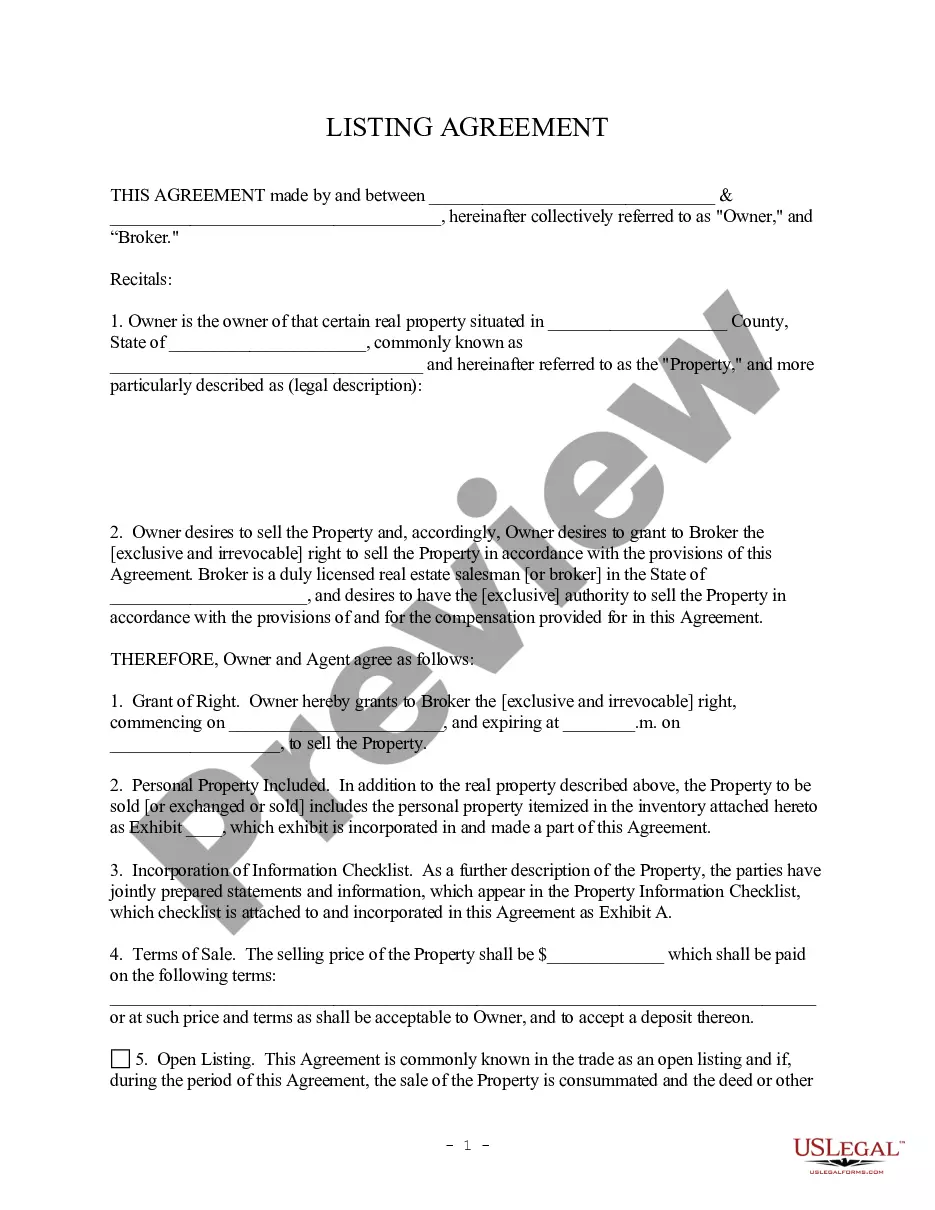
A listing agreement is a contract between a property owner and a real estate broker that authorizes the broker to represent the seller and find a buyer for the property.
In real estate, a listing agreement is a contract between homeowners and brokers that legally establishes how a realtor will find a property buyer on the seller's behalf. Listing agreements serve as a hiring contract with the agent for the sale of a property, and are only valid for a set amount of time.
Listing Brokerage means the firm who contracts as the agent of a property owner. For the purposes of these Rules and Regulations, the Listing Brokerage includes the Member Participant (firm) who is a party to the listing agreement with the Seller, as well as the Member Participant's Subscribers.
The brokerage agreement is in place to clearly define to both parties the expectations, responsibilities, applicable laws, and obligations agreed to by both parties. Having a broker agreement in place helps minimize the risk of misunderstandings that may result in legal action or the loss of business.
2. Exclusive right to sell listing agreement. An exclusive right to sell listing is the most widely-used listing agreement. Under this agreement, the broker has the exclusive right to market the property for a specified period of time.
Whether you change your mind about selling, have ethical or performance concerns about the agent, or you just don't find a buyer, you can get out of a listing agreement.
A listing agreement is a contract between a property owner and a real estate broker that authorizes the broker to represent the seller and find a buyer for the property. The three types of real estate listing agreements are open listing, exclusive agency listing, and exclusive right-to-sell listing.
Though notarization is not required, it may still be a good idea to have a notary present in order to verify the identities of all signers.

