Acceptance Letter In Ur In Fairfax
Description
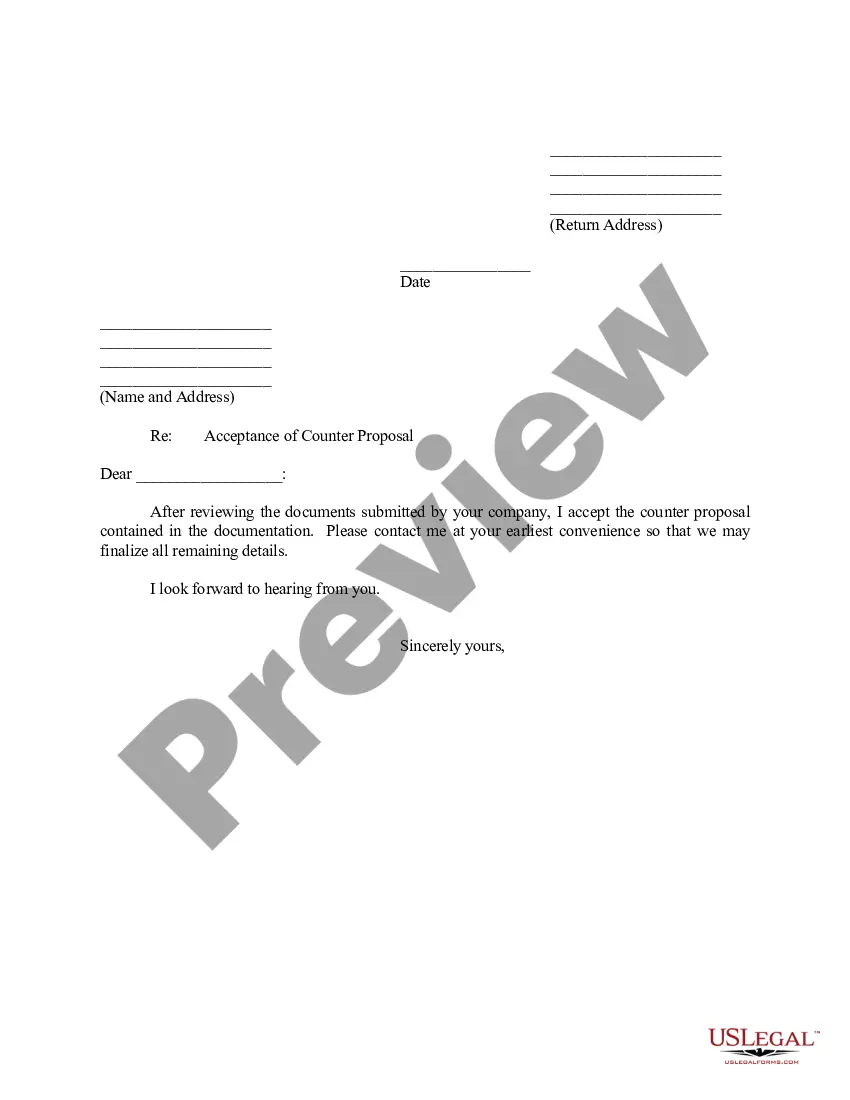
Get your form ready online
Our built-in tools help you complete, sign, share, and store your documents in one place.
Make edits, fill in missing information, and update formatting in US Legal Forms—just like you would in MS Word.
Download a copy, print it, send it by email, or mail it via USPS—whatever works best for your next step.
Sign and collect signatures with our SignNow integration. Send to multiple recipients, set reminders, and more. Go Premium to unlock E-Sign.
If this form requires notarization, complete it online through a secure video call—no need to meet a notary in person or wait for an appointment.
We protect your documents and personal data by following strict security and privacy standards.

Make edits, fill in missing information, and update formatting in US Legal Forms—just like you would in MS Word.

Download a copy, print it, send it by email, or mail it via USPS—whatever works best for your next step.

Sign and collect signatures with our SignNow integration. Send to multiple recipients, set reminders, and more. Go Premium to unlock E-Sign.

If this form requires notarization, complete it online through a secure video call—no need to meet a notary in person or wait for an appointment.

We protect your documents and personal data by following strict security and privacy standards.
Looking for another form?








Form popularity
FAQ
Although most colleges will send an acceptance letter in the mail, that isn't the only way you'll receive your college acceptance letter. In addition to mailing college acceptance letters, colleges and universities will also notify you virtually.
When Do College Acceptance Letters Arrive, Generally? First off, when do college acceptance letters arrive, broadly speaking? While the answer to this question really depends on what colleges you're applying to, in general most decisions come out in the springtime, that is, in either March or early April.
How do I know if I've been accepted to college? Hang in there—you'll know soon enough! Colleges that accept you will usually notify you of your acceptance between mid-March and mid-April, either through an email or as an update on your college application portal.
Your school must provide you with a letter of acceptance (LOA). Include the original or electronic copy of your letter with your study permit application.
Students usually receive acceptance letters through traditional mail, email, or as an update on your college application portal set up by the college. When applying to schools, keep track of how the school handles this process.
There are three ways you'll receive your letter of acceptance: by mail, email, or on your online portal. How schools choose to tell students about their university entry will vary.
It's not unusual for a college's application process to take four to six weeks. Colleges that have an application portal allow students to go online to check the status of their applications at any time. Also, many colleges post both acceptances and nonacceptances on the application portal at the same time.
There's also a little bit of variation in how decisions are conveyed: you can expect many colleges to send acceptance letters by email or online portal, though some will still send a formal letter in your mailbox, too.
Fairfax County Government offers employees a robust package of benefits. Depending on employment status, this may include a choice of medical plans including prescription and vision coverage, optional dental coverage, life and long term disability insurance, pre-tax savings plans, and more.
A system or policy whereby people are promoted or rewarded on the basis of ability and achievement rather than because of seniority, quotas, patronage, or the like.

