Termination Of Contract Without Notice In Travis
Description
Get your form ready online
Our built-in tools help you complete, sign, share, and store your documents in one place.
Make edits, fill in missing information, and update formatting in US Legal Forms—just like you would in MS Word.
Download a copy, print it, send it by email, or mail it via USPS—whatever works best for your next step.
Sign and collect signatures with our SignNow integration. Send to multiple recipients, set reminders, and more. Go Premium to unlock E-Sign.
If this form requires notarization, complete it online through a secure video call—no need to meet a notary in person or wait for an appointment.
We protect your documents and personal data by following strict security and privacy standards.

Make edits, fill in missing information, and update formatting in US Legal Forms—just like you would in MS Word.

Download a copy, print it, send it by email, or mail it via USPS—whatever works best for your next step.

Sign and collect signatures with our SignNow integration. Send to multiple recipients, set reminders, and more. Go Premium to unlock E-Sign.

If this form requires notarization, complete it online through a secure video call—no need to meet a notary in person or wait for an appointment.

We protect your documents and personal data by following strict security and privacy standards.
Looking for another form?










Form popularity
FAQ
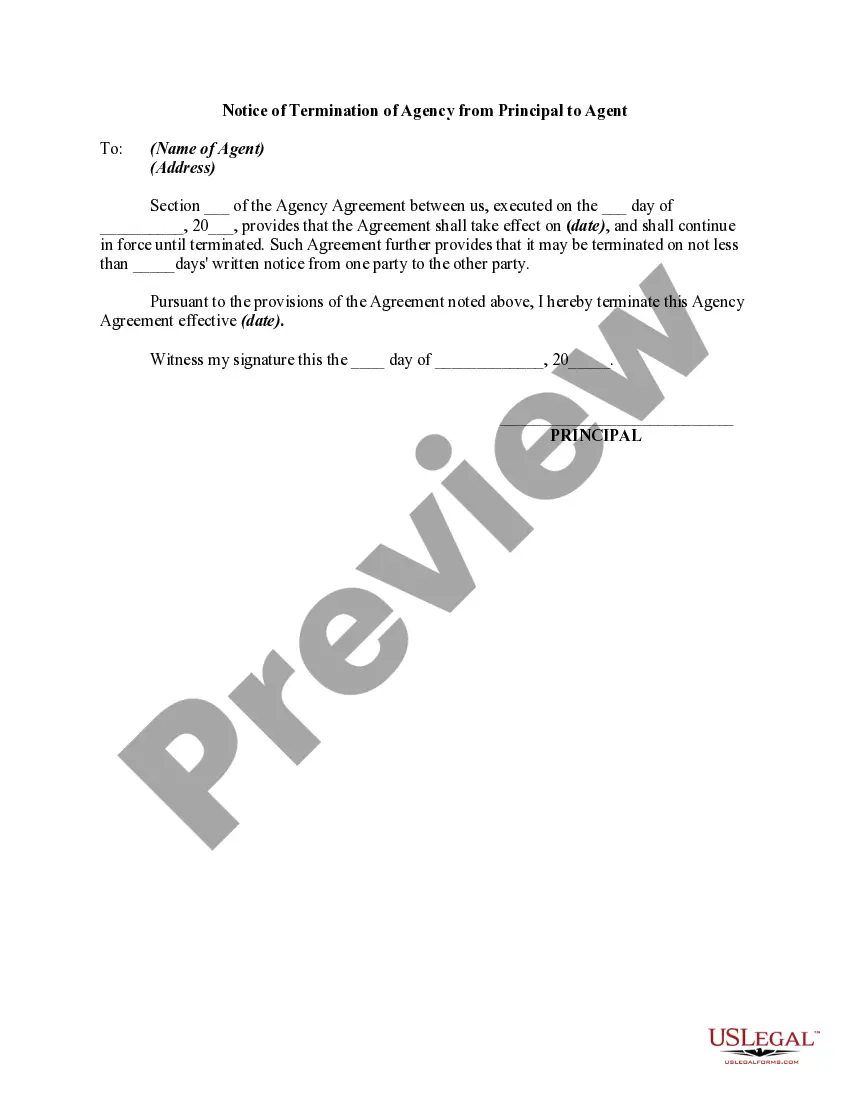
Can you terminate a contract without notice? If the other party to a contract breaches the agreement, you need to decide whether to accept the breach or affirm the contract. This means that to terminate the contract, you need to inform the other party of your decision and provide a notice of termination.
Regardless of what your grounds are, notice is required to terminate any contract. Typically, this notice will come in the form of a written document that clearly explains your decision to terminate the contract, why you wish to do so, and on what grounds.
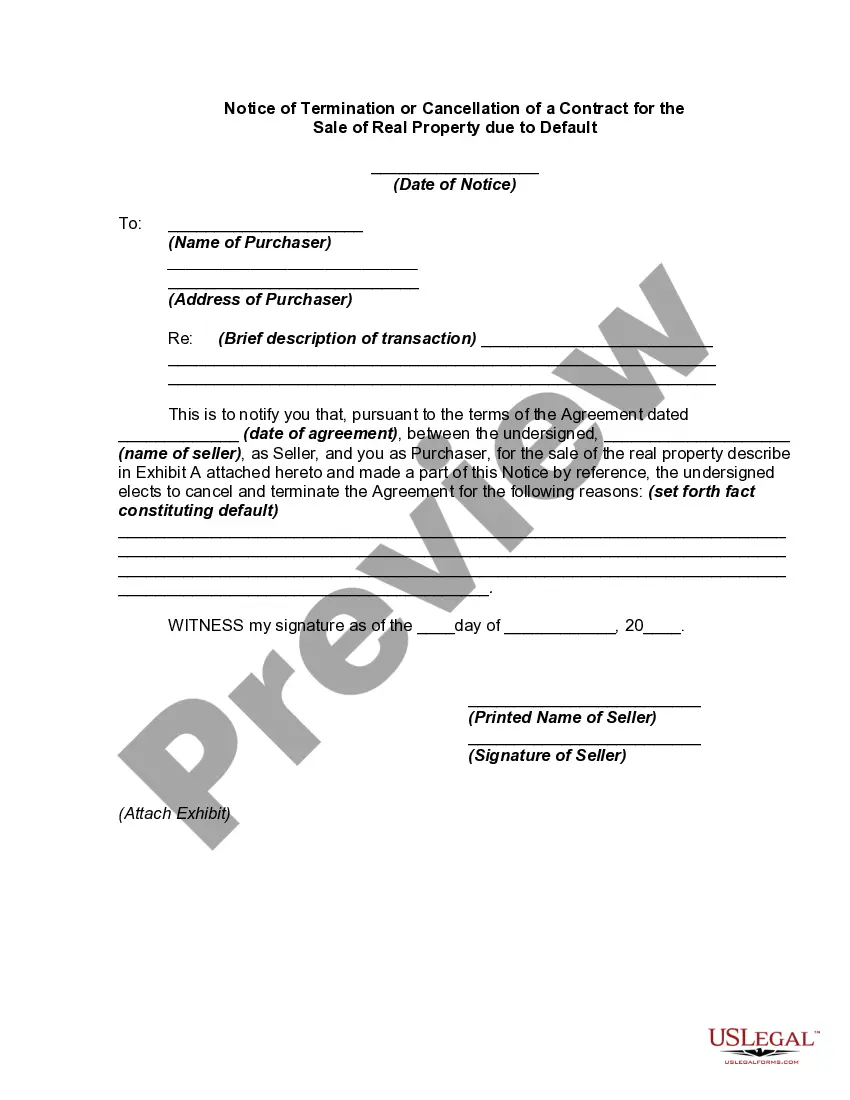
If there is not a cancellation clause in the contract and no date of performance, the innocent party must give notice to the party in breach that time is of the essence and give him a reasonable time to perform.
- Once a termination notice is given, the agreement will end 30 days later. In plain terms, this allows either side to exit the agreement for any reason as long as they provide 30 days' notice in writing. It gives both parties flexibility to discontinue the agreement after giving sufficient heads up.
If the contract is silent on the subject of termination notice periods, what is 'reasonable' notice will depend on the type of arrangement you have with your customer (including complexity, length of contract, damage to jobs etc). It must be very clear that this is a termination notice.
Write a termination contract letter A contract termination letter allows you to give written notice of your contract's cancellation. It clearly states intent and limits your liability, which arerequired if you're looking to avoid issues while terminating a contract. Writing the letter is simple.
Unless that contract states that the company is an ``at will'' company and either party (the employer OR the employee) can terminate their side of the contract without notice.
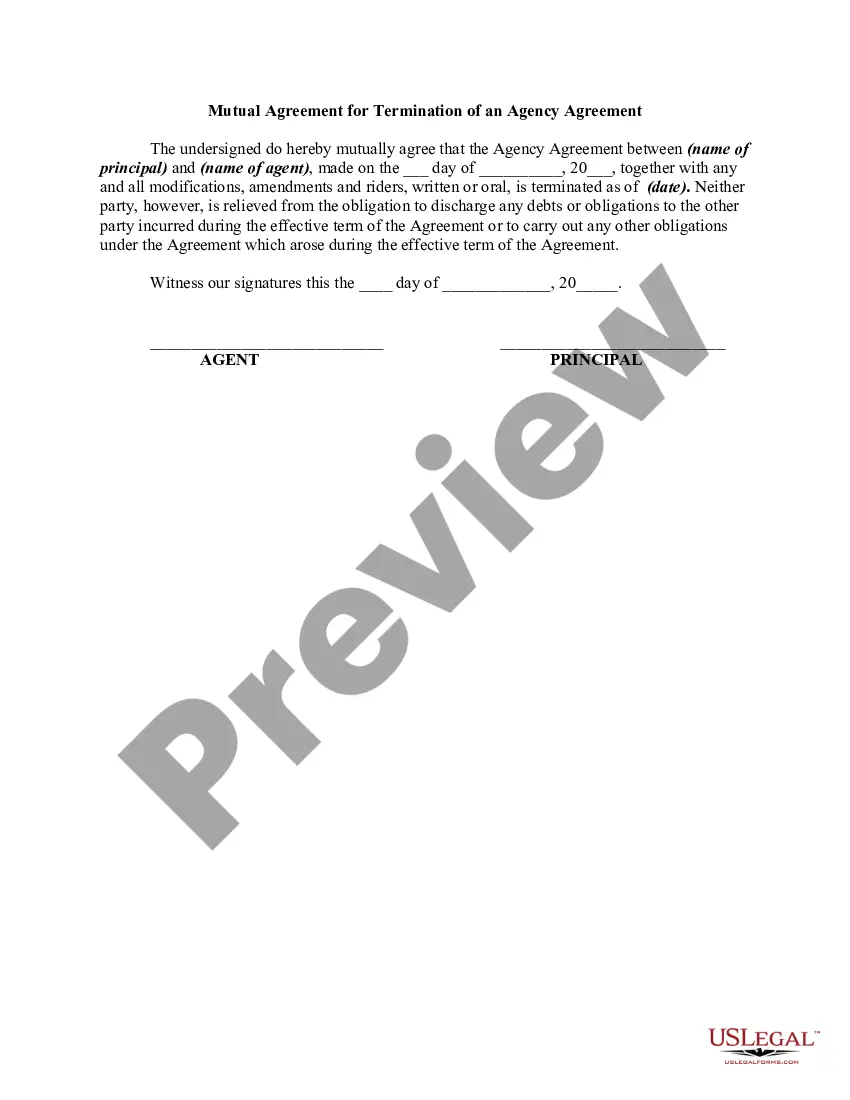
The release of the contracting parties from their obligations under the contract is known as the discharge. What are the four ways in which a contract can be discharged? Discharge by performance and agreement, discharge by operation of law, discharge by frustration, and discharge by breach.
Termination of contract for breach. Termination of contract by performance. Termination of contract by agreement. Termination of contract by frustration or force majeure.

