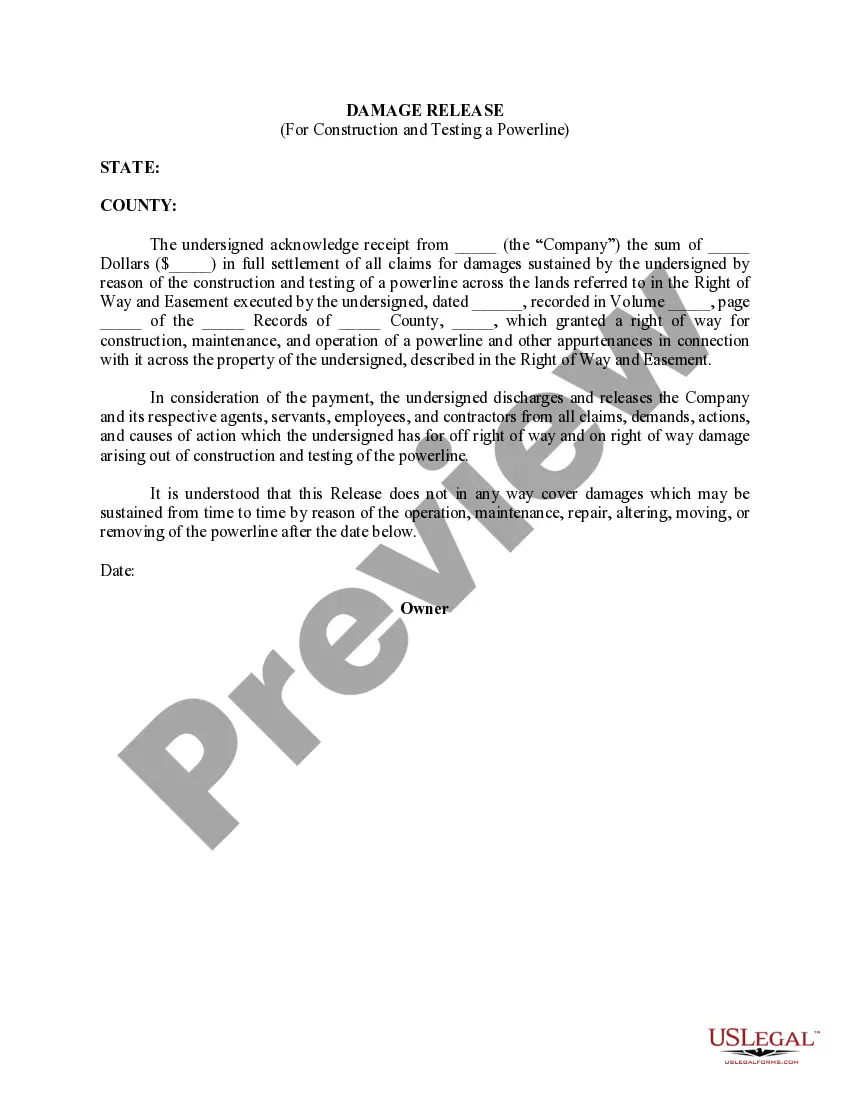
Damage Release (For Construction and Testing a Powerline)
Overview of this form
This Damage Release form for construction and testing a powerline is a legal document used to settle all claims for damages resulting from the construction and testing of a powerline on your property. It is essential for landowners to understand that by signing this form, they release the construction company from further claims associated with the specified actions. This differs from other forms as it specifically addresses powerline construction and related damages.
Main sections of this form
- Identification of the Company involved in the powerline project.
- Amount of compensation received for damages.
- Terms of the Right of Way Easement related to the construction.
- Clear discharge of claims against the Company and affiliates.
- A declaration that this release does not cover future damages from operations after the release date.
- Signature fields for the property owner to formalize the agreement.
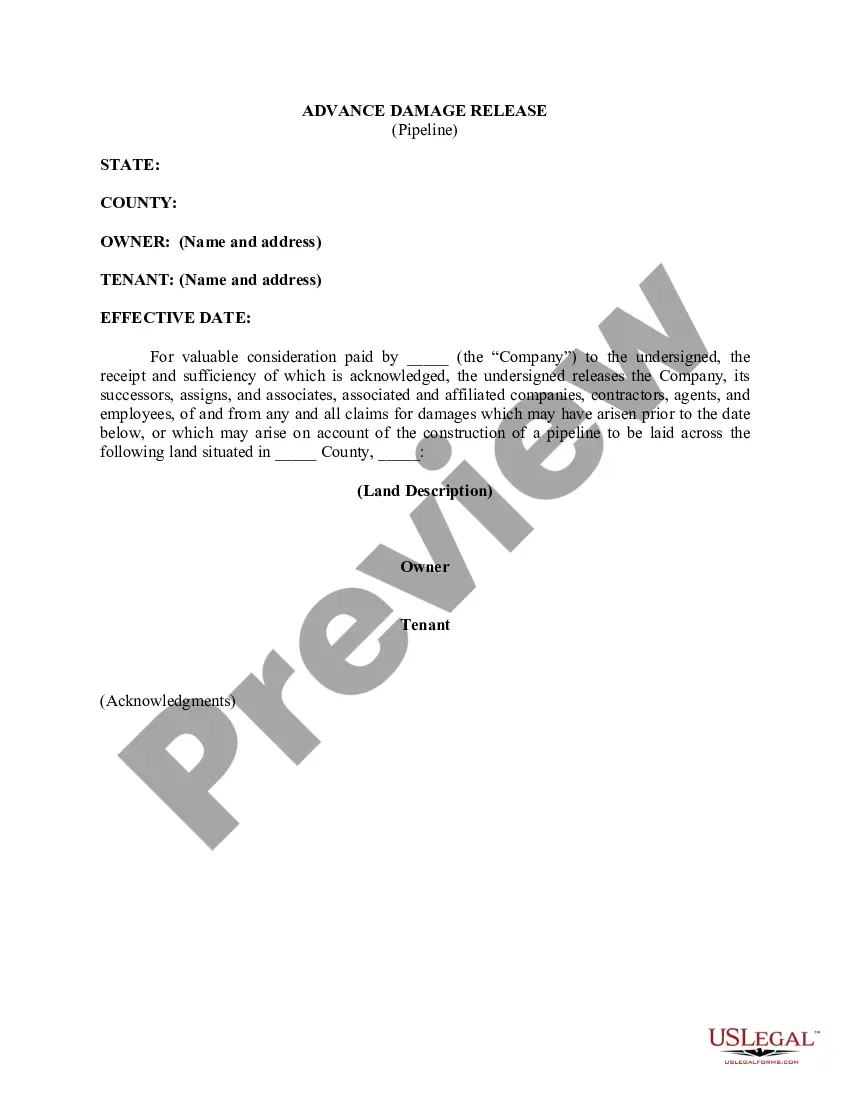
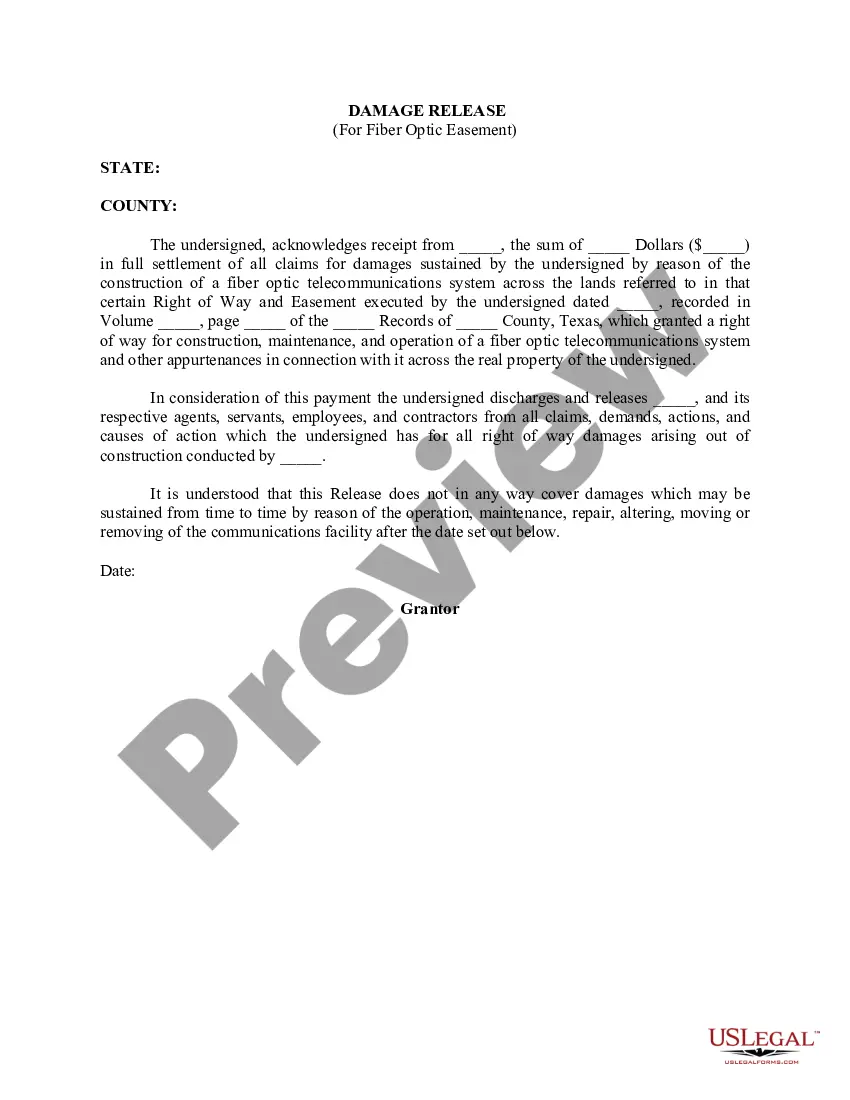
When to use this form
This form is necessary when a construction company has completed work related to a powerline on private property and the landowner has been compensated for any damages incurred during the process. It is commonly used right after construction activities or testing has been completed, ensuring that both parties are clear on the release of claims related to those specific actions.
Who should use this form
- Property owners whose land is affected by powerline construction.
- Construction companies responsible for the installation and testing of powerlines.
- Legal representatives handling property agreements or disputes regarding easements.
How to prepare this document
- Identify and enter the name of the company involved in the powerline project.
- Specify the compensation amount you have received.
- Fill in the details of the original Right of Way Easement, including the date and official record information.
- Sign and date the form to validate the release of claims.
- Ensure all necessary parties have signed the document to complete the agreement.
Notarization requirements for this form
In most cases, this form does not require notarization. However, some jurisdictions or signing circumstances might. US Legal Forms offers online notarization powered by Notarize, accessible 24/7 for a quick, remote process.
Get your form ready online
Our built-in tools help you complete, sign, share, and store your documents in one place.
Make edits, fill in missing information, and update formatting in US Legal Forms—just like you would in MS Word.
Download a copy, print it, send it by email, or mail it via USPS—whatever works best for your next step.
Sign and collect signatures with our SignNow integration. Send to multiple recipients, set reminders, and more. Go Premium to unlock E-Sign.
If this form requires notarization, complete it online through a secure video call—no need to meet a notary in person or wait for an appointment.
We protect your documents and personal data by following strict security and privacy standards.

Make edits, fill in missing information, and update formatting in US Legal Forms—just like you would in MS Word.

Download a copy, print it, send it by email, or mail it via USPS—whatever works best for your next step.

Sign and collect signatures with our SignNow integration. Send to multiple recipients, set reminders, and more. Go Premium to unlock E-Sign.

If this form requires notarization, complete it online through a secure video call—no need to meet a notary in person or wait for an appointment.

We protect your documents and personal data by following strict security and privacy standards.
Common mistakes
- Failing to specify the correct amount of compensation received.
- Not including the accurate details of the Right of Way Easement.
- Leaving out the property owner's signature or date.
- Not understanding that the release does not cover future damages from powerline operations.
Why complete this form online
- Immediate access to a legally compliant document
- Easy download and customization to suit your specific situation
- Secure and legally valid, with support available as needed
- Reduces the need for in-person visits to legal offices
Legal use & context
- The Damage Release form is legally binding once signed and delivered to all parties involved.
- It is crucial for limiting future claims related to the area where construction has occurred.
- Understanding your rights and obligations under the Right of Way Easement is vital when using this form.
Looking for another form?
Form popularity
FAQ
A flexible cord may be damaged by door or window edges, by staples and fastenings, by abrasion from adjacent materials, or simply by aging. If the electrical conductors become exposed, there is a danger of shocks, burns, or fire.
Electrocution means to injure or kill with electricity and occurs when a person is exposed to harmful amount of electrical energy.
Dubbed the Fatal Four by OSHA, they include falls, electrocutions, being struck by objects, and getting caught in or between hazards.
Therefore, BE SAFE by recognizing, avoiding, and protecting against all of the electrical hazards. B = Burns: A burn is the most common shock-related injury. Burns from electricity are caused by electrical, arc flash, or thermal contact. E = Electrocution: Electrocution is fatal; it means to kill with electricity.
Electrical burns are the most common shock-related, nonfatal injury. They occur when a worker contacts energized electrical wiring or equipment. Although electrical burns can occur anywhere on the body, they most often occur on the hands and feet.
The answer is electrocution. Explanation: Electrocution is when someone is, for example, working on electrical lines and gets exposed to a harmful or even fatal amount of electricity.
There are four main types of electrical injuries: flash, flame, lightning, and true. Flash injuries, caused by an arc flash, are typically associated with superficial burns, as no electrical current travels past the skin.
There are four main types of electrical injuries: flash, flame, lightning, and true. Flash injuries, caused by an arc flash, are typically associated with superficial burns, as no electrical current travels past the skin.