Competition Noncompetition For Us Treasuries In Salt Lake
Description

Get your form ready online
Our built-in tools help you complete, sign, share, and store your documents in one place.
Make edits, fill in missing information, and update formatting in US Legal Forms—just like you would in MS Word.
Download a copy, print it, send it by email, or mail it via USPS—whatever works best for your next step.
Sign and collect signatures with our SignNow integration. Send to multiple recipients, set reminders, and more. Go Premium to unlock E-Sign.
If this form requires notarization, complete it online through a secure video call—no need to meet a notary in person or wait for an appointment.
We protect your documents and personal data by following strict security and privacy standards.

Make edits, fill in missing information, and update formatting in US Legal Forms—just like you would in MS Word.

Download a copy, print it, send it by email, or mail it via USPS—whatever works best for your next step.

Sign and collect signatures with our SignNow integration. Send to multiple recipients, set reminders, and more. Go Premium to unlock E-Sign.

If this form requires notarization, complete it online through a secure video call—no need to meet a notary in person or wait for an appointment.

We protect your documents and personal data by following strict security and privacy standards.
Looking for another form?






Form popularity
FAQ
∎ The Rule applies to noncompetes with all workers, whether full-time or part-time, including employees, independent contractors, interns, externs, volunteers, apprentices, and others—but there are different requirements for senior executives as defined by the Rule (see Questions 5-6).
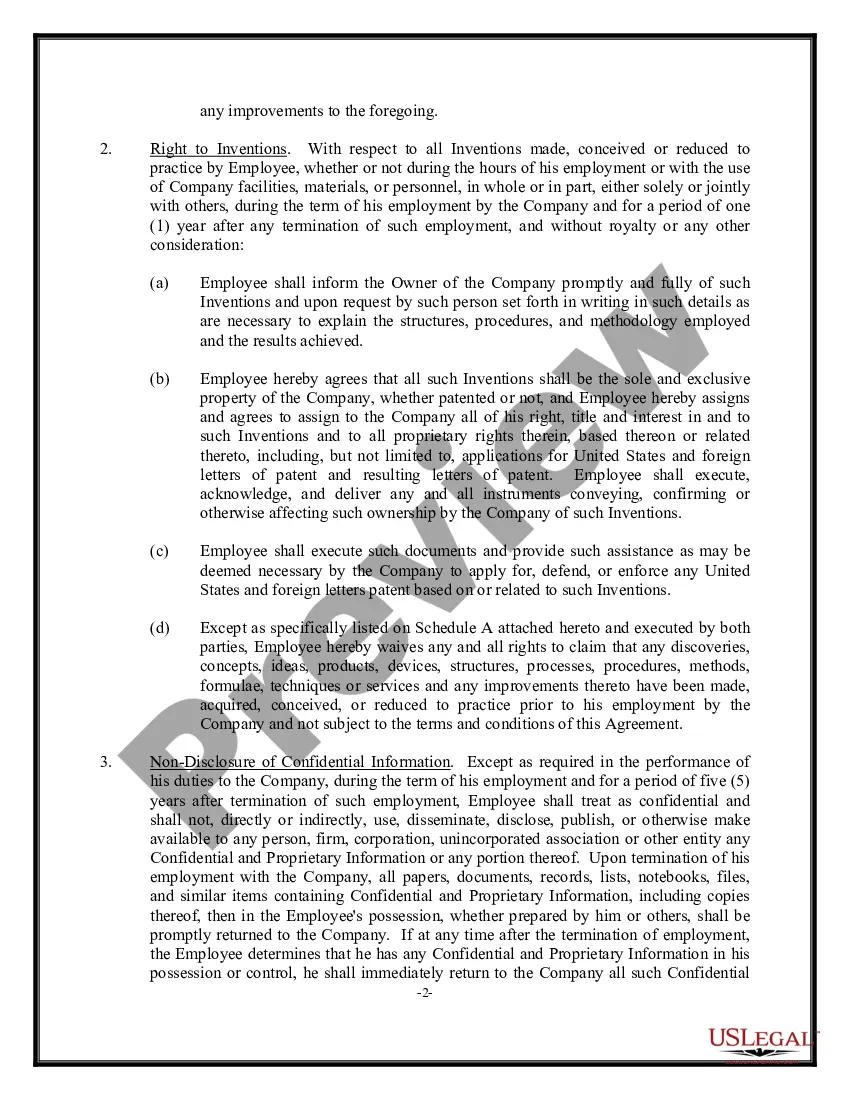
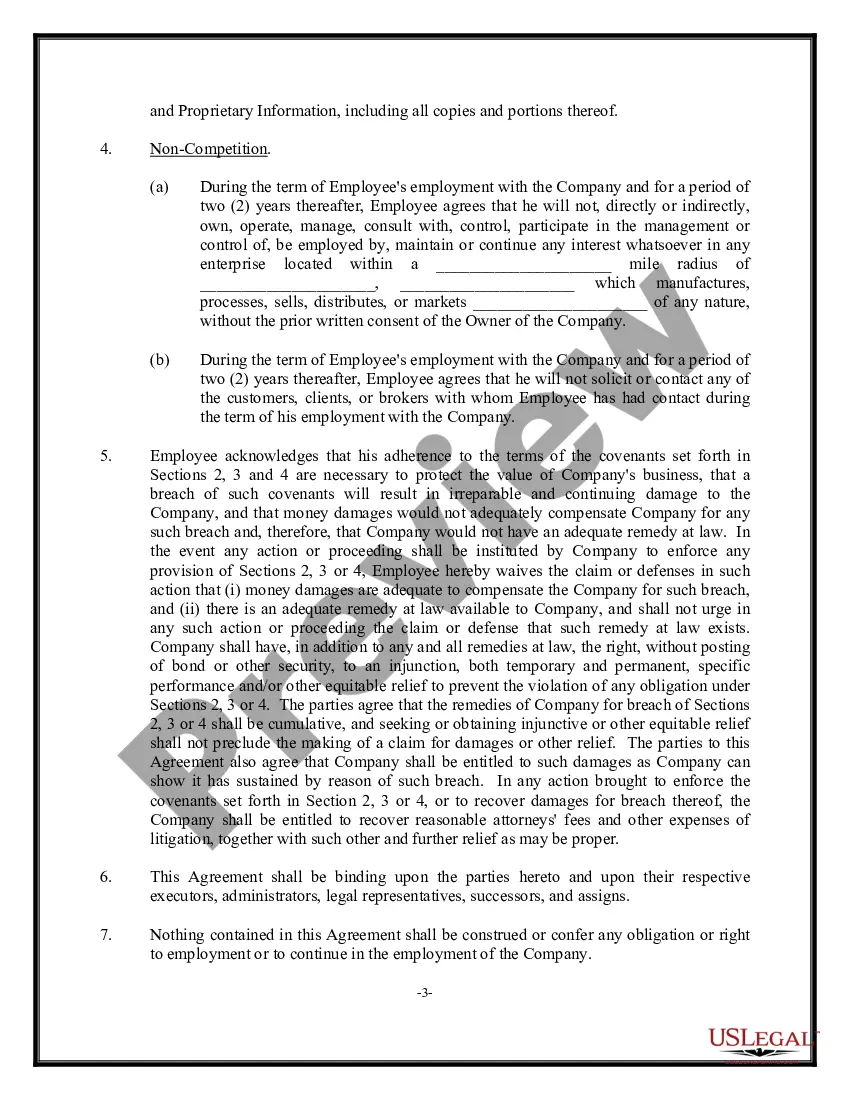
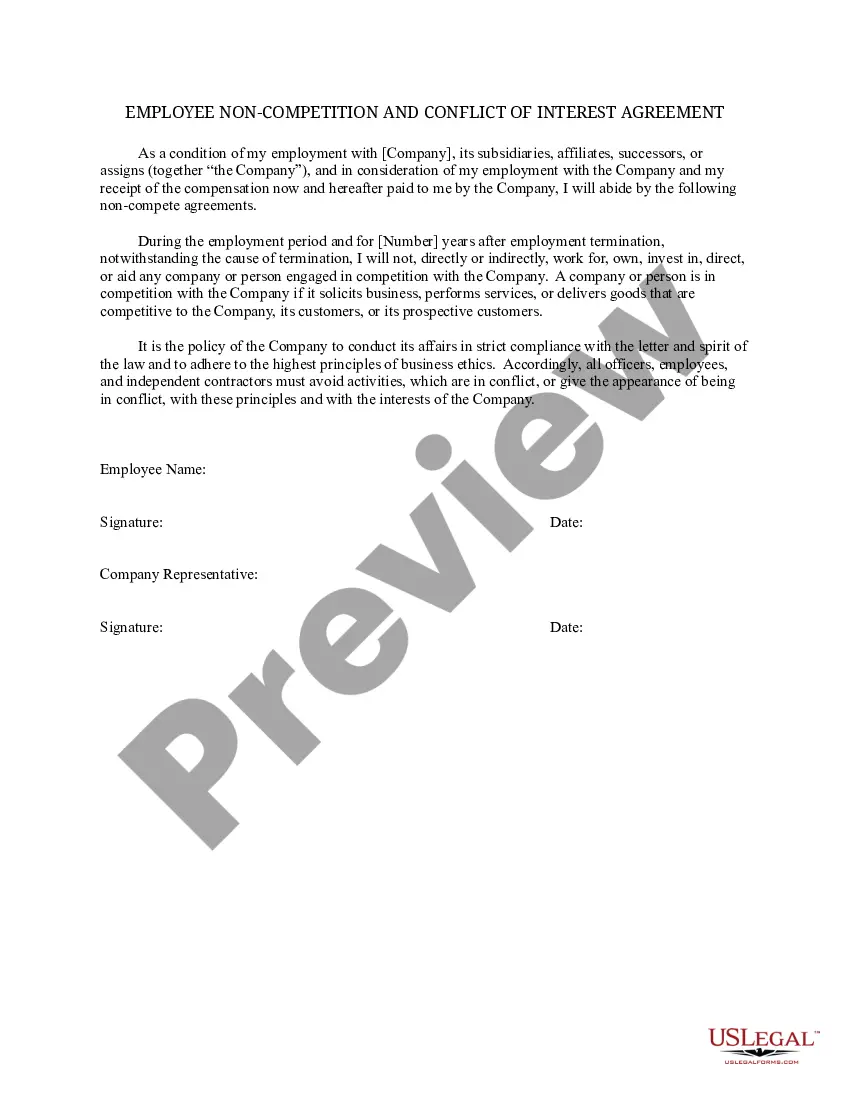
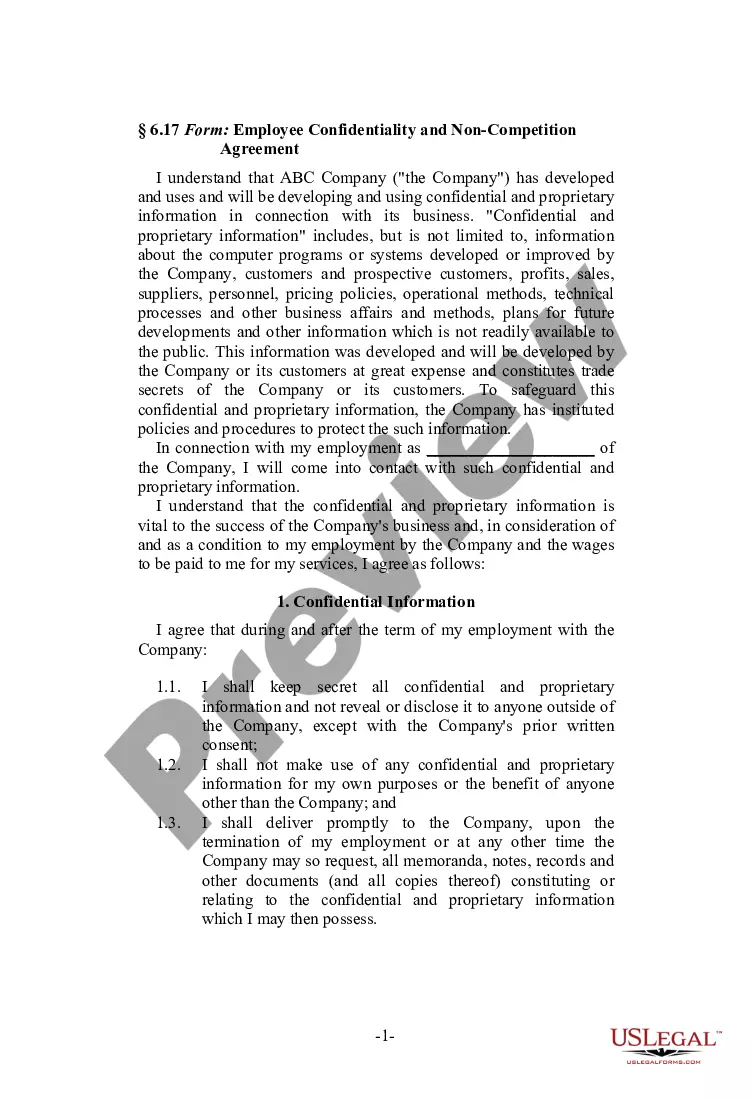
Non-competes are enforceable in Utah in many situations. A Utah court will usually enforce a non-compete agreement if the employer shows that the agreement was not made after “bad faith” negotiations and that agreement was necessary for the company to protect its interests.
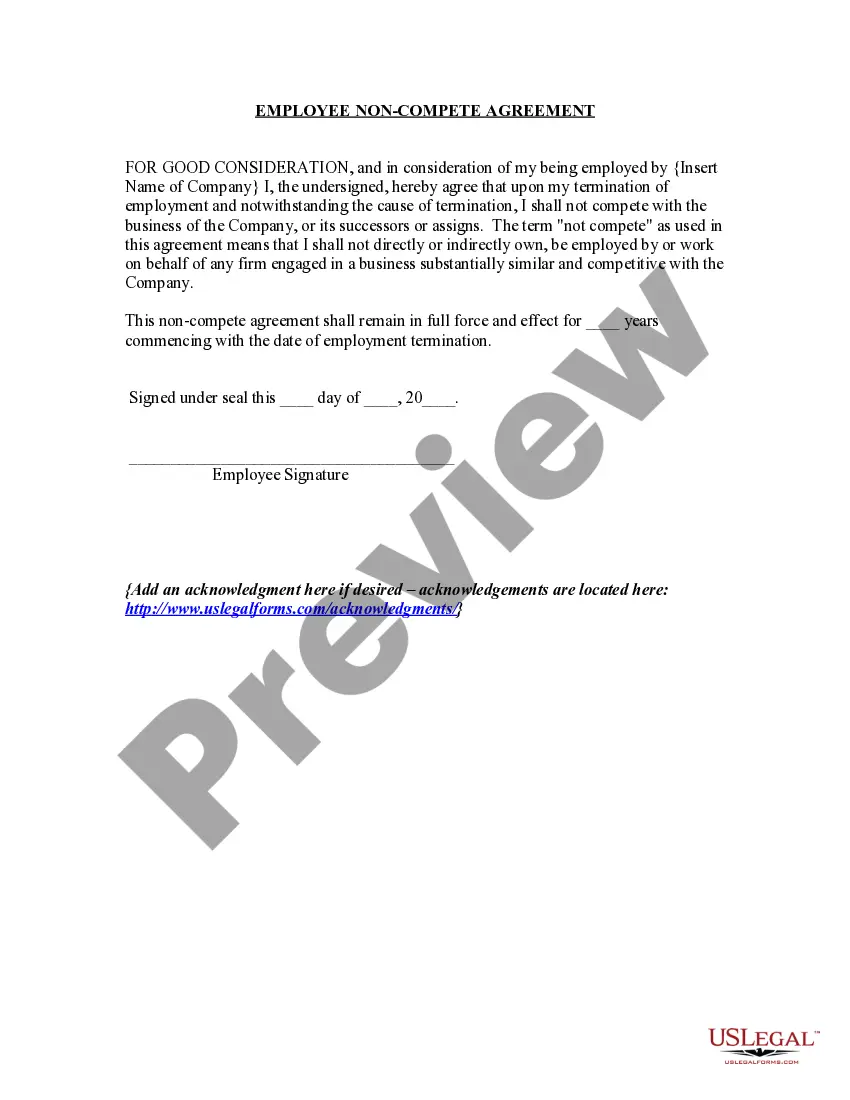
The following are the most common ways to get out of a non-compete agreement: Determine that the terms of the contract do not in fact prevent you from a desired course of action. Recognize when a non-compete contradicts the law. Negotiate a release agreement with the involved parties. Ignore the agreement.
As you can see, non-competes are not enforceable in California, although other states currently allow them. Instead, you can opt for a non-disclosure agreement, or hire employees who live and work in other states.
In Utah, non-compete agreements are often not enforced more than a year after an employee leaves a company. You can be fairly confident that a non-compete agreement is not going to be enforced in Utah after two years have passed since an employee left a company.
Non-competes are enforceable in Utah in many situations. A Utah court will usually enforce a non-compete agreement if the employer shows that the agreement was not made after “bad faith” negotiations and that agreement was necessary for the company to protect its interests.
Utah lawmakers added redundancy in March with a bill that prohibits NDAs “related to sexual assault and sexual harassment, as a condition of employment.” “The only way that sexual harassment and violence in the workplace happens is when we cannot talk about it and point it out to stop it,” Rep.
Employers do enforce non-competes, but the extent varies. Some employers rigorously enforce these agreements to protect their business interests, while others may choose not to pursue legal action.
Under the Noncompete Rule, the FTC adopted a comprehensive ban on new noncompetes with all workers, including senior executives. The final Noncompete Rule provides that it is an unfair method of competition—and therefore a violation of Section 5—for employers to enter into noncompetes with workers.
