Horse Racing Syndicate Contract For Deed In Orange
Description




Get your form ready online
Our built-in tools help you complete, sign, share, and store your documents in one place.
Make edits, fill in missing information, and update formatting in US Legal Forms—just like you would in MS Word.
Download a copy, print it, send it by email, or mail it via USPS—whatever works best for your next step.
Sign and collect signatures with our SignNow integration. Send to multiple recipients, set reminders, and more. Go Premium to unlock E-Sign.
If this form requires notarization, complete it online through a secure video call—no need to meet a notary in person or wait for an appointment.
We protect your documents and personal data by following strict security and privacy standards.

Make edits, fill in missing information, and update formatting in US Legal Forms—just like you would in MS Word.

Download a copy, print it, send it by email, or mail it via USPS—whatever works best for your next step.

Sign and collect signatures with our SignNow integration. Send to multiple recipients, set reminders, and more. Go Premium to unlock E-Sign.

If this form requires notarization, complete it online through a secure video call—no need to meet a notary in person or wait for an appointment.

We protect your documents and personal data by following strict security and privacy standards.
Looking for another form?




Form popularity
FAQ
Finishers receive a percentage of the purse, with 60% going to the winner, 20% to the runner-up, 10% to third place, 5% to fourth, 3% to fifth, and 2% to sixth. So, the owner of a winning horse in a race with a $20,000 purse would make $12,000.
Horse Racing Syndicates Horse Racing Syndicates Checklist. Define your Syndicate. Define your Syndicate. The first thing you need to ask yourself is why are you starting a syndicate. Pick your Members wisely. Set up a Management Plan. Ensure Everyone is On Board. Make it Happen. Conclusion.
Syndication refers to a co-ownership of a horse, also known as a “co-ownership agreement” when made between two or more people. Each owner owns a fractional interest in the animal and the original owner is the syndicator and the manager.
Middleham Park Racing. We are the UK's most successful racehorse syndication company, with over 1,600 winners under both codes, including 72 Group/Graded and Listed race winners.
Horse Racing Syndicates: How to Share Costs and Own a Racehorse Keep the partnership simple and get everything in writing. Find a horse you like and a great veterinarian you trust. Decide how many shares will be offered in a horse. Choose your trainer wisely. Map out a plan and consult with your partners and trainer.
Syndicates are a form of shared ownership where the Syndicate members own, or lease, an interest in racehorses. A Syndicate is managed and administered by the Syndicator(s) and only the syndicator(s) must register as a Sole/Company owner. It isn't necessary for members of the Syndicate to register as owners.
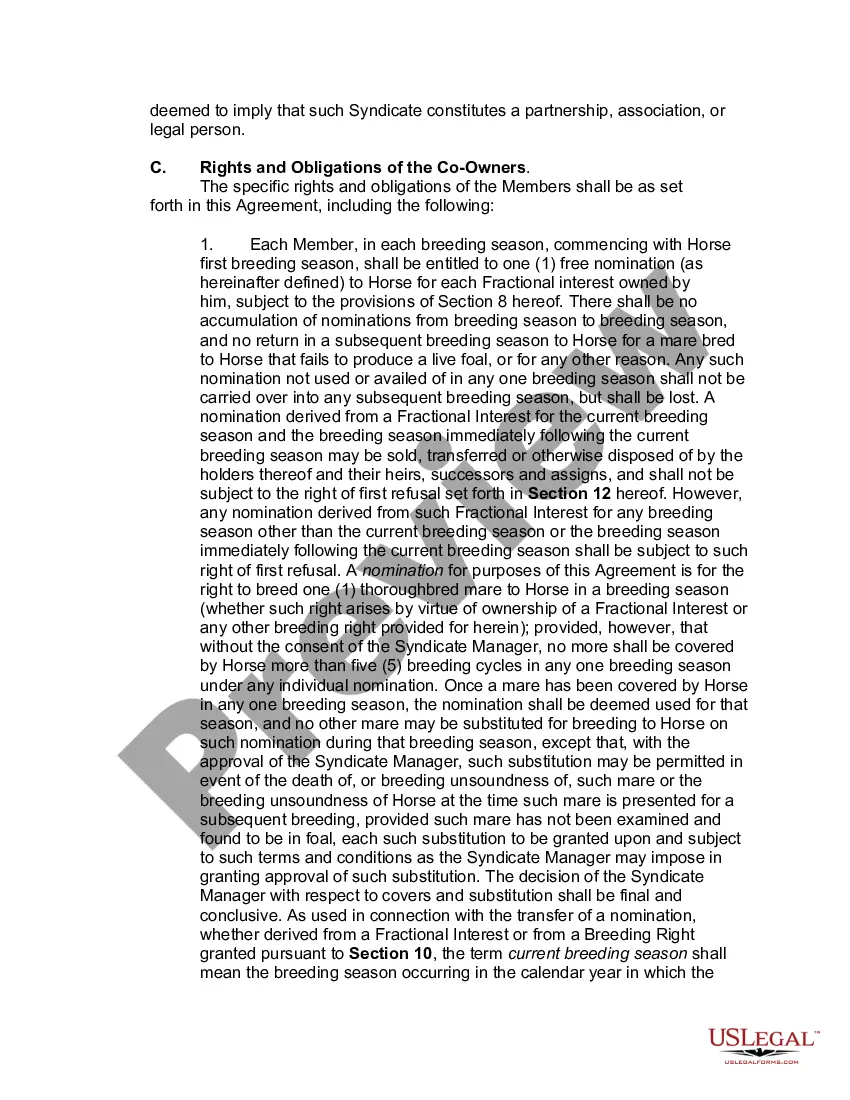
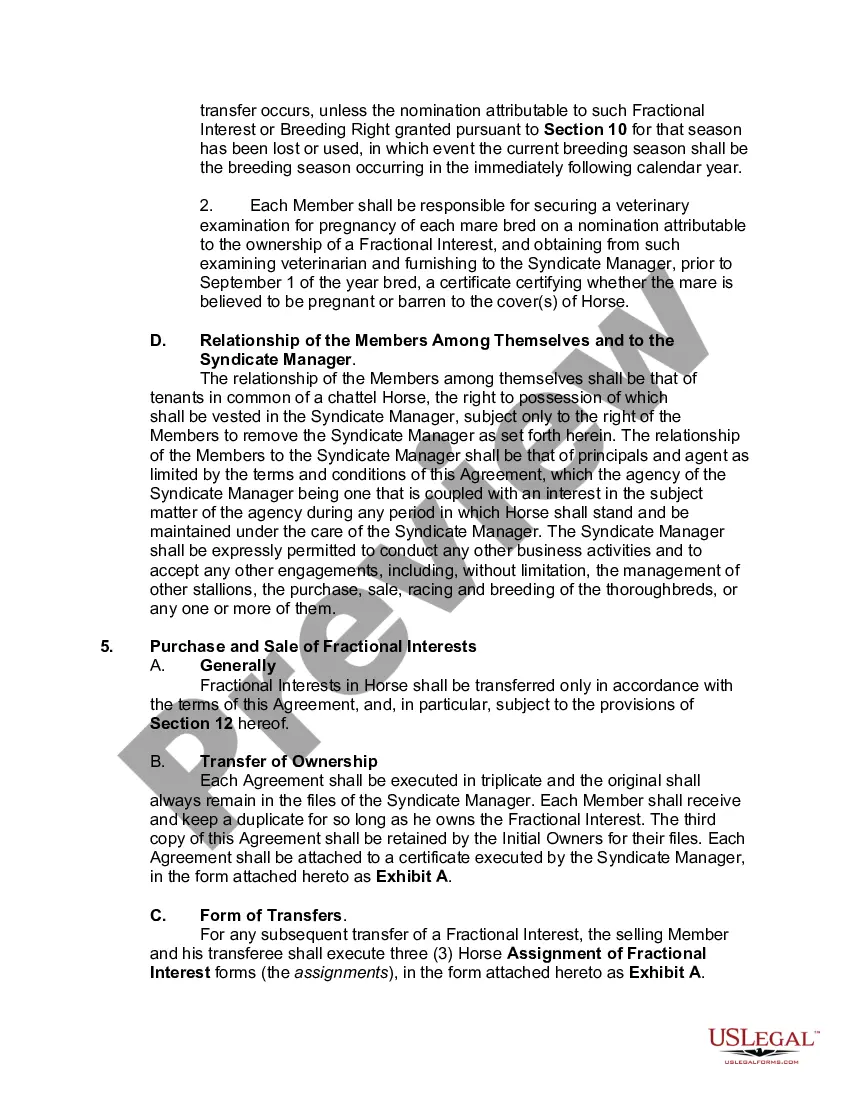
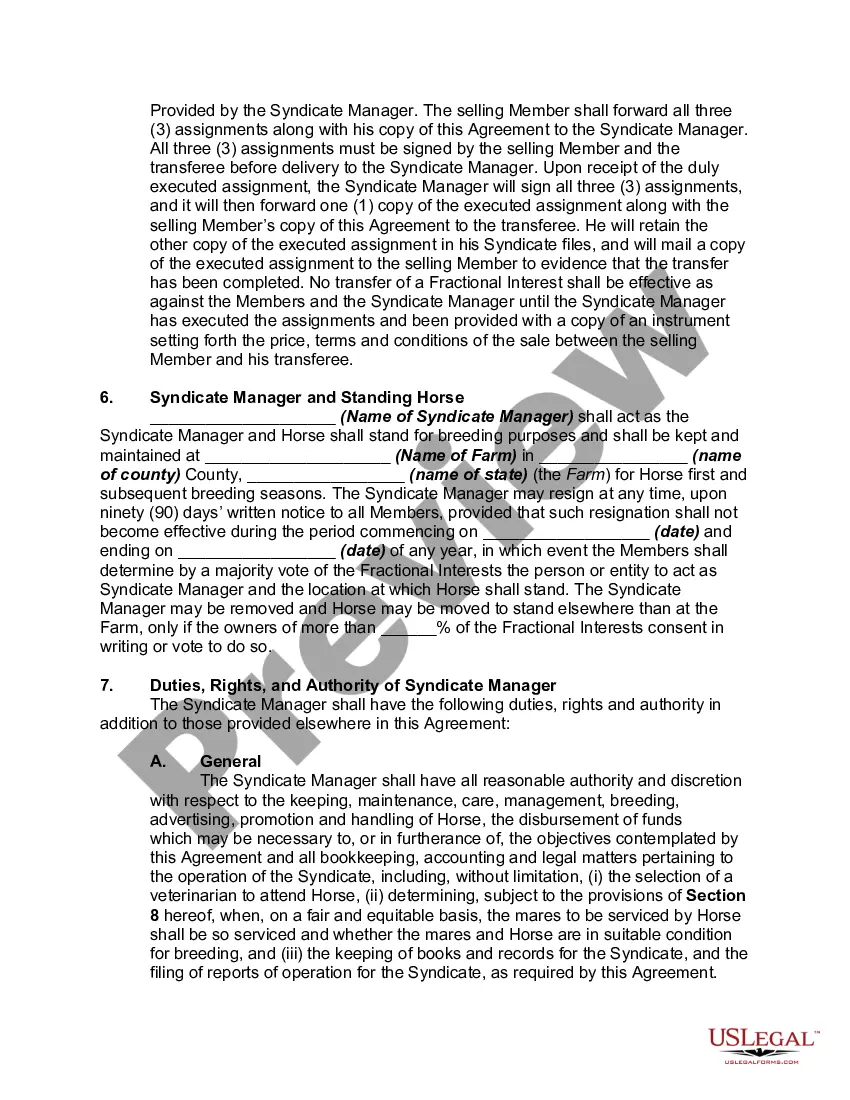
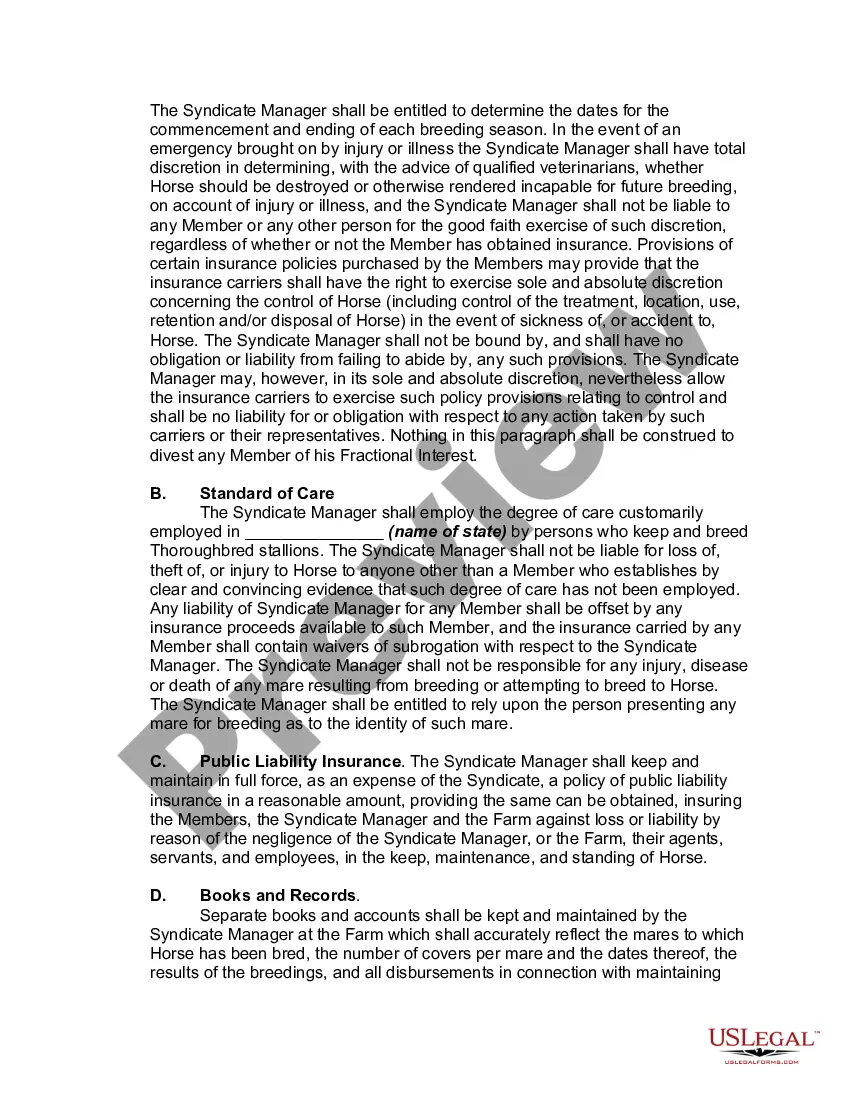
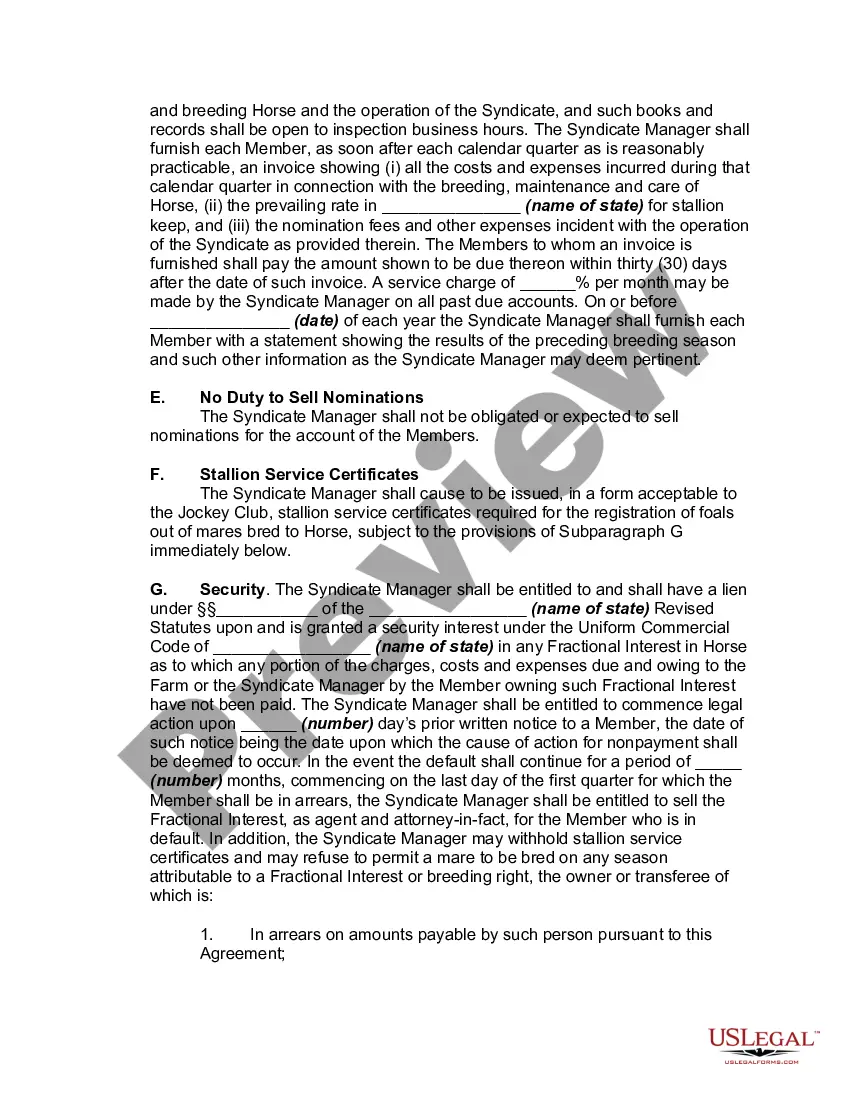
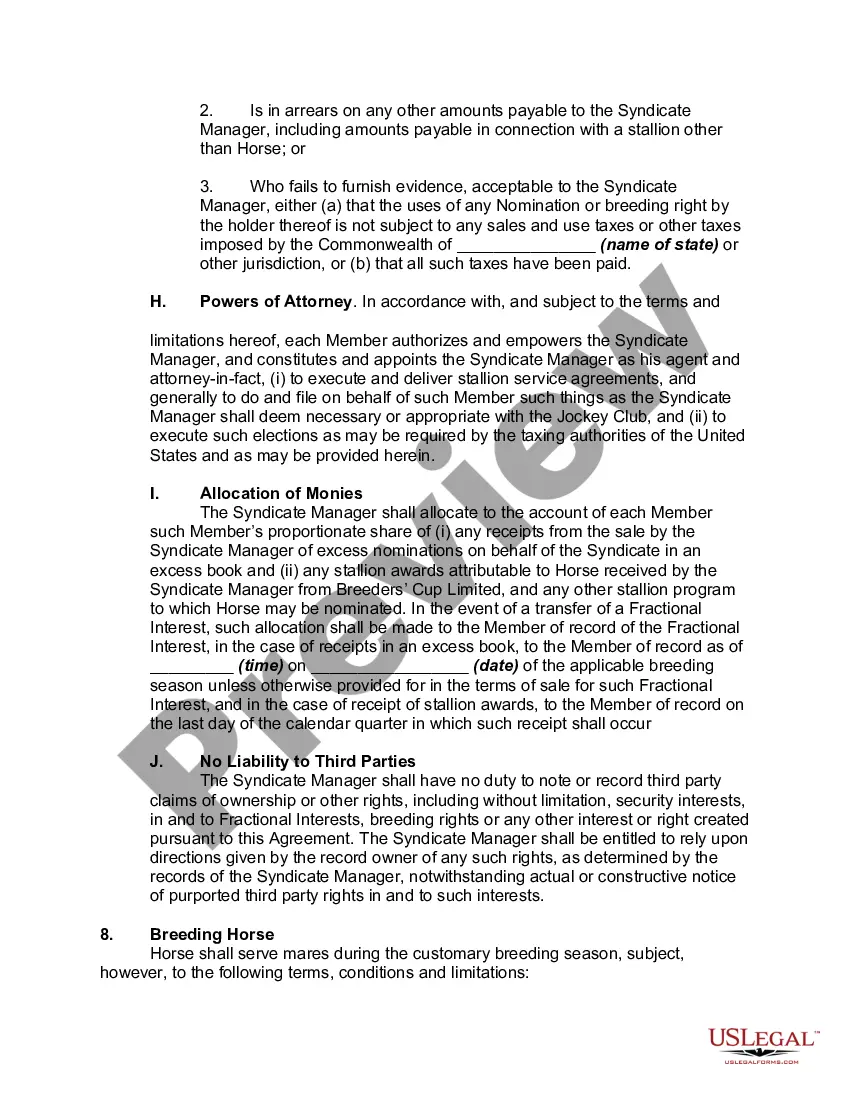
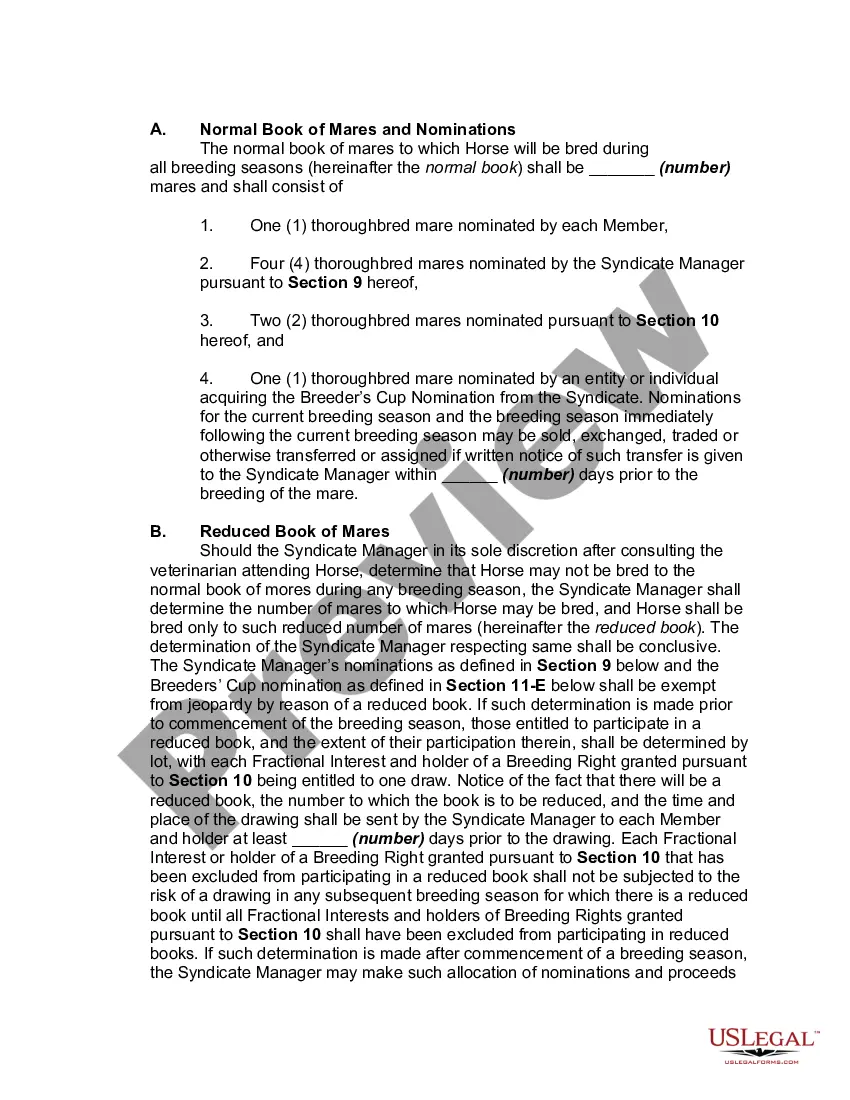
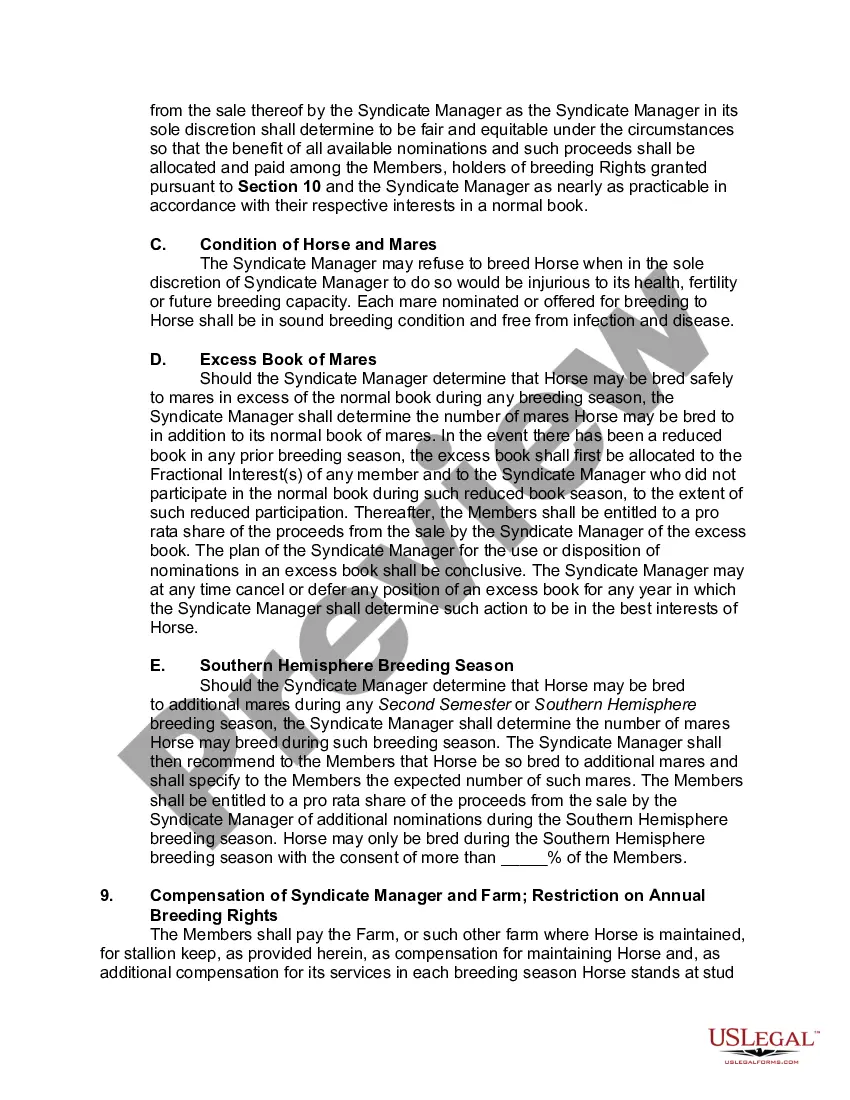
Syndicate involves multiple ownership of the stallion, and each. ownership interest (often called a "fractional interest" or a. "share")4 entitles the owner to certain defined annual breeding. rights (often called "nominations" or "seasons") and obligates the owner to share in the expenses of maintaining the stallion.
