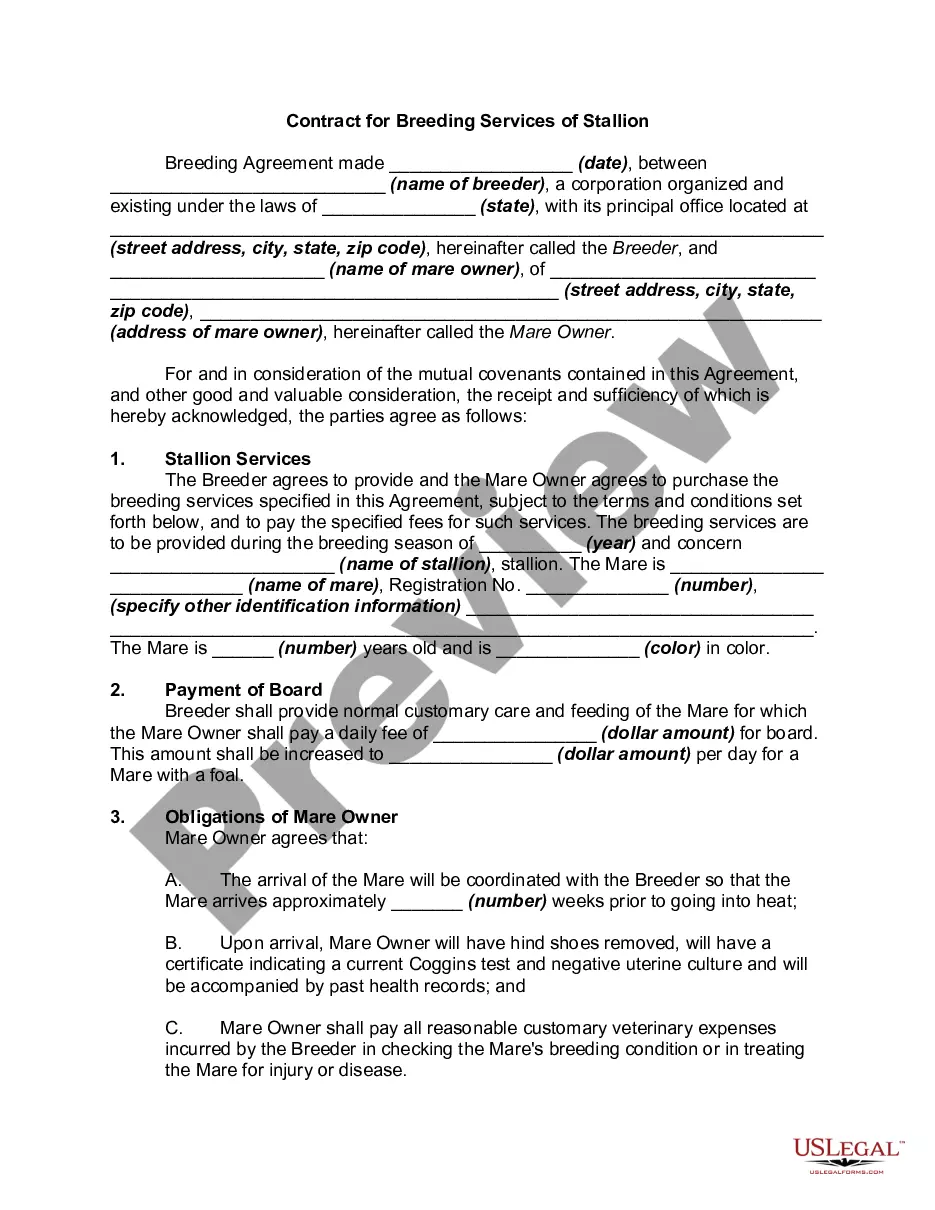
Stallion Breeding Contract Forms In Illinois
Description
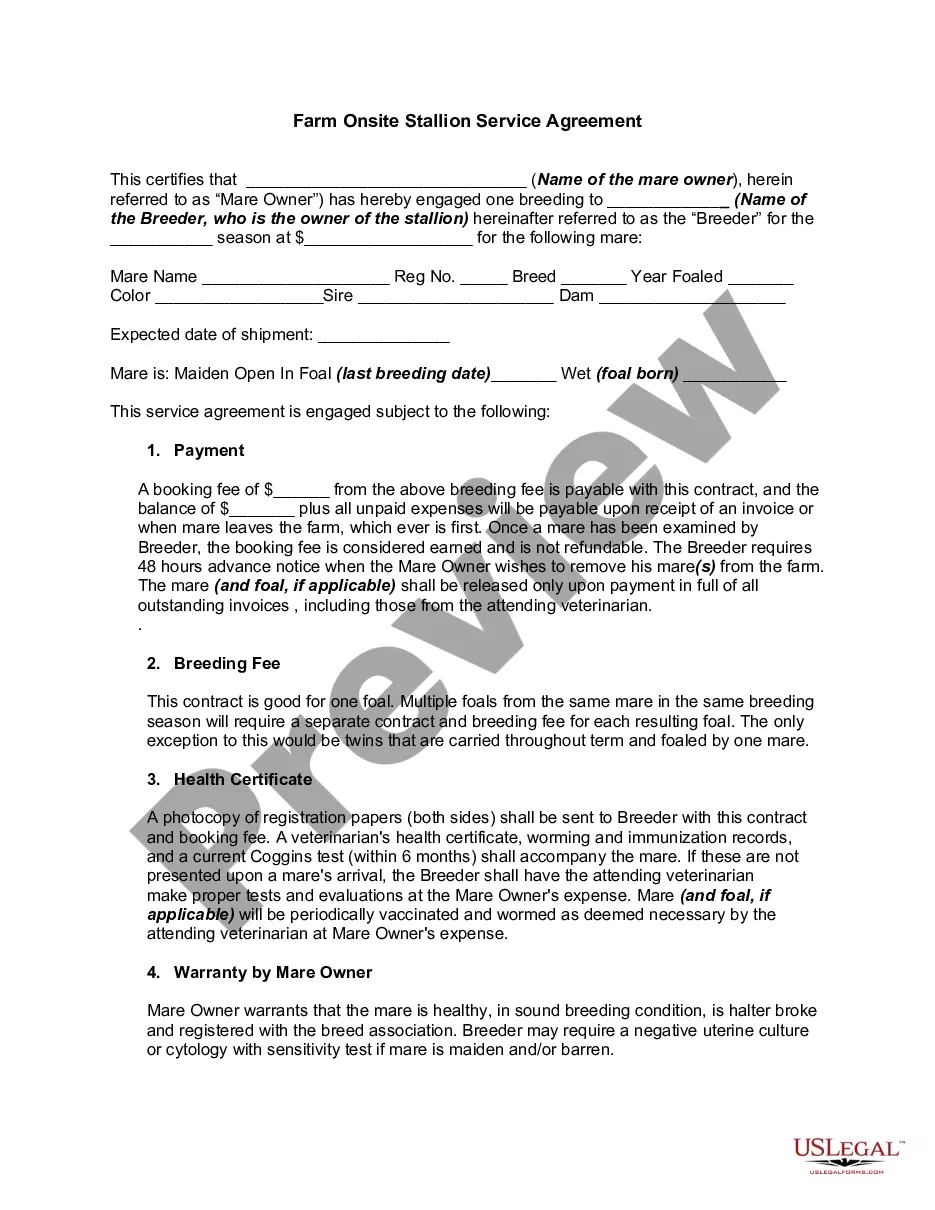
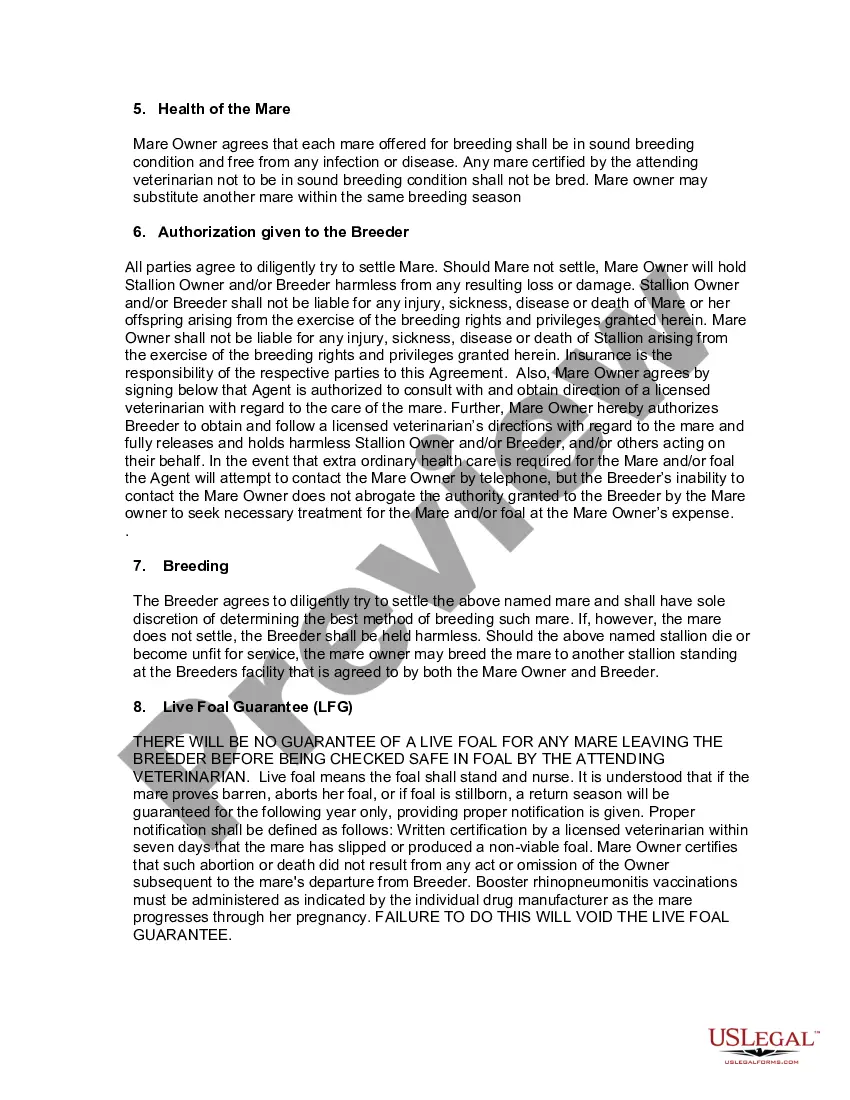
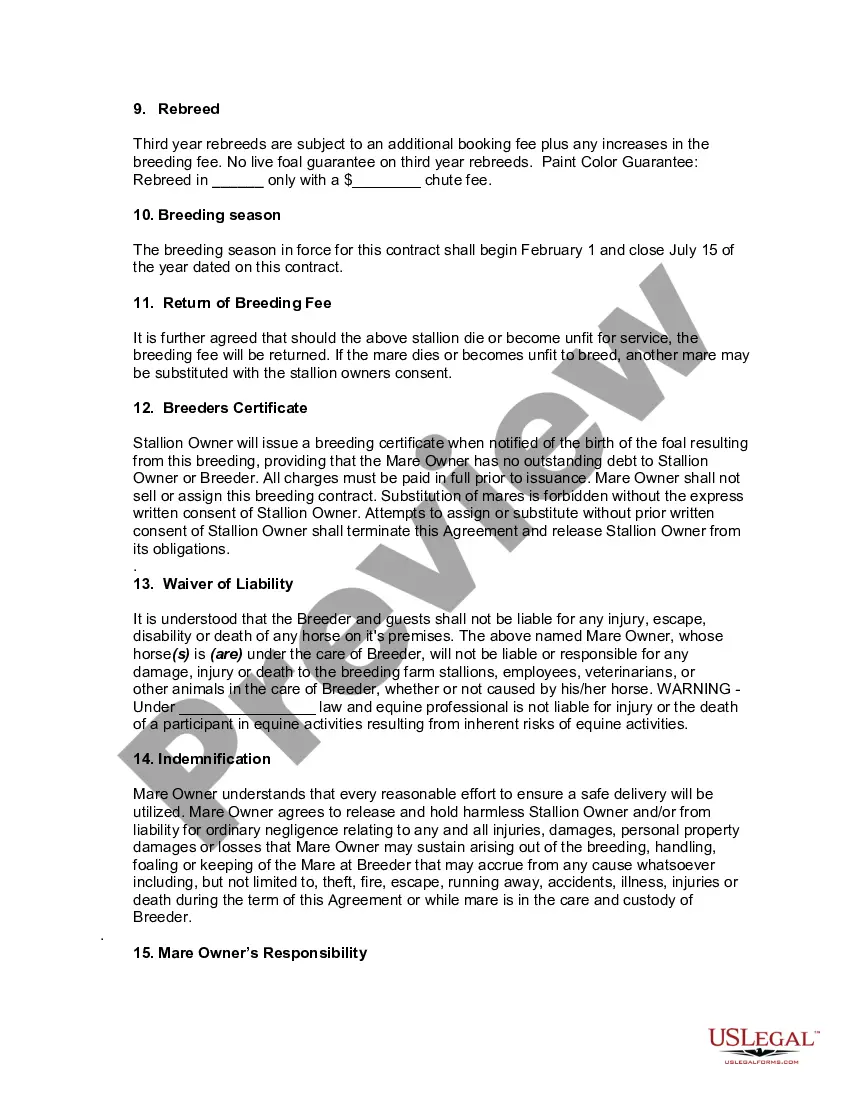
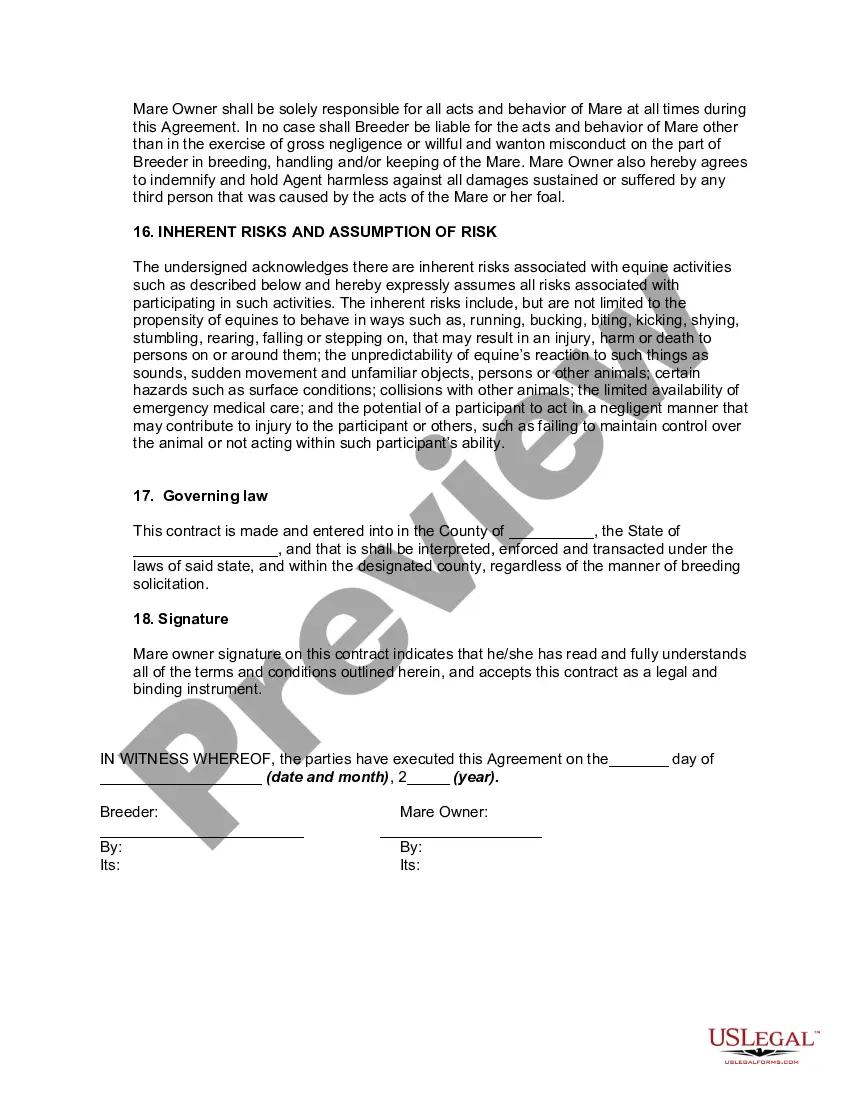
Get your form ready online
Our built-in tools help you complete, sign, share, and store your documents in one place.
Make edits, fill in missing information, and update formatting in US Legal Forms—just like you would in MS Word.
Download a copy, print it, send it by email, or mail it via USPS—whatever works best for your next step.
Sign and collect signatures with our SignNow integration. Send to multiple recipients, set reminders, and more. Go Premium to unlock E-Sign.
If this form requires notarization, complete it online through a secure video call—no need to meet a notary in person or wait for an appointment.
We protect your documents and personal data by following strict security and privacy standards.

Make edits, fill in missing information, and update formatting in US Legal Forms—just like you would in MS Word.

Download a copy, print it, send it by email, or mail it via USPS—whatever works best for your next step.

Sign and collect signatures with our SignNow integration. Send to multiple recipients, set reminders, and more. Go Premium to unlock E-Sign.

If this form requires notarization, complete it online through a secure video call—no need to meet a notary in person or wait for an appointment.

We protect your documents and personal data by following strict security and privacy standards.
Looking for another form?






Form popularity
FAQ
Pasture mating, hand mating and artificial insemination are the three methods used, with variations of each. Breed registry regulations vary regarding the use of artificial insemination.
The male semen must go into the cervix, and swim around to attach. Her ovum could live 2 or 3 days, and the male semen could live 2 or 3 days, but it does not always cause a pregnancy. So , if a mare is not in estrus, she can't become pregnant.
Mares typically ovulate around seven days after giving birth. If the mare's uterus is not recovering in a timely manner, or if there is any infection post-partum, this cycle will likely not be viable time for breeding.
8 Steps for Breeding Your Mare Step 1: Consider the mare's overall health. Step 2: Schedule a breeding soundness examination and address any problems. Step 3: Get the mare cycling. Step 4: Track the mare's estrous cycle to know when she's ovulating. Step 5: Determine when to breed the mare.
A stallion used for breeding is known as a stud.
8 Steps for Breeding Your Mare Step 1: Consider the mare's overall health. Step 2: Schedule a breeding soundness examination and address any problems. Step 3: Get the mare cycling. Step 4: Track the mare's estrous cycle to know when she's ovulating. Step 5: Determine when to breed the mare.
If the young horse has done well on the racetrack during his 2- and 3-year-old years, for instance, he may begin breeding mares as a 4-year-old. Before entering the breeding shed, he needs some re-training, a fertility evaluation, and some time to refocus on his new job and prepare for his first breeding season.
The selection process involves evaluating the stallion's conformation, pedigree, performance record, temperament, and genetic traits to ensure that he is well-suited to contribute positively to improving and preserving the Arabian breed.
So what makes a good broodmare? Look closely at the mare's conformation – she should be balanced from back to front, with structural correctness and everything in proportion, as well as good feet, bone and girth. Consider her temperament, trainability and rideability, and what you want her offspring to inherit.
What Attributes to look for in a stallion? Conformation – Is the stallion a good impressive physical type or does he have any conformation faults that maybe passed onto the foal? Pedigree – This is where it's important to do your research. Temperament – does he display good behavior and are his foals of a nice nature?
