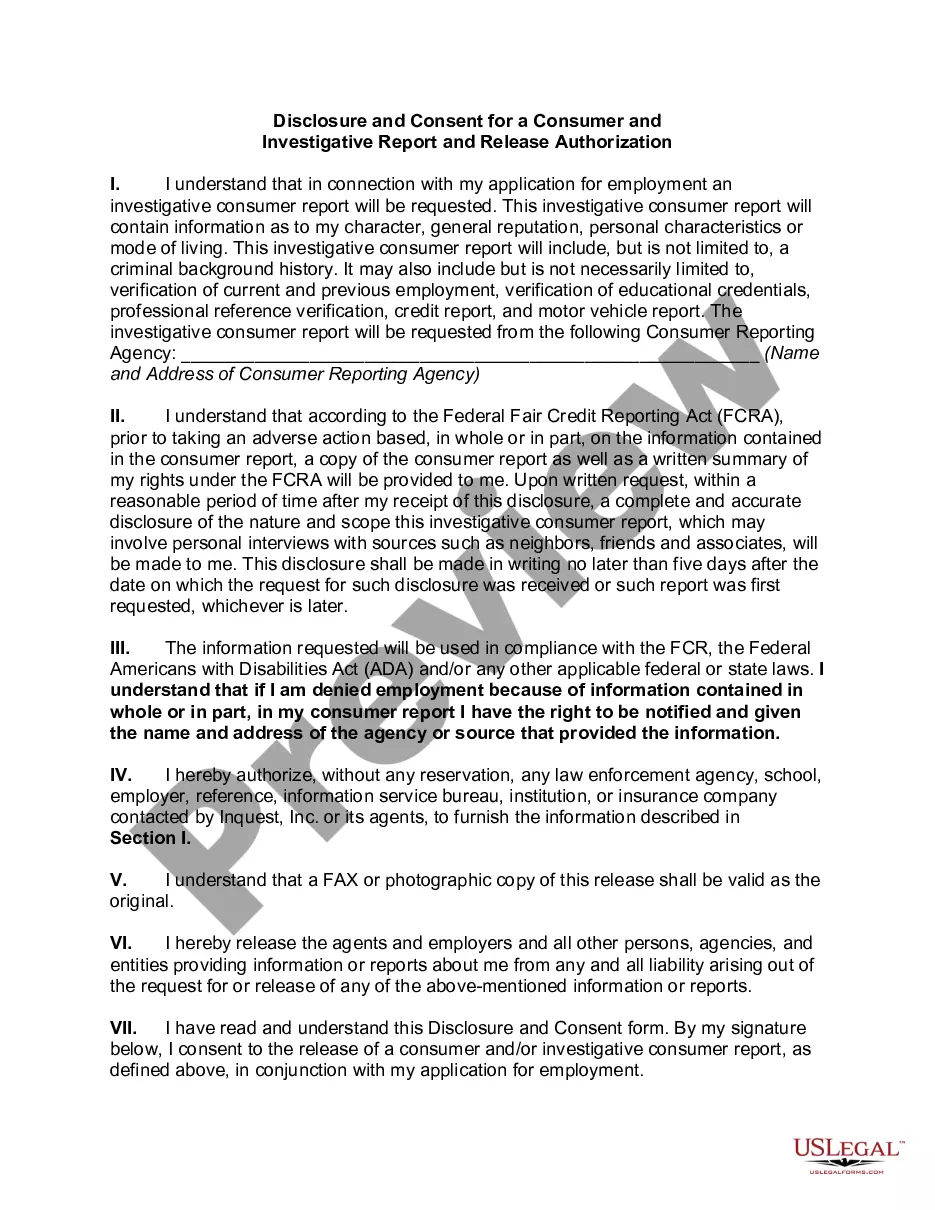
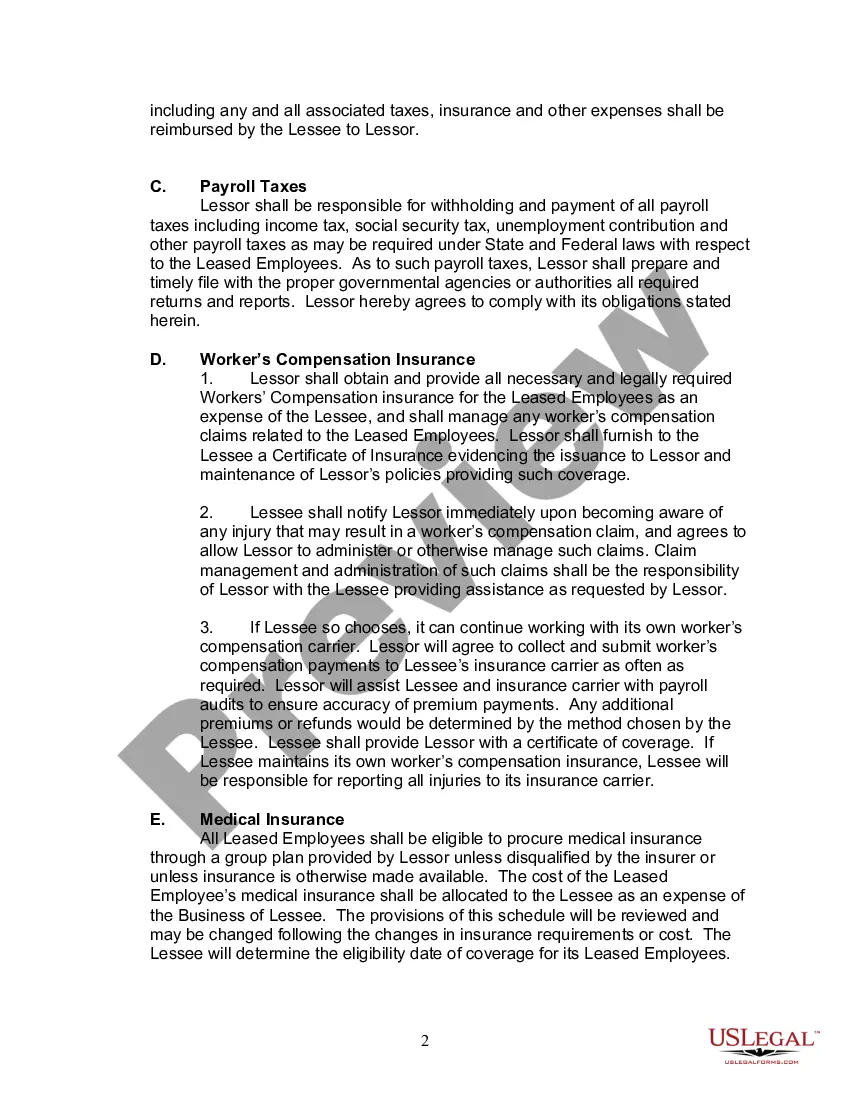
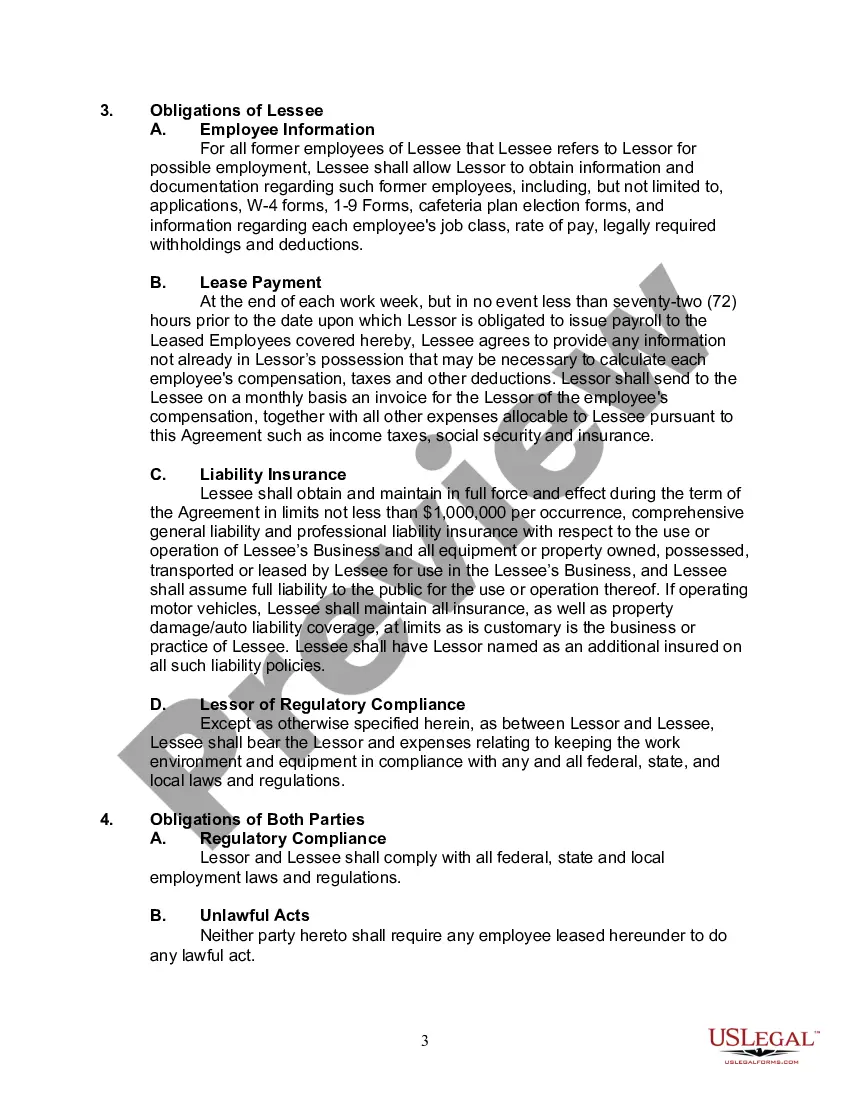
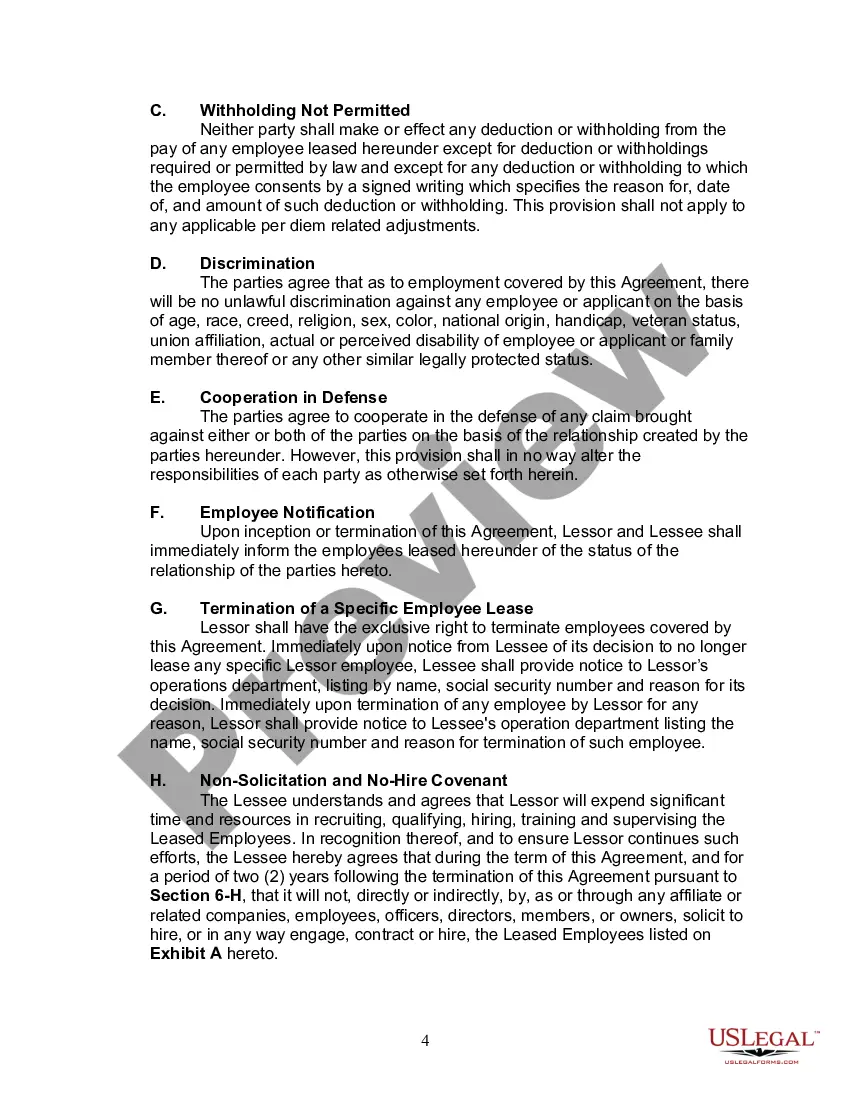
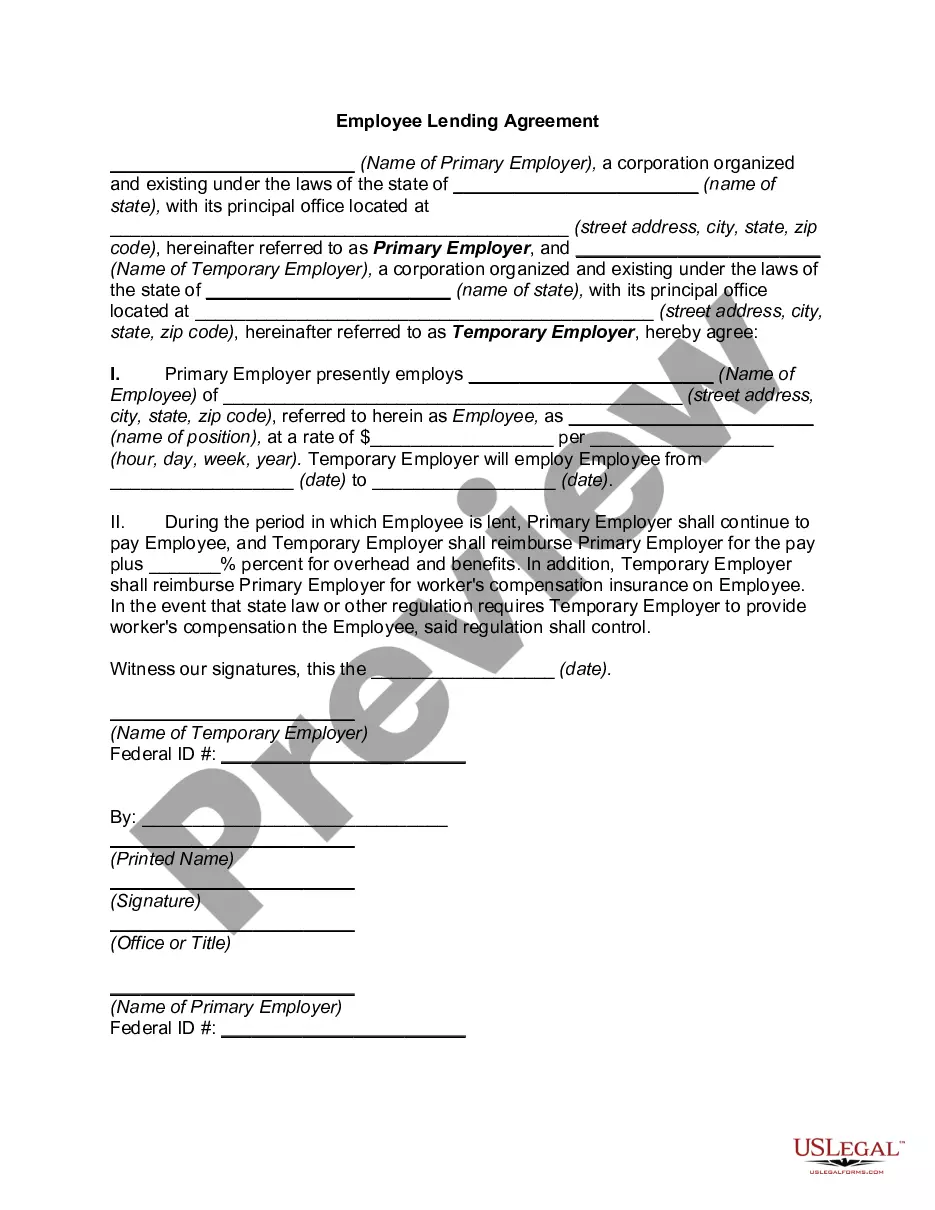
Employee Leasing Contract With Example In Texas
Description

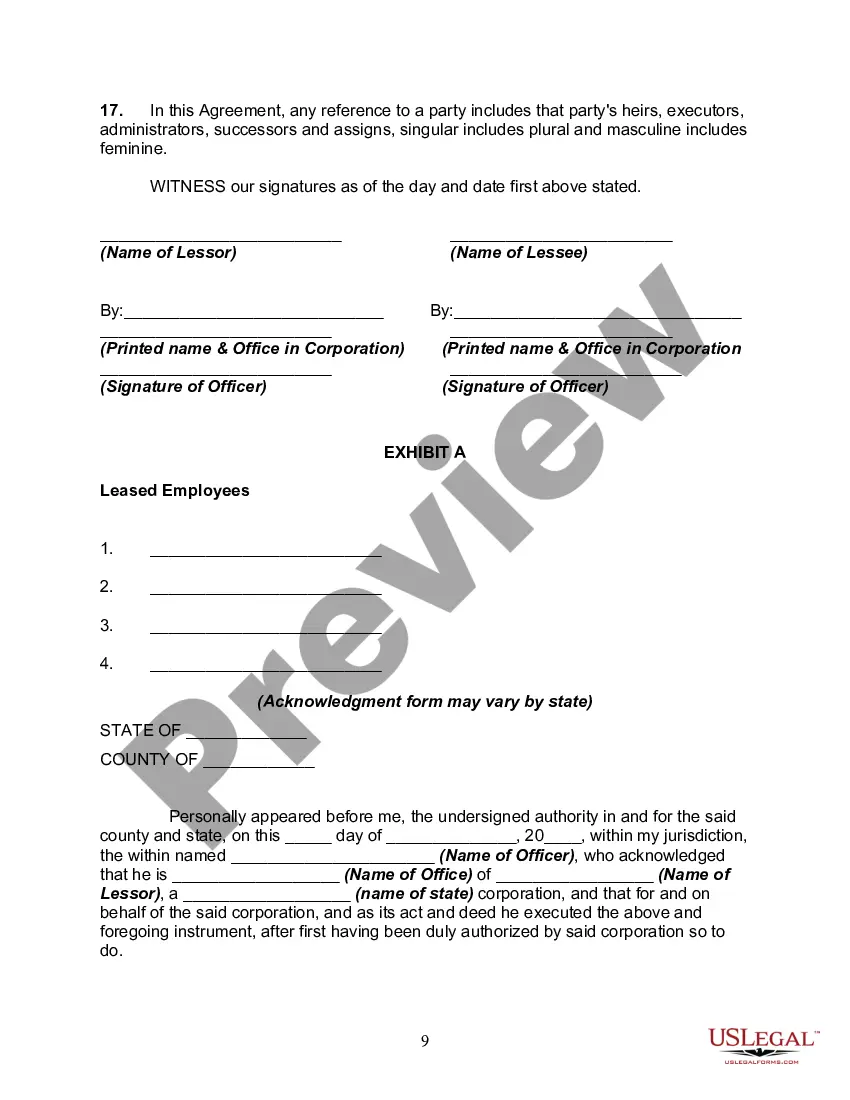
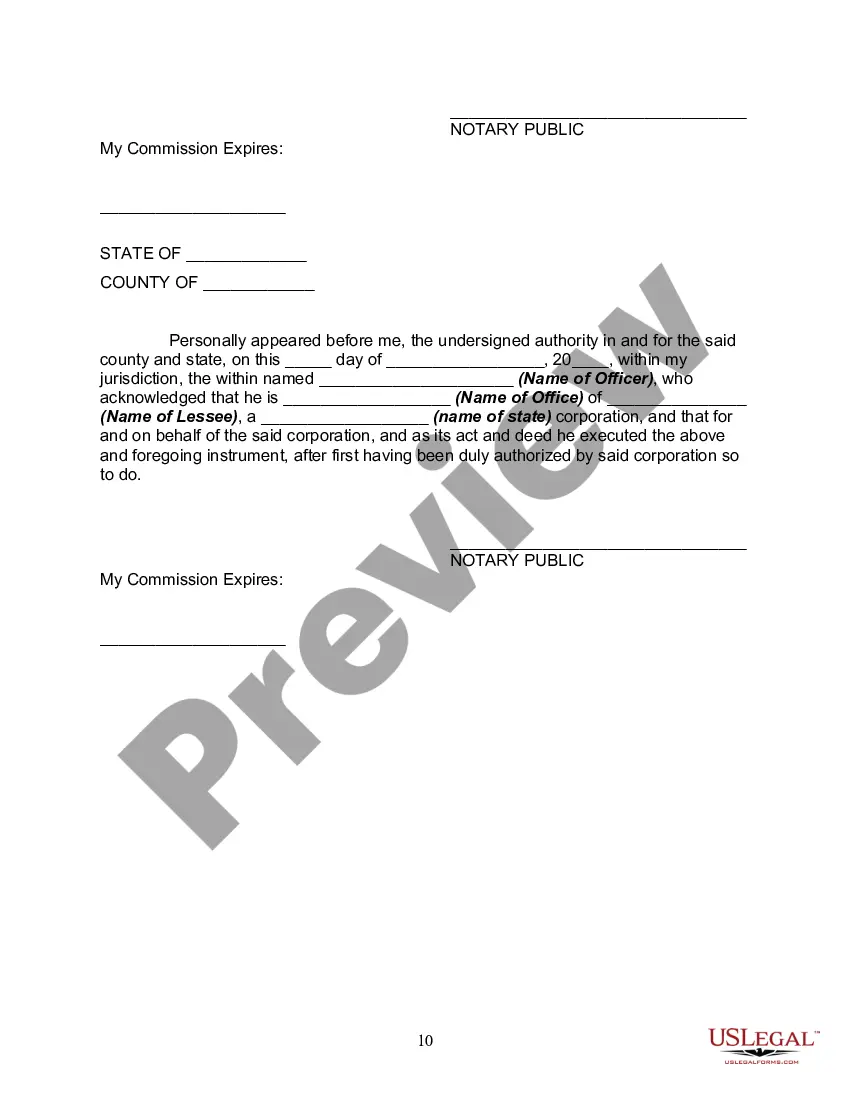
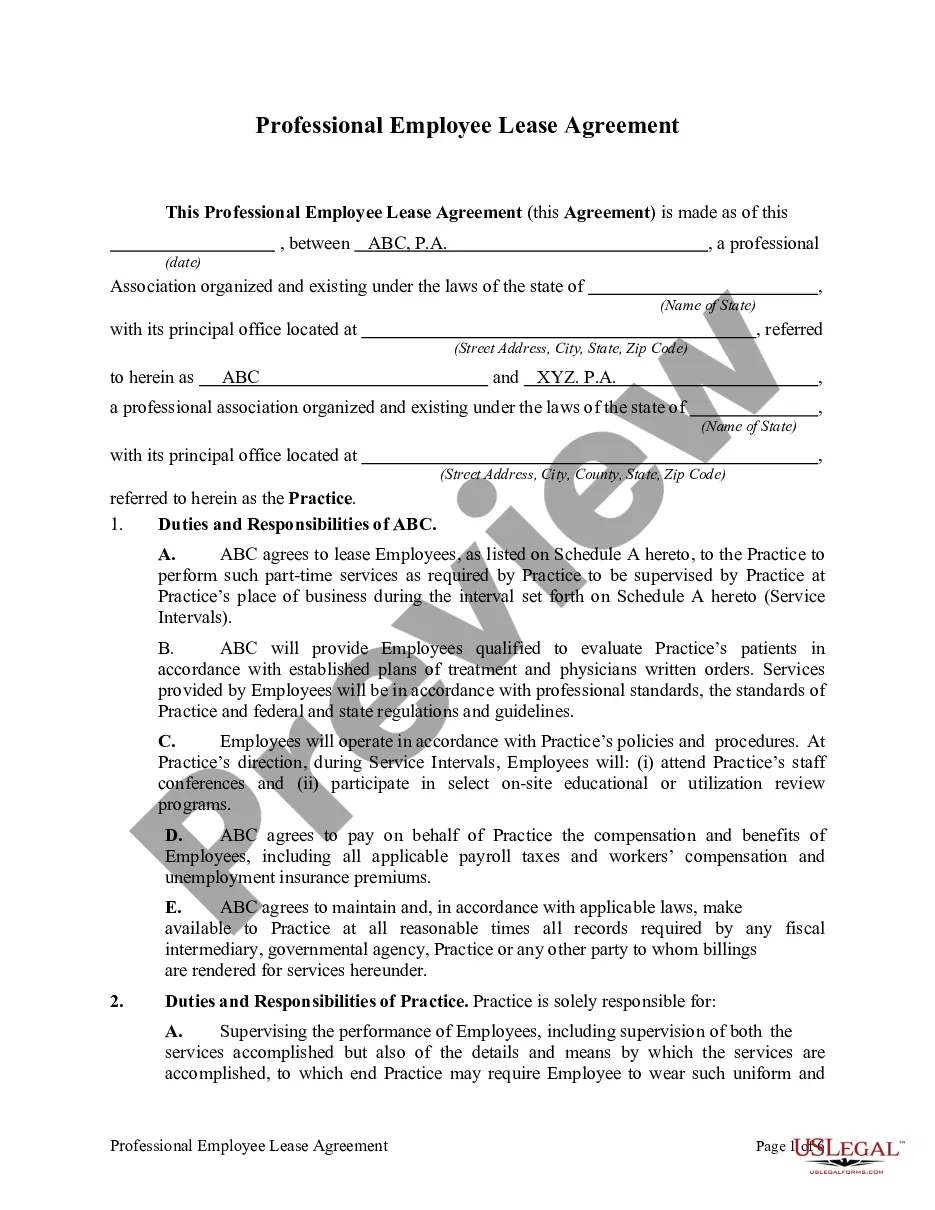
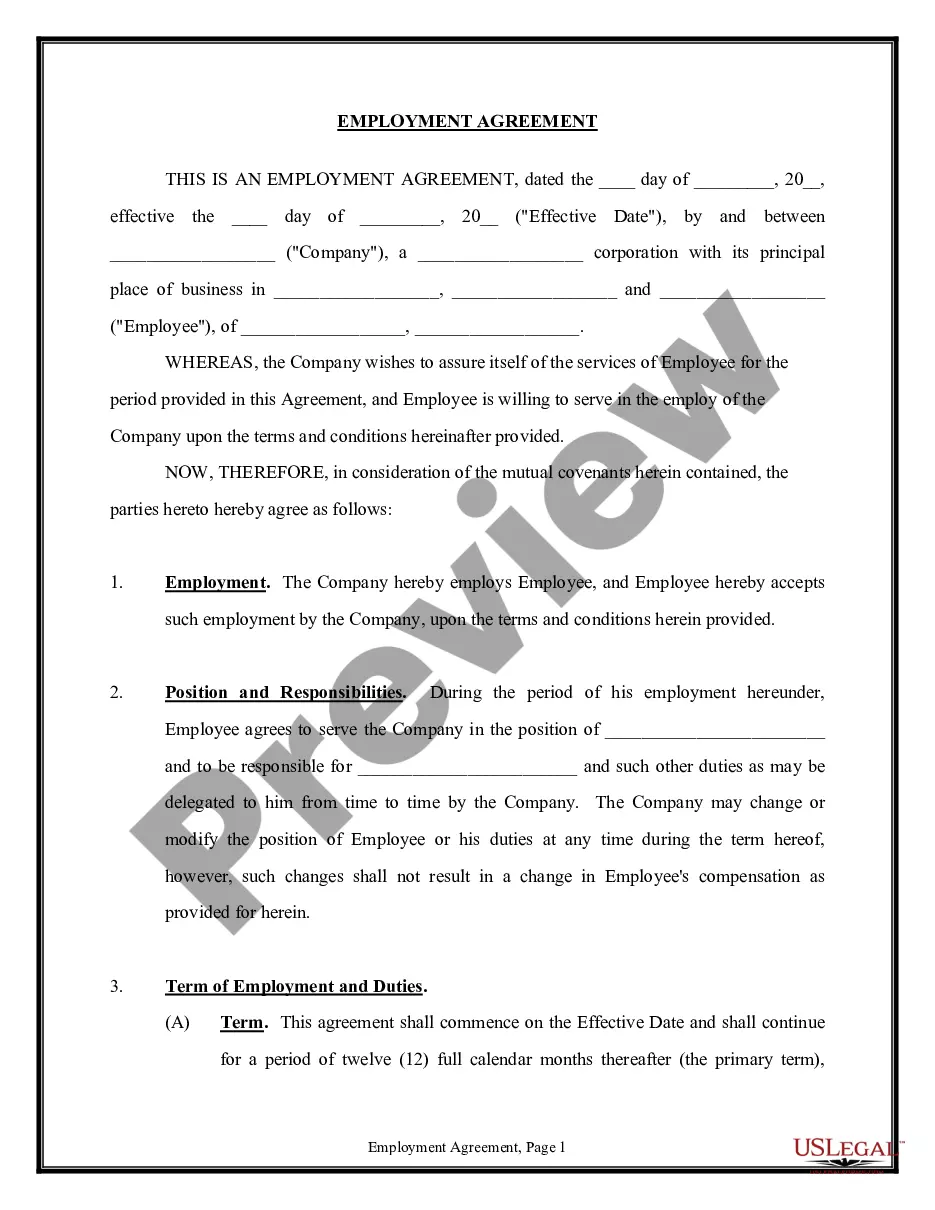
Get your form ready online
Our built-in tools help you complete, sign, share, and store your documents in one place.
Make edits, fill in missing information, and update formatting in US Legal Forms—just like you would in MS Word.
Download a copy, print it, send it by email, or mail it via USPS—whatever works best for your next step.
Sign and collect signatures with our SignNow integration. Send to multiple recipients, set reminders, and more. Go Premium to unlock E-Sign.
If this form requires notarization, complete it online through a secure video call—no need to meet a notary in person or wait for an appointment.
We protect your documents and personal data by following strict security and privacy standards.

Make edits, fill in missing information, and update formatting in US Legal Forms—just like you would in MS Word.

Download a copy, print it, send it by email, or mail it via USPS—whatever works best for your next step.

Sign and collect signatures with our SignNow integration. Send to multiple recipients, set reminders, and more. Go Premium to unlock E-Sign.

If this form requires notarization, complete it online through a secure video call—no need to meet a notary in person or wait for an appointment.

We protect your documents and personal data by following strict security and privacy standards.
Looking for another form?








Form popularity
FAQ
Examples of work provided by Employee Leasing Companies are Payroll Services, Insurance, Tax Services, and various Personnel Services.
Employee leasing is an arrangement between a business and a staffing firm, who supplies workers on a project-specific or temporary basis. These employees work for the client business, but the leasing agency pays their salaries and handles all of the HR administration associated with their employment.
How to Write a Lease Agreement Include Parties' Info & Property Details. Specify the Lease Length. Include Rent Payment Terms & Late Fees. Outline Security Deposit Rules. Describe Maintenance Responsibilities. Explain Utility Provisions. Highlight Rules & Policies. Make Mandatory Disclosures.
A Texas standard residential lease agreement is a document used by a landlord renting property to a tenant for monthly payment under typical conditions. Most agreements of this type are for a fixed term, usually one year.
How to write a Texas lease agreement Begin by including the names and contact information of both the landlord and tenant. Describe the rental property, including its address and any unique features. Specify the lease term, including the move-in and move-out dates.
Anyone can write a lease agreement, but you have to make sure that it does not contravine any part of the state statues, any part that does will become unenforcable if challenged in a court. It is best to have any lease that you write looked over ...
The residential lease agreement should include the rental term or lease term, monthly rent payment, due date, the grace period for unpaid rent, the landlord and tenant maintenance responsibilities, and lease agreement disclosures, including lead-based paint hazards that may pose health risks.
Yes, you can create your own lease agreement without the assistance of a lawyer or other professional.
Do Lease Agreements Need to Be Notarized in Texas? No, Texas Lease Agreements do not need to be notarized. They just need to be signed by the Tenant and Landlord.
It must be written in strict adherence to property laws of the state where the property is located. Failing to do so can either render the lease invalid or unable to protect the landlord's property and interests from potential problem tenants.