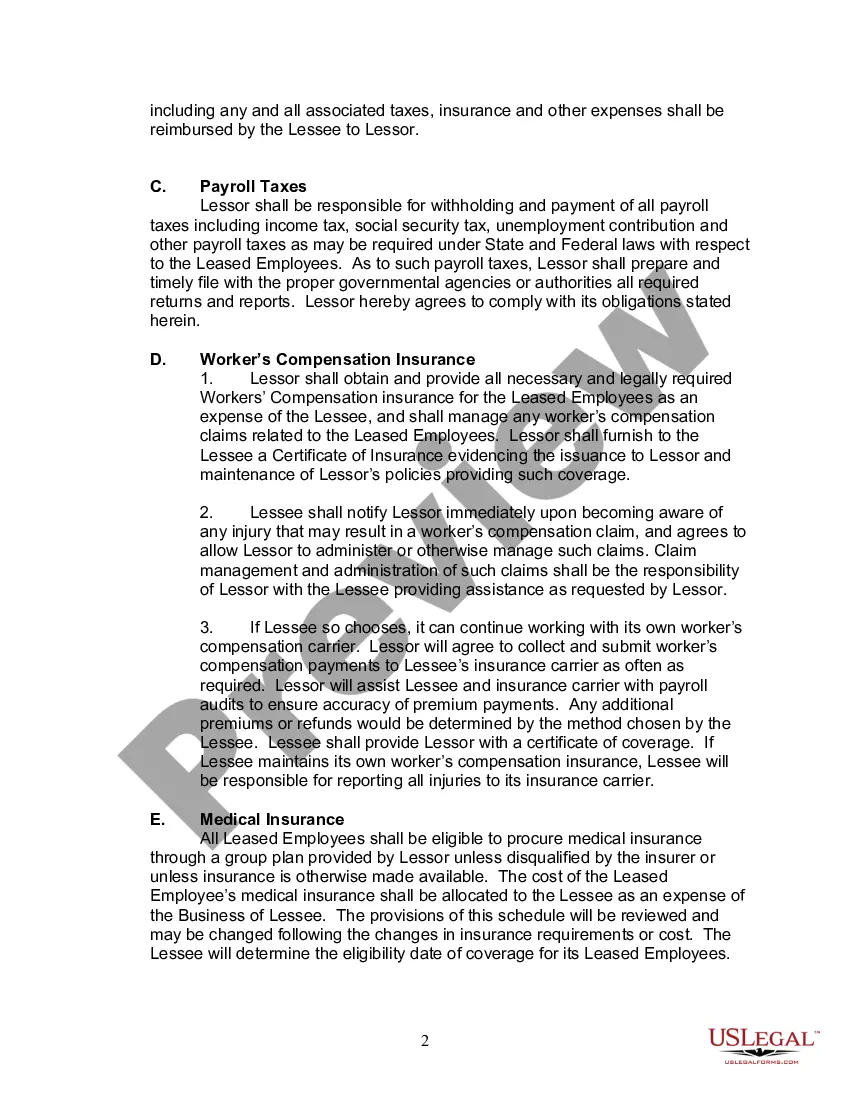
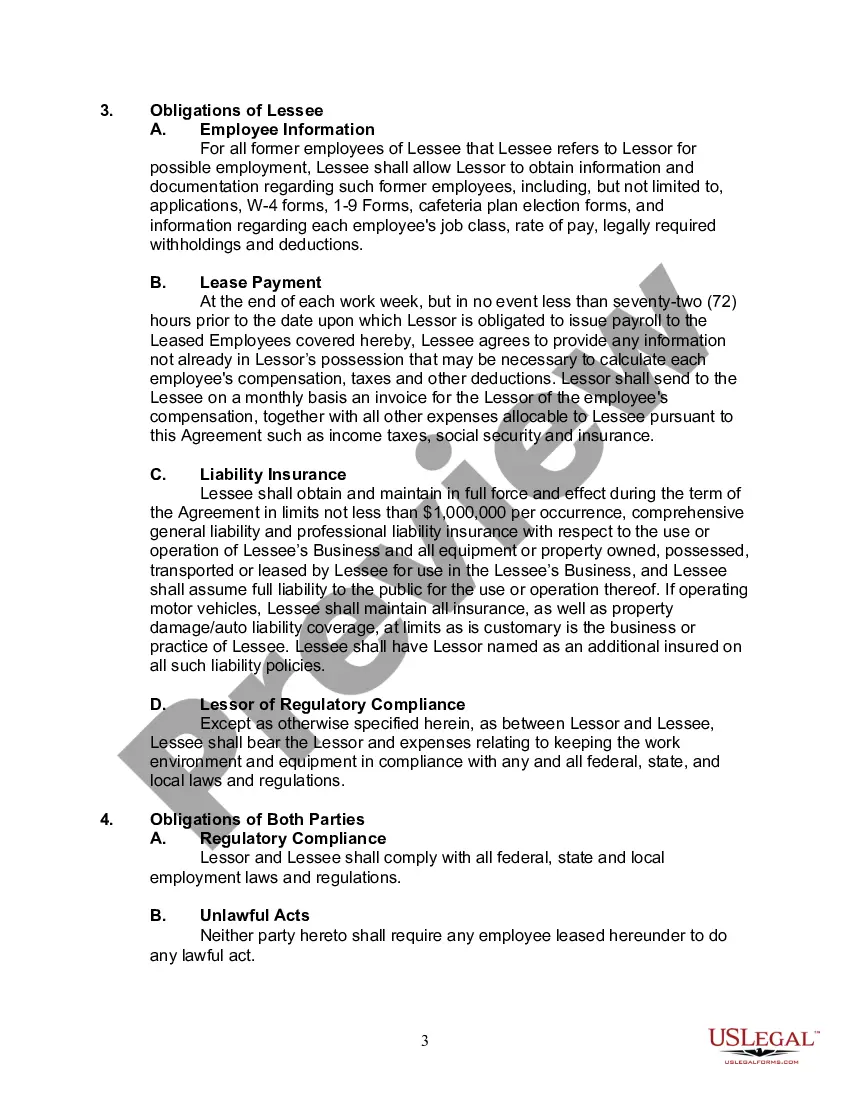
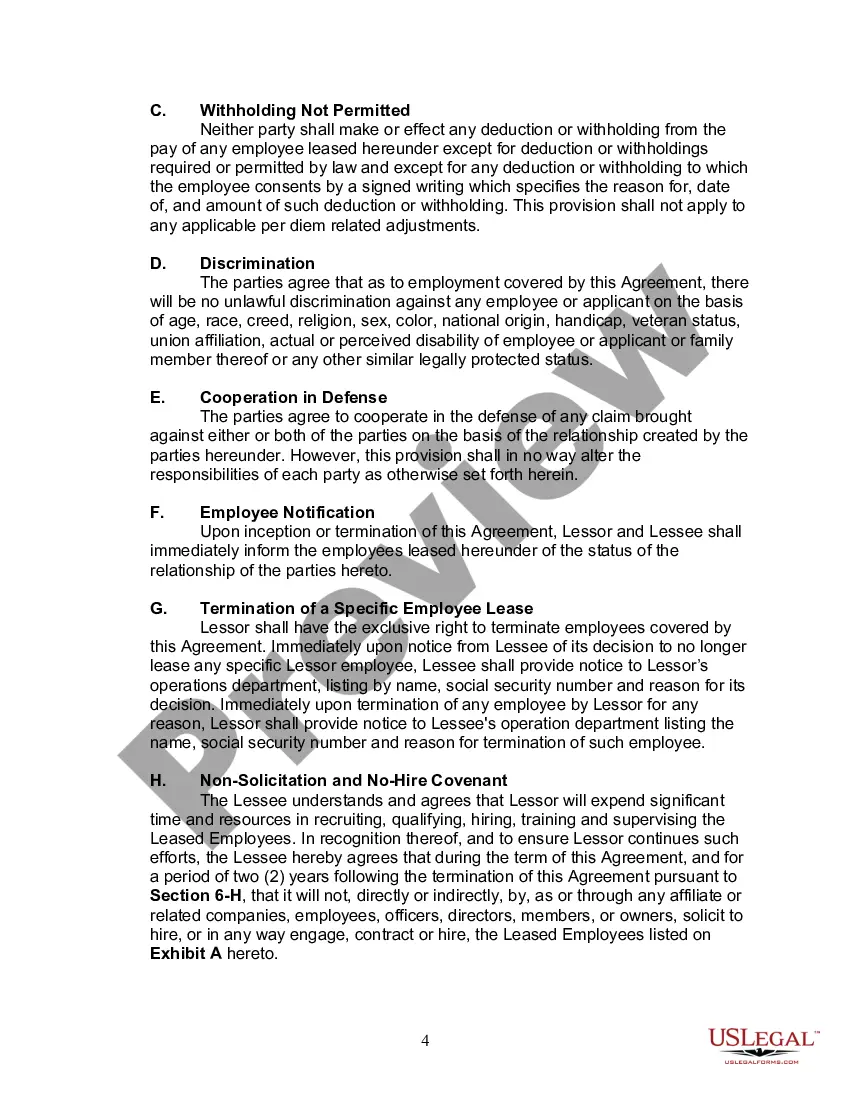
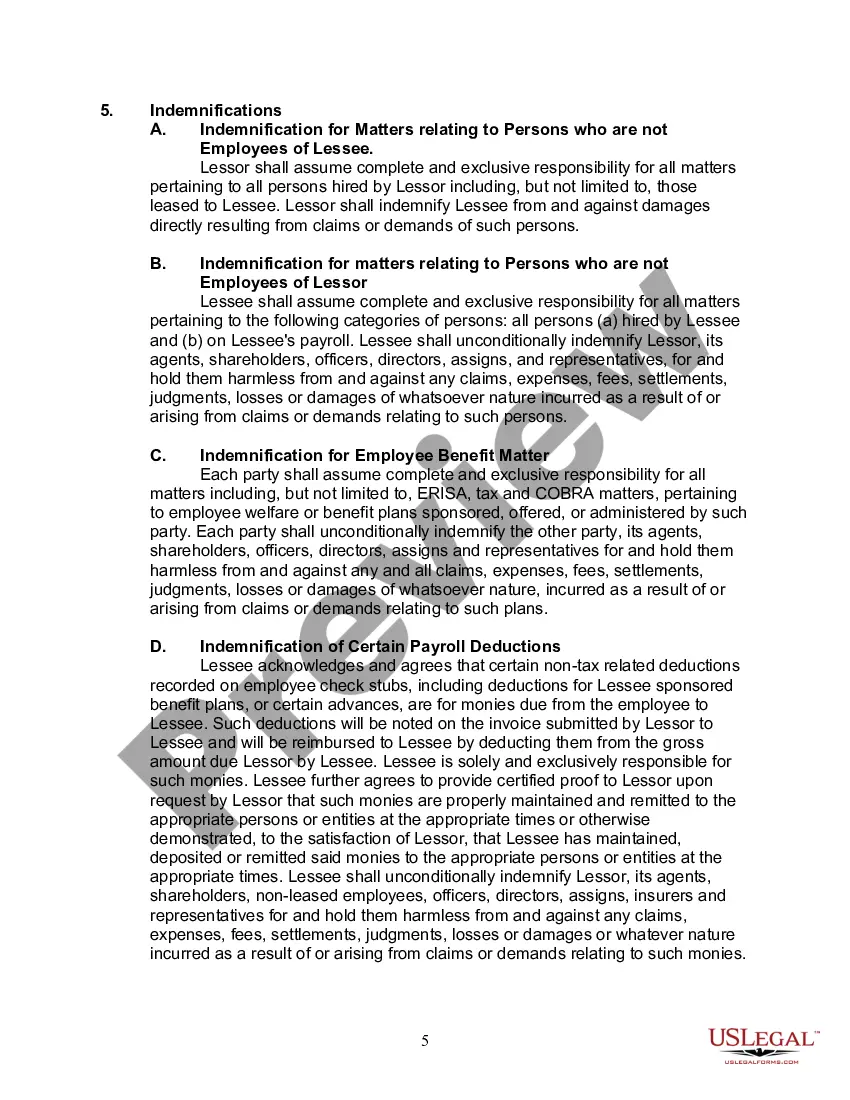
Employee Leasing Contract In Ohio
Description


Get your form ready online
Our built-in tools help you complete, sign, share, and store your documents in one place.
Make edits, fill in missing information, and update formatting in US Legal Forms—just like you would in MS Word.
Download a copy, print it, send it by email, or mail it via USPS—whatever works best for your next step.
Sign and collect signatures with our SignNow integration. Send to multiple recipients, set reminders, and more. Go Premium to unlock E-Sign.
If this form requires notarization, complete it online through a secure video call—no need to meet a notary in person or wait for an appointment.
We protect your documents and personal data by following strict security and privacy standards.

Make edits, fill in missing information, and update formatting in US Legal Forms—just like you would in MS Word.

Download a copy, print it, send it by email, or mail it via USPS—whatever works best for your next step.

Sign and collect signatures with our SignNow integration. Send to multiple recipients, set reminders, and more. Go Premium to unlock E-Sign.

If this form requires notarization, complete it online through a secure video call—no need to meet a notary in person or wait for an appointment.

We protect your documents and personal data by following strict security and privacy standards.
Looking for another form?


Form popularity
FAQ
The definition and the status of a temporary or leased employee can be described simply as employees who do not have the status of common law employees, which are employees who have access to all of the benefits and job security that an employer may provide. This simplified explanation does require elaboration.
California law has stipulated the requirements for classifying an employee as a temporary agency employee. These requirements include the right of the agency to assign and reassign a worker, but the workers have the right to refuse an assignment and remain on the agency's hiring list.
While leased employees are legally employed by a PEO, they work under the day-to-day management and supervision of the leasing business — much like any other employee. This generally gives the leasing business control over how they spend their time, which tools they use to perform their work, their deadlines, and more.
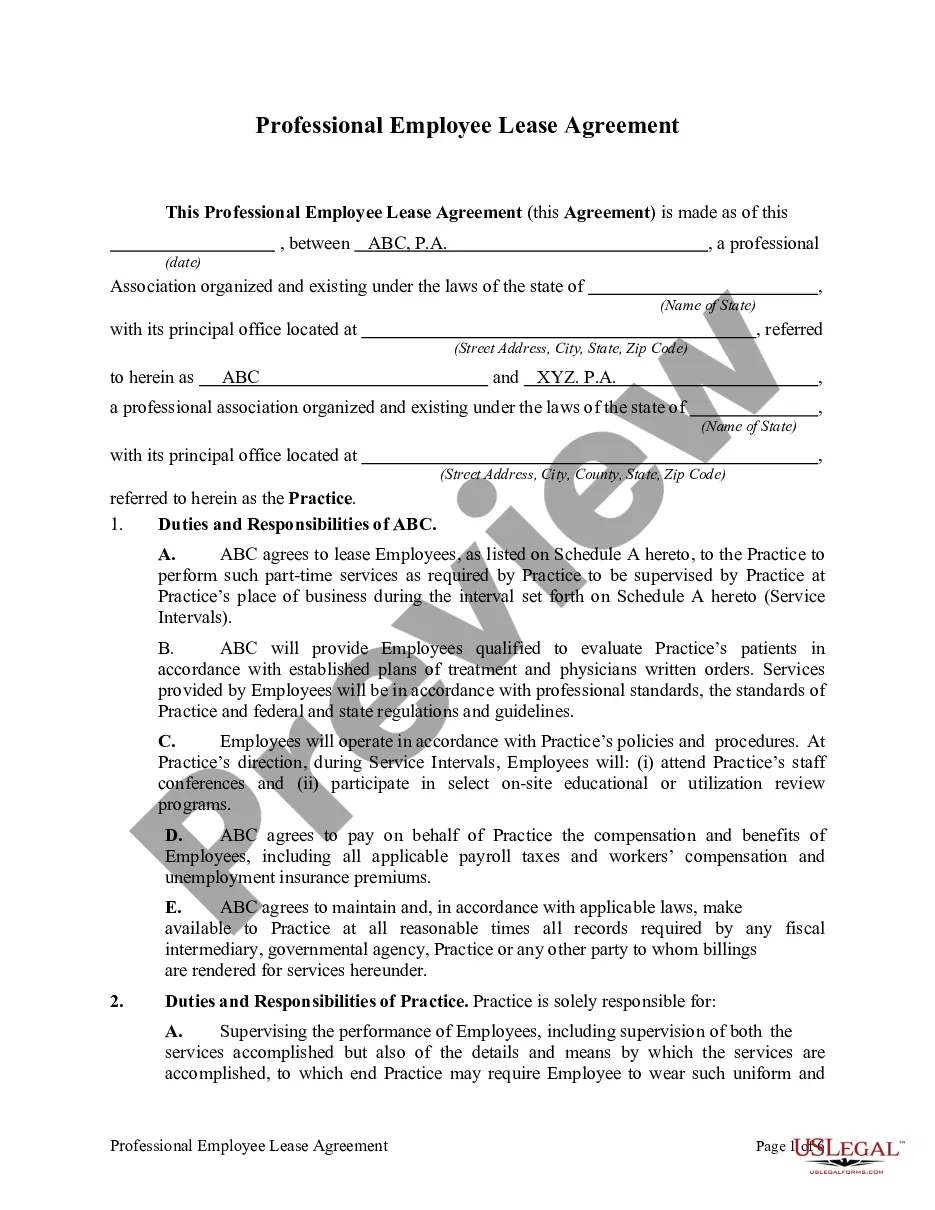
Employee leasing is an arrangement between a business and a staffing firm, who supplies workers on a project-specific or temporary basis. These employees work for the client business, but the leasing agency pays their salaries and handles all of the HR administration associated with their employment.
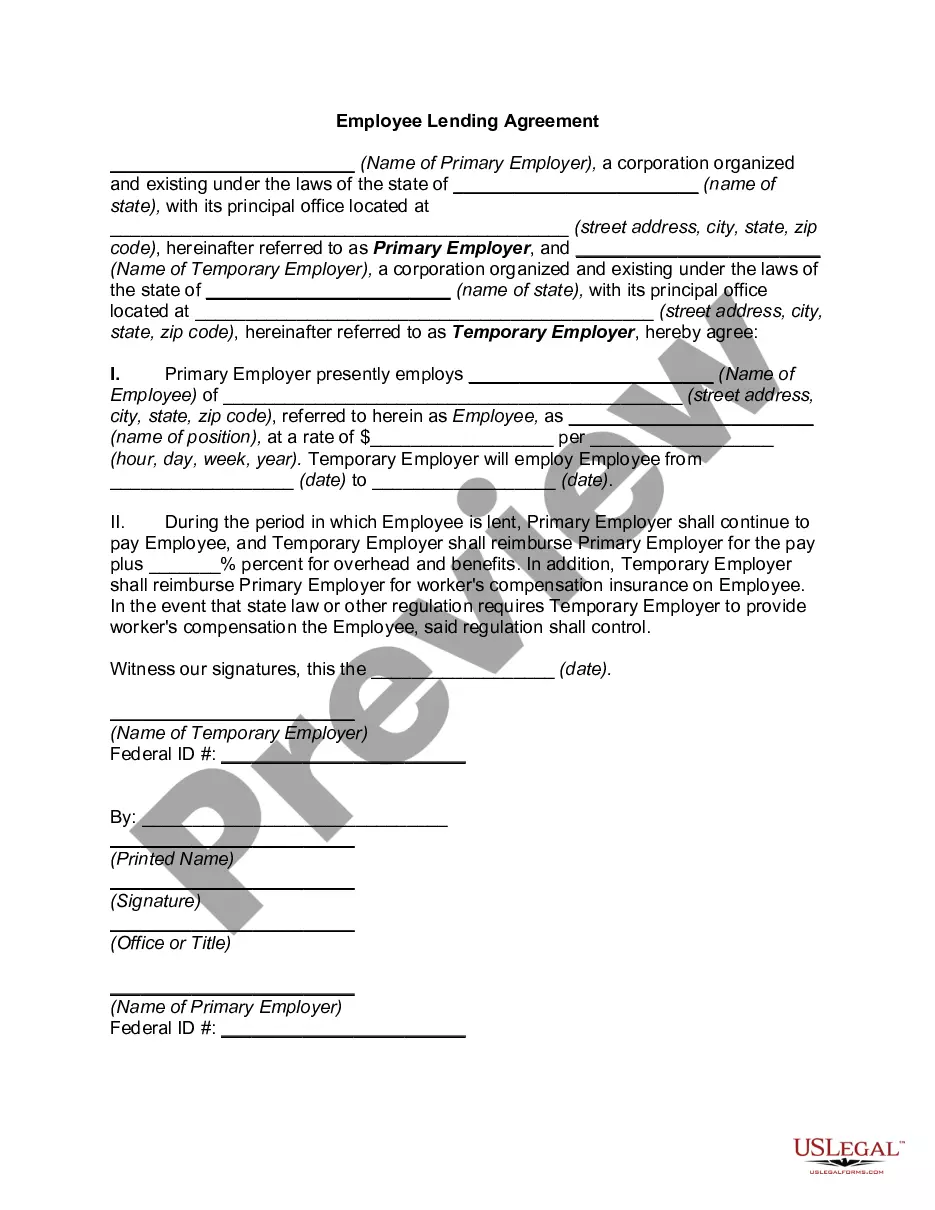
Employee leasing is anytime you enter into a contract with a staffing or employee leasing agency to lend you an employee to perform work for your company. Work responsibilities are typical to those of a regular employee at your business, such as customer service, executive assistant, marketing, and so on.
Employee leasing is an arrangement between a business and a staffing firm, who supplies workers on a project-specific or temporary basis. These employees work for the client business, but the leasing agency pays their salaries and handles all of the HR administration associated with their employment.
Limited Autonomy: When you partner with a PEO, you may have less control over certain HR functions, such as payroll and benefits administration. This could be a drawback if you prefer hands-on management of these areas.
Three Types of PEO Co-employers. The idea of giving complete power in the hands of an HR outsource company might not settle with everyone. Professional Employer Organization. This type of PEO providing HR services does not become the employer of record. Staffing Companies.
How to Start Your Own Employee Leasing Company Register your business. Consult your state and county licensing boards to see if you need a license or permit to operate your employee leasing company. Locate professional office space. Create a niche in your serviceable area. Build and grow a business network.
Ohio law has a filing requirement for Professional Employer Organizations (PEO), Professional Employer Organization Reporting Entities, and Alternate Employer Organizations (AEO).
