Employee Form Document Format In Los Angeles
Description

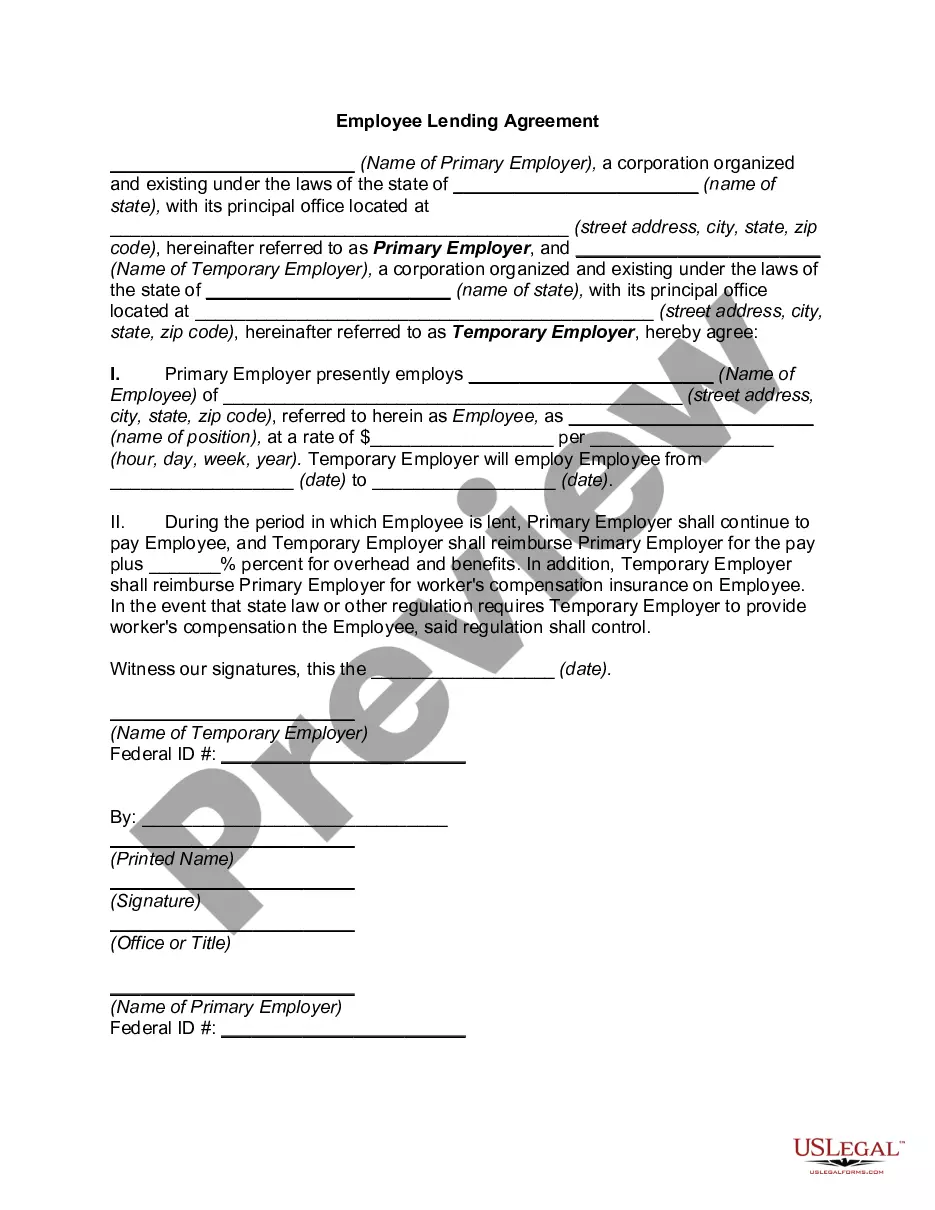
Get your form ready online
Our built-in tools help you complete, sign, share, and store your documents in one place.
Make edits, fill in missing information, and update formatting in US Legal Forms—just like you would in MS Word.
Download a copy, print it, send it by email, or mail it via USPS—whatever works best for your next step.
Sign and collect signatures with our SignNow integration. Send to multiple recipients, set reminders, and more. Go Premium to unlock E-Sign.
If this form requires notarization, complete it online through a secure video call—no need to meet a notary in person or wait for an appointment.
We protect your documents and personal data by following strict security and privacy standards.

Make edits, fill in missing information, and update formatting in US Legal Forms—just like you would in MS Word.

Download a copy, print it, send it by email, or mail it via USPS—whatever works best for your next step.

Sign and collect signatures with our SignNow integration. Send to multiple recipients, set reminders, and more. Go Premium to unlock E-Sign.

If this form requires notarization, complete it online through a secure video call—no need to meet a notary in person or wait for an appointment.

We protect your documents and personal data by following strict security and privacy standards.
Looking for another form?



Form popularity
FAQ
How to fill out an I-9 form in 6 steps Designate your authorized representative. Have the new hire complete Section 1: Employee Information and Attestation. Inspect the new hire's I-9 identification documents. Complete Section 2: Employer Review and Verification. Complete I-9 supplements, if applicable.
Other records that are generally kept in personnel files are those used to determine an employee's qualifications for promotion, additional compensation, or disciplinary action. This could include the following: Notices of commendation, warning, or discipline. Notices of layoff, leave of absence, and vacation.
Examples of items that should not be included in the personnel file are: Pre-employment records (with the exception of the application and resume) Monthly attendance transaction documents. Whistleblower complaints, notes generated from informal discrimination complaint investigations, Ombuds, or Campus Climate.
Here's a snapshot of the items that can be included in a basic employee file: Job description. Job application and/or resume. Job offer. IRS Form W-4. Receipt or signed acknowledgment of employee handbook. Performance evaluations. Forms relating to employee benefits. Forms providing emergency contacts.
Payroll & Compensation You should keep a written record of an employee's salary and compensation package and update their personal file each time their salary is adjusted. You also need to maintain a record of all employee W-4s and beneficiary forms, payroll records, and timecards.
Other records that are generally kept in personnel files are those used to determine an employee's qualifications for promotion, additional compensation, or disciplinary action. This could include the following: Notices of commendation, warning, or discipline. Notices of layoff, leave of absence, and vacation.
If the letter has the sole purpose of proving employment, you could ask your accountant to write it for you (certifying you are working for the company you own) or write it yourself on company letterhead.
What Should Be Included in an Employment Verification Letter? The employee's full name. Employer name. Employer address. Name and address of the third party requesting the letter. Job title (and description – optional) Employment start date (and end date if applicable) Current or final salary.
Your proof of employment letter should include the following information: The company where youemploy the individual. Their job title. Their annual salary. The dates of their employment. Whether you employ them on a full-time or part-time basis.
The most common proof of employment is an employment verification letter from an employer that includes the employee's dates of employment, job title, and salary. It's also often called a "letter of employment," a "job verification letter," or a "proof of employment letter."