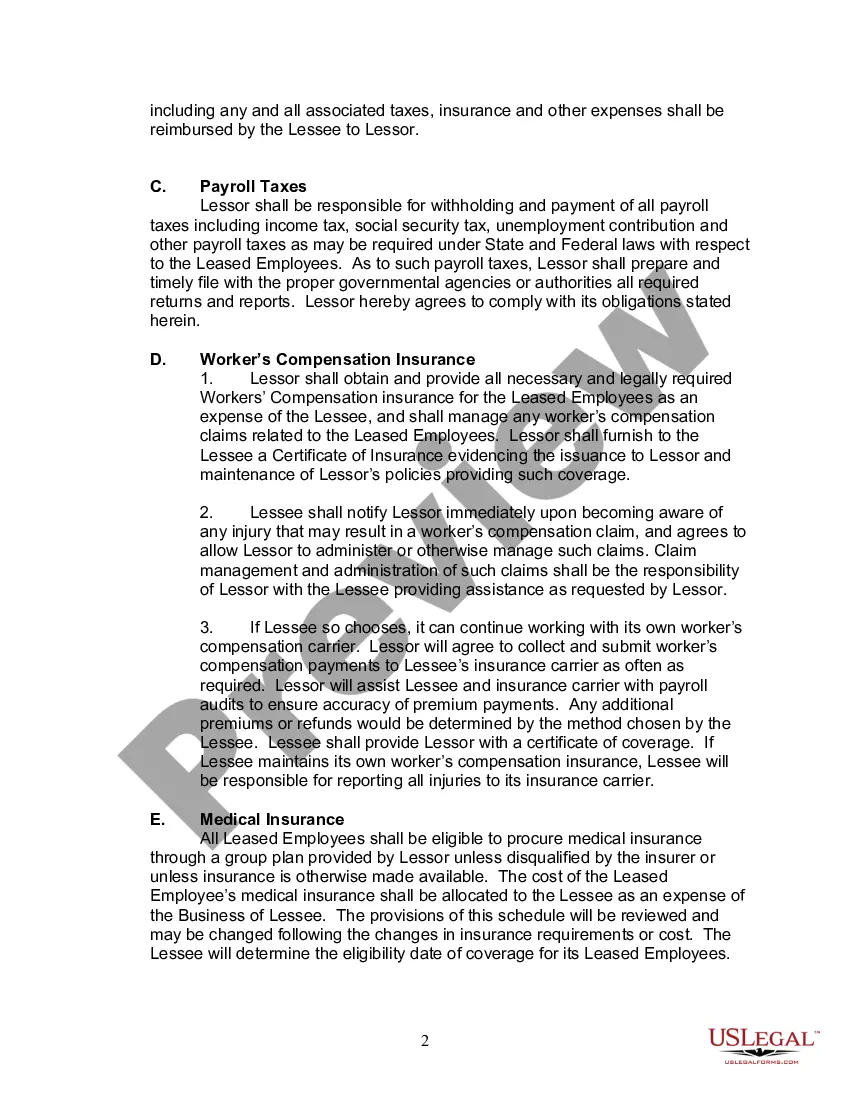
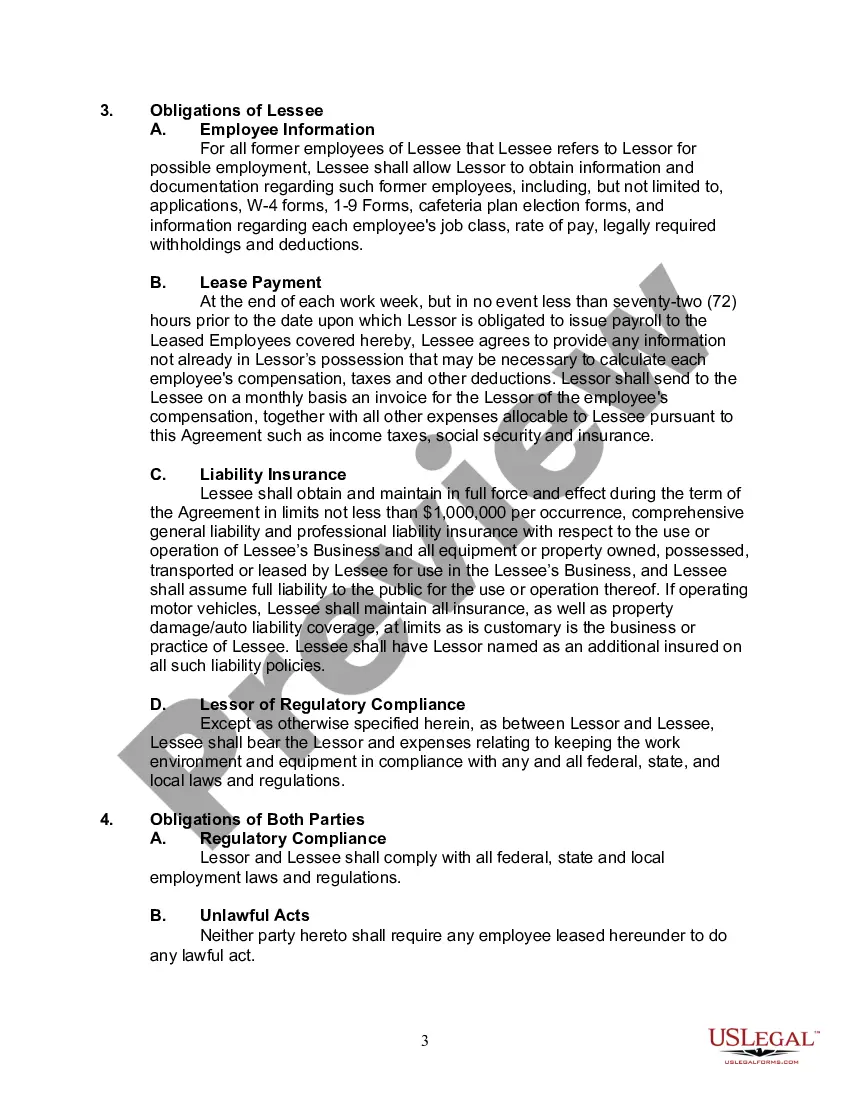
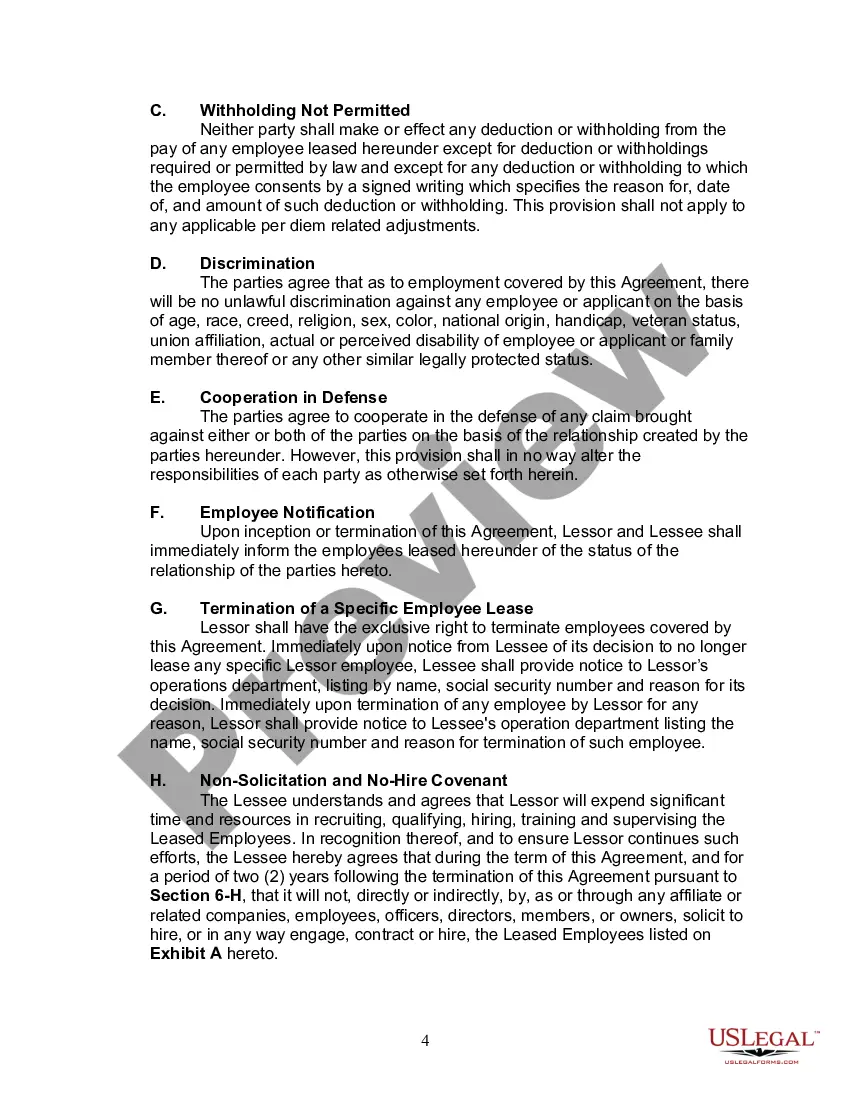
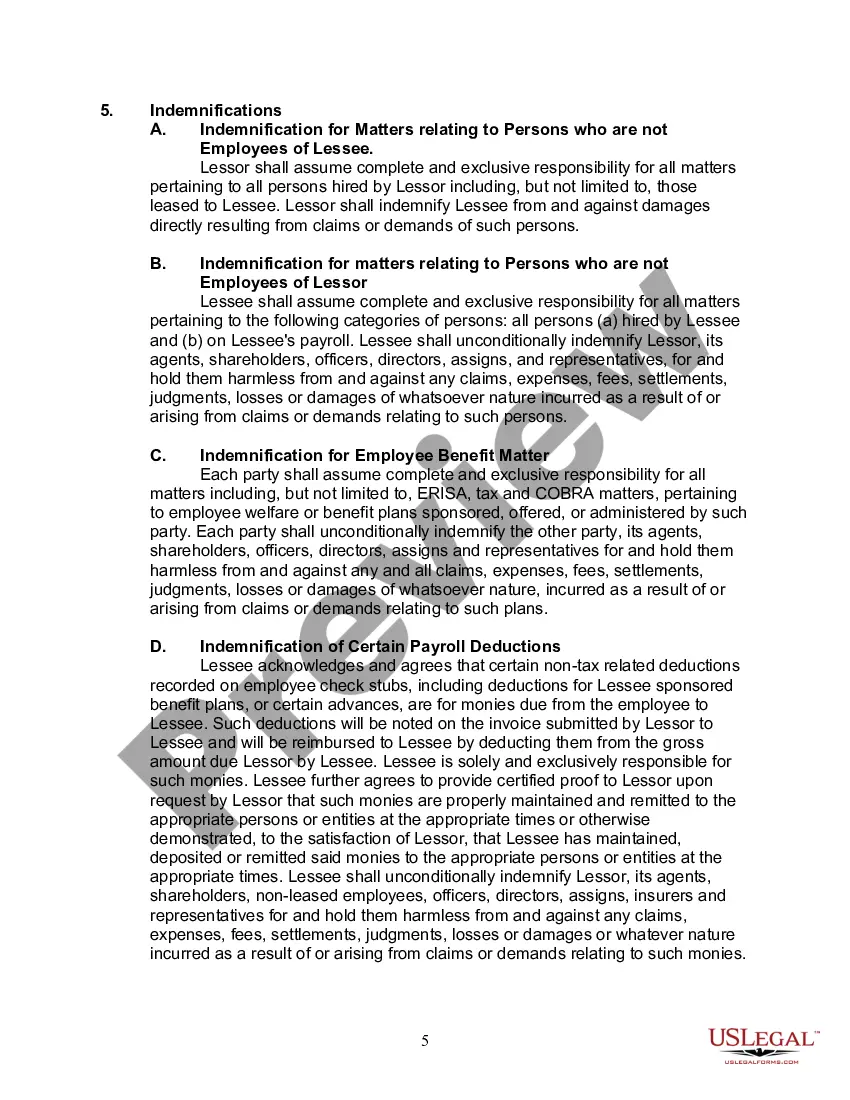
Lease Employee Agreement With Trust In Florida
Description

Get your form ready online
Our built-in tools help you complete, sign, share, and store your documents in one place.
Make edits, fill in missing information, and update formatting in US Legal Forms—just like you would in MS Word.
Download a copy, print it, send it by email, or mail it via USPS—whatever works best for your next step.
Sign and collect signatures with our SignNow integration. Send to multiple recipients, set reminders, and more. Go Premium to unlock E-Sign.
If this form requires notarization, complete it online through a secure video call—no need to meet a notary in person or wait for an appointment.
We protect your documents and personal data by following strict security and privacy standards.

Make edits, fill in missing information, and update formatting in US Legal Forms—just like you would in MS Word.

Download a copy, print it, send it by email, or mail it via USPS—whatever works best for your next step.

Sign and collect signatures with our SignNow integration. Send to multiple recipients, set reminders, and more. Go Premium to unlock E-Sign.

If this form requires notarization, complete it online through a secure video call—no need to meet a notary in person or wait for an appointment.

We protect your documents and personal data by following strict security and privacy standards.
Looking for another form?


Form popularity
FAQ
While Florida does not have an income tax for trust, trusts must file the Tangible Personal Property Tax Return. The tax is based on tangible property owned by the trust, not the income of the trust.
Only the trustees of the trust can hold title. As such, the landlord under a lease or other rental agreement needs to be the trustee(s) of the trust, not the trust itself.
Usually, the notice is filed with the court where the settlor lived. For instance, if the settlor has lived in Jacksonville, Florida her entire life then the Notice of Trust will be filed in the Duval County probate court. If the settlor lived in Ponte Vedra Beach, then the Notice of Trust will be filed in St.
Only three states "require" trust registration, but even in those states, there are no legal consequences or penalties if you don't.
No trust needs to be filed, registered, or recorded in Florida – neither with the court nor anyone else. Florida law protects the confidentiality of trusts, requiring no recording, filing, or registering involved in the document's creation. Nowadays, it is almost impossible to avoid having one's privacy invaded.
Florida Statute 732.502 states that a will properly executed in another state is valid in Florida. Living trusts are private contracts. A trust agreement properly executed in another state is enforceable in Florida, similar to all other contracts, under the full faith and credit provisions of the U.S. Constitution.
No. It is a private document which, unlike a Will, is not entered into public record.
As such, title to trust property is in the name of the trustee, any contract executed with respect to trust property is entered into in the name of the trustee in that capacity, an attorney represents the trustee rather than a trust itself (since no such thing exists), and any lawsuits are brought by or against the ...
In July 2021, Florida adopted the new Florida Uniform Directed Trust Act (FUDTA), in response to the increased use of directed trusts in Florida. Simply put, a directed trust is a trust in which a person other than a trustee has a power over some aspect of the trust's administration.
Talk about what name should appear in a lease if the property for rent is in a trust. Should the lease show the complete name of the trust, or just mention the name of the trustee, adding that this person is representing the trust? Putting the full name of the trust is perfectly fine.
