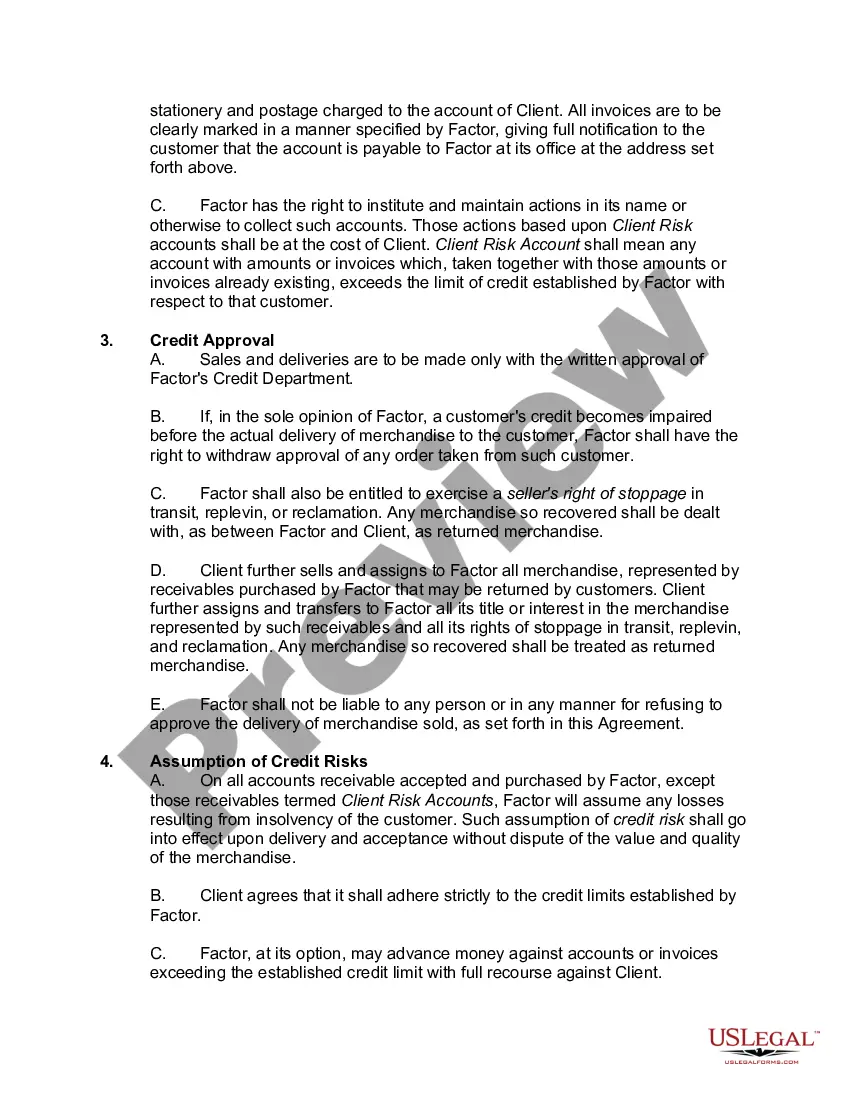
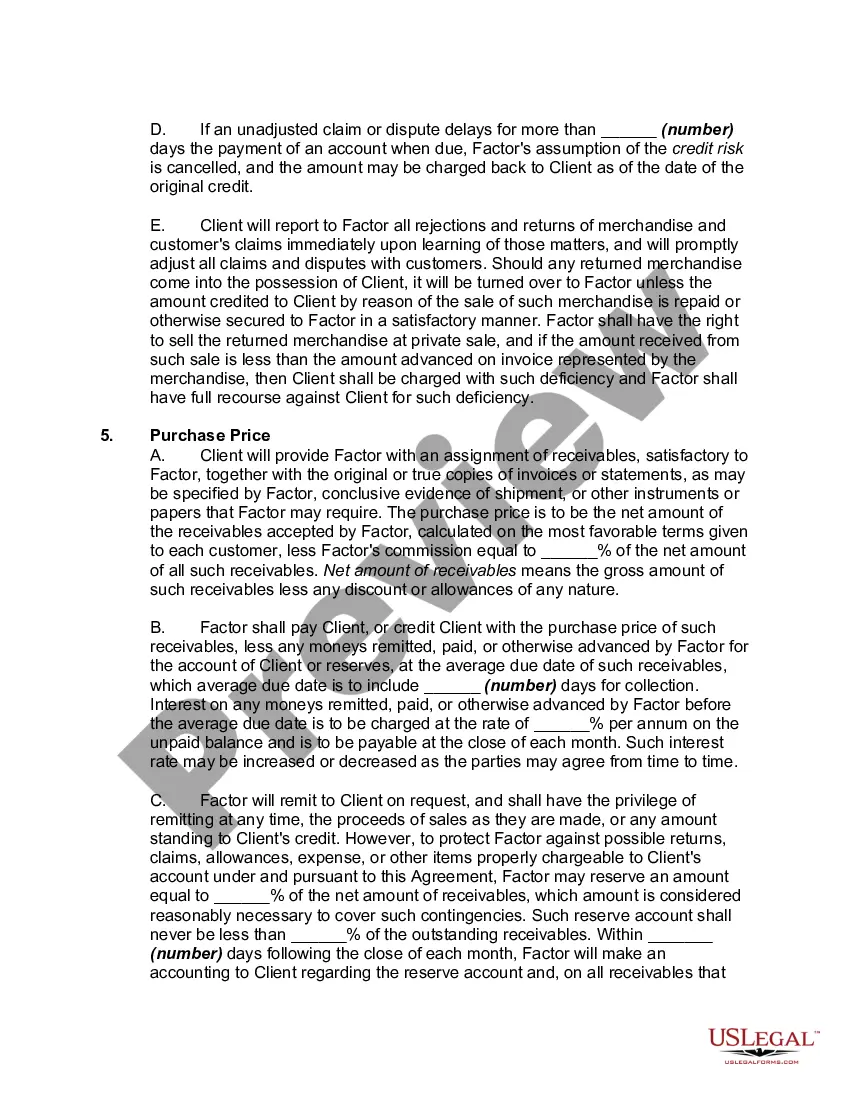
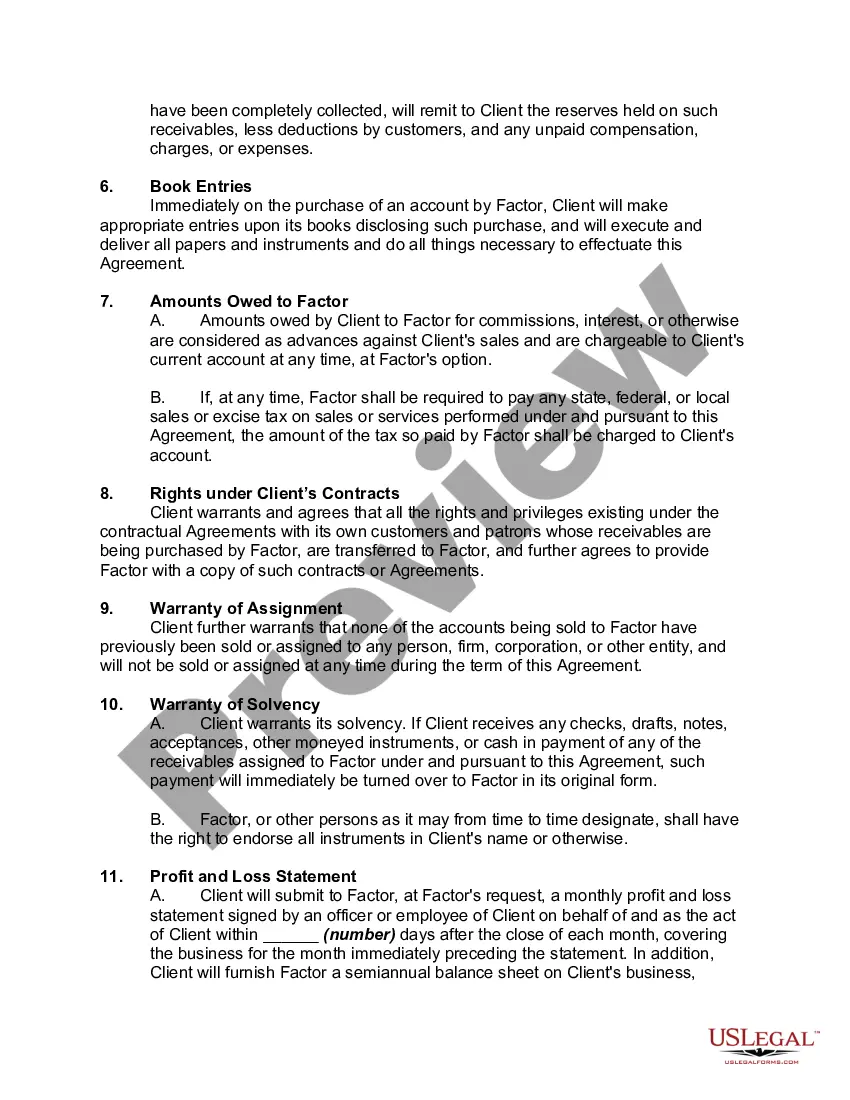
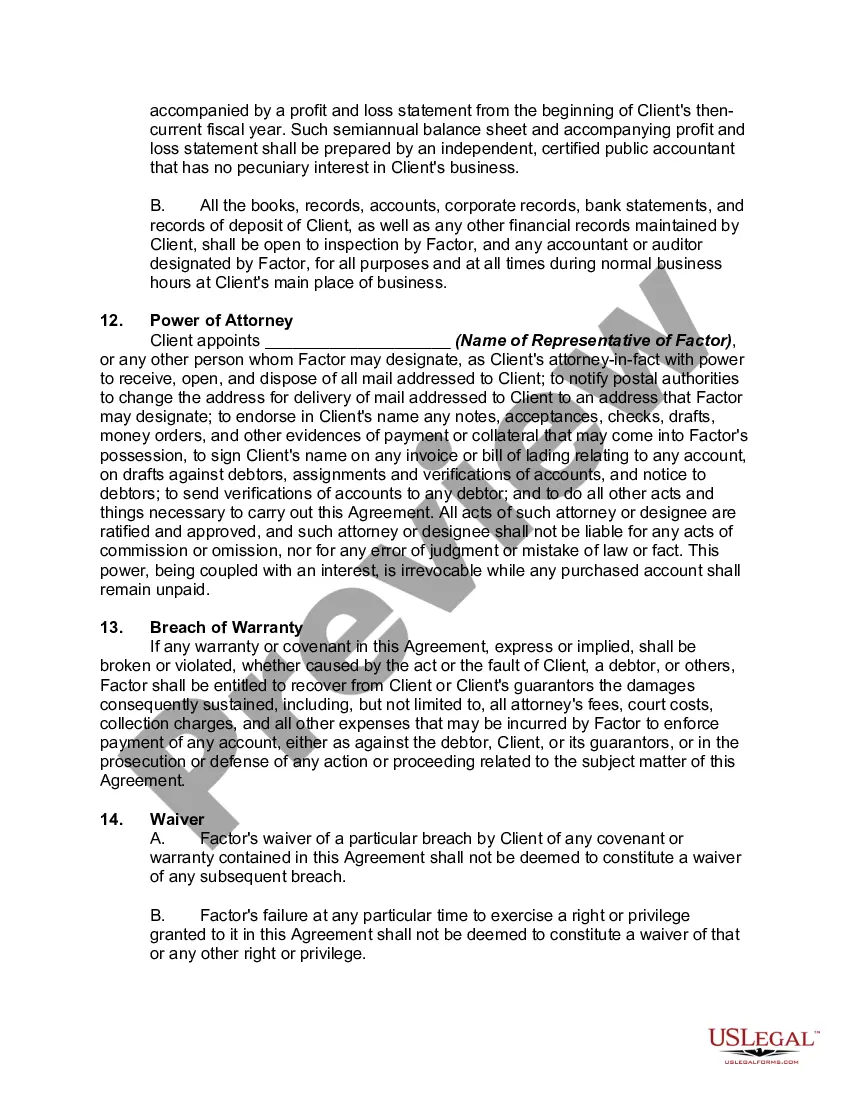
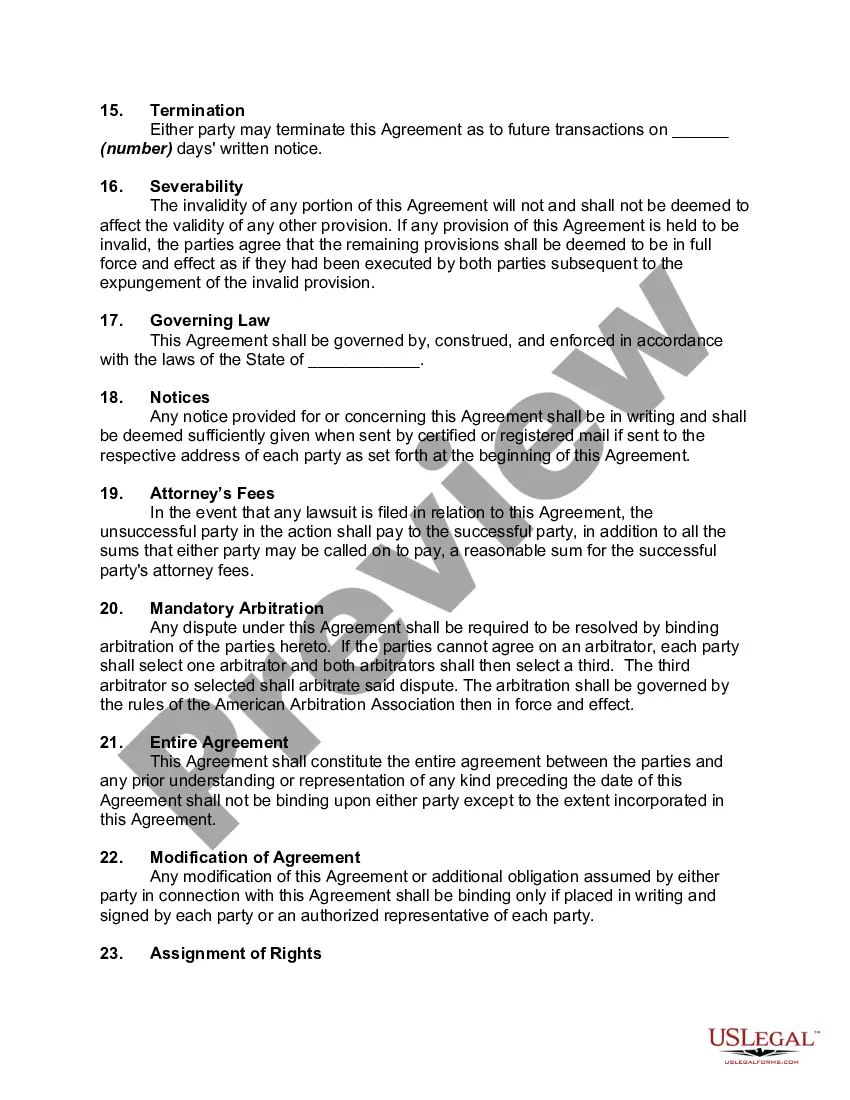
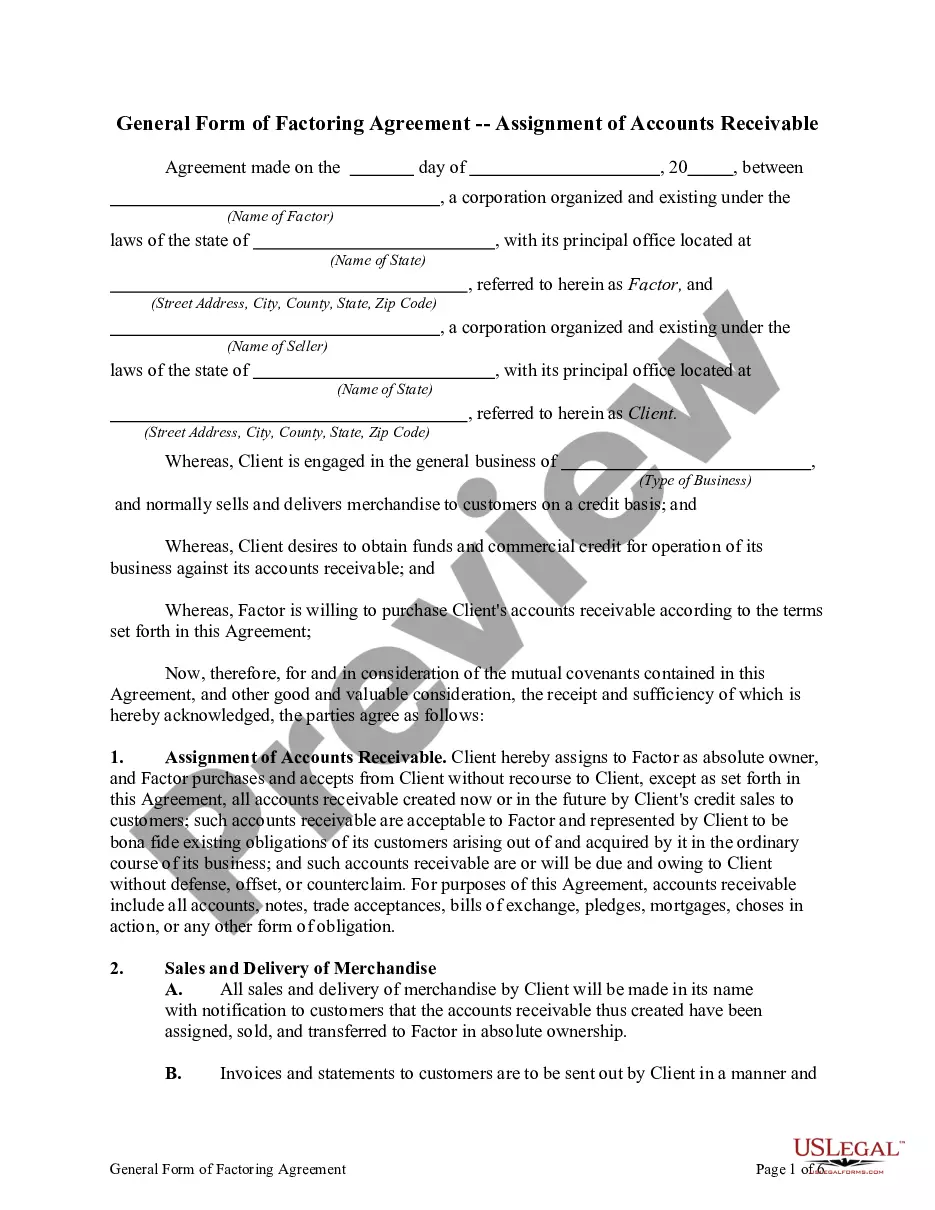
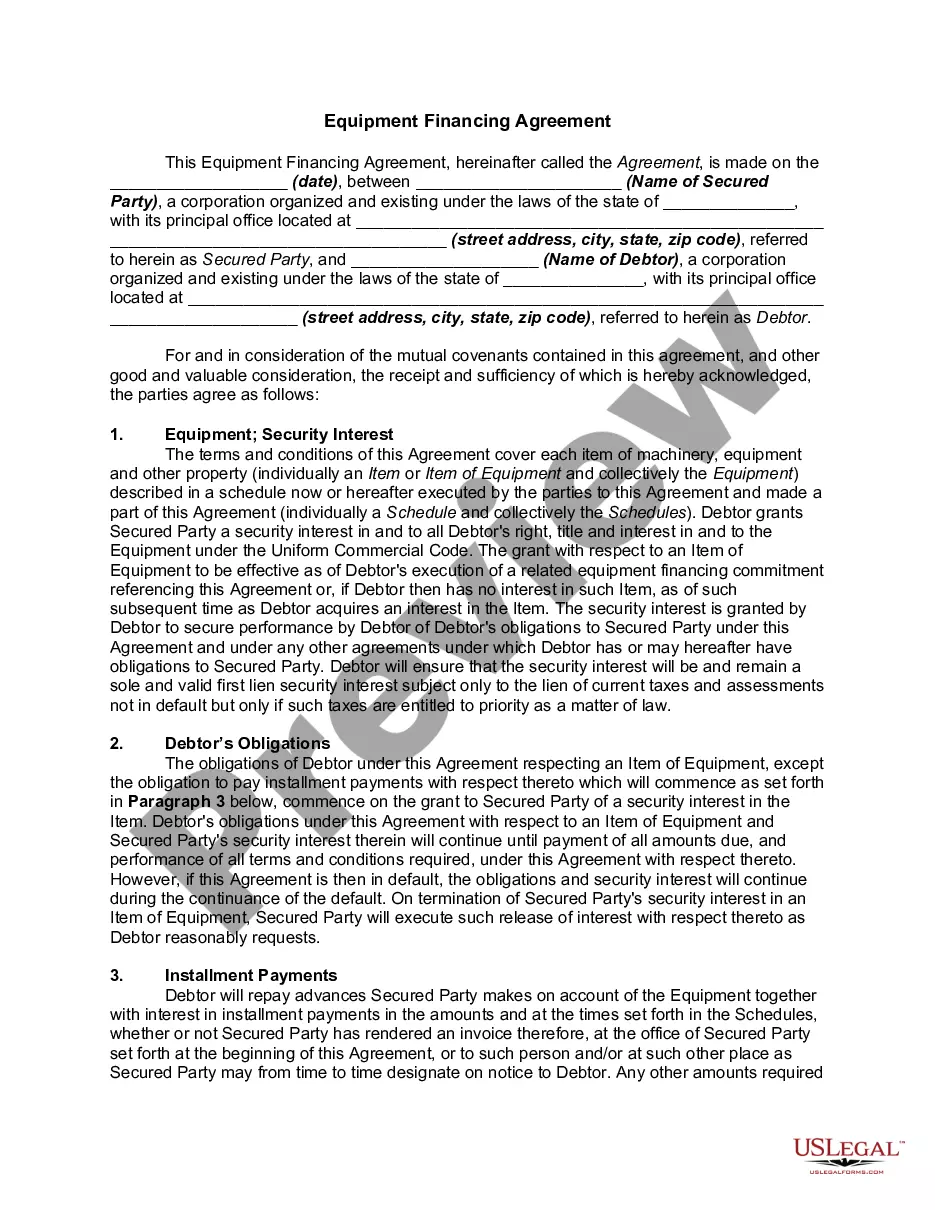
Factoring Agreement Meaning Forfaiting In Montgomery
Description


Get your form ready online
Our built-in tools help you complete, sign, share, and store your documents in one place.
Make edits, fill in missing information, and update formatting in US Legal Forms—just like you would in MS Word.
Download a copy, print it, send it by email, or mail it via USPS—whatever works best for your next step.
Sign and collect signatures with our SignNow integration. Send to multiple recipients, set reminders, and more. Go Premium to unlock E-Sign.
If this form requires notarization, complete it online through a secure video call—no need to meet a notary in person or wait for an appointment.
We protect your documents and personal data by following strict security and privacy standards.

Make edits, fill in missing information, and update formatting in US Legal Forms—just like you would in MS Word.

Download a copy, print it, send it by email, or mail it via USPS—whatever works best for your next step.

Sign and collect signatures with our SignNow integration. Send to multiple recipients, set reminders, and more. Go Premium to unlock E-Sign.

If this form requires notarization, complete it online through a secure video call—no need to meet a notary in person or wait for an appointment.

We protect your documents and personal data by following strict security and privacy standards.
Looking for another form?








Form popularity
FAQ
Purpose: Factoring is typically used to obtain short-term financing, while forfaiting is used to manage long-term trade receivables. Types of assets: Factoring involves the sale of accounts receivable, while forfaiting involves the sale of trade receivables, such as promissory notes and bills of exchange.
Factoring and forfeiting differ in eligible receivables terms and risk coverage. Factoring and bills discounting both provide short term financing but differ in recourse, collection responsibilities, additional services, and treatment of individual bills.
They would also forfeit the right to leave their home to their heirs. They do not forfeit basic rights just because they are away from work. He must also forfeit his computer and is barred from the web.
The exporter, the importer, and the forfaiter are the three main parties involved in forfaiting.
The forfaiter is the individual or entity that purchases the receivables. The importer then pays the amount of the receivables to the forfaiter. A forfaiter is typically a bank or a financial firm that specializes in export financing.
Factoring is commonly referred to as accounts receivable factoring, invoice factoring, and sometimes accounts receivable financing. Accounts receivable financing is a term more accurately used to describe a form of asset based lending against accounts receivable.
A forfaiting agreement is entered into once the export is selected. Step 2: An agreement is made between the two parties--importer and exporter. Step 3: The importer secures a guarantee from his local bank to facilitate the trade. Step 4: The exporter ships the package of goods.