Factoring Agreement Document Format In King
Description

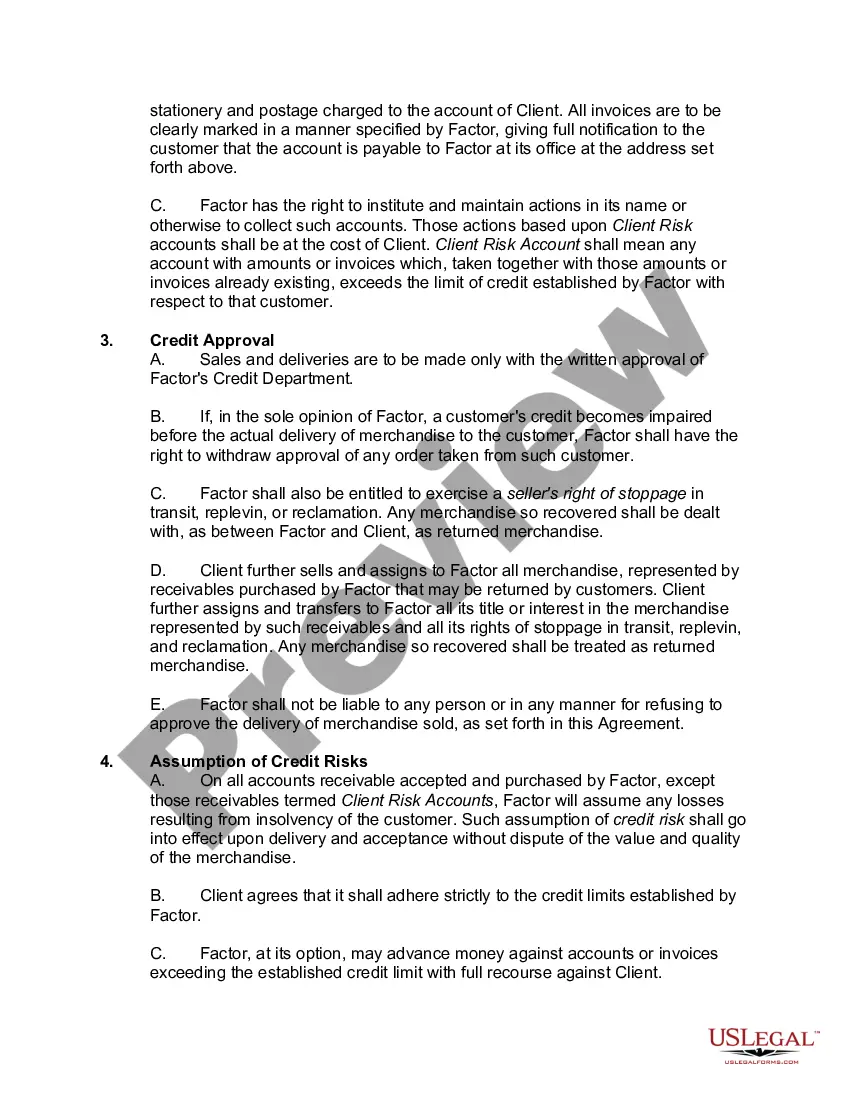
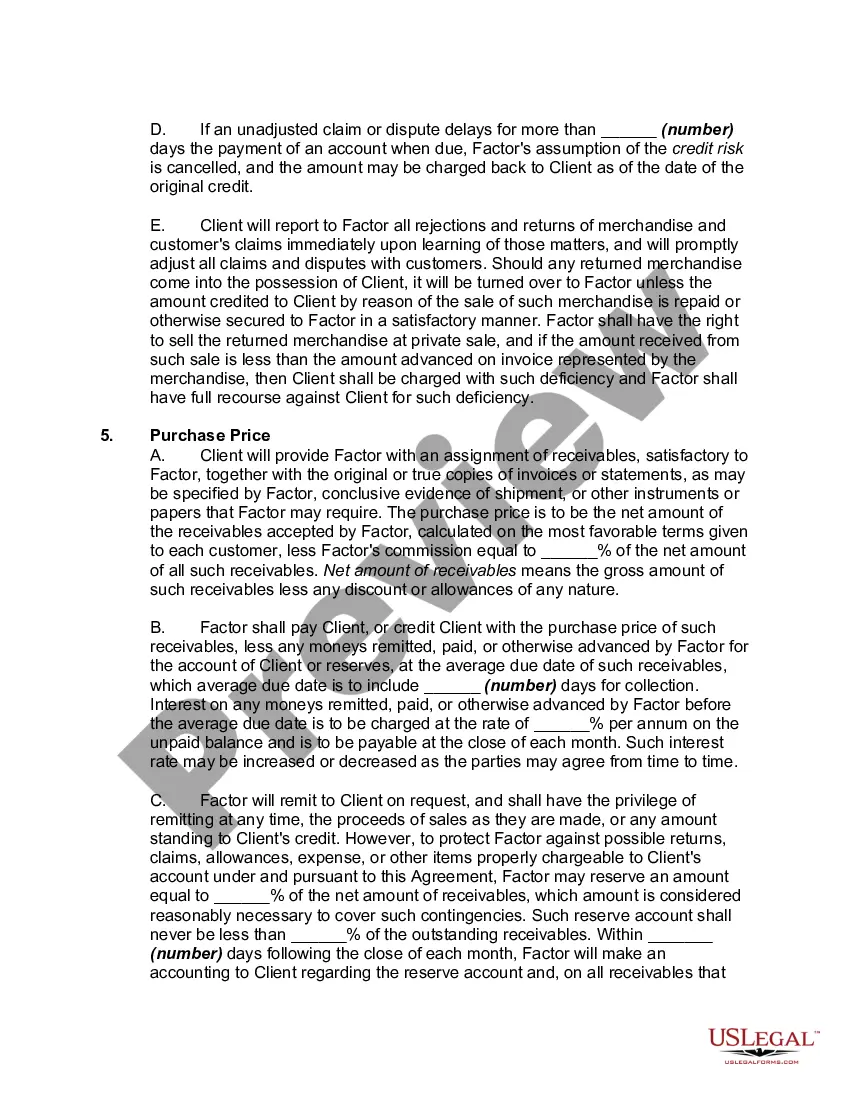
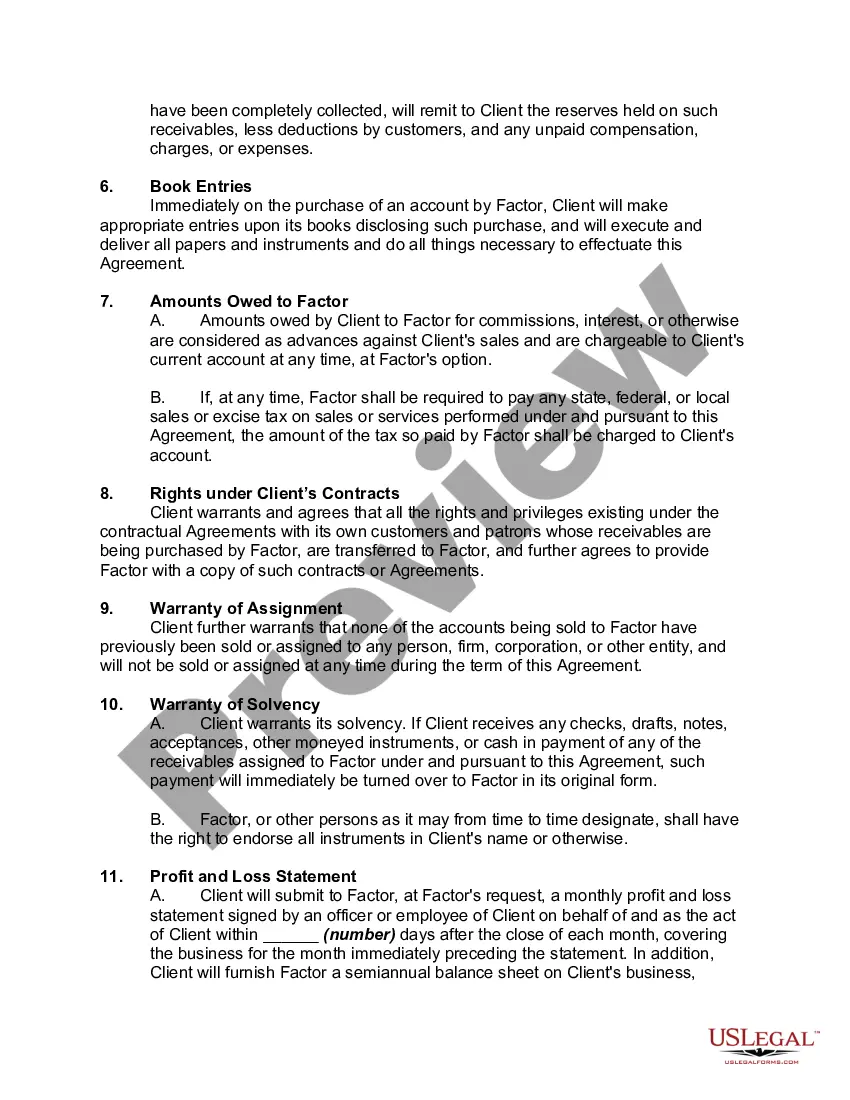
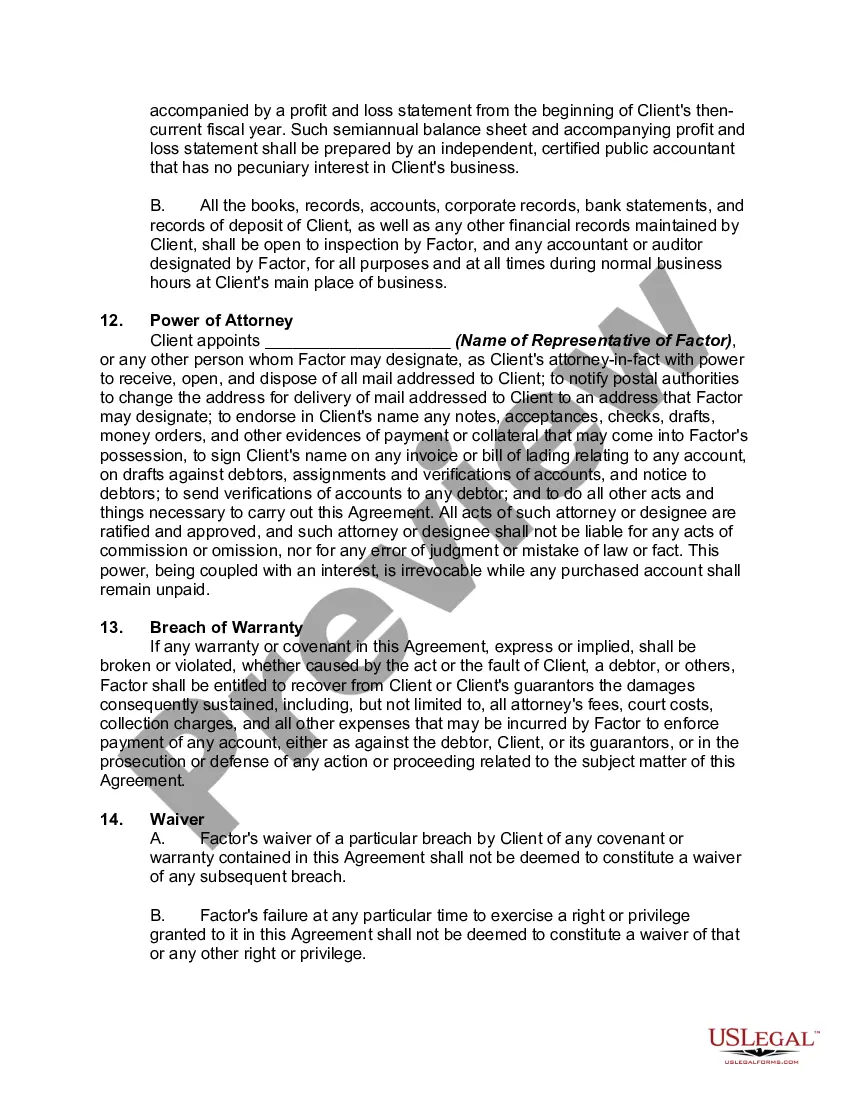

Get your form ready online
Our built-in tools help you complete, sign, share, and store your documents in one place.
Make edits, fill in missing information, and update formatting in US Legal Forms—just like you would in MS Word.
Download a copy, print it, send it by email, or mail it via USPS—whatever works best for your next step.
Sign and collect signatures with our SignNow integration. Send to multiple recipients, set reminders, and more. Go Premium to unlock E-Sign.
If this form requires notarization, complete it online through a secure video call—no need to meet a notary in person or wait for an appointment.
We protect your documents and personal data by following strict security and privacy standards.

Make edits, fill in missing information, and update formatting in US Legal Forms—just like you would in MS Word.

Download a copy, print it, send it by email, or mail it via USPS—whatever works best for your next step.

Sign and collect signatures with our SignNow integration. Send to multiple recipients, set reminders, and more. Go Premium to unlock E-Sign.

If this form requires notarization, complete it online through a secure video call—no need to meet a notary in person or wait for an appointment.

We protect your documents and personal data by following strict security and privacy standards.
Looking for another form?






Form popularity
FAQ
Factor expressions, also known as factoring, mean rewriting the expression as the product of factors. For example, 3x + 12y can be factored into a simple expression of 3 (x + 4y). In this way, the calculations become easier. The terms 3 and (x + 4y) are known as factors.
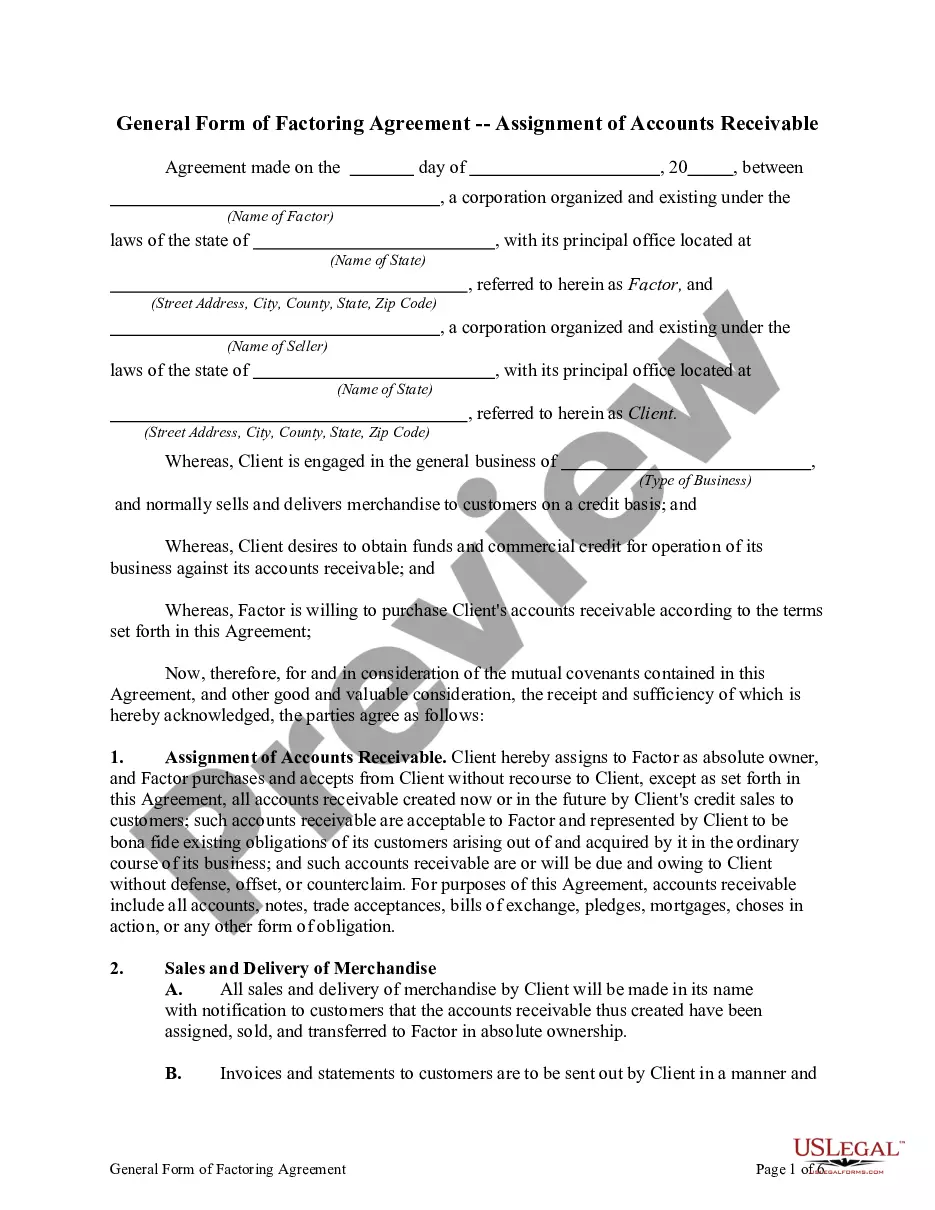
There are three parties directly involved in a transaction involving a factor: The first party is the company selling its accounts receivables. The second party is the factor that purchases the receivables.
Types of Factoring Recourse Factoring: The business must buy back any unpaid invoices from the factor. Non-Recourse Factoring: The factor assumes the risk of unpaid invoices, providing more security to the business. Domestic Factoring: Involves transactions within the same country.
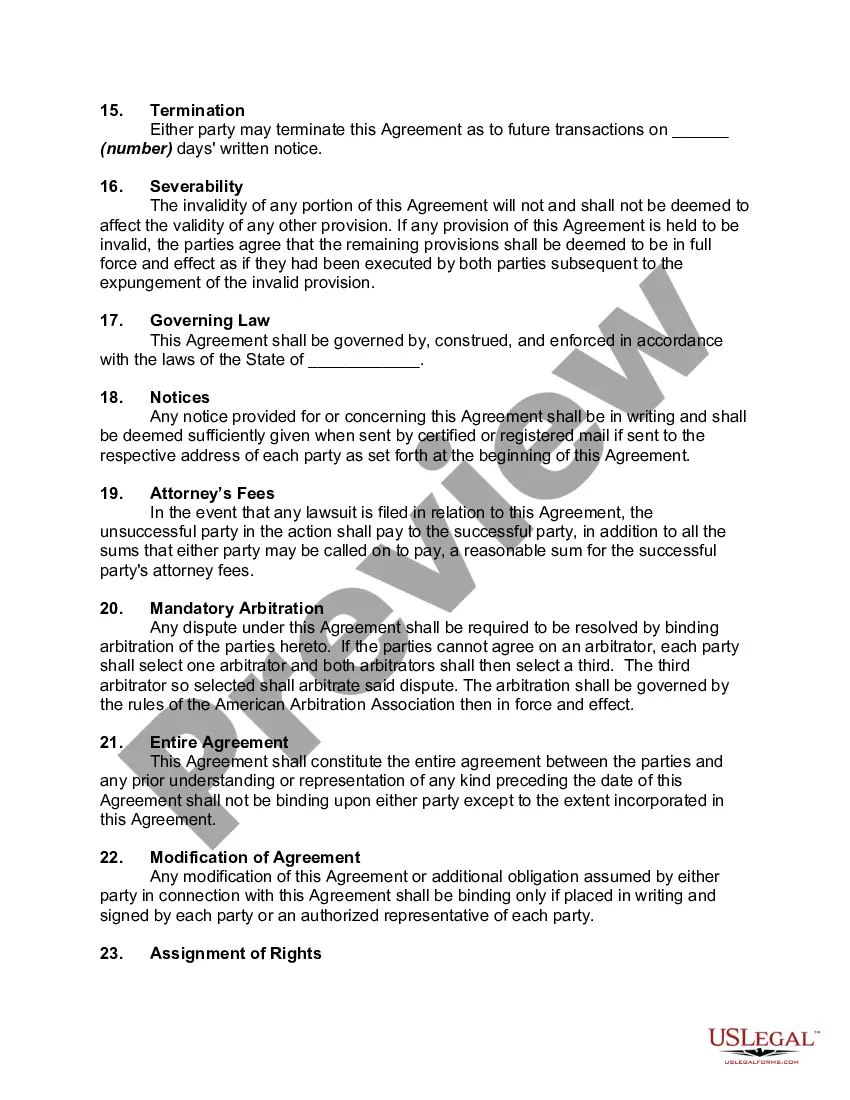
To cancel or terminate a factoring agreement, first review the terms in your contract regarding notice periods and potential penalties for early termination. You'll need to formally notify your factoring company, usually in writing, of your intention to end the agreement.
Invoice factoring is an agreement to assign your accounts receivable (A/R) to a factoring company. So the letter communicates that a third party (factoring company) is managing and collecting your A/R.
How To Get Out Of Factoring Check your factoring contract. Get some guidance. Identify your problems with factoring. Consider product migration. Plan any product migration. Take over the credit control function. Calculate the residual funding gap. Plan your funding migration.
To cancel or terminate a factoring agreement, first review the terms in your contract regarding notice periods and potential penalties for early termination. You'll need to formally notify your factoring company, usually in writing, of your intention to end the agreement.
The FCA sets out rules and guidelines that govern the conduct and operations of factoring companies, ensuring they adhere to high standards of professionalism, transparency, and consumer protection.
You need to consider the fees associated with switching before committing to the change. Once you've decided to leave your current factor, you will need to give notice. All factoring companies require written notice to terminate the contract. The expectation is usually 30 – 60 days prior to the renewal date.
The factoring company assesses the creditworthiness of the customers and the overall financial stability of the business. Typically, the factoring rates range from 1% to 5% of the invoice value, but they can be higher or lower depending on the specific circumstances.