Equity Agreement Sample For Partnership In Alameda
Description






Get your form ready online
Our built-in tools help you complete, sign, share, and store your documents in one place.
Make edits, fill in missing information, and update formatting in US Legal Forms—just like you would in MS Word.
Download a copy, print it, send it by email, or mail it via USPS—whatever works best for your next step.
Sign and collect signatures with our SignNow integration. Send to multiple recipients, set reminders, and more. Go Premium to unlock E-Sign.
If this form requires notarization, complete it online through a secure video call—no need to meet a notary in person or wait for an appointment.
We protect your documents and personal data by following strict security and privacy standards.

Make edits, fill in missing information, and update formatting in US Legal Forms—just like you would in MS Word.

Download a copy, print it, send it by email, or mail it via USPS—whatever works best for your next step.

Sign and collect signatures with our SignNow integration. Send to multiple recipients, set reminders, and more. Go Premium to unlock E-Sign.

If this form requires notarization, complete it online through a secure video call—no need to meet a notary in person or wait for an appointment.

We protect your documents and personal data by following strict security and privacy standards.
Looking for another form?








Form popularity
FAQ
Equity Partnership Benefits They bring people together to share knowledge, expertise, contacts in the business world, and/or financial resources for the benefit of the firm. In many cases, a founder wouldn't have another method to obtain these resources.
An equity partner is an individual who holds an ownership stake in a business, with the most prominent example being a law firm. Equity partners have financial interest in the success of the firm because they share in the annual profits and losses, based on the equity percentage they own.
What is An Equity Partner. An equity partner is an individual who holds an ownership stake in a business, with the most prominent example being a law firm. Equity partners have financial interest in the success of the firm because they share in the annual profits and losses, based on the equity percentage they own.
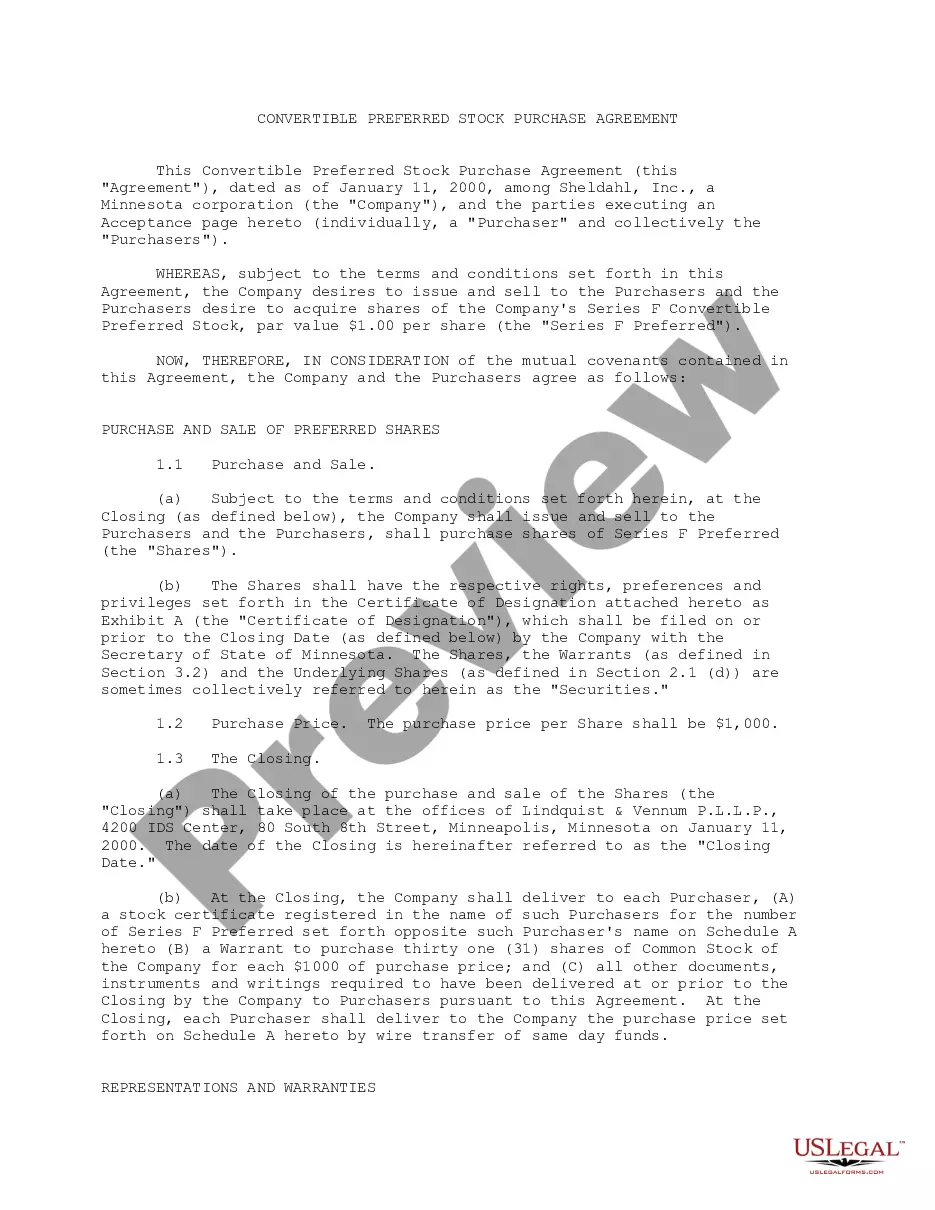
Equity agreements allow entrepreneurs to secure funding for their start-up by giving up a portion of ownership of their company to investors. In short, these arrangements typically involve investors providing capital in exchange for shares of stock which they will hold and potentially sell in the future for a profit.
The parties hereto hereby form a Partnership under the name and style of _______________________________________________ (hereafter referred to as "the Partnership") to own real property, develop real property, and thereafter to manage, operate, develop, mortgage, lease or sell real property and do all other lawful ...
How to Write a Partnership Agreement Define Partnership Structure. Outline Capital Contributions and Ownership. Detail Profit, Loss, and Distribution Arrangements. Set Decision-Making and Management Protocols. Plan for Changes and Contingencies. Include Legal Provisions and Finalize the Agreement.
An agreement should include details about partner roles, capital contributions, profit distribution, decision-making processes, exit strategies, and dispute-resolution mechanisms. It should be customized to the specific needs of the partnership.
How to Write a Partnership Agreement Define Partnership Structure. Outline Capital Contributions and Ownership. Detail Profit, Loss, and Distribution Arrangements. Set Decision-Making and Management Protocols. Plan for Changes and Contingencies. Include Legal Provisions and Finalize the Agreement.
The Partnership shall commence as of the date of the execution of this Agreement and shall continue thereafter for a term of __________ years, unless sooner dissolved and terminated by agreement of the Partners; provided, however, that the Partnership shall not be terminated by the bankruptcy, insolvency, appointment ...
No formal or written agreement among the partners is needed to create a partnership, even though under current law, “A partnership is an entity distinct from its partners”. Corp. Code § 16201; 9 Witkin, Summary of California Law (10th Ed., 2008), Partnership, § 23.
