Film Production Contract Template Formation In Orange
Description

Get your form ready online
Our built-in tools help you complete, sign, share, and store your documents in one place.
Make edits, fill in missing information, and update formatting in US Legal Forms—just like you would in MS Word.
Download a copy, print it, send it by email, or mail it via USPS—whatever works best for your next step.
Sign and collect signatures with our SignNow integration. Send to multiple recipients, set reminders, and more. Go Premium to unlock E-Sign.
If this form requires notarization, complete it online through a secure video call—no need to meet a notary in person or wait for an appointment.
We protect your documents and personal data by following strict security and privacy standards.

Make edits, fill in missing information, and update formatting in US Legal Forms—just like you would in MS Word.

Download a copy, print it, send it by email, or mail it via USPS—whatever works best for your next step.

Sign and collect signatures with our SignNow integration. Send to multiple recipients, set reminders, and more. Go Premium to unlock E-Sign.

If this form requires notarization, complete it online through a secure video call—no need to meet a notary in person or wait for an appointment.

We protect your documents and personal data by following strict security and privacy standards.
Looking for another form?










Form popularity
FAQ
Business Liability Protection If you haven't set up each film as its own LLC, that actor can go after your entire company. This doesn't just put the assets of the current project at risk, but the assets of the company of a whole, and you and your partners' personal assets at risk.
It is generally recommended that you create a LLC or C-Corp in order to protect yourself and other investors/co-creators from personal liability arising from any movie production venture you are considering.
How to Form an LLC for an Independent Film in 6 Steps Name Your Film's LLC. Select a Registered Agent. Create an Operating Agreement for Your Film's LLC. File Articles of Organization with Your State. Apply for an Employer Identification Number (EIN) ... Open a Business Bank Account and Obtain Film Permits and Licenses.
How Do You Start A Production Company? Find your company's niche. Choose a creative company name. Draft a killer business plan. Hire a specialist entertainment lawyer. Incorporate your new business venture. Seek essential funding. Get the all-important paperwork and filings in order. Appoint an awesome leadership team.
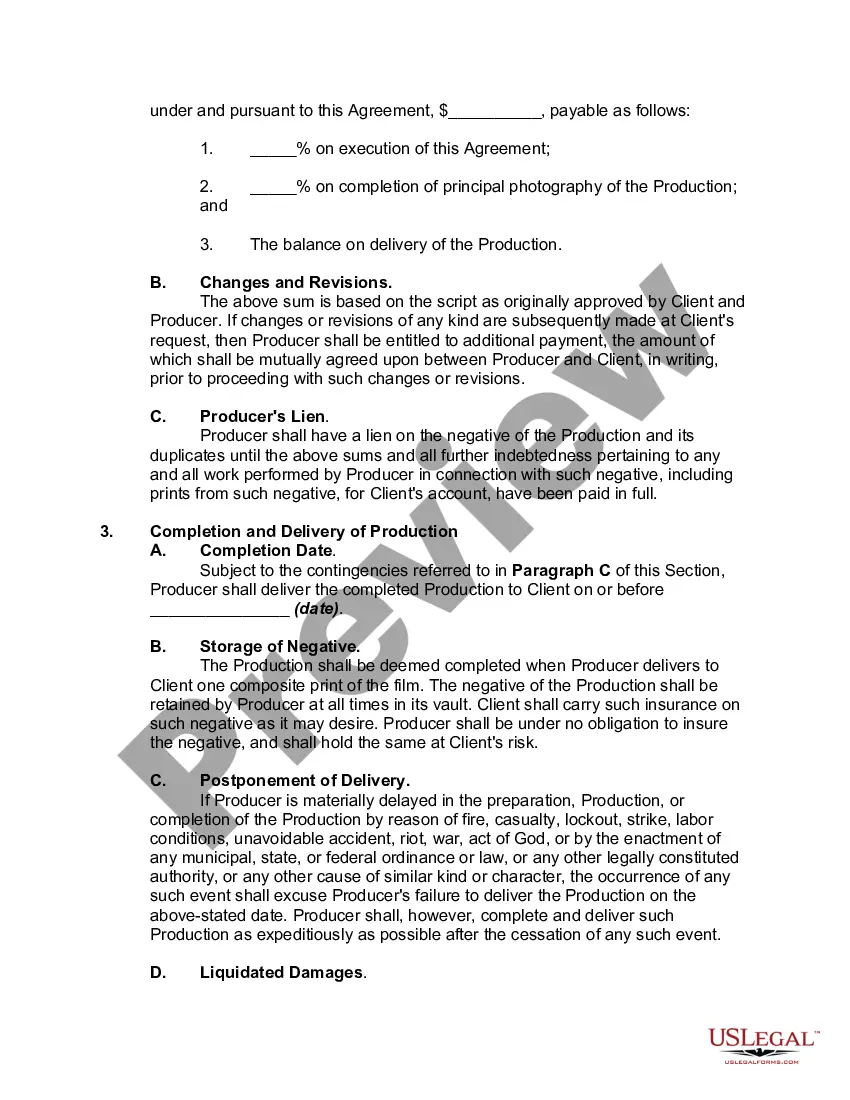
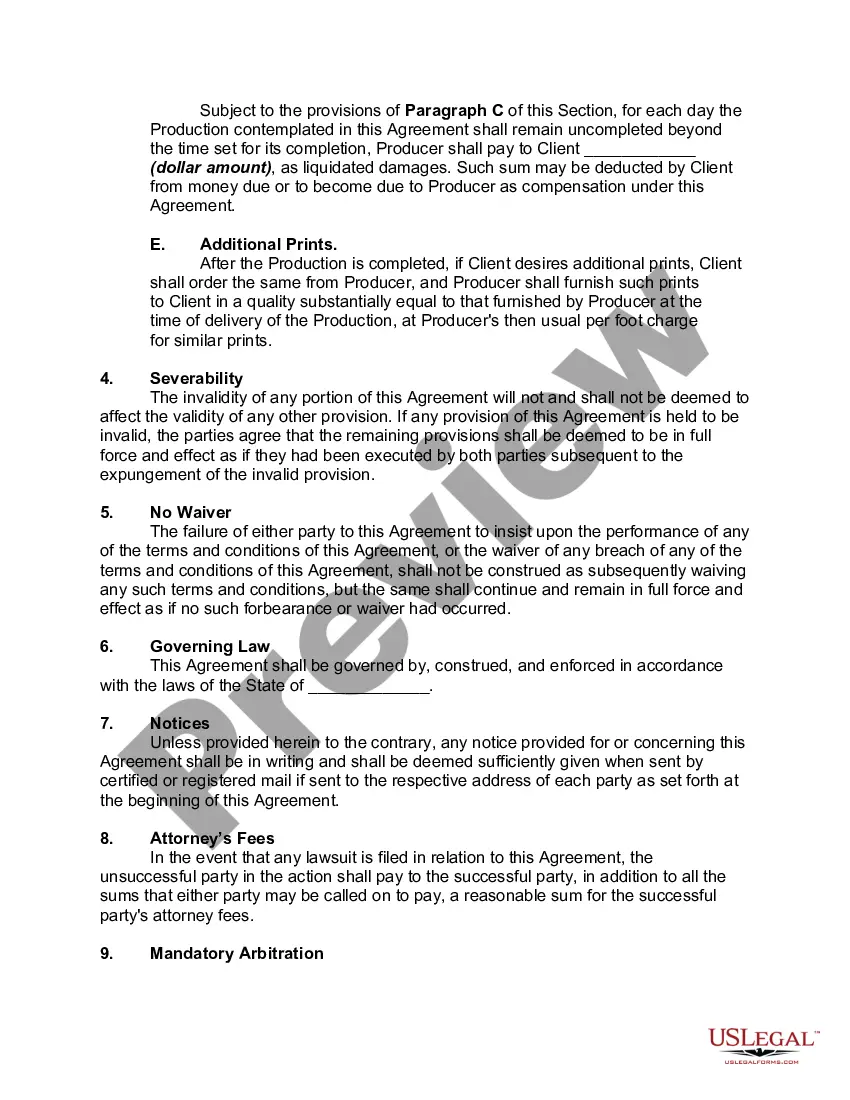
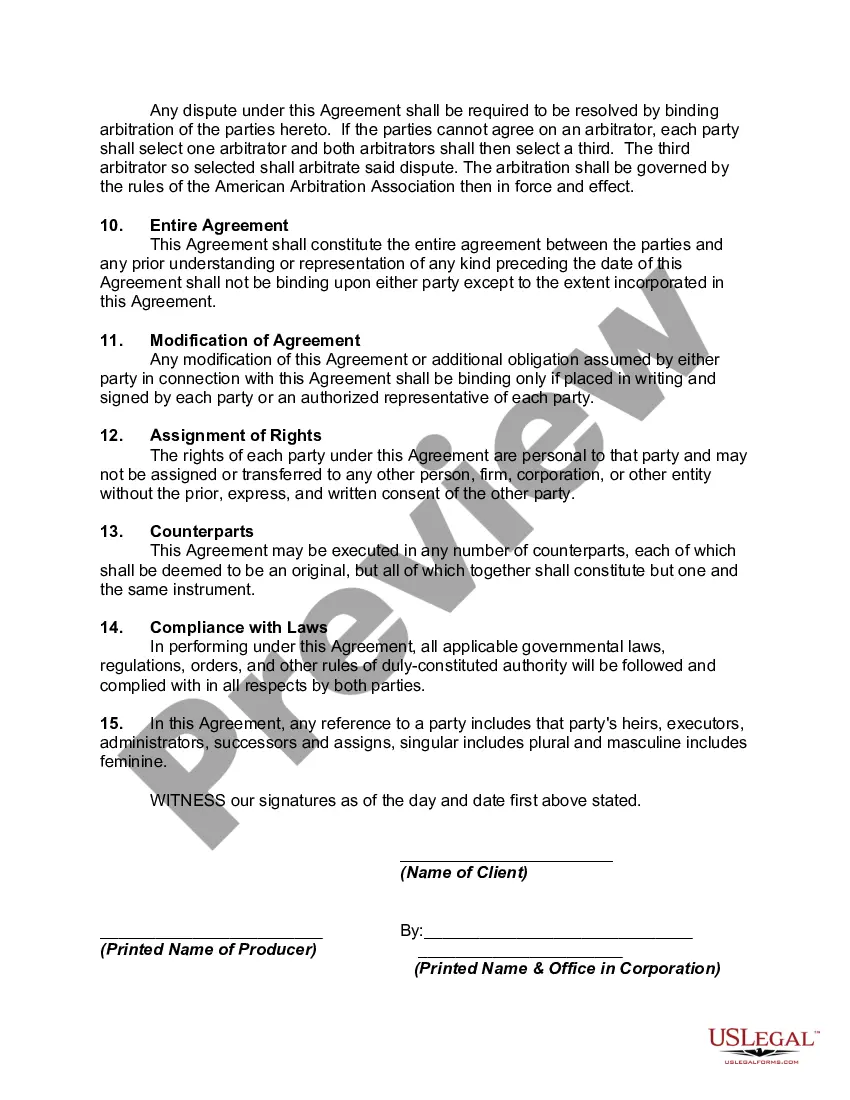
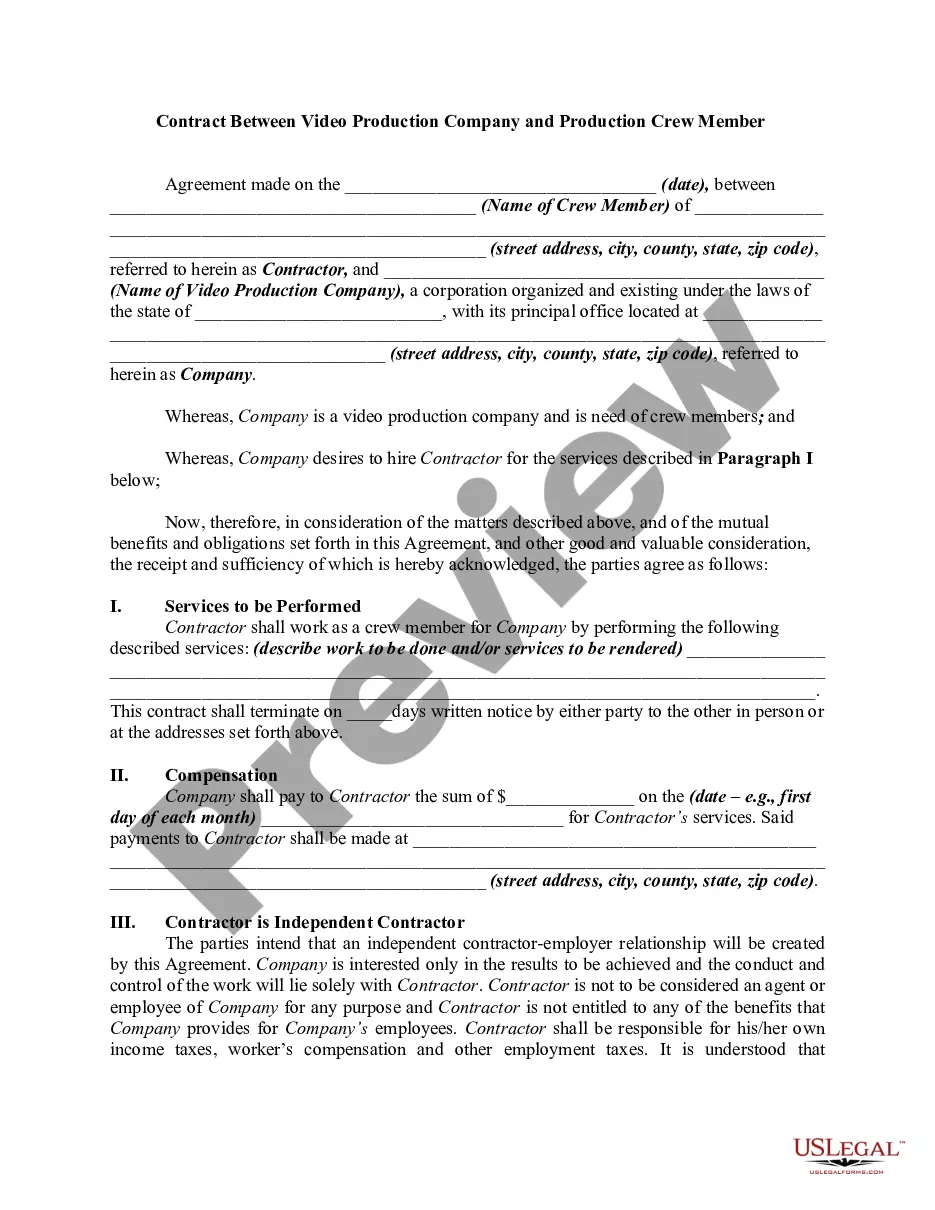
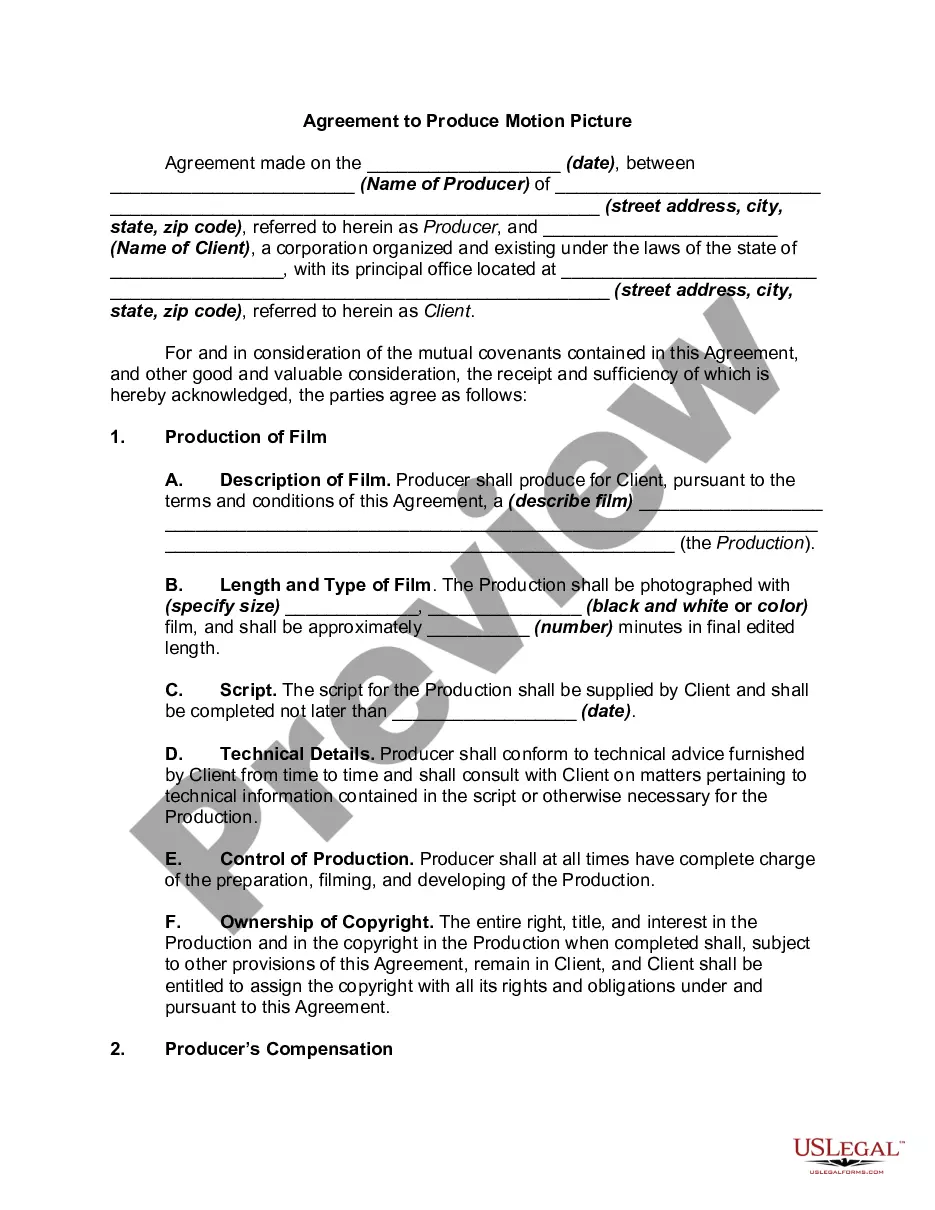
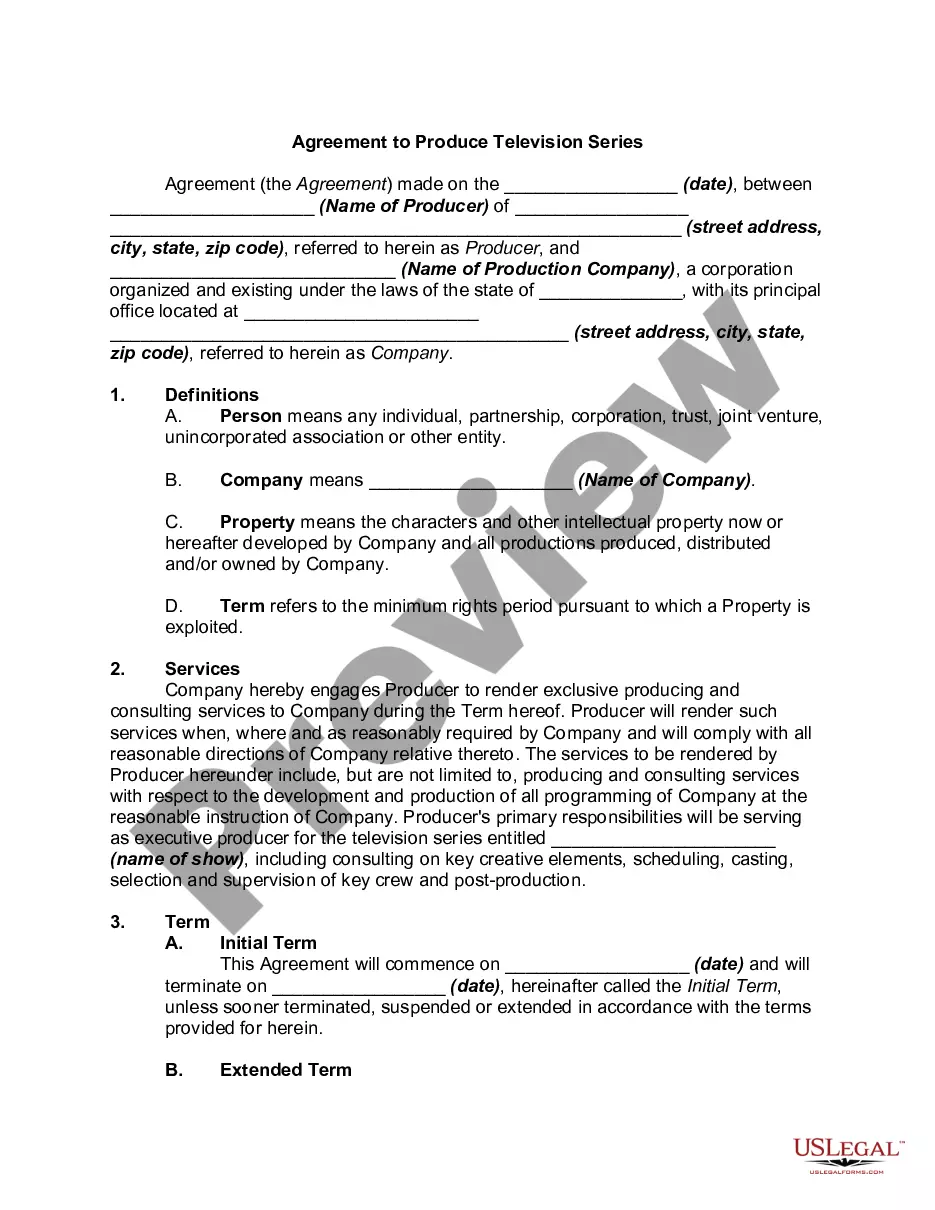
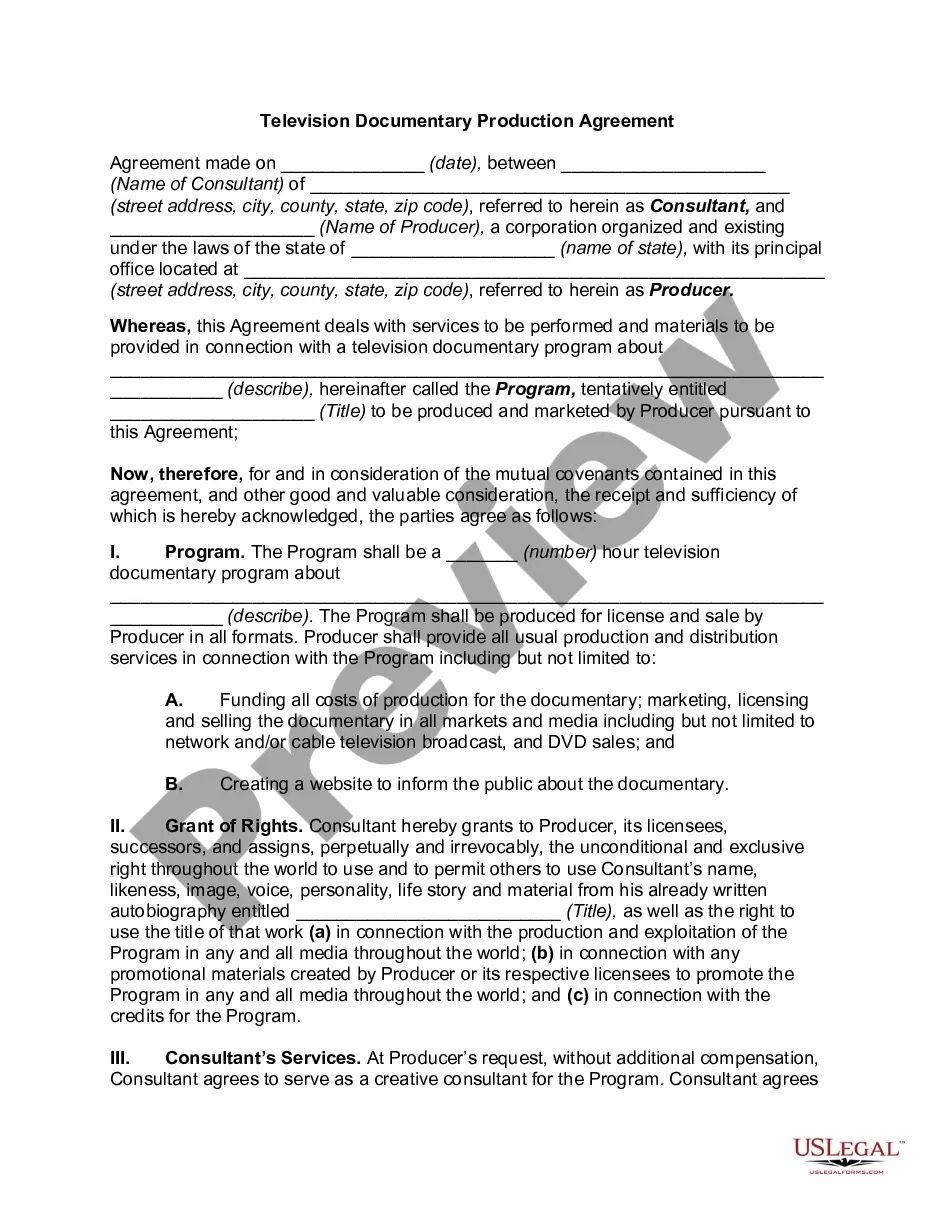
A film production contract is a key legal document that details the agreed terms and conditions for everyone involved in making a film. It ensures that all participants, from lead actors to set designers, understand their roles and compensation.
In the indie film space, it's common for producers to use two entities: a multi-member LLC for rights management and fundraising and a C-Corp for physical production. In this situation, the C-Corp handles all elements of physical production—hiring talent and crew, entering into leases, making purchases, and so on.
4.1 The Director assigns to the Producer for the compensation agreed in this Agree- ment the exclusive right, unlimited in terms of time and geography, to make cop- ies of the Film in its final form as well as for publication and showing of the Film both in commercial and non-commercial distribution irrespectively of ...
Most actor contracts are between two and three pages long. The typical term for an actor contract is a certain a number of months after the film or play premieres, although some go on indefinitely. Term lengths can vary greatly! The typical term for an agent or manager contract for actors is about 12 to 18 months.
What should an actor contract template include? Character name and description, including any specific traits or requirements. Detailed job description outlining the actor's responsibilities and expectations on set. Information on rehearsals, promotional activities and any additional duties.
