Film Contracts For Actors In King
Description

Get your form ready online
Our built-in tools help you complete, sign, share, and store your documents in one place.
Make edits, fill in missing information, and update formatting in US Legal Forms—just like you would in MS Word.
Download a copy, print it, send it by email, or mail it via USPS—whatever works best for your next step.
Sign and collect signatures with our SignNow integration. Send to multiple recipients, set reminders, and more. Go Premium to unlock E-Sign.
If this form requires notarization, complete it online through a secure video call—no need to meet a notary in person or wait for an appointment.
We protect your documents and personal data by following strict security and privacy standards.

Make edits, fill in missing information, and update formatting in US Legal Forms—just like you would in MS Word.

Download a copy, print it, send it by email, or mail it via USPS—whatever works best for your next step.

Sign and collect signatures with our SignNow integration. Send to multiple recipients, set reminders, and more. Go Premium to unlock E-Sign.

If this form requires notarization, complete it online through a secure video call—no need to meet a notary in person or wait for an appointment.

We protect your documents and personal data by following strict security and privacy standards.
Looking for another form?
Form popularity
FAQ
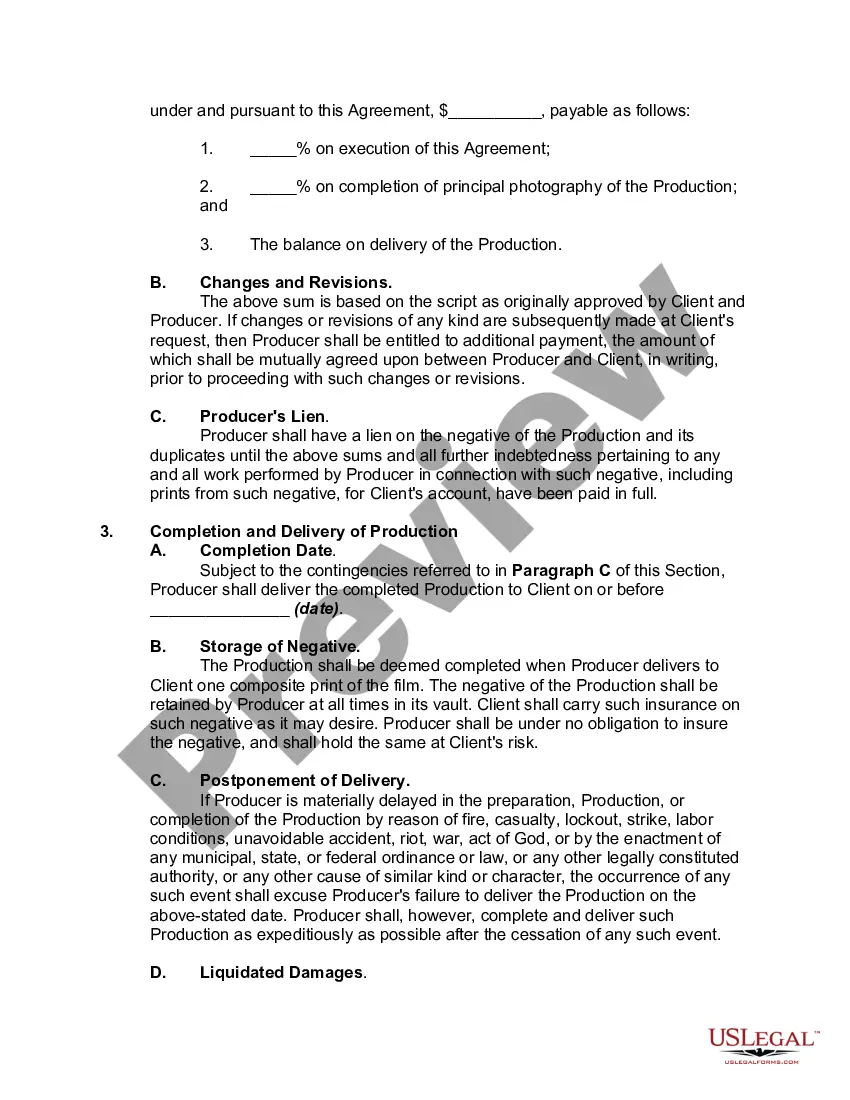
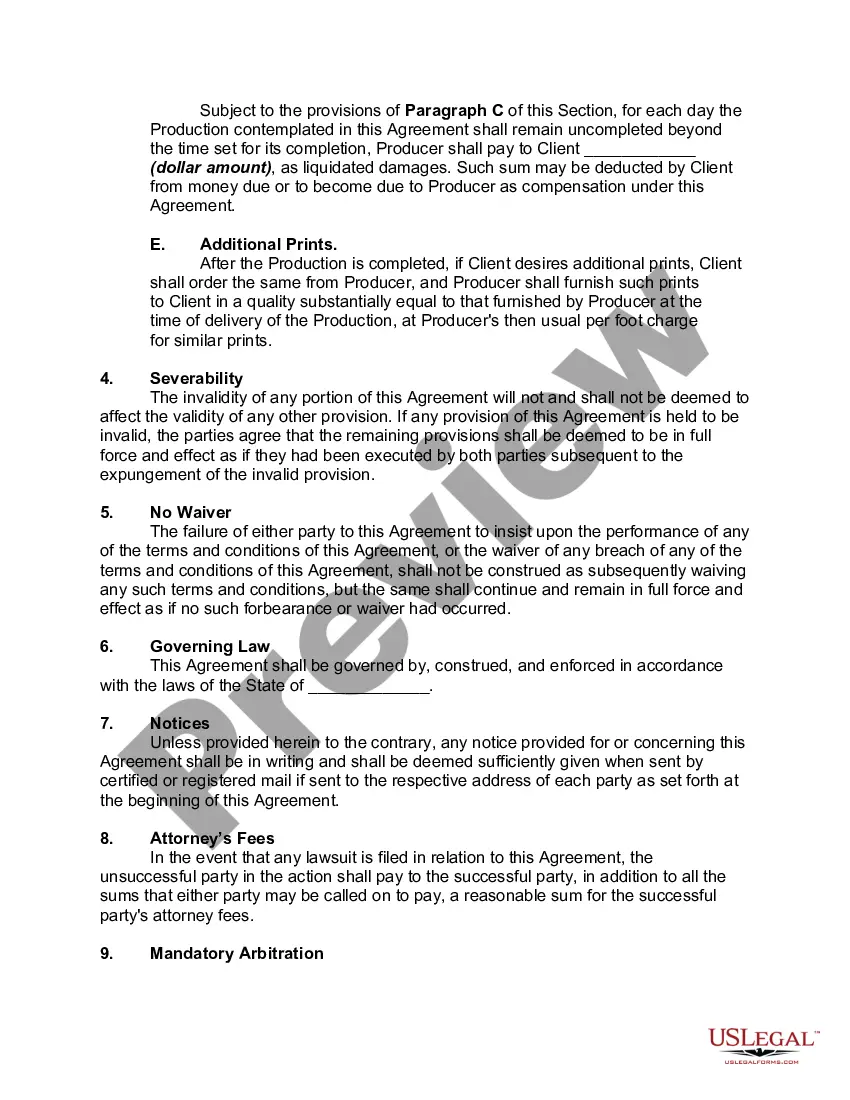
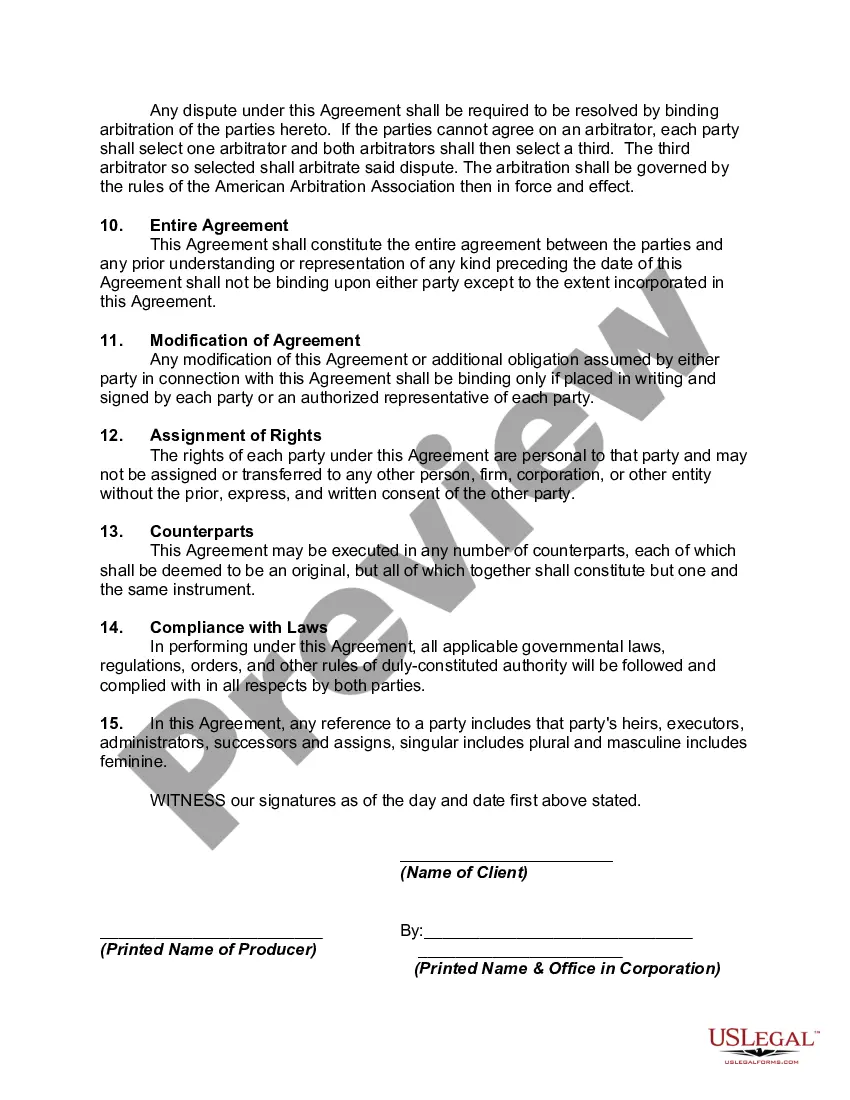
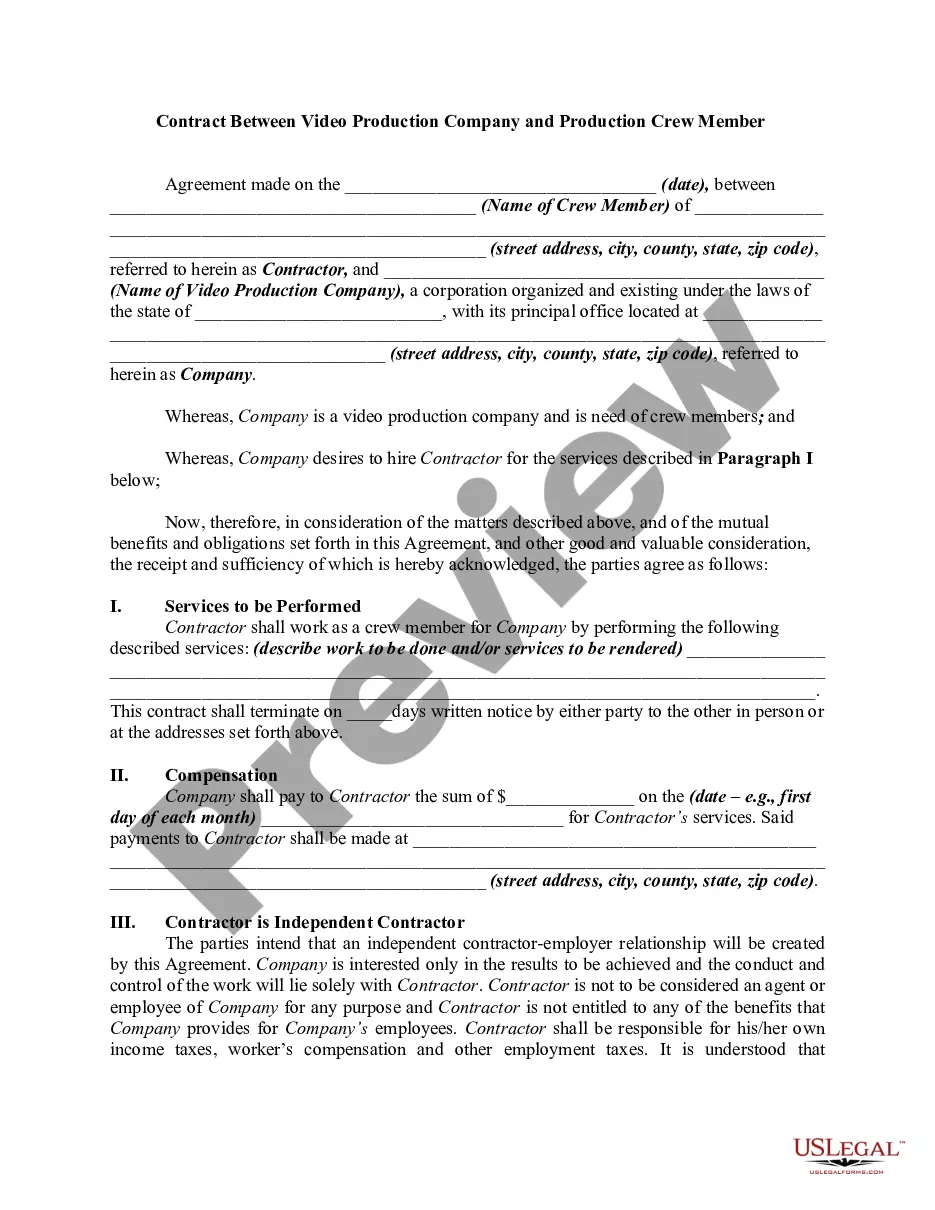
An actor contract is a legally binding agreement between an actor and a production company or director. It outlines the terms and conditions of the actor's engagement in a project, such as a film, television show or theatre production.
The Basic Agreement (BA) covers projects shot on film made under an agreement with the Association of Motion Picture and Television Producers (AMPTP). This contract applies to Directors, Assistant Directors and Unit Production Managers working in film and television.
In film, everything the viewer sees needs to be arranged inside the frame. This creates meaningful relationships between the subjects. The points is to achieve a balanced, aesthetically pleasing, unified, harmonious whole. Don't put your subject in the middle.
Most actor contracts are between two and three pages long. The typical term for an actor contract is a certain a number of months after the film or play premieres, although some go on indefinitely. Term lengths can vary greatly! The typical term for an agent or manager contract for actors is about 12 to 18 months.
When it comes to contract negotiations, the top three stakeholders in an organization are the legal, procurement, and sales teams. The legal team holds the pen and writes the language within the contract. They're responsible for ensuring the contract meets all legal requirements.
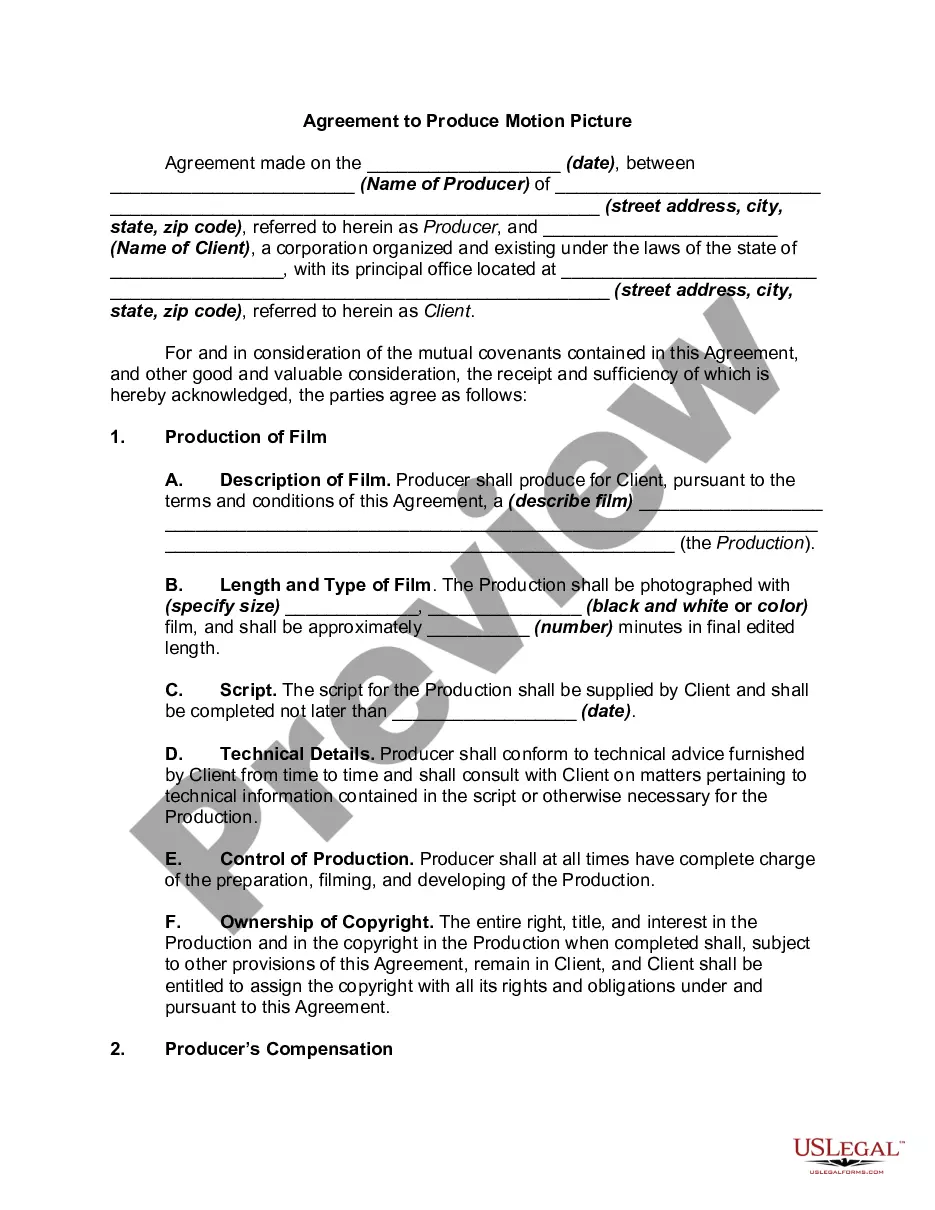
Sample Movie Production Agreement Description of Project. . Production Specifications. The Project will be produced in color on , using both studio and location recording techniques. Budget. Script. Date of Delivery. Ownership of Rights in Project. Credits. Right to Enter Project in Competitions.
SAG-AFTRA negotiates contracts that cover the work of media professionals in front of a camera or behind a microphone. Below are links to contract information, rates, FAQs and resources that help members and producers navigate the media and entertainment industries.
Look for reputable acting schools or programs that offer comprehensive training in various acting techniques. As you gain experience, start building a portfolio that showcases your acting abilities. This can include footage from theater performances, monologues, and scenes filmed specifically for your portfolio.
While yes, an agent's job is most certainly to negotiate the very best deal she can for her client, it's also to explain the process, the contract terms and what they mean to the author going forward.
During negotiations, it's important to maintain a professional yet assertive demeanor. Clearly articulate your value as an actor and why you deserve the terms you're requesting. Be open to compromise but also stand firm on the aspects that are most important to you. Remember that negotiation is a two-way street.
