Employee Bonus Letter Sample With Benefits In Washington
Description
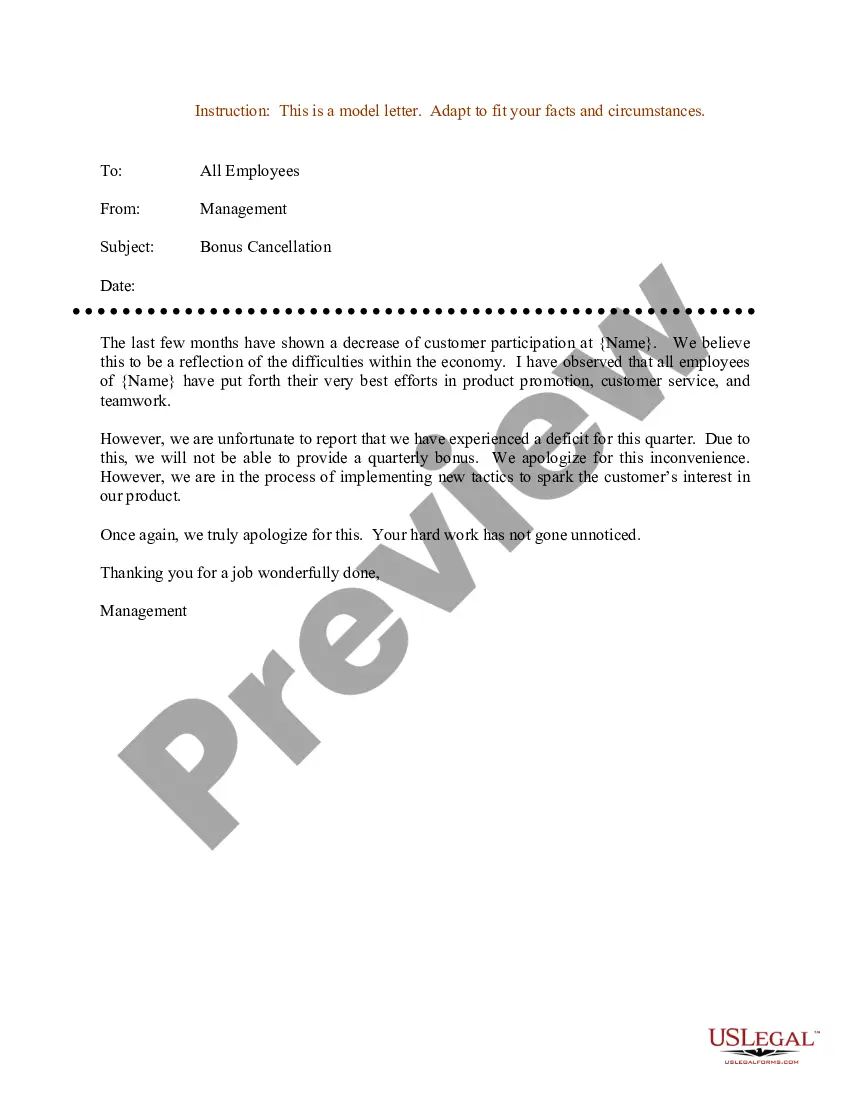
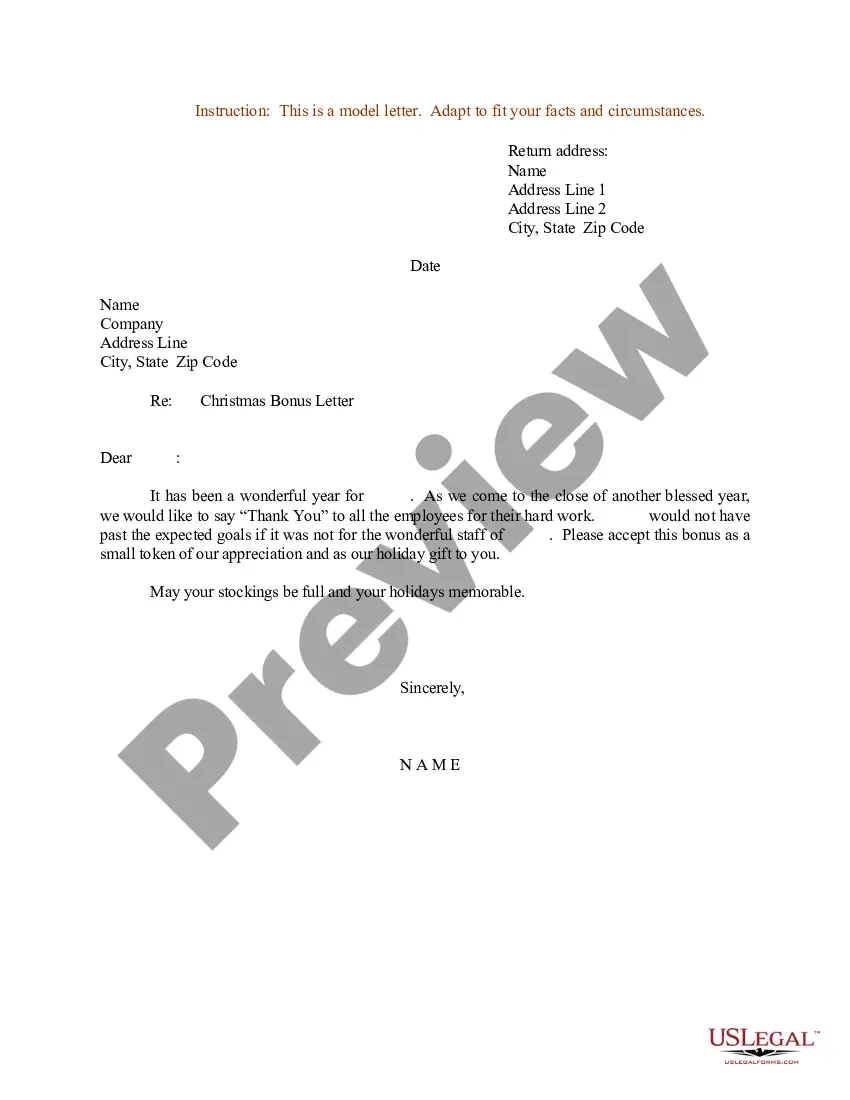
Get your form ready online
Our built-in tools help you complete, sign, share, and store your documents in one place.
Make edits, fill in missing information, and update formatting in US Legal Forms—just like you would in MS Word.
Download a copy, print it, send it by email, or mail it via USPS—whatever works best for your next step.
Sign and collect signatures with our SignNow integration. Send to multiple recipients, set reminders, and more. Go Premium to unlock E-Sign.
If this form requires notarization, complete it online through a secure video call—no need to meet a notary in person or wait for an appointment.
We protect your documents and personal data by following strict security and privacy standards.

Make edits, fill in missing information, and update formatting in US Legal Forms—just like you would in MS Word.

Download a copy, print it, send it by email, or mail it via USPS—whatever works best for your next step.

Sign and collect signatures with our SignNow integration. Send to multiple recipients, set reminders, and more. Go Premium to unlock E-Sign.

If this form requires notarization, complete it online through a secure video call—no need to meet a notary in person or wait for an appointment.

We protect your documents and personal data by following strict security and privacy standards.
Looking for another form?
Form popularity
FAQ
I trust that my commitment and hard work are worthy of this bonus. I request your understanding and support in granting this bonus as an acknowledgement of the value added by my work. I look forward to your positive response.
A bonus is a one-time award for an employee, while a raise is a permanent increase in their salary. Bonuses are typically awarded for short-term performance, while raises reflect a long-term investment in an employee. Both raises and bonuses are valuable for small business owners.
Earned income is any compensation that you receive from a job or self-employment. It can include wages, tips, salaries, commissions, or bonuses. It is different from unearned income, which comes from sources like investment profits or government benefits. The two types of income are taxed differently by the IRS.
When your employer provides you with a bonus, they will report it on your W-2 in box 1—but it's combined with your normal wages or salary. In the eyes of the Internal Revenue Service, your bonus is no different than the salary you receive.
Details to Include: Reason for Bonus: Clearly state the extraordinary contribution or innovation that is being recognized. Amount of Bonus: Specify the bonus amount being awarded. Specific Achievements: Detail the specific achievements or contributions that led to the award.
Notify them that they're receiving a bonus and give a brief reason why. For example, if this bonus is for a particular achievement you can mention the specific action or project.
If you're asking for a bonus for a specific project, provide facts and figures about the outcome of the project and how it exceeded the stakeholders' requirements. If you're asking for a bonus for more general reasons, offer details about why you deserve it.
Consider saying ``Thank you for the bonus. I am so appreciative of it. I will continue giving my best every day''. Adding that second and third line makes all the difference.
