Example With Bonus In Salt Lake
Description
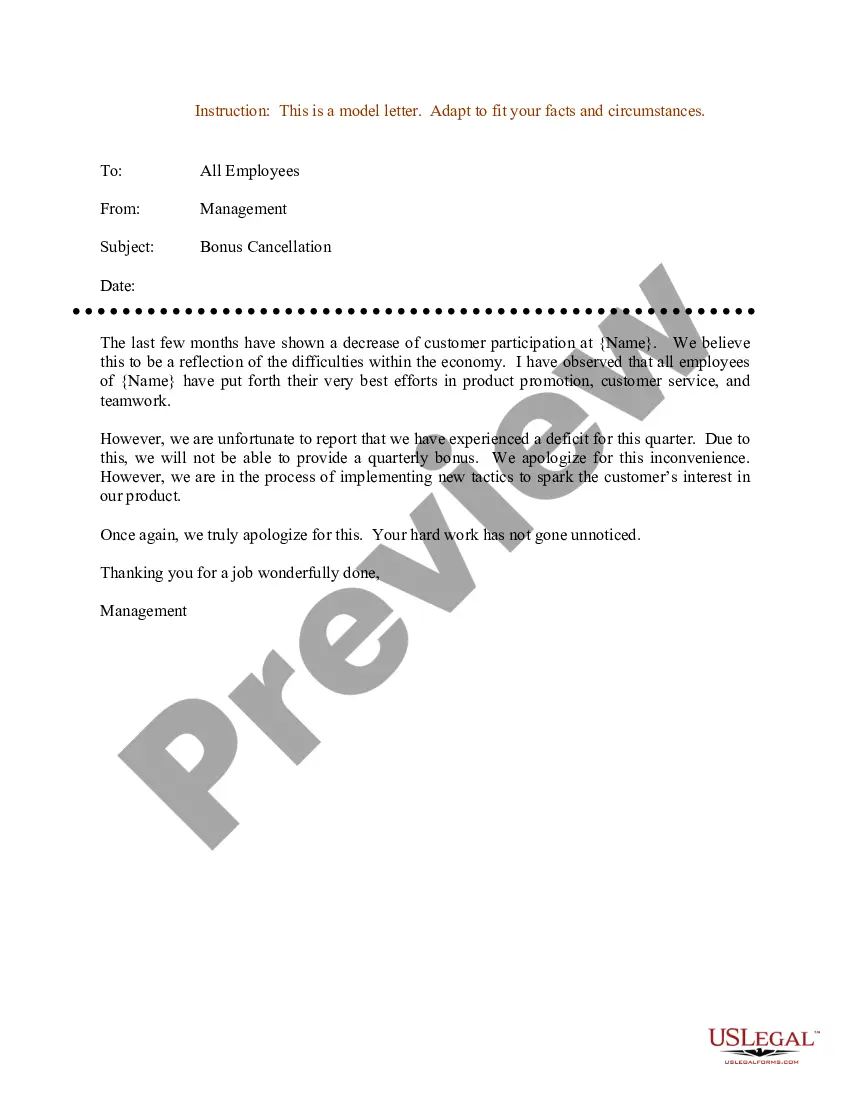
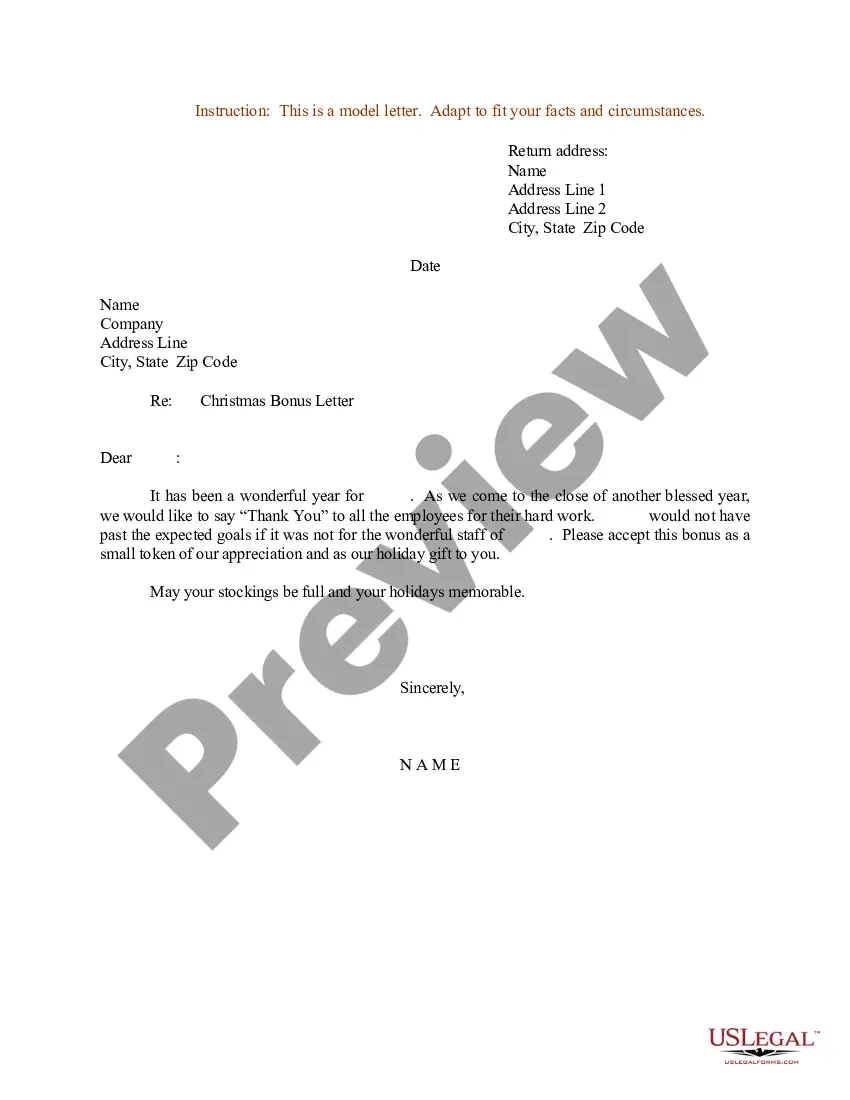
Get your form ready online
Our built-in tools help you complete, sign, share, and store your documents in one place.
Make edits, fill in missing information, and update formatting in US Legal Forms—just like you would in MS Word.
Download a copy, print it, send it by email, or mail it via USPS—whatever works best for your next step.
Sign and collect signatures with our SignNow integration. Send to multiple recipients, set reminders, and more. Go Premium to unlock E-Sign.
If this form requires notarization, complete it online through a secure video call—no need to meet a notary in person or wait for an appointment.
We protect your documents and personal data by following strict security and privacy standards.

Make edits, fill in missing information, and update formatting in US Legal Forms—just like you would in MS Word.

Download a copy, print it, send it by email, or mail it via USPS—whatever works best for your next step.

Sign and collect signatures with our SignNow integration. Send to multiple recipients, set reminders, and more. Go Premium to unlock E-Sign.

If this form requires notarization, complete it online through a secure video call—no need to meet a notary in person or wait for an appointment.

We protect your documents and personal data by following strict security and privacy standards.
Looking for another form?

Form popularity
FAQ
The federal bonus tax withholding rate is typically 22%. However, employers could instead combine a bonus with your regular wages as though it's one of your usual paychecks—with your usual tax amount withheld. There are ways to reduce the tax impact of your bonus.
The flat withholding rate for bonuses is 22% — except when those bonuses are above $1 million. If your employee's bonus exceeds $1 million, congratulations to both of you on your success! These large bonuses are taxed at a flat rate of 37%.
Reporting your bonus on your tax return Your Form W-2, which you receive at the beginning of the tax year, will include your bonus as part of your wages. Box 1 of your Form W-2 will reflect your taxable income, including both regular wages and any supplemental wages like bonuses.
When your employer provides you with a bonus, they will report it on your W-2 in box 1—but it's combined with your normal wages or salary. In the eyes of the Internal Revenue Service, your bonus is no different than the salary you receive.
While you will not need to handle a 1099 form when providing bonuses, you'd be surprised by how many businesses need to use 1099 forms with some regularity.
Reporting your bonus on your tax return Your Form W-2, which you receive at the beginning of the tax year, will include your bonus as part of your wages. Box 1 of your Form W-2 will reflect your taxable income, including both regular wages and any supplemental wages like bonuses.

