Template For Bonus Payout In Pennsylvania
Description
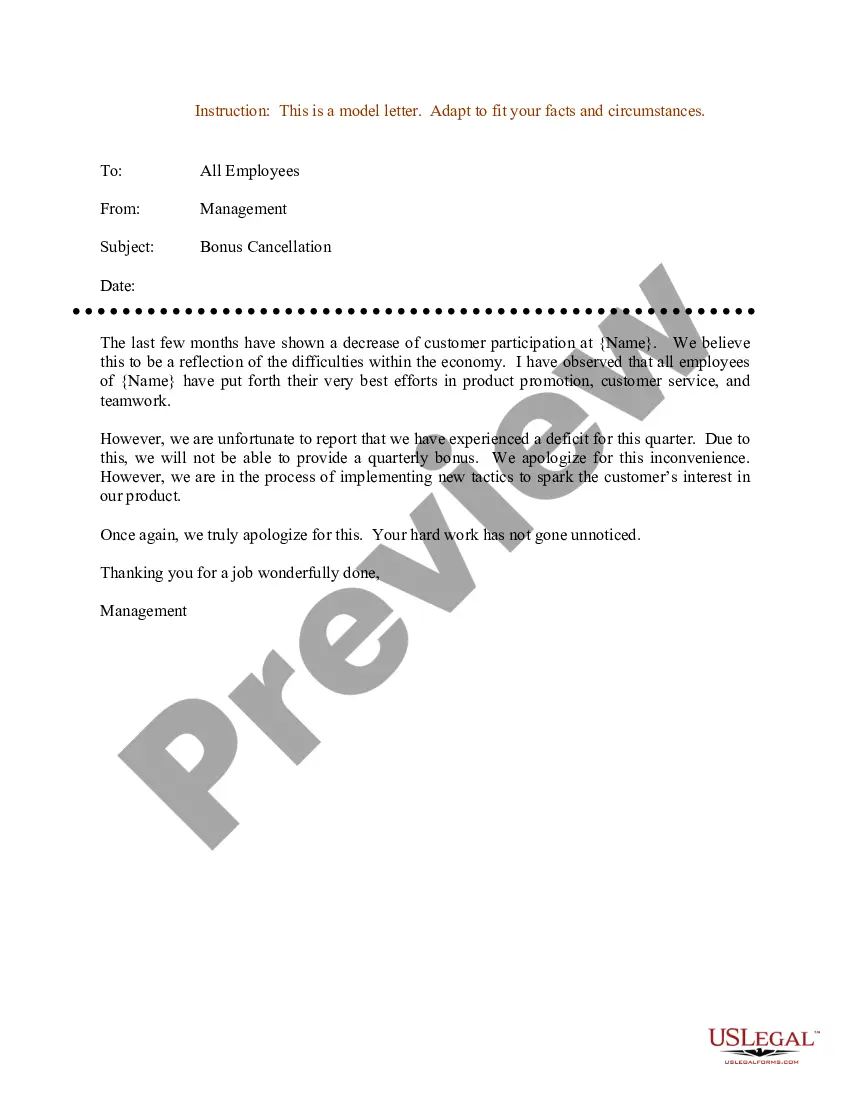
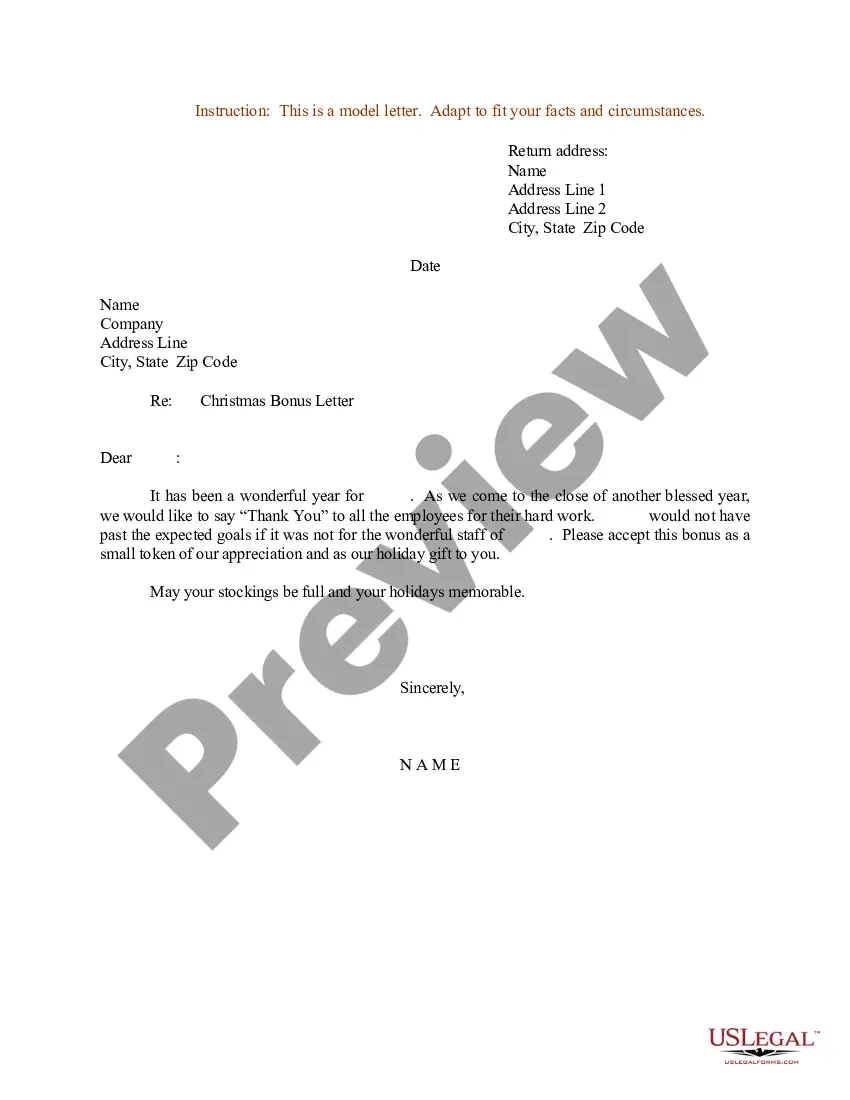
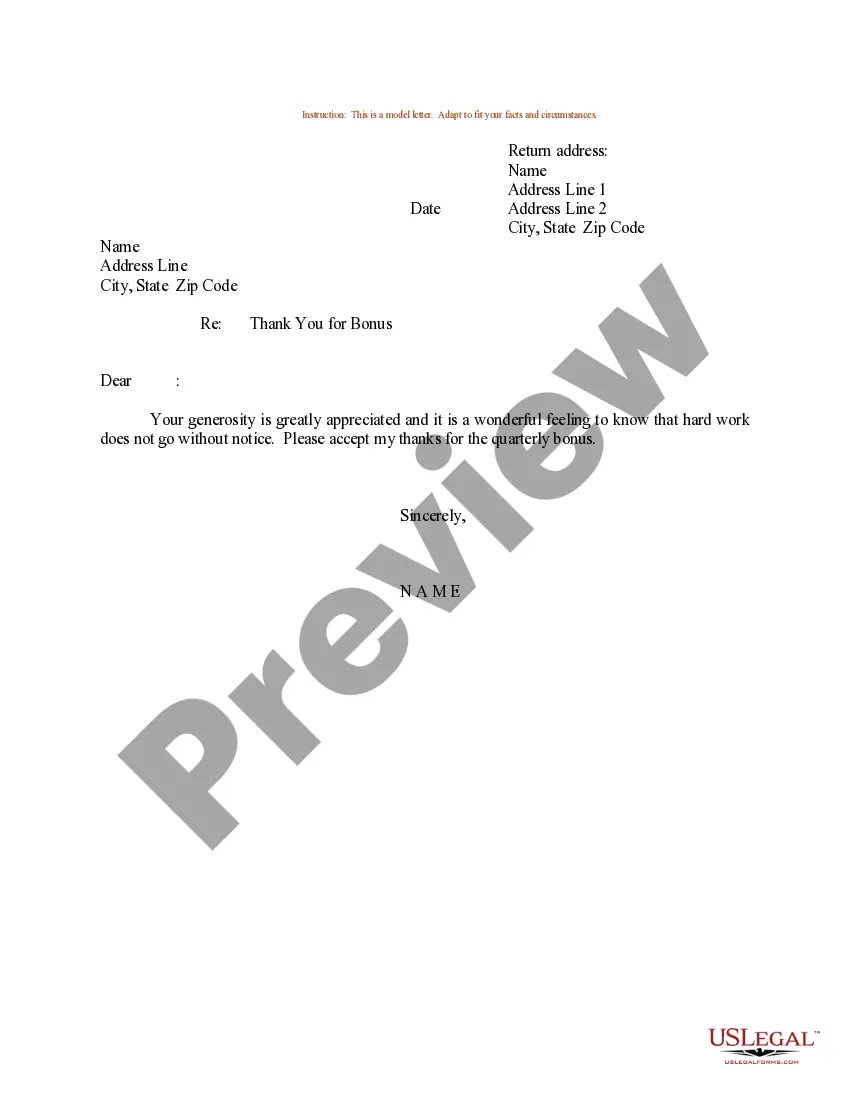
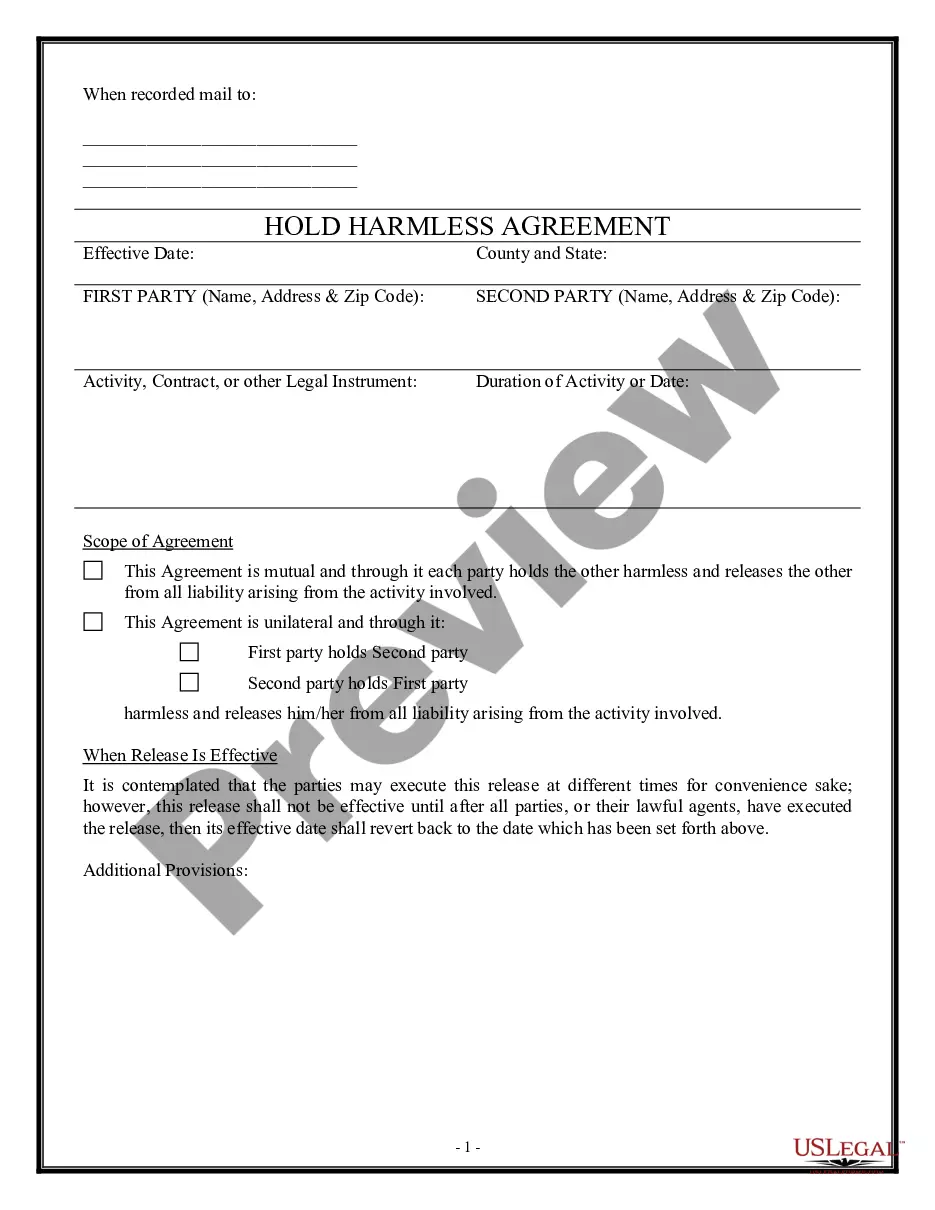
Get your form ready online
Our built-in tools help you complete, sign, share, and store your documents in one place.
Make edits, fill in missing information, and update formatting in US Legal Forms—just like you would in MS Word.
Download a copy, print it, send it by email, or mail it via USPS—whatever works best for your next step.
Sign and collect signatures with our SignNow integration. Send to multiple recipients, set reminders, and more. Go Premium to unlock E-Sign.
If this form requires notarization, complete it online through a secure video call—no need to meet a notary in person or wait for an appointment.
We protect your documents and personal data by following strict security and privacy standards.

Make edits, fill in missing information, and update formatting in US Legal Forms—just like you would in MS Word.

Download a copy, print it, send it by email, or mail it via USPS—whatever works best for your next step.

Sign and collect signatures with our SignNow integration. Send to multiple recipients, set reminders, and more. Go Premium to unlock E-Sign.

If this form requires notarization, complete it online through a secure video call—no need to meet a notary in person or wait for an appointment.

We protect your documents and personal data by following strict security and privacy standards.
Looking for another form?







Form popularity
FAQ
Your total bonuses for the year get taxed at a 22% flat rate if they're under $1 million. If your total bonuses are higher than $1 million, the first $1 million gets taxed at 22%, and every dollar over that gets taxed at 37%.
Pennsylvania has a flat 3.07 percent individual income tax rate. There are also jurisdictions that collect local income taxes. Pennsylvania has an 7.99 percent corporate income tax rate.
When an employer pays its taxes, it will often report the bonus in Box 1 for your W2. This bonus will be combined with all earnings and salary earned for the year. In addition, any taxes withheld from the bonus will be added to the W2 and reported as part of the W2.
To calculate a bonus based on your employee's salary, just multiply the employee's salary by your bonus percentage.
How to calculate bonus earnings Determine the total sales made. Determine a total bonus percentage. Multiply total sales by total bonus percentage.
Just like your salary or wages, bonuses count as earned income for the year, which means they're taxed at the same ordinary income tax rates and brackets.
For Pennsylvania personal income tax purposes, the term “compensation” includes salaries, wages, commissions, bonuses and incentive payments whether based on profits or otherwise, fees, tips and similar remuneration received for services rendered as an employee or casual employee, agent or officer of an individual, ...
The percentage method is used if your bonus comes in a separate check from your regular paycheck. Your employer withholds a flat 22% (or if over $1 million, 37% which is the highest rate of income tax).
An annual bonus of 5-10% of your yearly salary is standard in a lot of industries, just as a 5-10% annual raise is considered standard. However, if you work on commission, you may see a significantly higher percentage. Your industry, company revenue, location, and level also heavily inform what's expected.

