Sample Bonus Template With Lines In Minnesota
Description
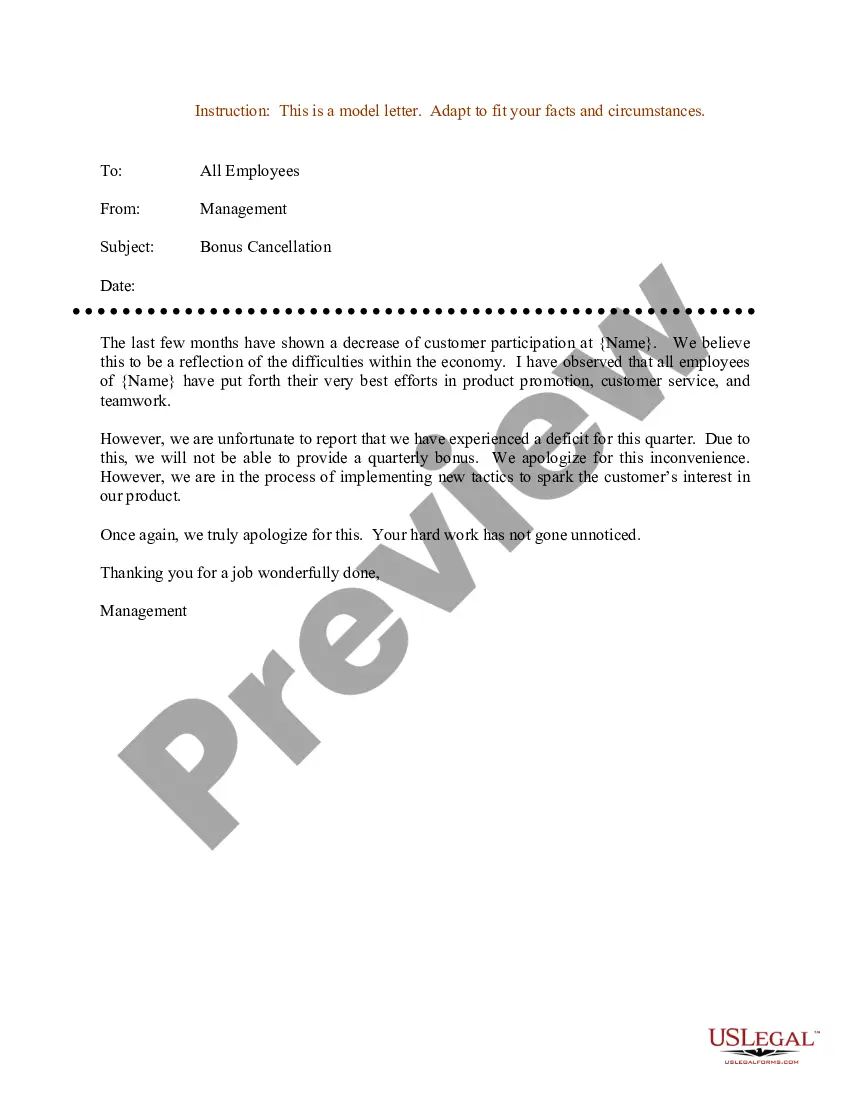
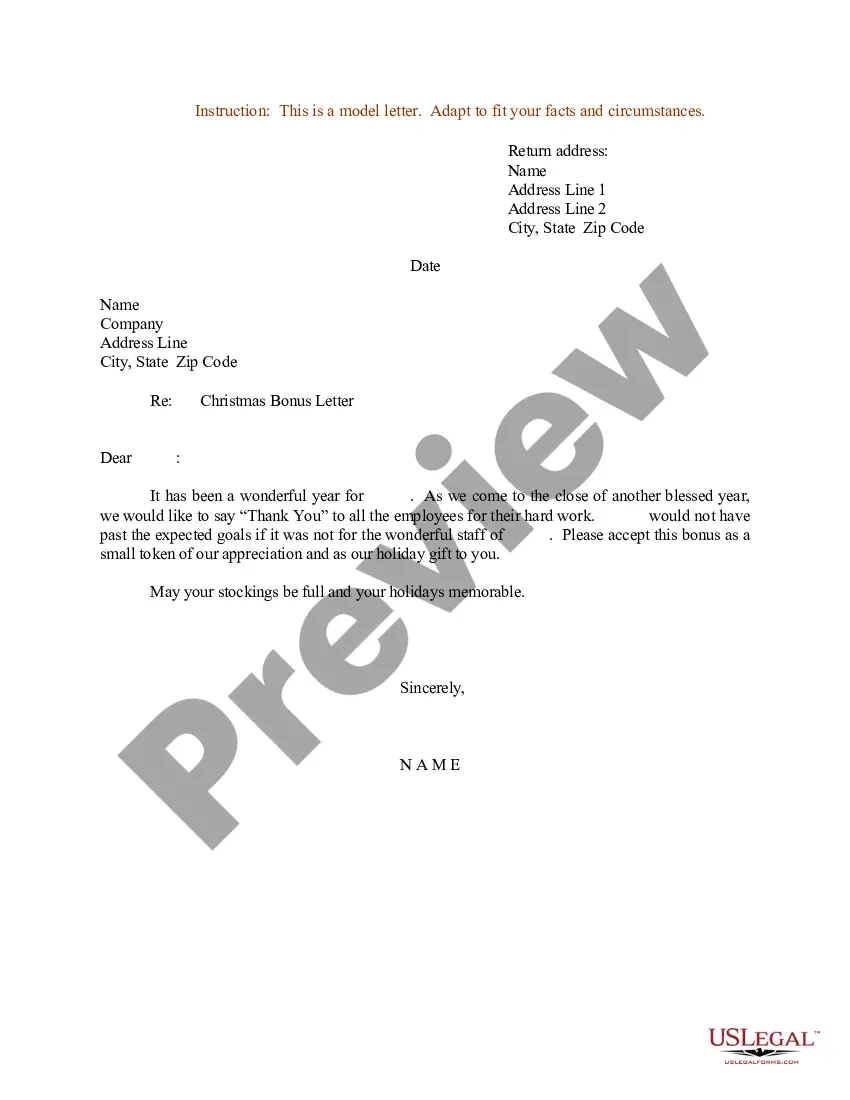
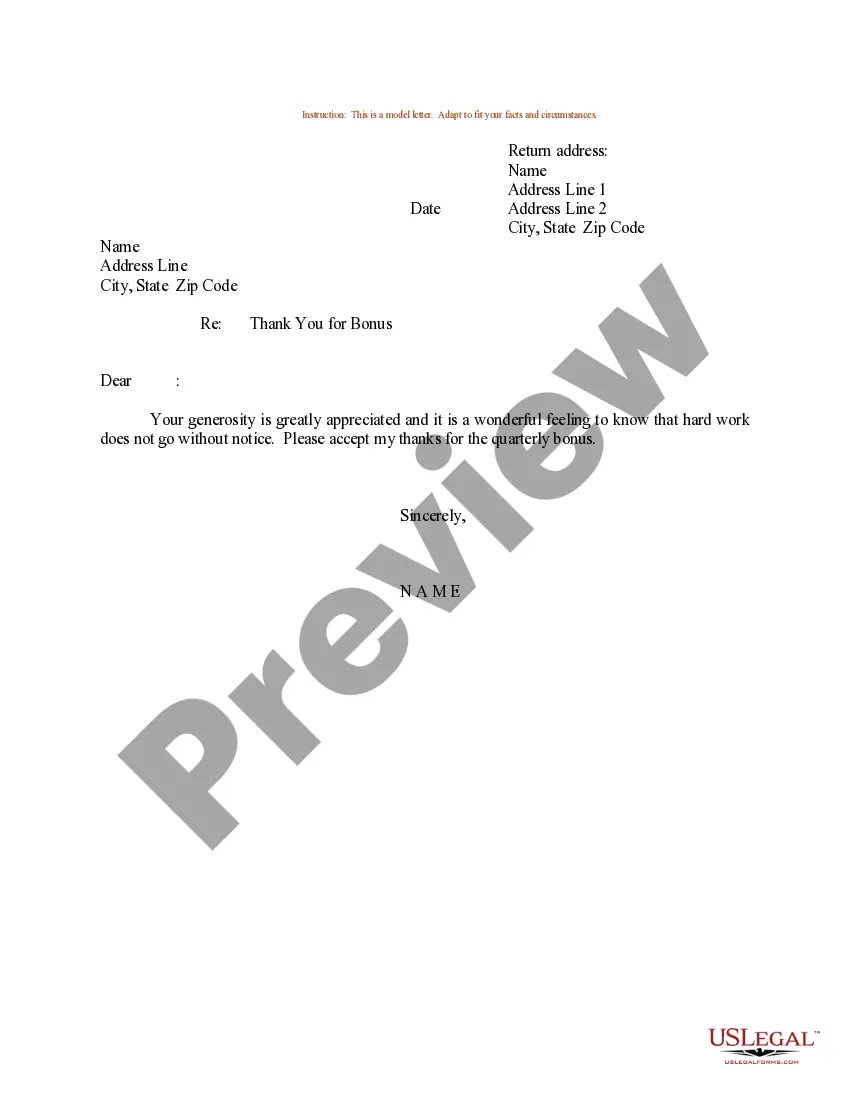
Get your form ready online
Our built-in tools help you complete, sign, share, and store your documents in one place.
Make edits, fill in missing information, and update formatting in US Legal Forms—just like you would in MS Word.
Download a copy, print it, send it by email, or mail it via USPS—whatever works best for your next step.
Sign and collect signatures with our SignNow integration. Send to multiple recipients, set reminders, and more. Go Premium to unlock E-Sign.
If this form requires notarization, complete it online through a secure video call—no need to meet a notary in person or wait for an appointment.
We protect your documents and personal data by following strict security and privacy standards.

Make edits, fill in missing information, and update formatting in US Legal Forms—just like you would in MS Word.

Download a copy, print it, send it by email, or mail it via USPS—whatever works best for your next step.

Sign and collect signatures with our SignNow integration. Send to multiple recipients, set reminders, and more. Go Premium to unlock E-Sign.

If this form requires notarization, complete it online through a secure video call—no need to meet a notary in person or wait for an appointment.

We protect your documents and personal data by following strict security and privacy standards.
Looking for another form?






Form popularity
FAQ
Some examples of non-discretionary bonuses include sign-on bonuses with clawback provisions, longevity or retention bonuses, and most attendance and production bonuses related to quality and accuracy of work as types of bonuses.
By definition, it is unplanned and given outside of the normal compensation plan or performance-based incentive plans. Some examples include Christmas-time bonuses that aren't dependent on an employee's performance, or random gifts to your team members to show appreciation.
The typical bonus amount can range from 1% to 15% of an employee's salary, usually depending on a number of factors such as industry, company performance, and individual or team accomplishments. The average bonus for employees continues to rise over time. In 2020, the average employee bonus was only 8.1%.
Executives receive higher bonuses that can multiply based on performance, while most employees earn bonuses equal to 1% to 5% of their overall salary.
The federal bonus tax withholding rate is typically 22%. However, employers could instead combine a bonus with your regular wages as though it's one of your usual paychecks—with your usual tax amount withheld. There are ways to reduce the tax impact of your bonus.
This initiative addresses the shortage of DSPs in Minnesota by rewarding people who work in this high-demand profession. Providers can use incentive payments to retain DSPs who make less than $30 per hour. Each DSP can receive up to $1,000.
What is the percentage method for bonuses? The percentage method is used if your bonus comes in a separate check from your regular paycheck. Your employer withholds a flat 22% (or 37% if over $1 million).

