Example With Bonus In Miami-Dade
Description
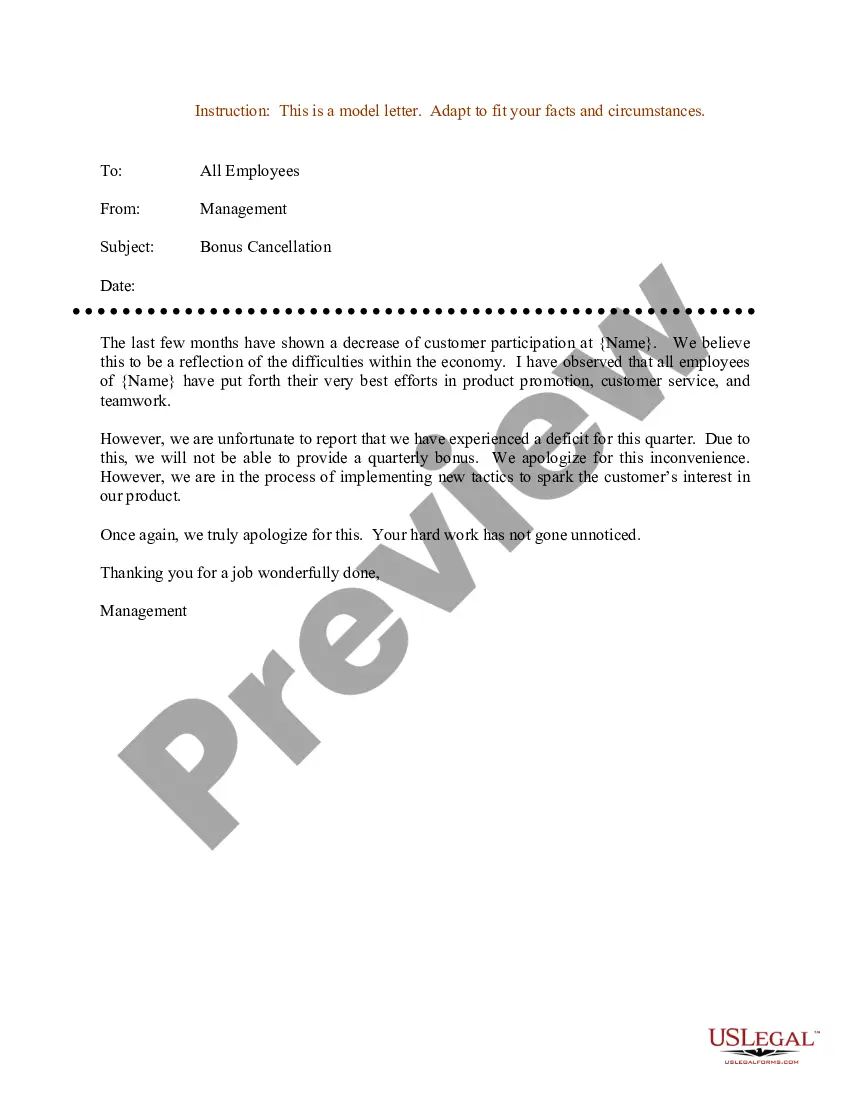
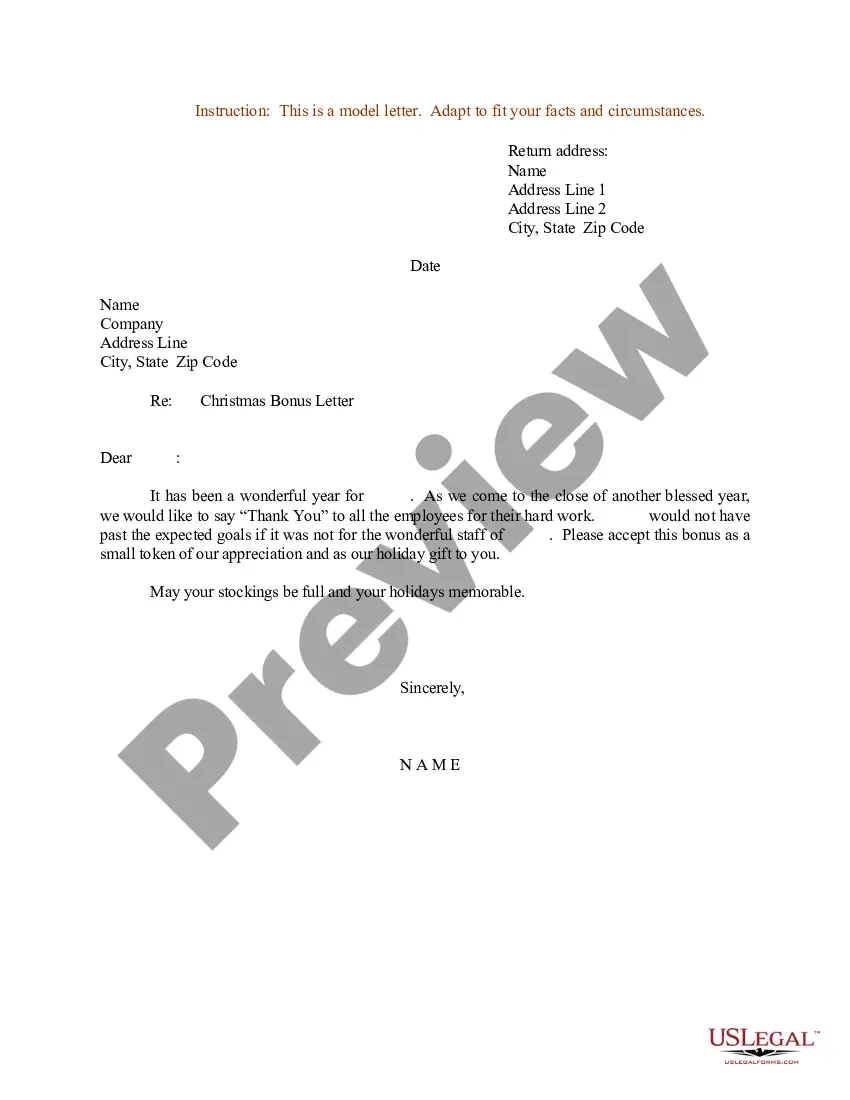
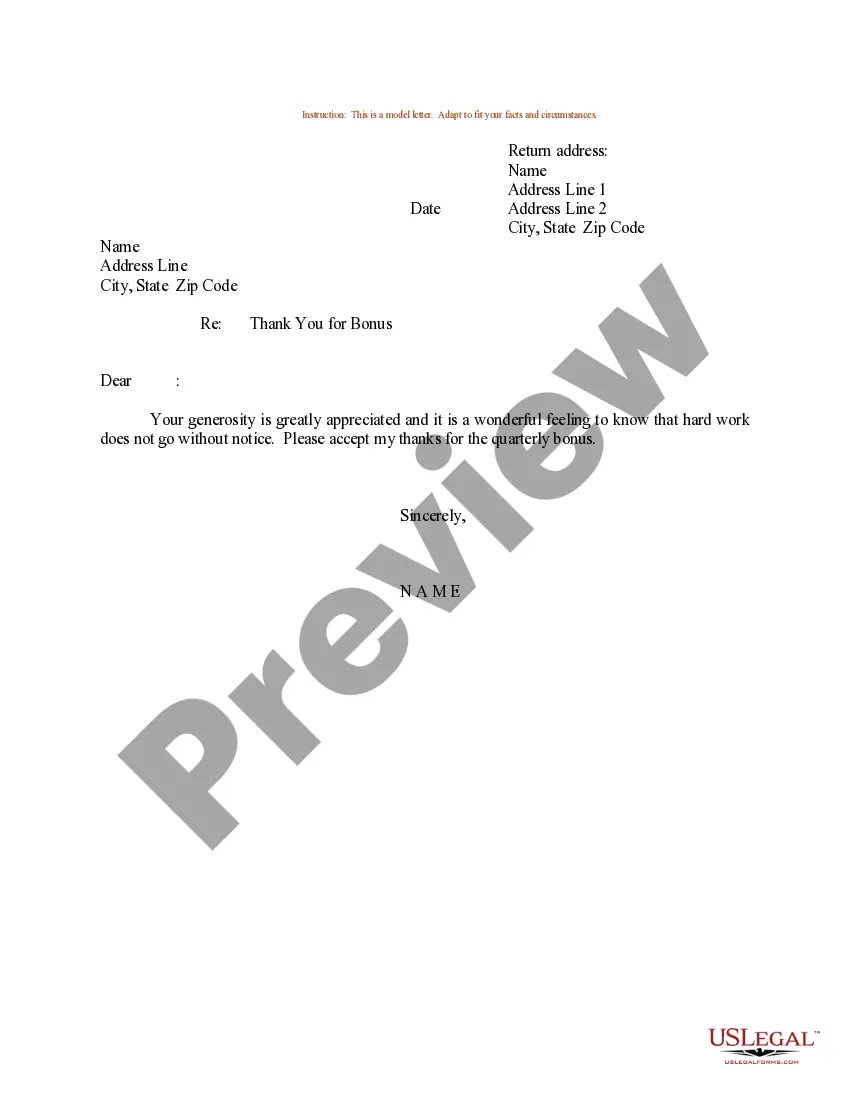
Get your form ready online
Our built-in tools help you complete, sign, share, and store your documents in one place.
Make edits, fill in missing information, and update formatting in US Legal Forms—just like you would in MS Word.
Download a copy, print it, send it by email, or mail it via USPS—whatever works best for your next step.
Sign and collect signatures with our SignNow integration. Send to multiple recipients, set reminders, and more. Go Premium to unlock E-Sign.
If this form requires notarization, complete it online through a secure video call—no need to meet a notary in person or wait for an appointment.
We protect your documents and personal data by following strict security and privacy standards.

Make edits, fill in missing information, and update formatting in US Legal Forms—just like you would in MS Word.

Download a copy, print it, send it by email, or mail it via USPS—whatever works best for your next step.

Sign and collect signatures with our SignNow integration. Send to multiple recipients, set reminders, and more. Go Premium to unlock E-Sign.

If this form requires notarization, complete it online through a secure video call—no need to meet a notary in person or wait for an appointment.

We protect your documents and personal data by following strict security and privacy standards.
Looking for another form?



Form popularity
FAQ
Miami-Dade County provides retirement benefits for eligible employees through the Florida Retirement System (FRS). The FRS is qualified under Section 401(a) of the Internal Revenue Code and provides a defined benefit (FRS Pension Plan) and a defined contribution plan (FRS Investment Plan) option.
A new employee hired before the end of the first half of the calendar year will receive two floating holidays upon hire; a new employee hired during the second half of the calendar year will receive one floating holiday upon hire. Employees must specify the event for which they are requesting to use a floating holiday.
Ratings distribution Miami Dade County has an employee rating of 3.9 out of 5 stars, based on 440 company reviews on Glassdoor which indicates that most employees have a good working experience there.
Florida law does not explicitly address the issue of bonuses and wages. Generally, discretionary bonuses are not considered wages, while nondiscretionary bonuses can be considered wages and protected under wage laws.
Generally, discretionary bonuses are not considered wages, while nondiscretionary bonuses can be considered wages and protected under wage laws. A nondiscretionary bonus is one where the amount and criteria for getting the bonus are announced in advance.
Texas and Florida: No state income tax, so bonuses are only subject to federal withholding and FICA taxes. Illinois: A flat state income tax rate of 4.95% applies to all income, including bonuses. Georgia: The state applies a progressive income tax rate to bonuses, ranging from 1% to 5.75%.

