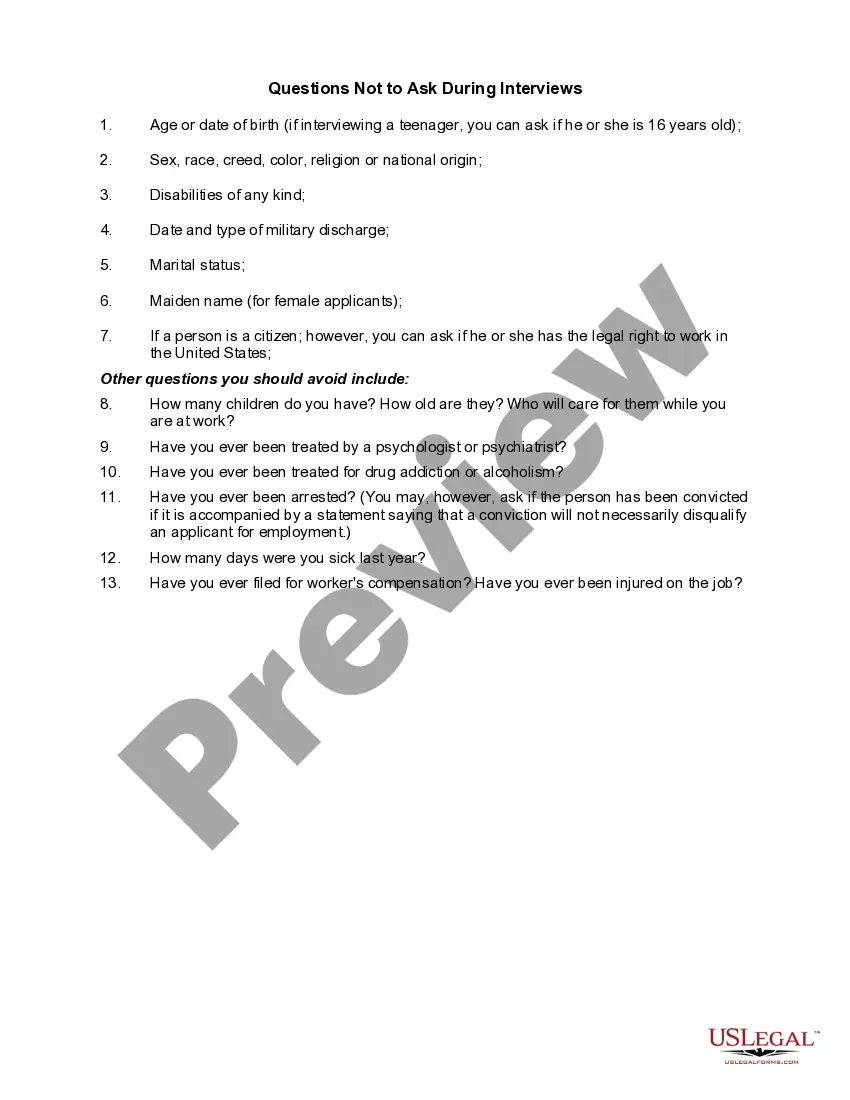
Eeoc Examples Of Discrimination In Oakland
Description




Get your form ready online
Our built-in tools help you complete, sign, share, and store your documents in one place.
Make edits, fill in missing information, and update formatting in US Legal Forms—just like you would in MS Word.
Download a copy, print it, send it by email, or mail it via USPS—whatever works best for your next step.
Sign and collect signatures with our SignNow integration. Send to multiple recipients, set reminders, and more. Go Premium to unlock E-Sign.
If this form requires notarization, complete it online through a secure video call—no need to meet a notary in person or wait for an appointment.
We protect your documents and personal data by following strict security and privacy standards.

Make edits, fill in missing information, and update formatting in US Legal Forms—just like you would in MS Word.

Download a copy, print it, send it by email, or mail it via USPS—whatever works best for your next step.

Sign and collect signatures with our SignNow integration. Send to multiple recipients, set reminders, and more. Go Premium to unlock E-Sign.

If this form requires notarization, complete it online through a secure video call—no need to meet a notary in person or wait for an appointment.

We protect your documents and personal data by following strict security and privacy standards.
Looking for another form?









Form popularity
FAQ
The following would be considered illegal discrimination if there is evidence that the decision was made based on a protected characteristic: Sexual Harassment. Refusal to Provide Services. Unfair Lending Practices. Misrepresenting the Availability of Housing. Refusal to Allow “Reasonable Modifications” Refusing Rental.
Most workers speak up about retaliation In 2022, the most recent year with data available, there was little question that retaliation claims as the most common issue brought to the EEOC's attention. The agency found that 51.6% of the reports it investigated involved retaliation.
For example, in a disability or race discrimination case, some courts have said that the 4 elements are that (1) the plaintiff belongs to a protected group, (2) he is qualified for the job (3) the plaintiff was discriminated against, and (4) the plaintiff was replaced bv a nonminority.
Age. Age discrimination involves treating someone (an applicant or employee) less favorably because of age. Disability. Genetic Information. Unlawful Workplace Harassment (Harassment) ... National Origin. Pregnancy. Race/Color. Religion.
Types of discrimination Direct discrimination. Direct discrimination happens when an employer treats an employee less favourably than someone else because of one of the above reasons. Indirect discrimination. Harassment. Victimisation. Being treated unfairly for other reasons.
Include the following in your complaint letter: Your name, address and telephone number. The name, address, and telephone number of your attorney or authorized representative, if you are represented. The basis of your complaint. The date(s) that the incident(s) you are reporting as discrimination occurred.
Your EEO statement should be about one or two paragraphs customized to your organization's culture and include the following elements: Be specific and concise. Mention relevant employment practices. Highlight diversity and inclusion. State that hiring decisions are based on merit. Direct to further resources.
Evidence takes several forms. It includes your testimony, which is the very first evidence gathered by EEOC. It also includes written materials such as evaluations, notes by your employer, letters, memos, and the like. You will be asked to provide any documents you may have that relate to your case.
The position statement should clearly explain the Respondent's version of the facts and identify the specific documents and witnesses supporting its position. A well drafted position statement can help EEOC accelerate the investigation and limit requests for additional information.
The name, address, and telephone number of the person who is being treated unfairly; The name, address, and telephone number of the employer you are filing the complaint against; A brief description of the event or events that you believe are unfair or harassing; and. The dates these events occurred.