Sample Bonus Policy In Maryland
Description
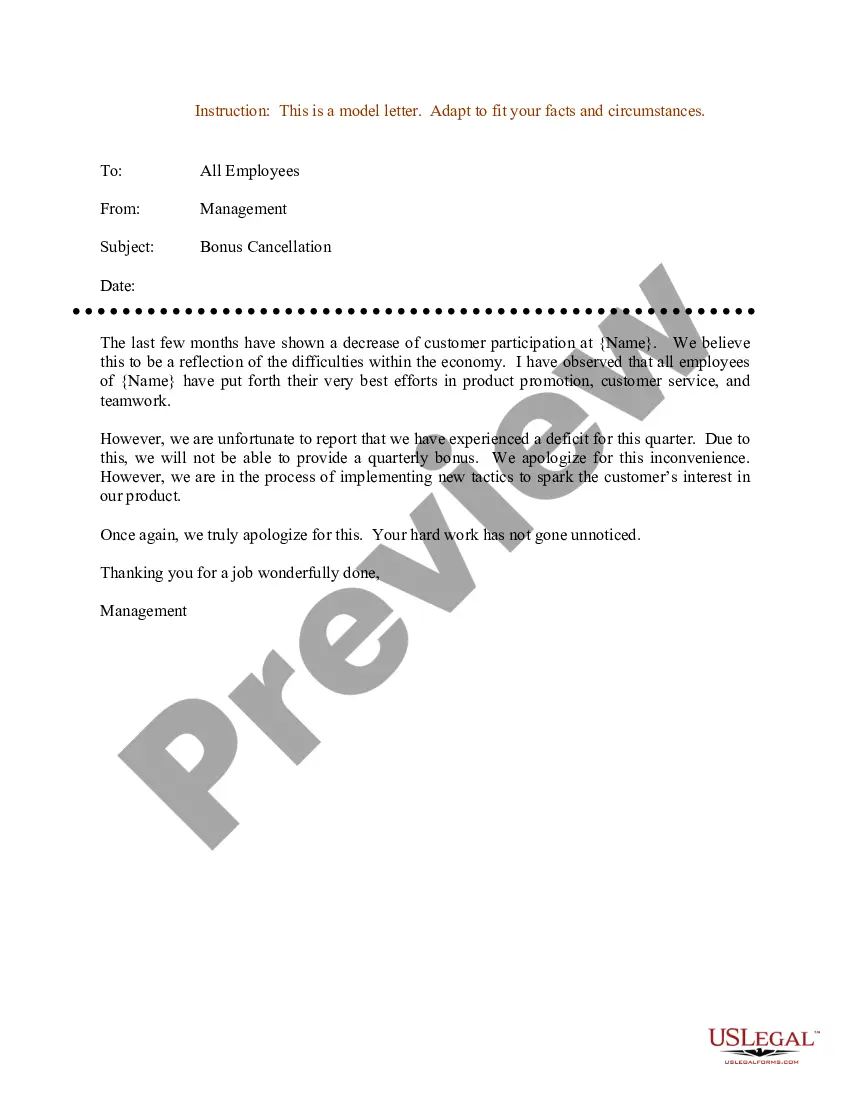
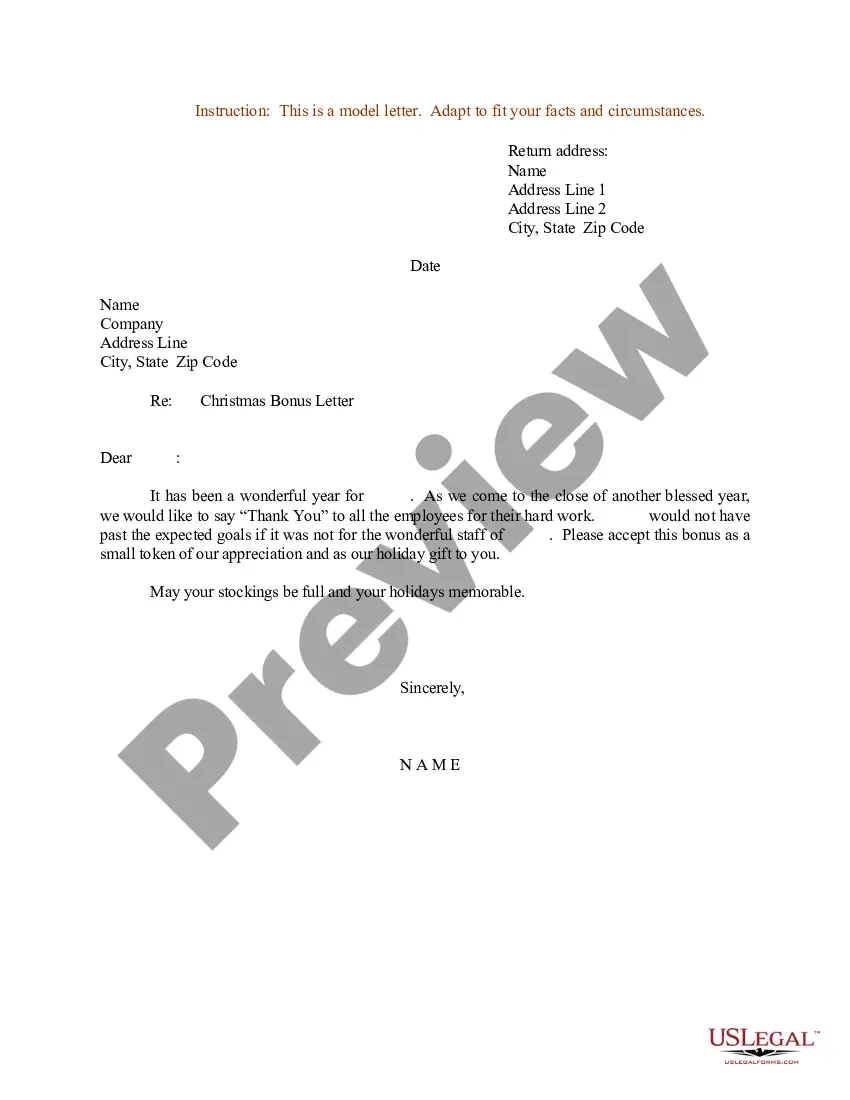
Get your form ready online
Our built-in tools help you complete, sign, share, and store your documents in one place.
Make edits, fill in missing information, and update formatting in US Legal Forms—just like you would in MS Word.
Download a copy, print it, send it by email, or mail it via USPS—whatever works best for your next step.
Sign and collect signatures with our SignNow integration. Send to multiple recipients, set reminders, and more. Go Premium to unlock E-Sign.
If this form requires notarization, complete it online through a secure video call—no need to meet a notary in person or wait for an appointment.
We protect your documents and personal data by following strict security and privacy standards.

Make edits, fill in missing information, and update formatting in US Legal Forms—just like you would in MS Word.

Download a copy, print it, send it by email, or mail it via USPS—whatever works best for your next step.

Sign and collect signatures with our SignNow integration. Send to multiple recipients, set reminders, and more. Go Premium to unlock E-Sign.

If this form requires notarization, complete it online through a secure video call—no need to meet a notary in person or wait for an appointment.

We protect your documents and personal data by following strict security and privacy standards.
Looking for another form?


Form popularity
FAQ
Create a written document outlining the employee bonus plan's details. Give all employees this information so they understand how and why bonuses are given. Provide details on the bonus types in your plan, why they exist and how employees can earn these bonuses, especially if a bonus is tied to a specific outcome.
An incentive program is a formal scheme used to promote or encourage specific actions or behavior by a specific group of people during a defined period of time. Incentive programs are particularly used in business management to motivate employees and in sales to attract and retain customers.
The typical bonus amount can range from 1% to 15% of an employee's salary, usually depending on a number of factors such as industry, company performance, and individual or team accomplishments. The average bonus for employees continues to rise over time. In 2020, the average employee bonus was only 8.1%.
Create a written document outlining the employee bonus plan's details. Give all employees this information so they understand how and why bonuses are given. Provide details on the bonus types in your plan, why they exist and how employees can earn these bonuses, especially if a bonus is tied to a specific outcome.
The Incentive Bonus Policy compensates for performance above the acceptable standard. It is not intended to make up for or add to an employee's regular hourly wage or compensation for meeting the minimum standards of your job position.
An incentive bonus scheme refers to a structured program of rewarding employees to motivate them and enhance their performance. Offering financial rewards helps foster a positive work culture, enhance employee engagement, and align individual interests to company objectives.
The typical bonus amount can range from 1% to 15% of an employee's salary, usually depending on a number of factors such as industry, company performance, and individual or team accomplishments. The average bonus for employees continues to rise over time. In 2020, the average employee bonus was only 8.1%.
The typical bonus amount can range from 1% to 15% of an employee's salary, usually depending on a number of factors such as industry, company performance, and individual or team accomplishments. The average bonus for employees continues to rise over time. In 2020, the average employee bonus was only 8.1%.
One of the most common types of bonus is an annual bonus, which employers give out once a year. Annual bonuses are usually based on your overall performance, although companies who use profit-sharing rewards may distribute bonuses based on company success and profits.
The 9.6% average is a good bonus percentage benchmark, but it isn't one-size-fits-all. You should shift this percentage based on industry factors and what's feasible for your company.

